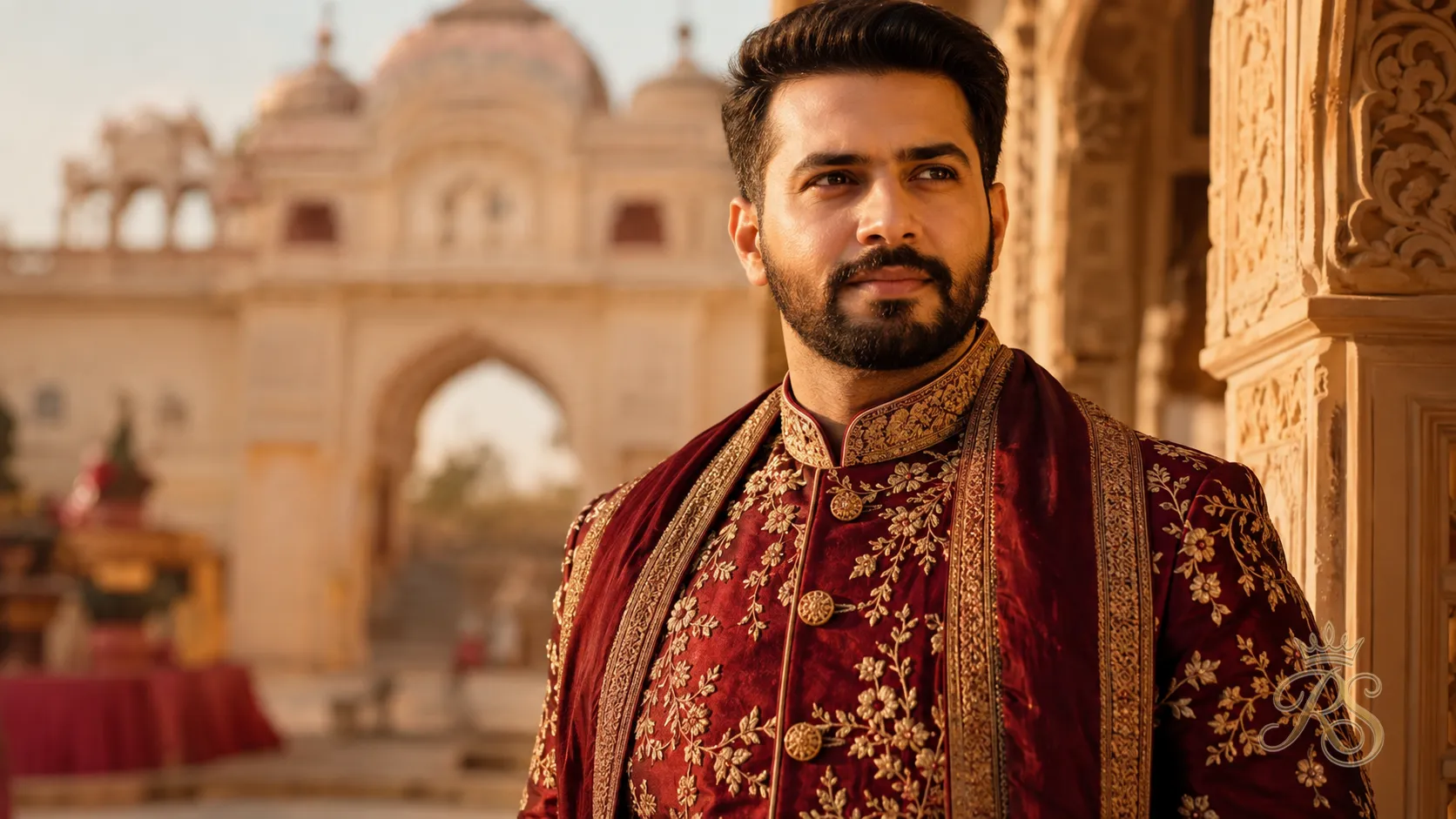
Choosing what to wear on your wedding day isn't just about looking sharp for the photographs — it's about feeling confident through five or six back-to-back functions, each with its own mood, dress code, and climate. From the structured elegance of a bandhgala to the playful fusion of an indo-western jacket, this guide walks through every outfit a modern Indian groom needs, function by function.
Why Your Wedding Outfit Choices Matter
A wedding wardrobe isn't one outfit — it's five or six, each expected to hold up under different lighting, weather, and hours of standing, dancing, and greeting guests. Getting each look right upfront saves you from last-minute tailoring panic and mismatched photos.
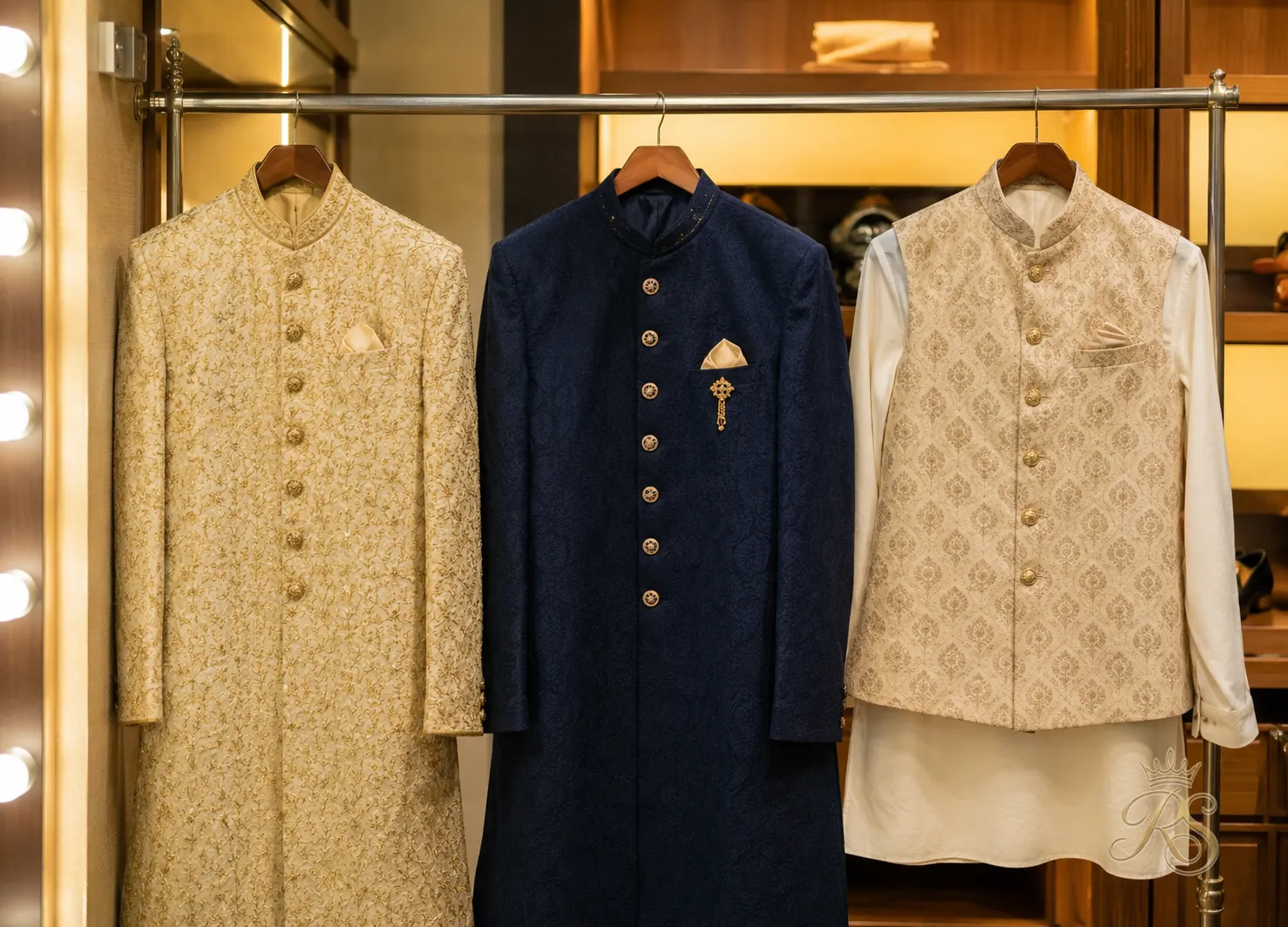
Start early: plan every function's outfit at least six to eight weeks before the wedding.
The goal isn't matching the bride's outfit exactly — it's complementing her palette and the event's formality while still feeling like yourself in every photograph.
Book your final fitting at least ten days before the wedding, not the week of — alterations always take longer than expected once function season is in full swing.
Sherwani Looks: The Timeless Choice
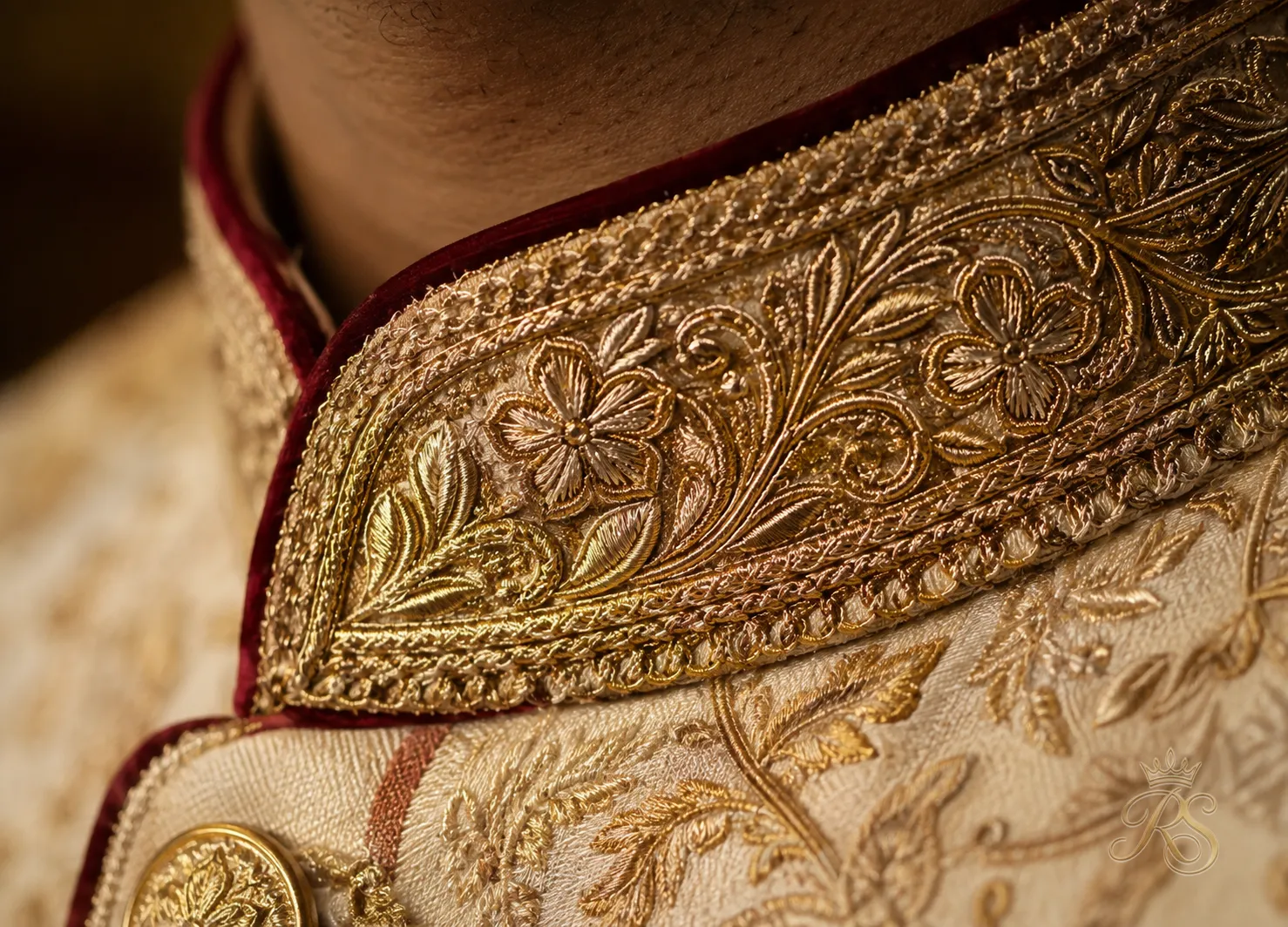
The sherwani remains the single most requested groom outfit in India, and for good reason — its long silhouette flatters almost every body type and photographs beautifully under both daylight and string lights.
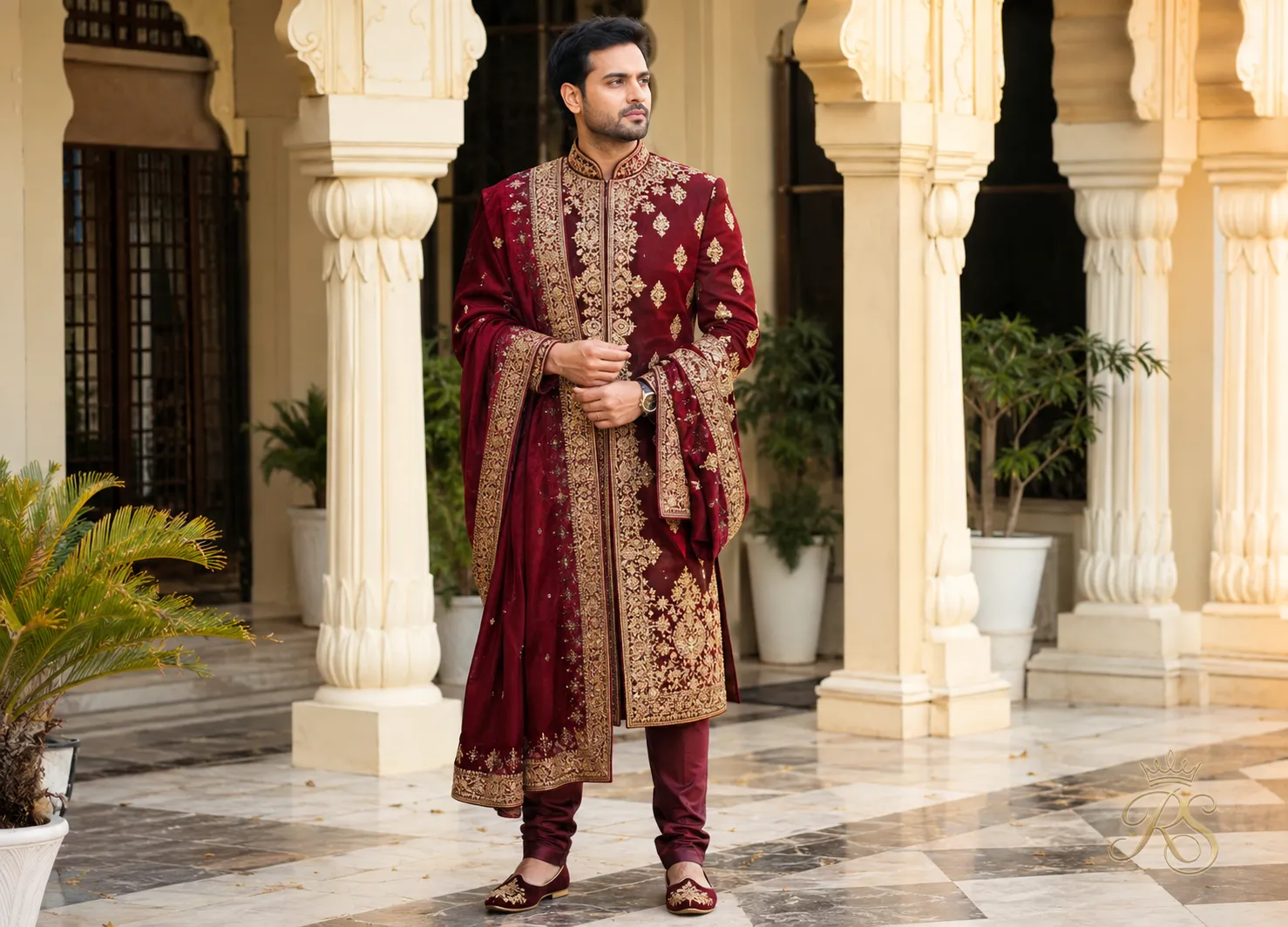
The safest bet: a maroon or deep jewel-tone sherwani works across nearly every regional wedding style.
Kurta Pajama for a Lighter Look
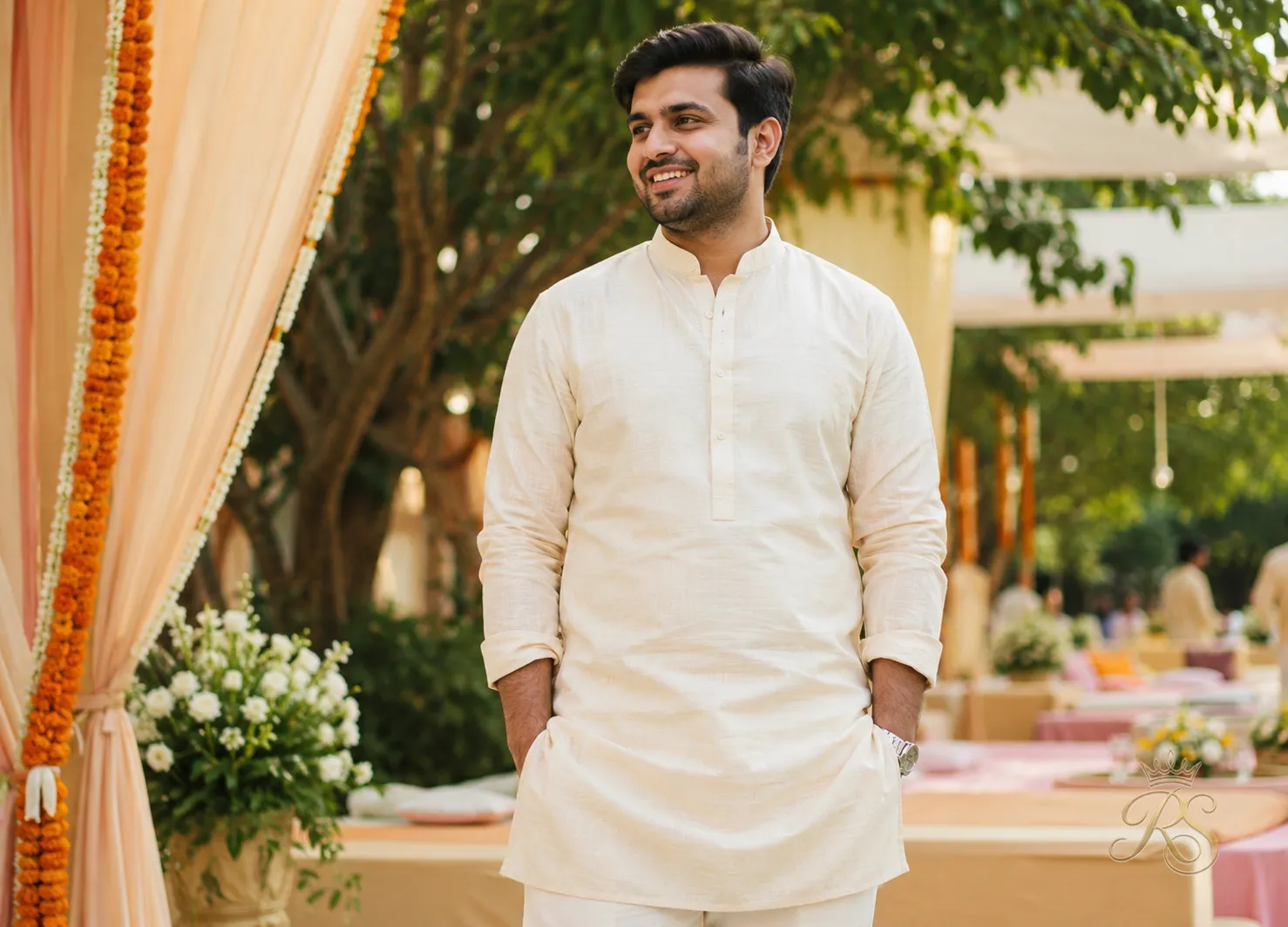
For daytime or smaller functions, a well-tailored kurta pajama in raw silk or cotton silk offers the same traditional feel with far less weight and formality — ideal for outdoor ceremonies in warmer months.
- Choose a sherwani length that ends just above the ankle for the most flattering line
- Raw silk holds embroidery weight better than georgette for heavier zari work
- A contrasting dupatta or stole instantly elevates a plain sherwani
Bandhgala Suits: Structured & Modern
The bandhgala — a closed-collar, fitted jacket rooted in royal Rajasthani menswear — has become the go-to for grooms who want tradition without the volume of a full sherwani.
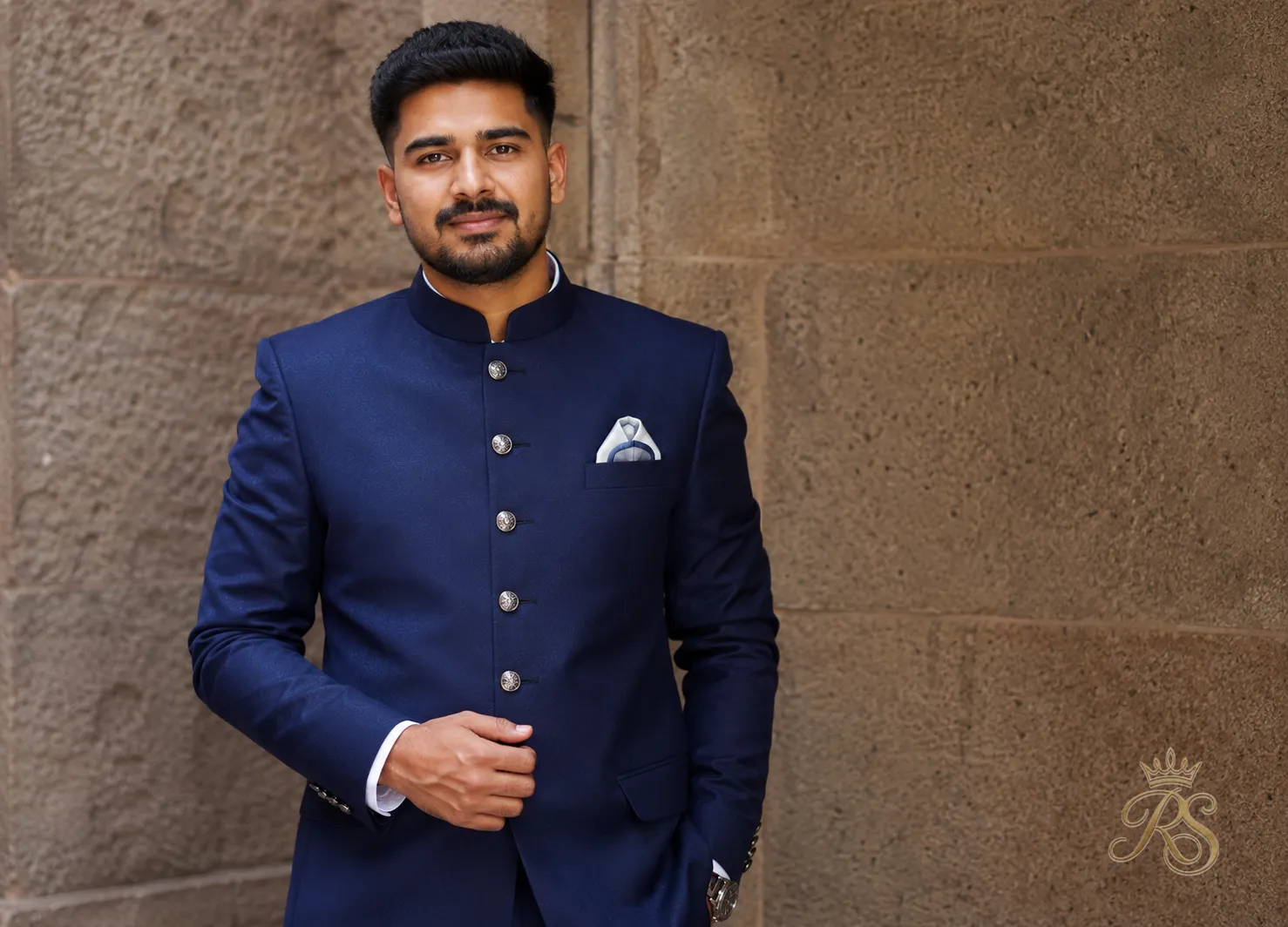
A tailored bandhgala works equally well for the wedding ceremony or a formal engagement.
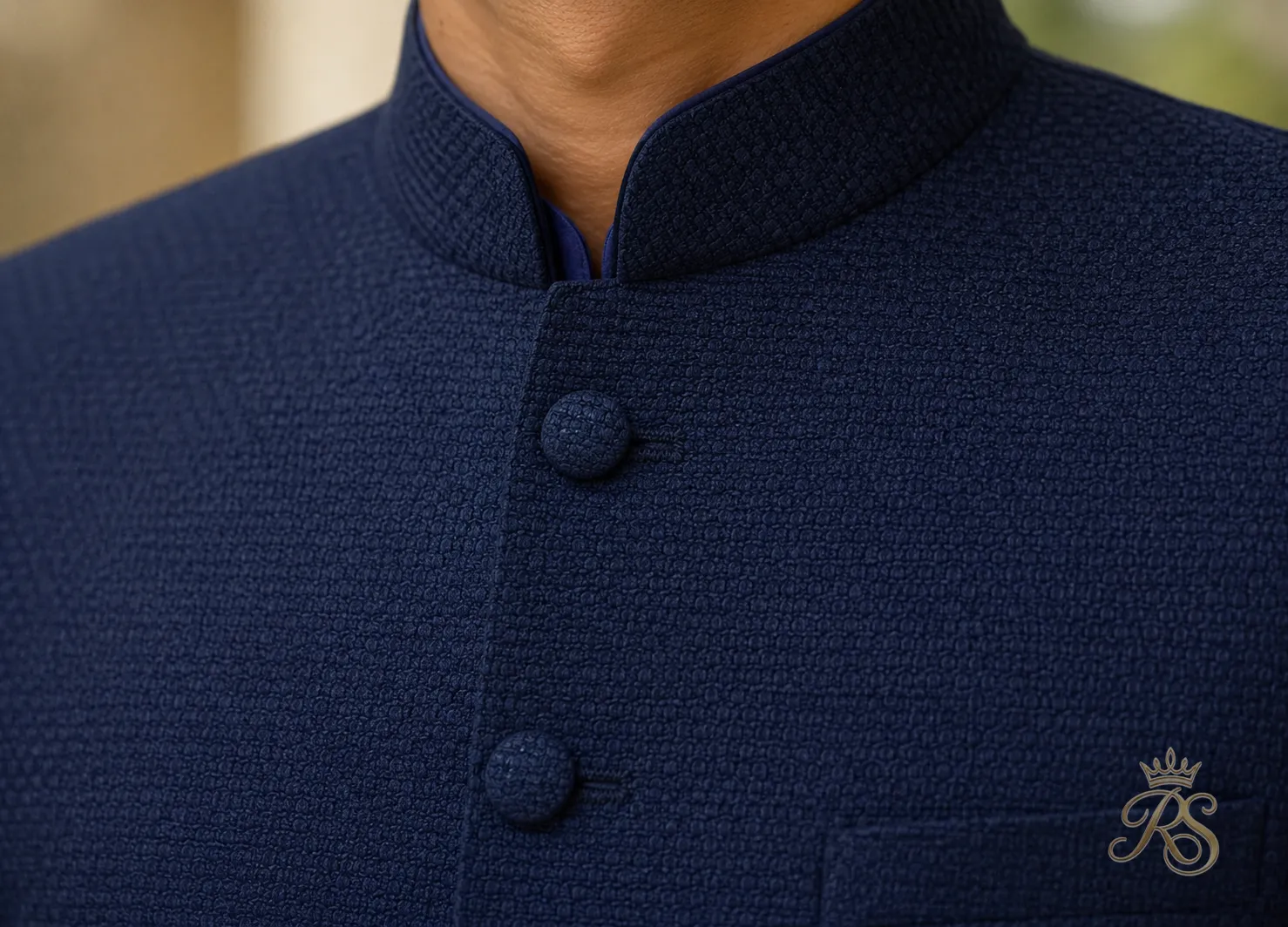
Textured wool-silk blends hold their shape through long ceremonies better than pure silk.
Because it pairs cleanly with both traditional churidars and slim Western trousers, the bandhgala is one of the few pieces that can move from a daytime engagement to an evening reception with only a change of accessories.
Indo-Western Fusion Outfits
Indo-western dressing has moved from niche to mainstream over the last few wedding seasons, blending traditional silhouettes with contemporary tailoring, cropped jackets, and unexpected fabrics.
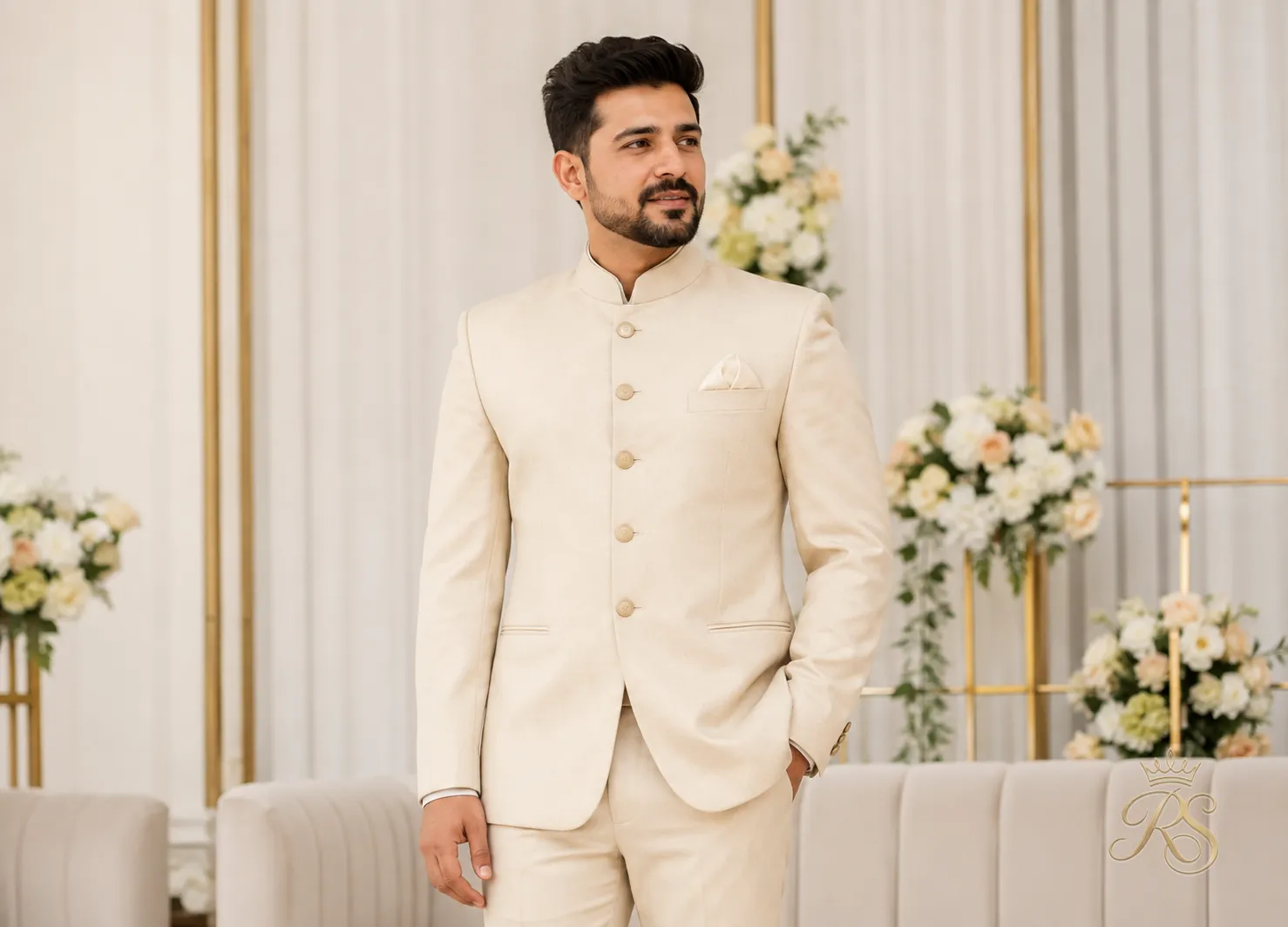
Nehru Jacket Set
A structured Nehru jacket over slim trousers gives a clean, contemporary silhouette without losing traditional roots.
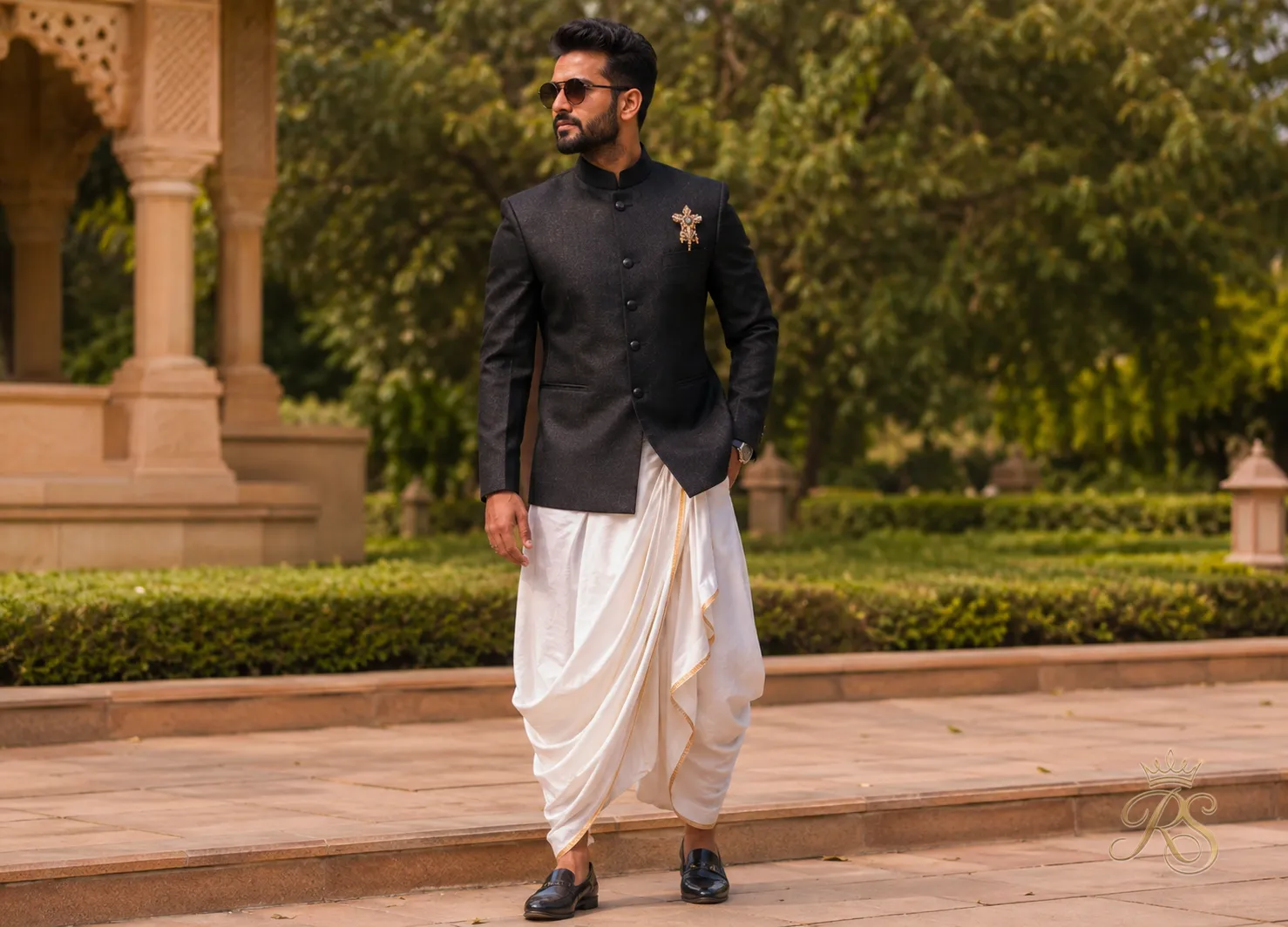
Dhoti with Blazer
A pre-draped dhoti paired with a fitted blazer is the most photographed fusion look of the last two wedding seasons.
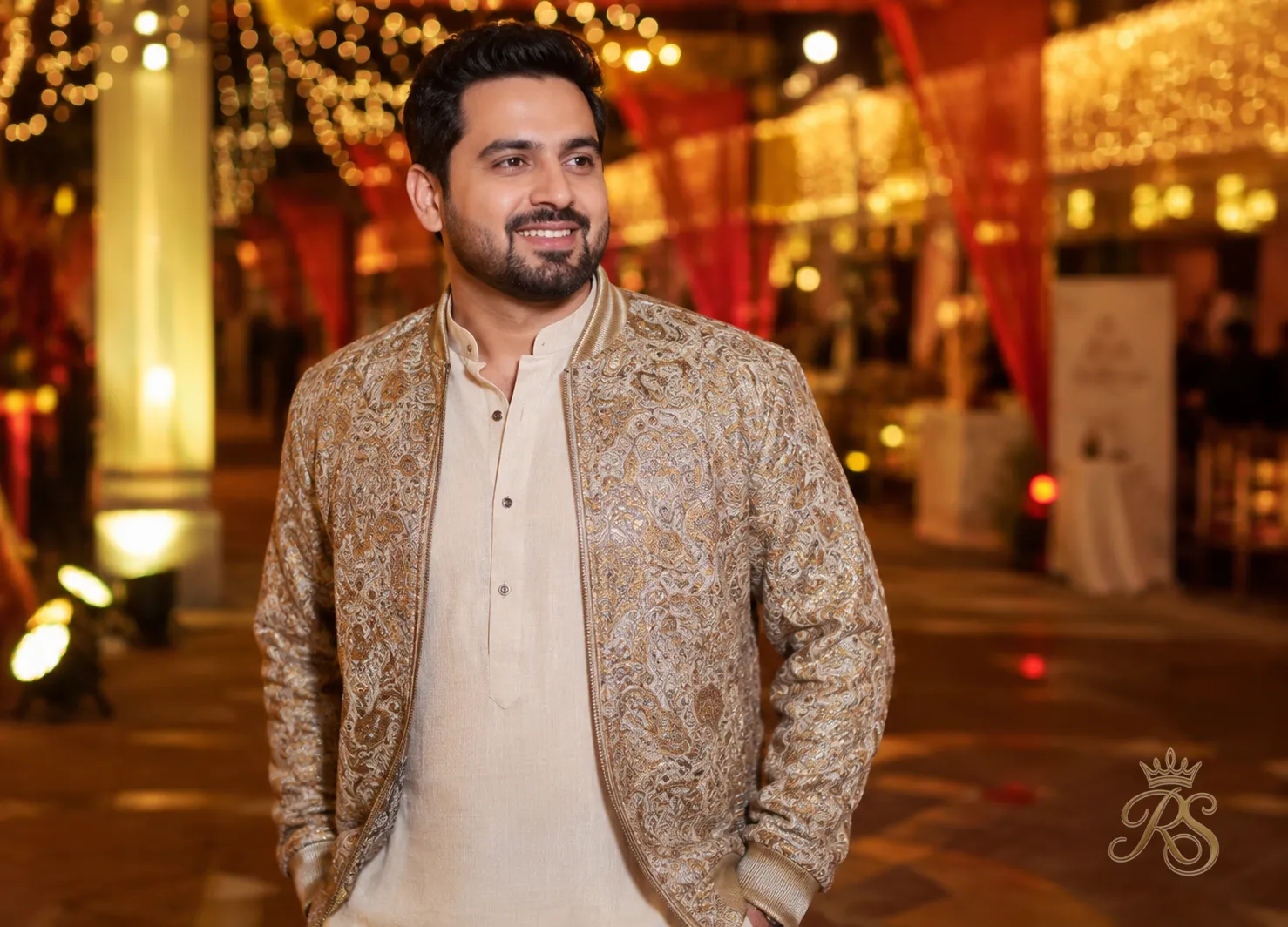
Embroidered Bomber
A silk bomber jacket with traditional embroidery is a lighter, younger alternative to a full sherwani for sangeet night.
"Indo-western dressing lets a groom carry tradition and personal style in the same outfit — it doesn't have to be one or the other."
Mehndi & Haldi Outfit Ideas
Mehndi and haldi functions call for something breathable, colorful, and easy to move in — these are the ceremonies with the most dancing, sitting on the floor, and turmeric that could stain fabric.
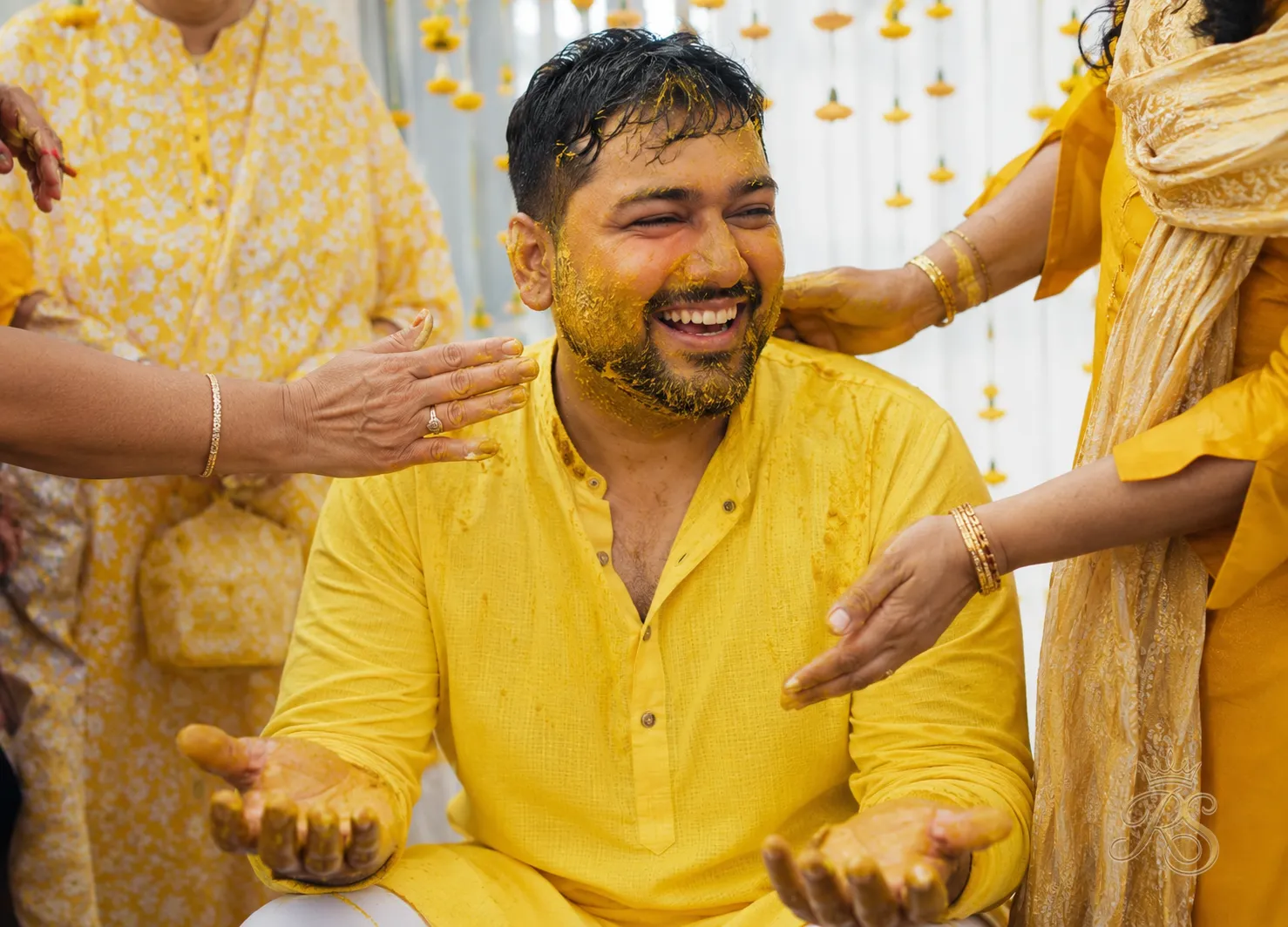
Cotton and linen kurtas in yellow or mustard are the traditional haldi choice — and the most forgiving if turmeric splashes.
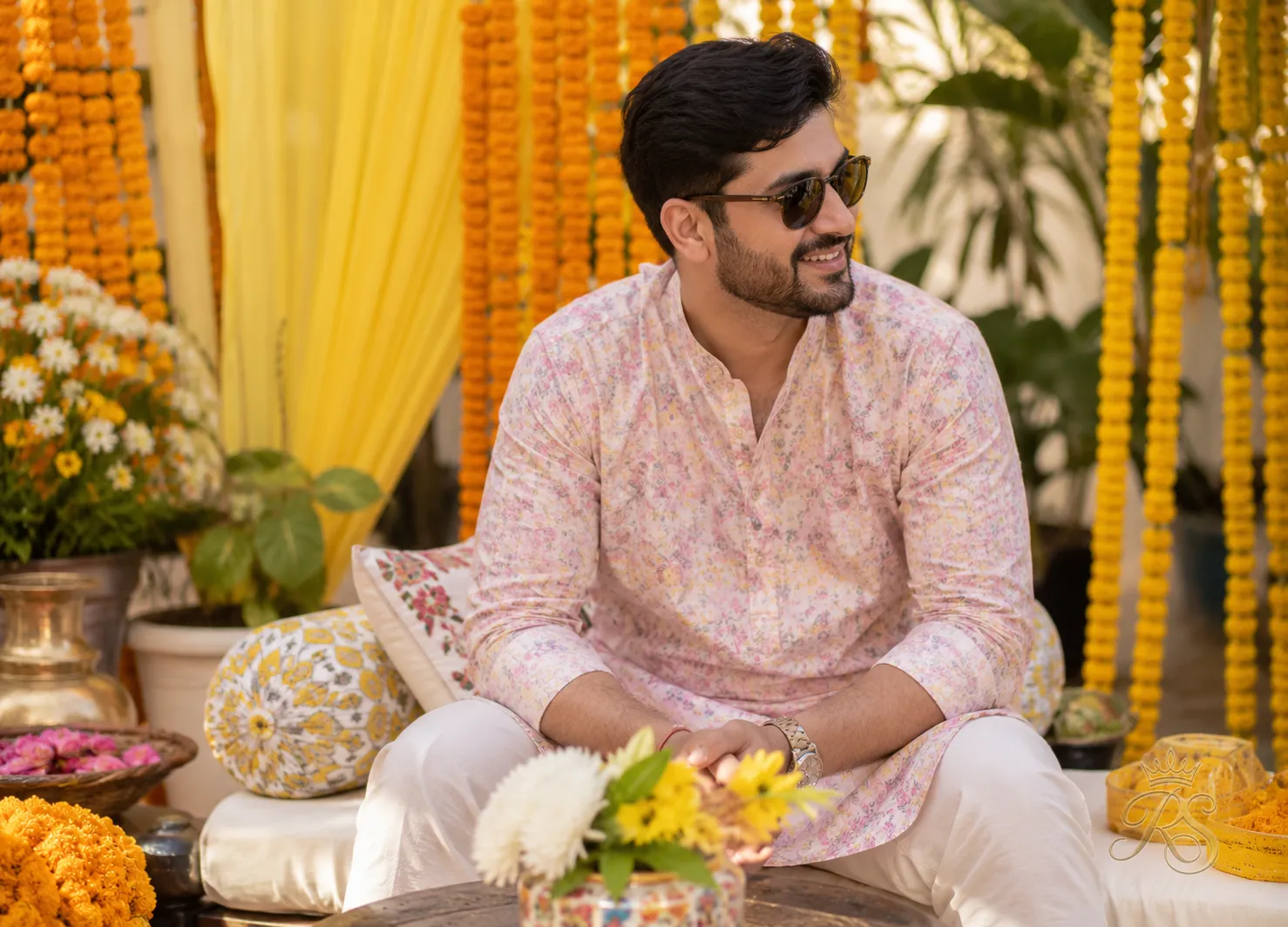
Pastel prints and floral jackets suit mehndi's relaxed, daytime mood.
Avoid heavy embroidery or dry-clean-only fabrics for these two functions specifically — a simple cotton or linen kurta in a bright, festive color photographs just as well and survives the day intact.
Sangeet Night Outfit Ideas
Sangeet is the one function where a groom can genuinely experiment — the dress code leans festive and expressive, and comfort matters more here than at any other event since you'll be dancing for hours.
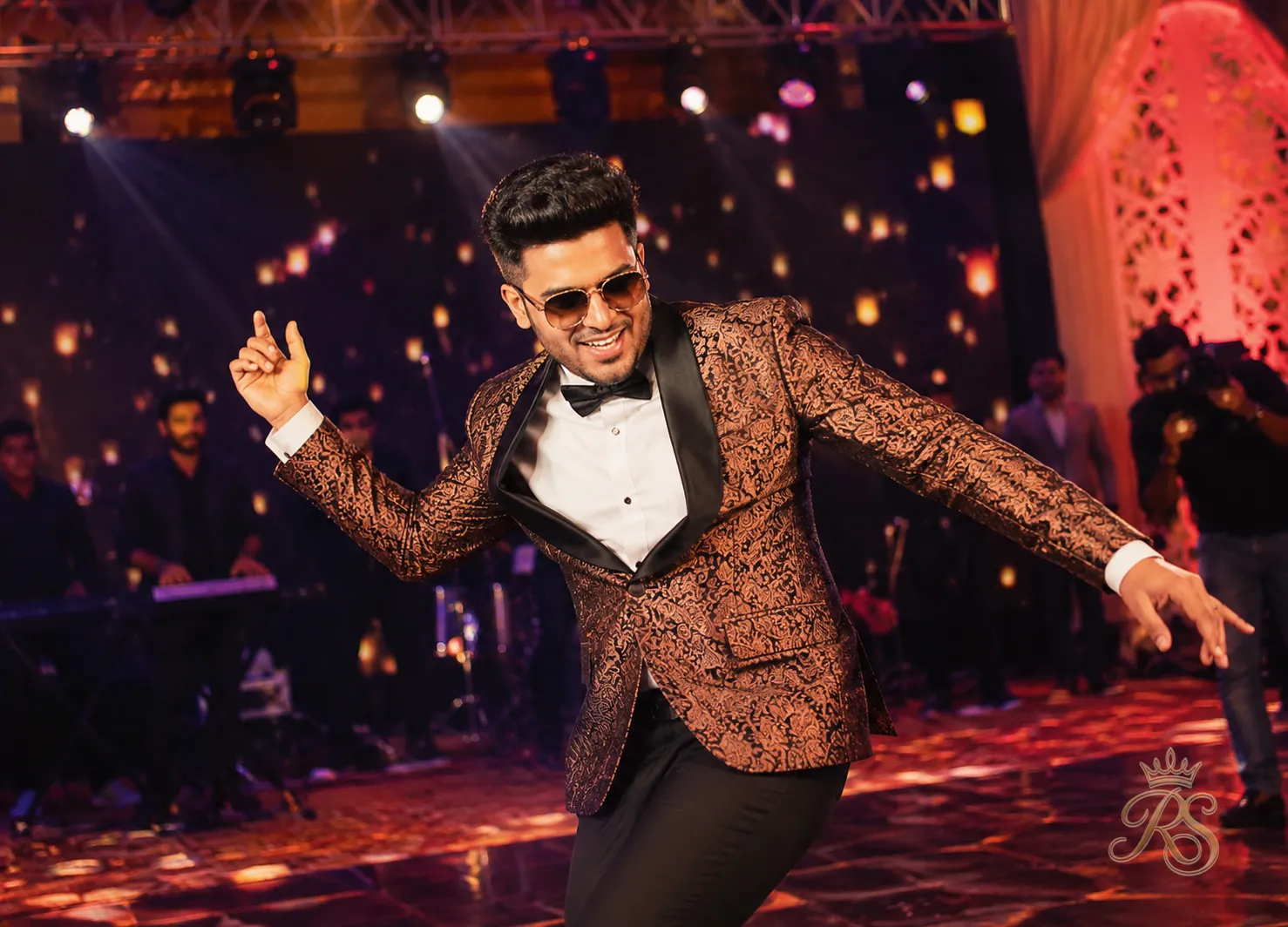
Prioritize movement: a fitted but non-restrictive jacket and trouser set works best for a night of dancing.
Jewel-tone jackets, printed silks, and even a well-cut indo-western bomber all work here — this is the function to save your boldest color or print for.
Wedding Ceremony Day Outfit
This is the outfit that appears in the most photographs for the rest of your life, so it deserves the largest share of both your budget and your fitting time.
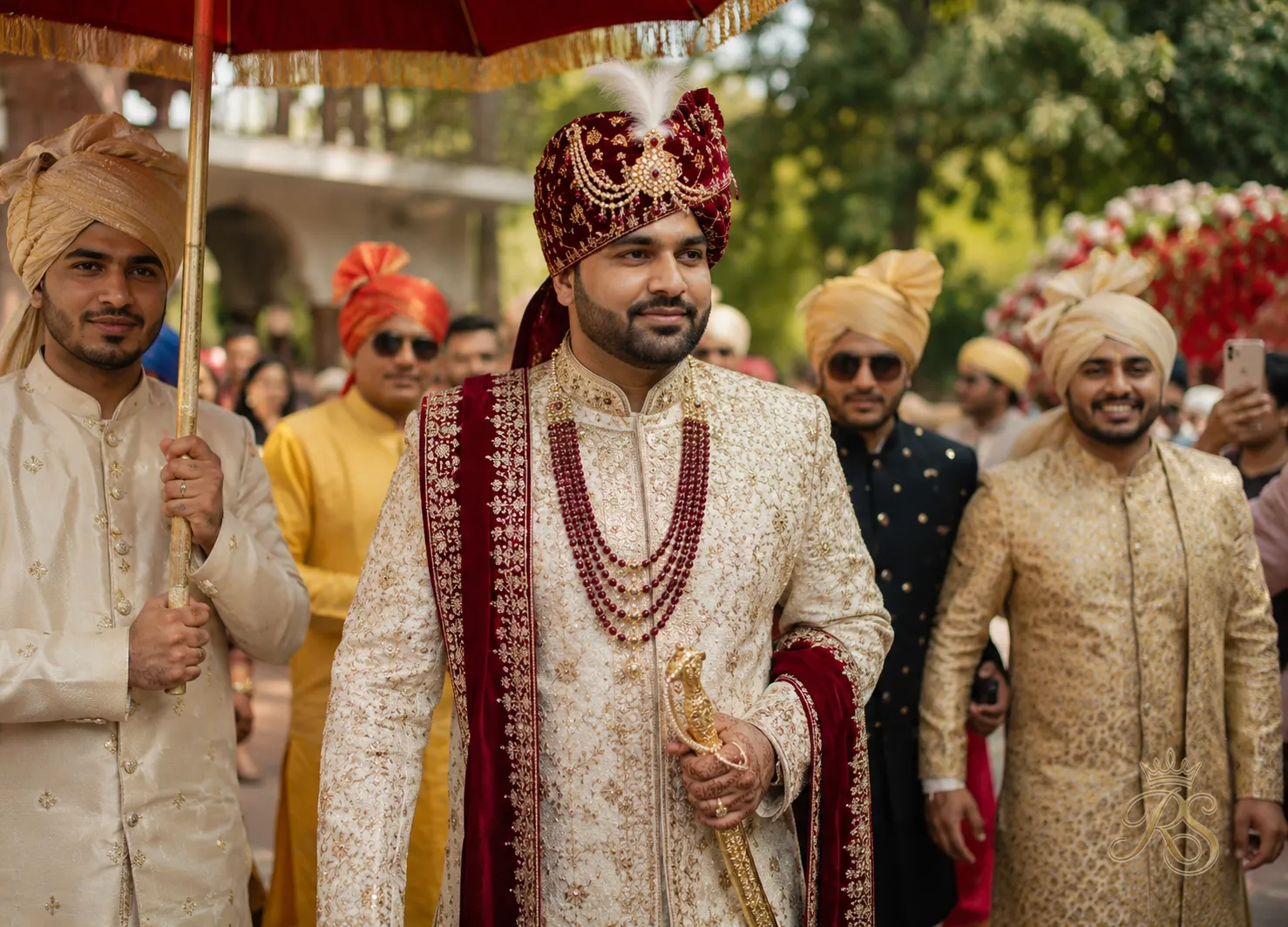
Go traditional: the wedding day is where most grooms choose their most elaborate, most formal outfit.
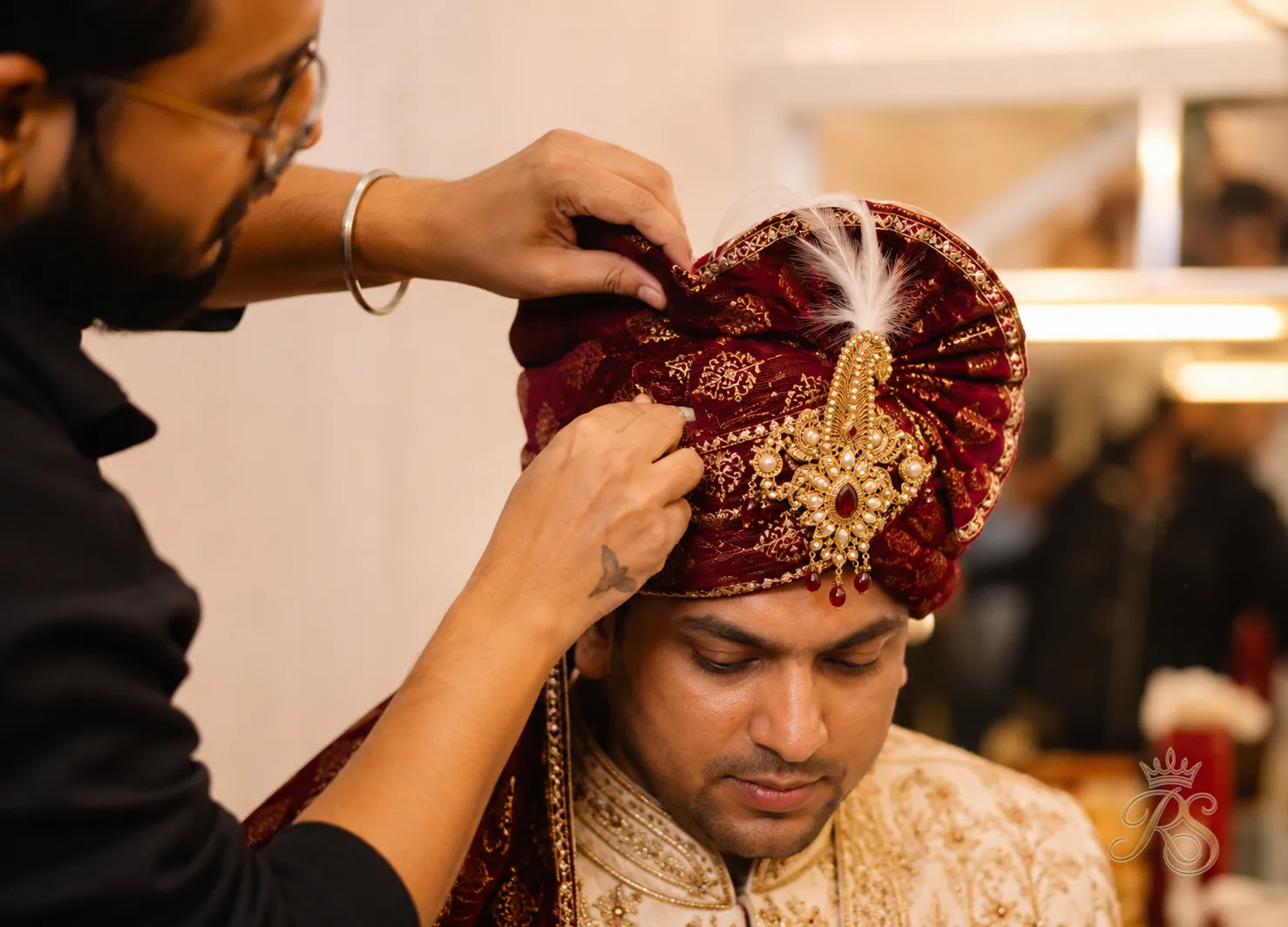
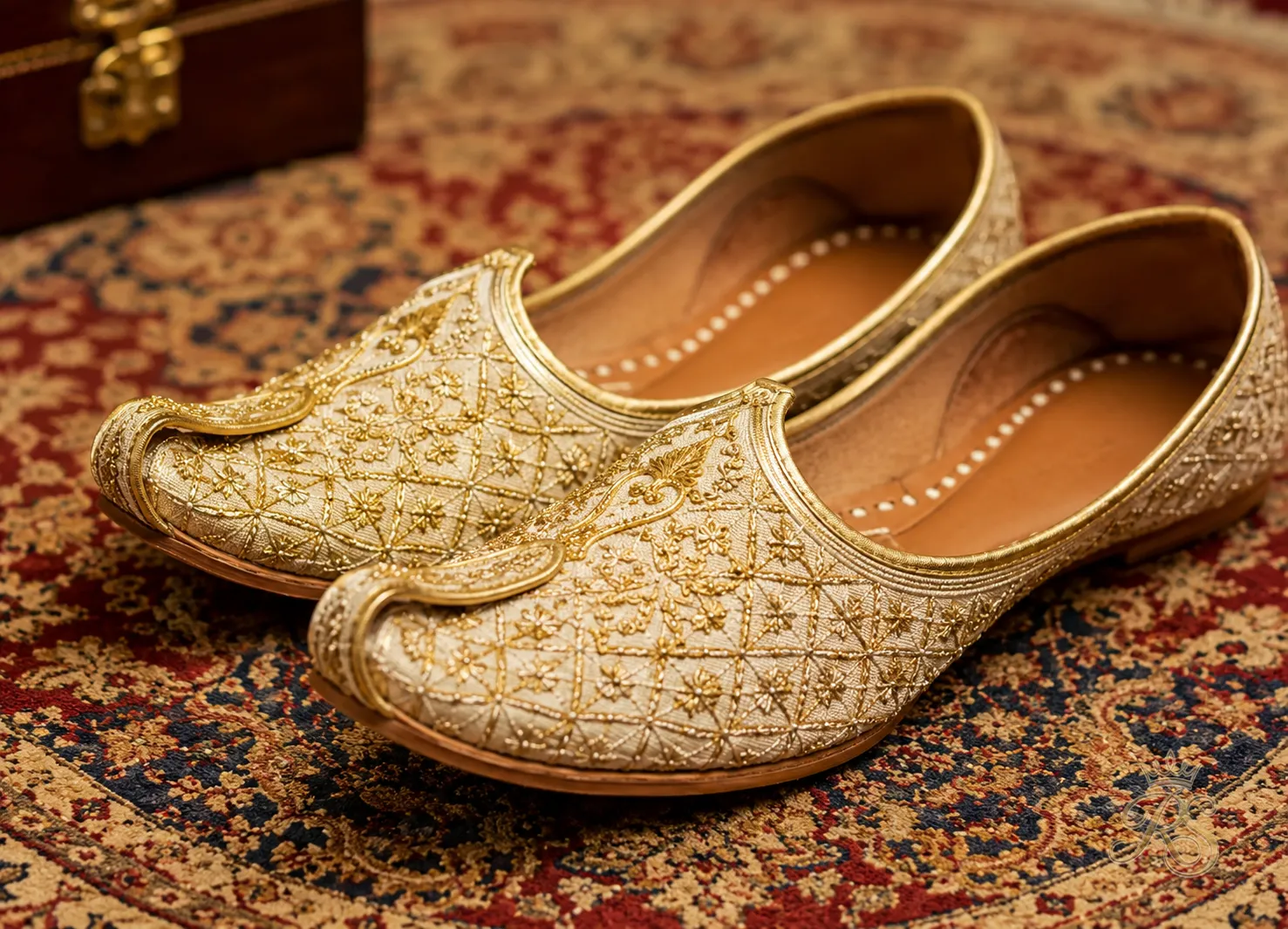
If your ceremony involves a turban or safa, have it tied by a professional the morning of rather than pre-tying it the night before — a fresh tie holds its shape far better through hours of rituals.
Reception Look: Suits & Tuxedos
The reception is the one function where Western formalwear genuinely fits the mood — a well-fitted suit or tuxedo signals the shift from ceremony to celebration.
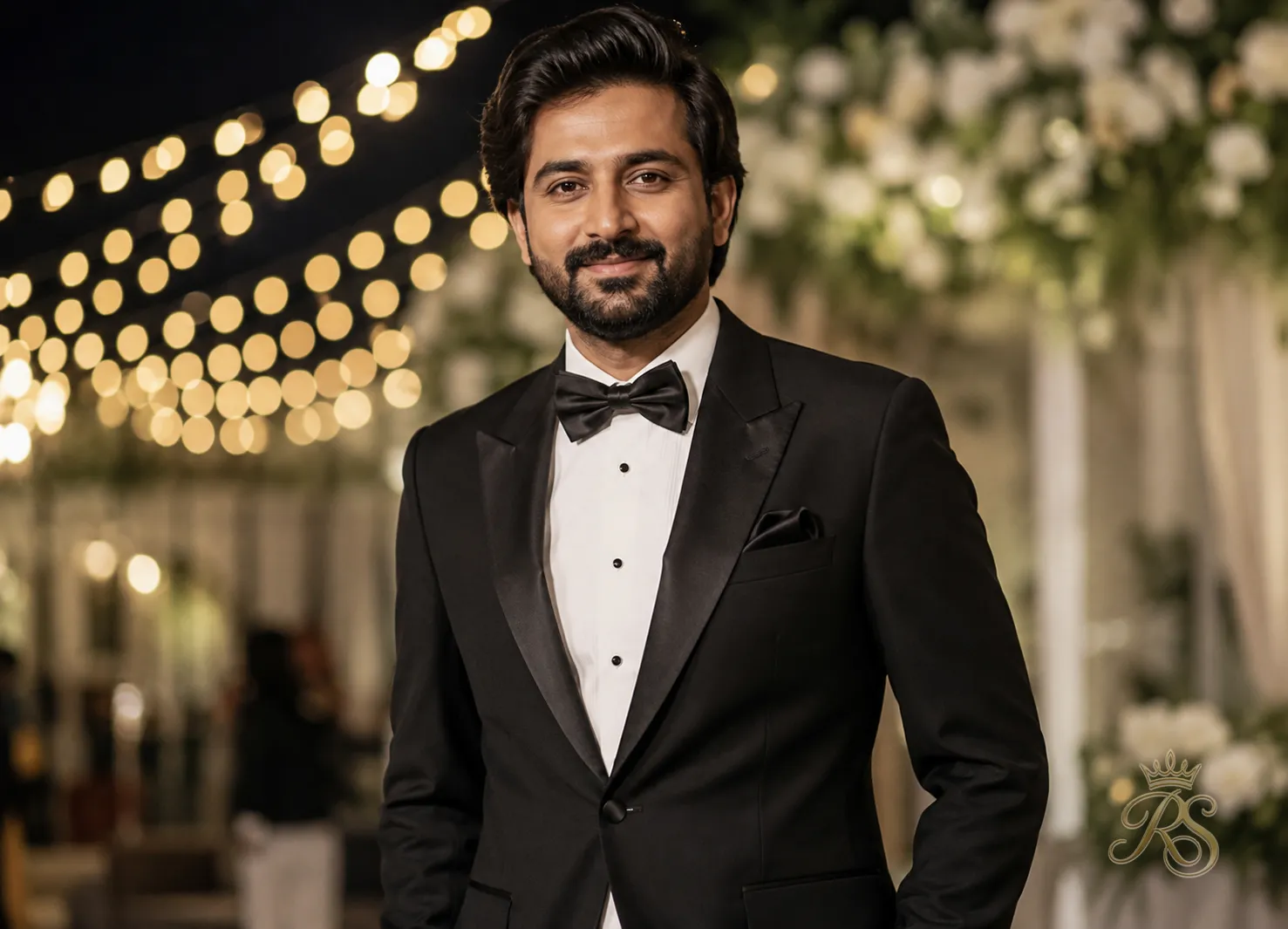
A classic black tuxedo remains the safest, most timeless reception choice.
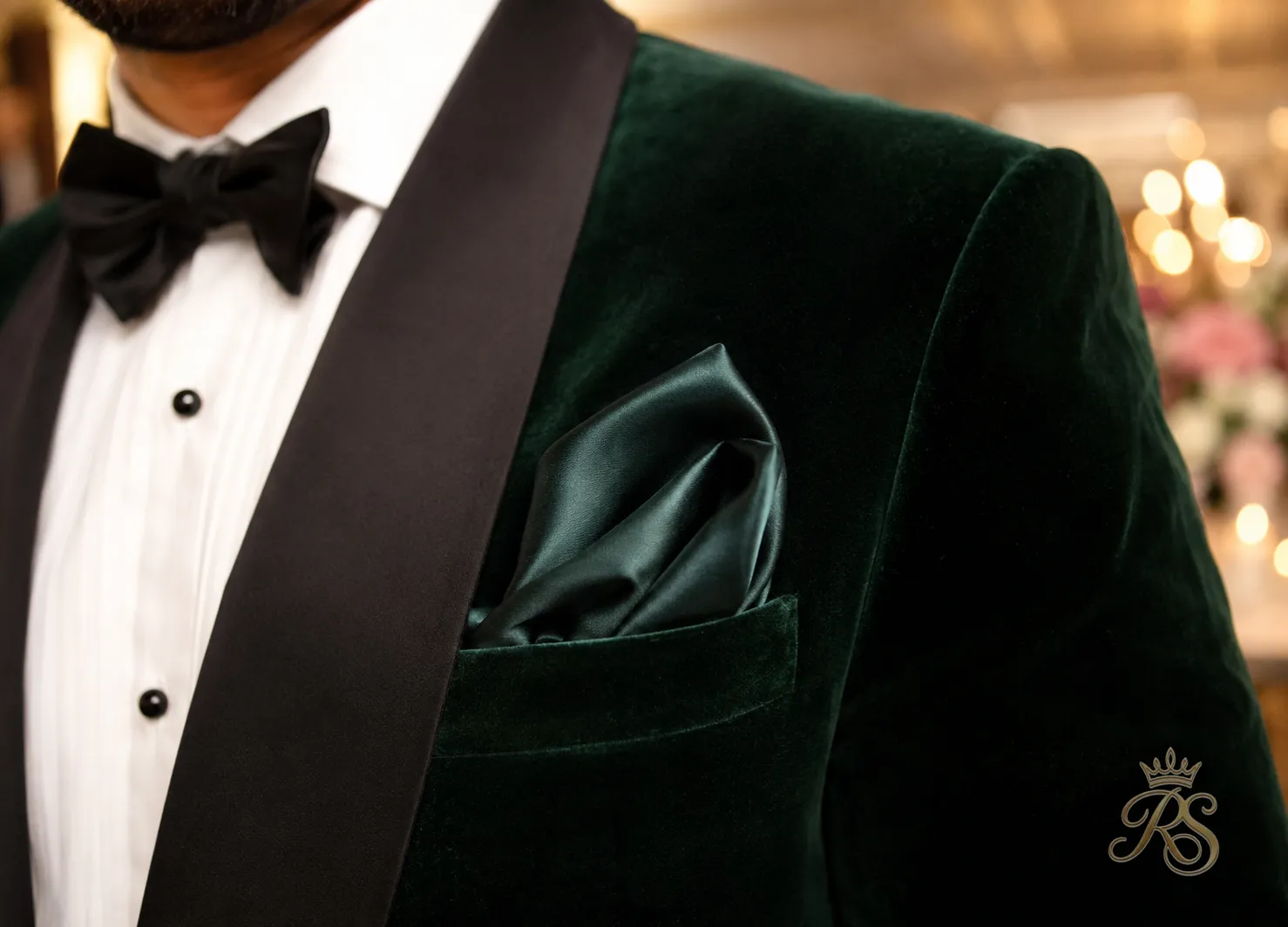
Velvet jackets in deep jewel tones are a popular alternative to plain black for evening receptions.
Coordinate the tuxedo or suit's color family with the bride's reception outfit rather than matching it exactly — complementary tones photograph better than identical ones.
Choosing Colors & Fabrics by Season
Fabric choice affects comfort far more than most grooms expect — a heavy silk sherwani that looks stunning in December photos can be genuinely uncomfortable at a June wedding.
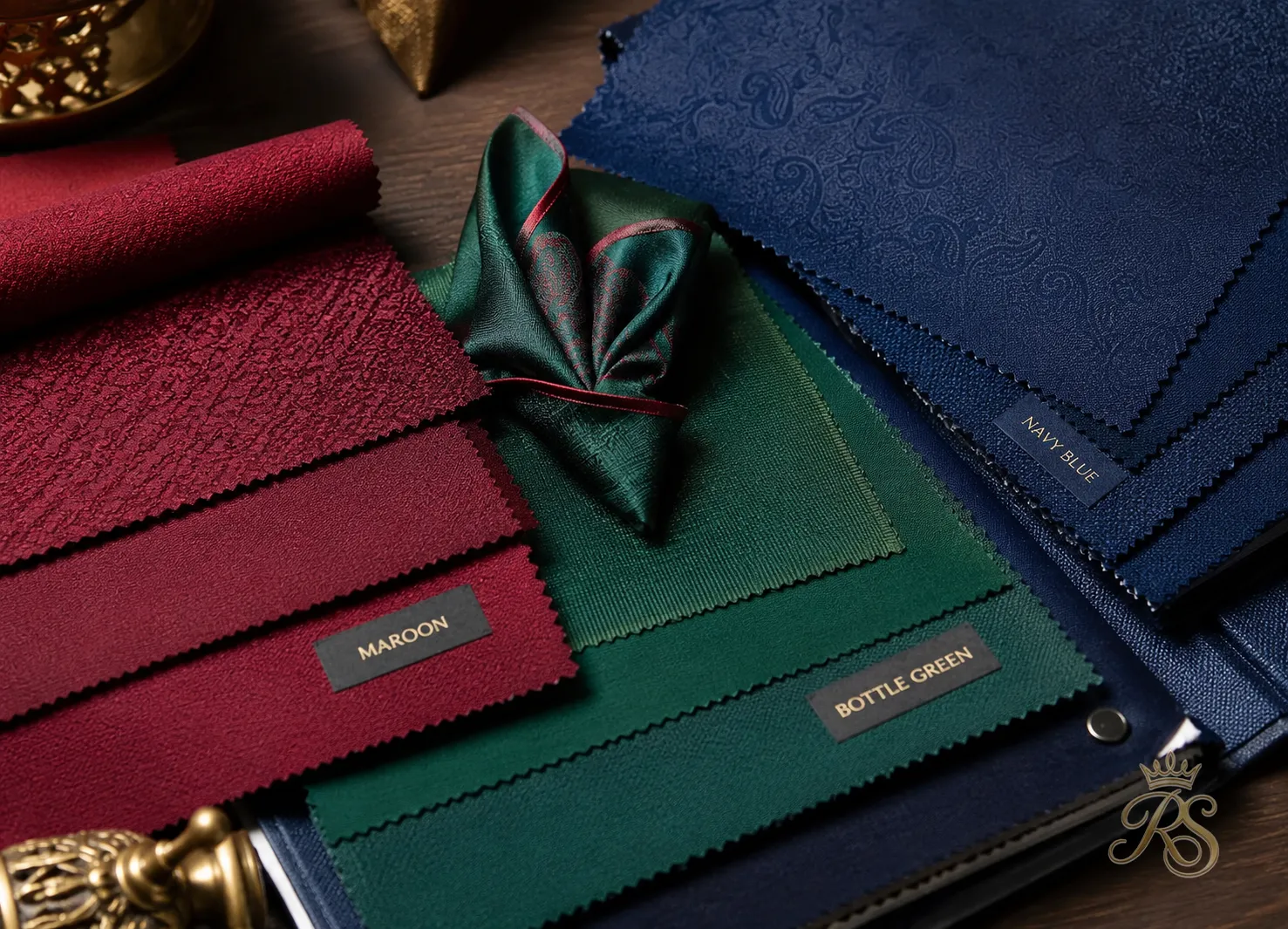
Deep jewel tones — maroon, bottle green, navy — stay flattering across every skin tone and lighting condition.
| Season | Best Fabrics | Notes |
|---|---|---|
| Winter (Nov–Feb) | Velvet, heavy silk, brocade | Layer confidently — richer textures photograph beautifully in cooler light |
| Summer (Mar–Jun) | Cotton silk, linen, chanderi | Prioritize breathability over embroidery weight |
| Monsoon (Jul–Sep) | Cotton, light silk blends | Avoid fabrics that show water spots easily |
| Festive / Any season | Raw silk, tussar | A reliable middle ground for most Indian climates |
Accessorizing the Groom's Outfit
The right accessories can lift a simple outfit far more than any embroidery — a well-chosen stole, brooch, or pocket square often does more visual work than people expect.
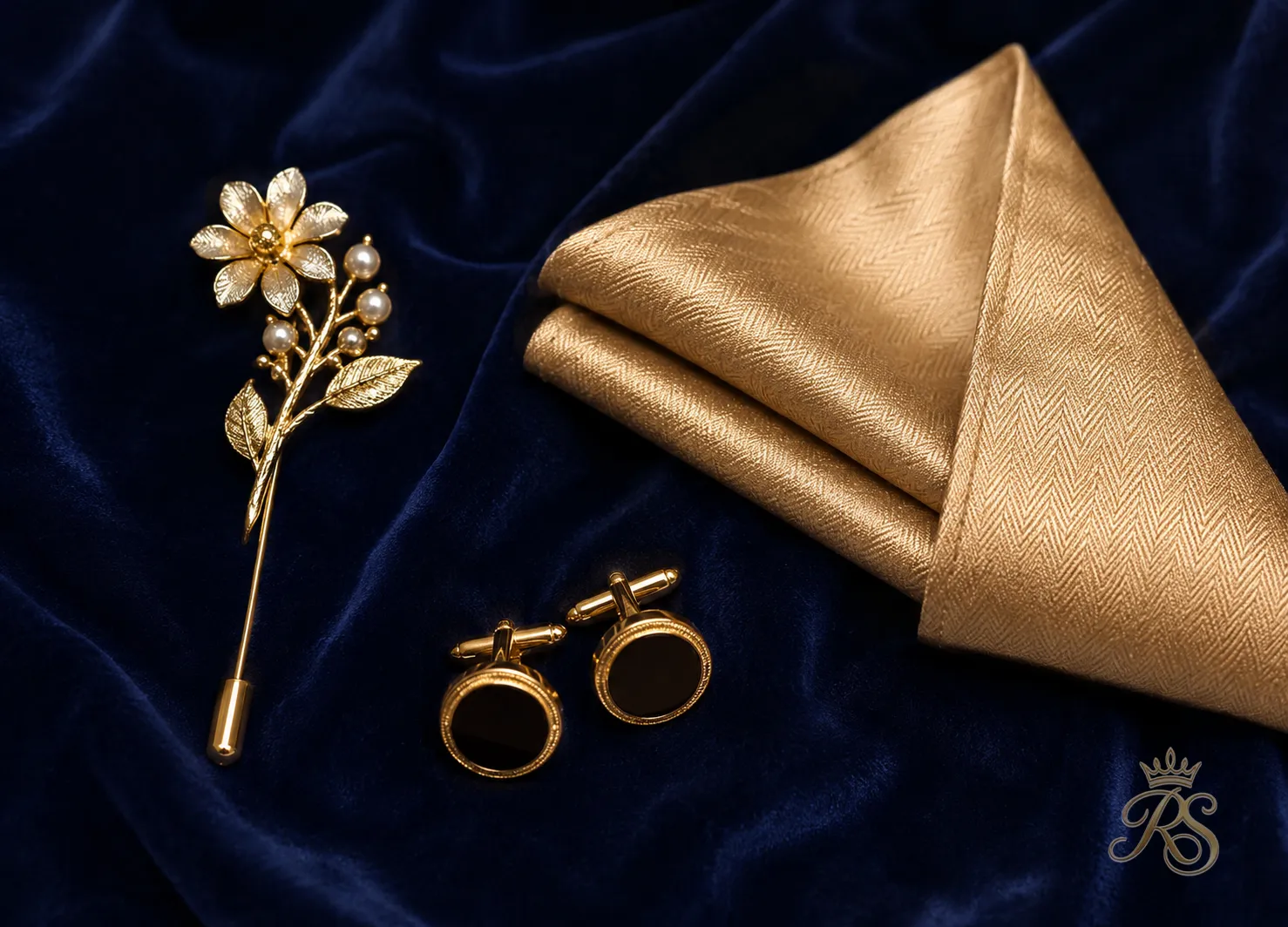
Keep accessories to two or three pieces per outfit — more starts to compete with the outfit itself.
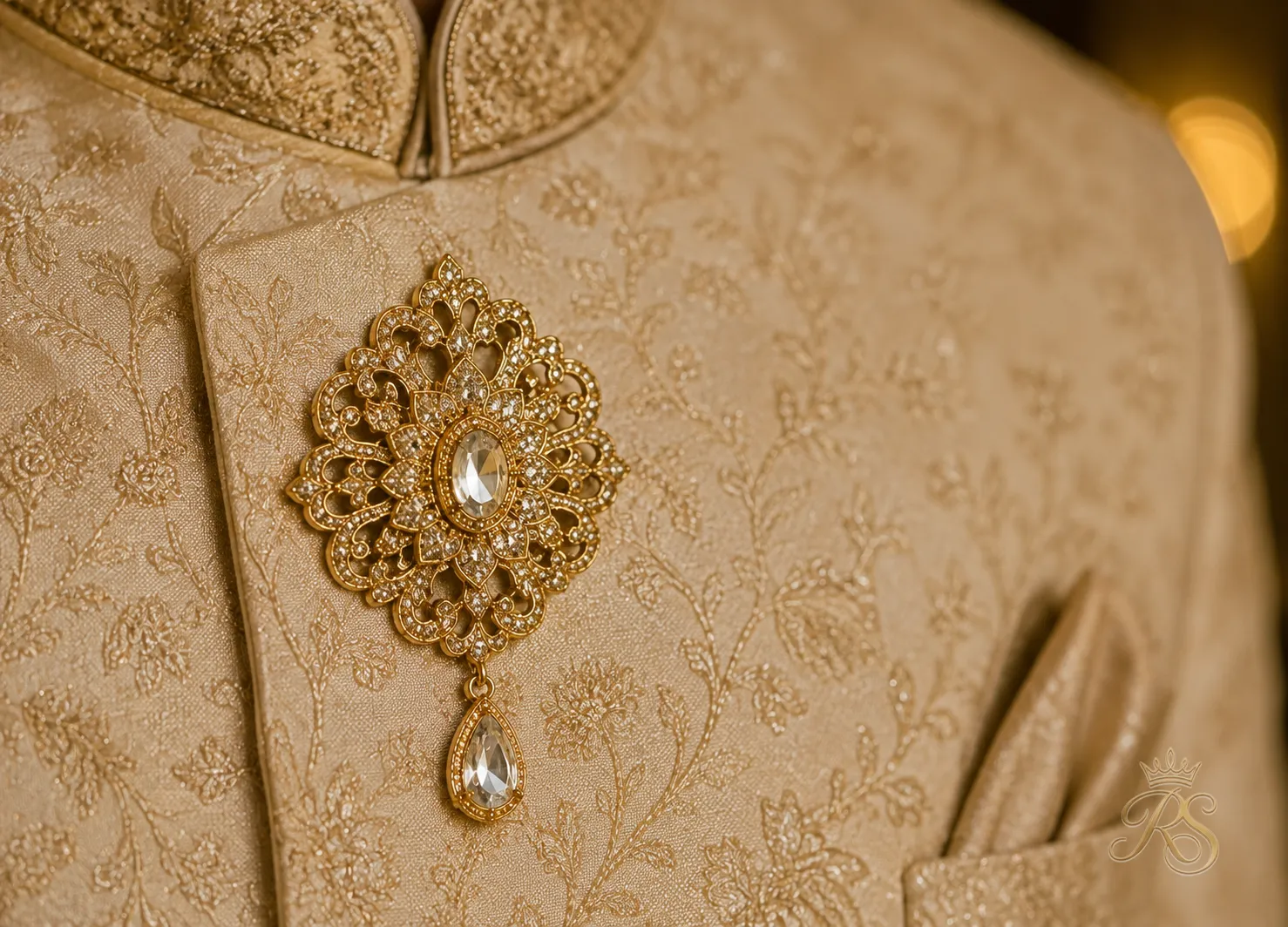
A single statement brooch works better than multiple smaller pieces.
- A silk pocket square in a complementary (not matching) color adds contrast without overpowering
- Keep jewelry minimal — one ring and, at most, a subtle chain
- Choose a watch that fits the outfit's formality, not just your everyday choice
Footwear Guide for Every Ceremony
Footwear gets overlooked until the day itself, but the wrong shoe can be genuinely painful after six or seven hours of standing and walking between functions.
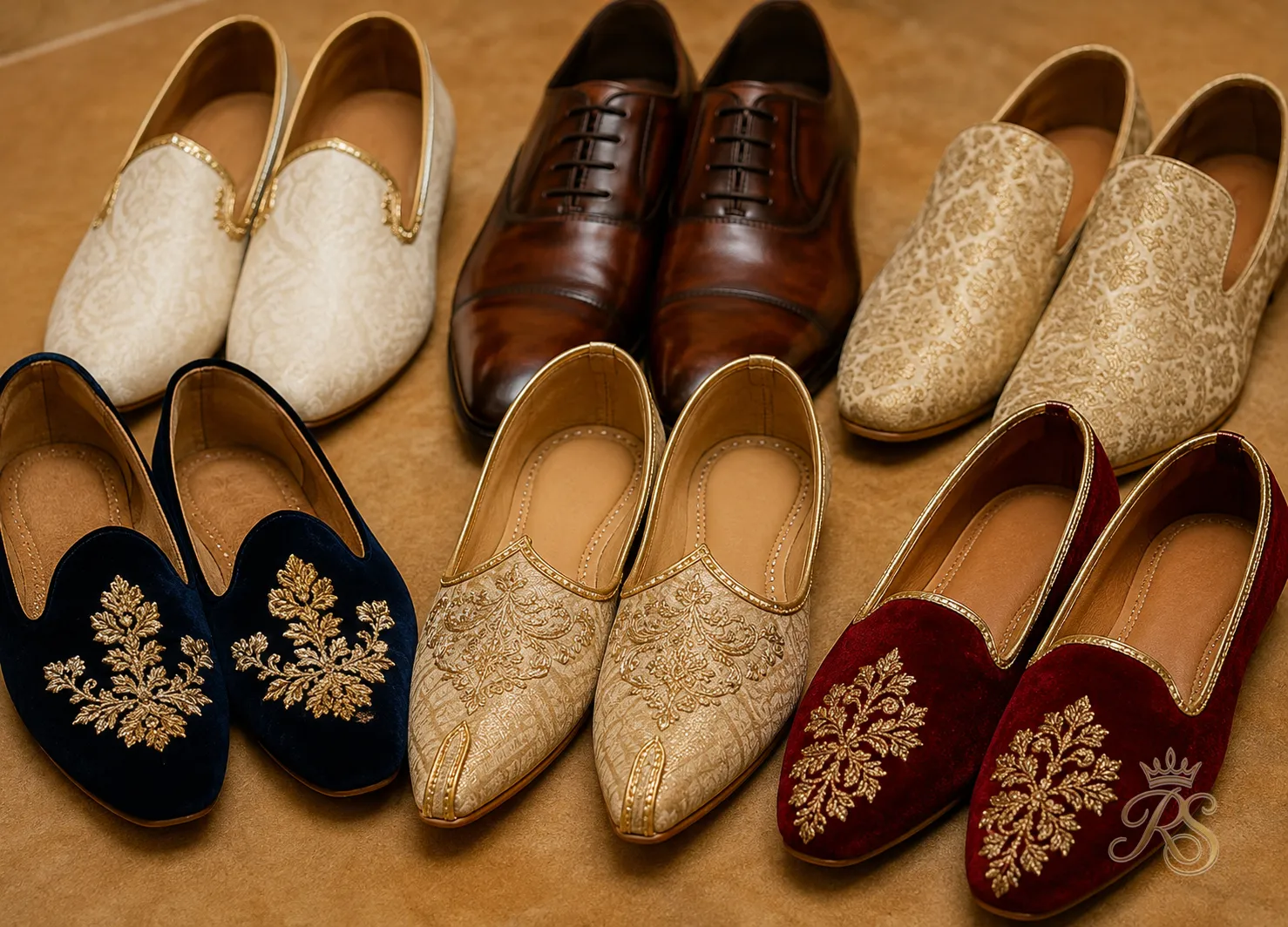
Break them in early: wear new mojaris or oxfords around the house for at least a week before the wedding.
Mojaris and juttis suit traditional outfits best, while formal oxfords or brogues are the right call for a suit or tuxedo — never mix the two formality levels.
Regional Groom Wear Traditions
India's regional wedding traditions each bring a distinct groom silhouette, often rooted in specific fabrics, drapes, and headwear that have stayed consistent for generations.
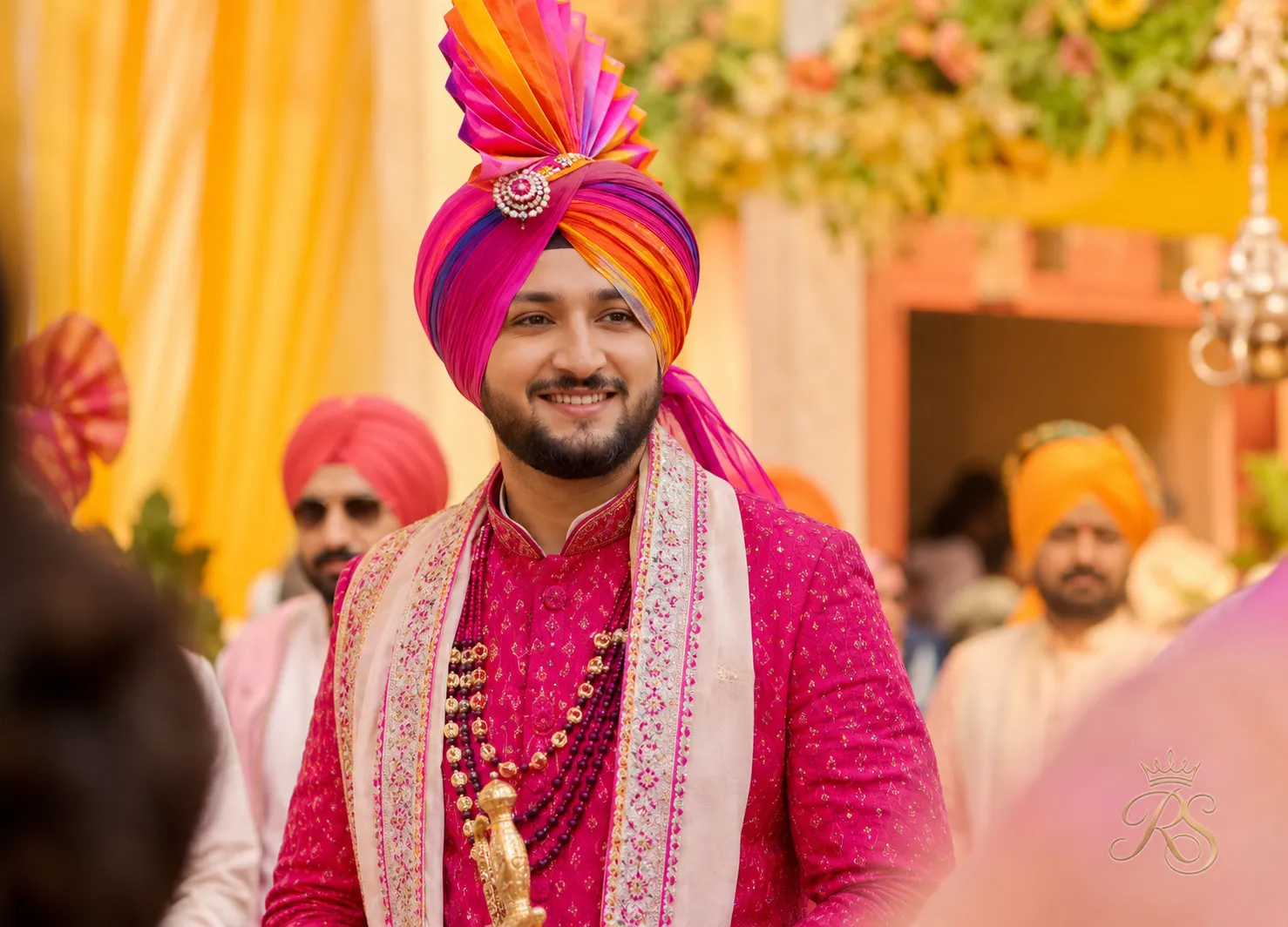
Kurta with Pagri
A vibrant kurta paired with a tall, colorful pagri turban is the signature Punjabi groom look.
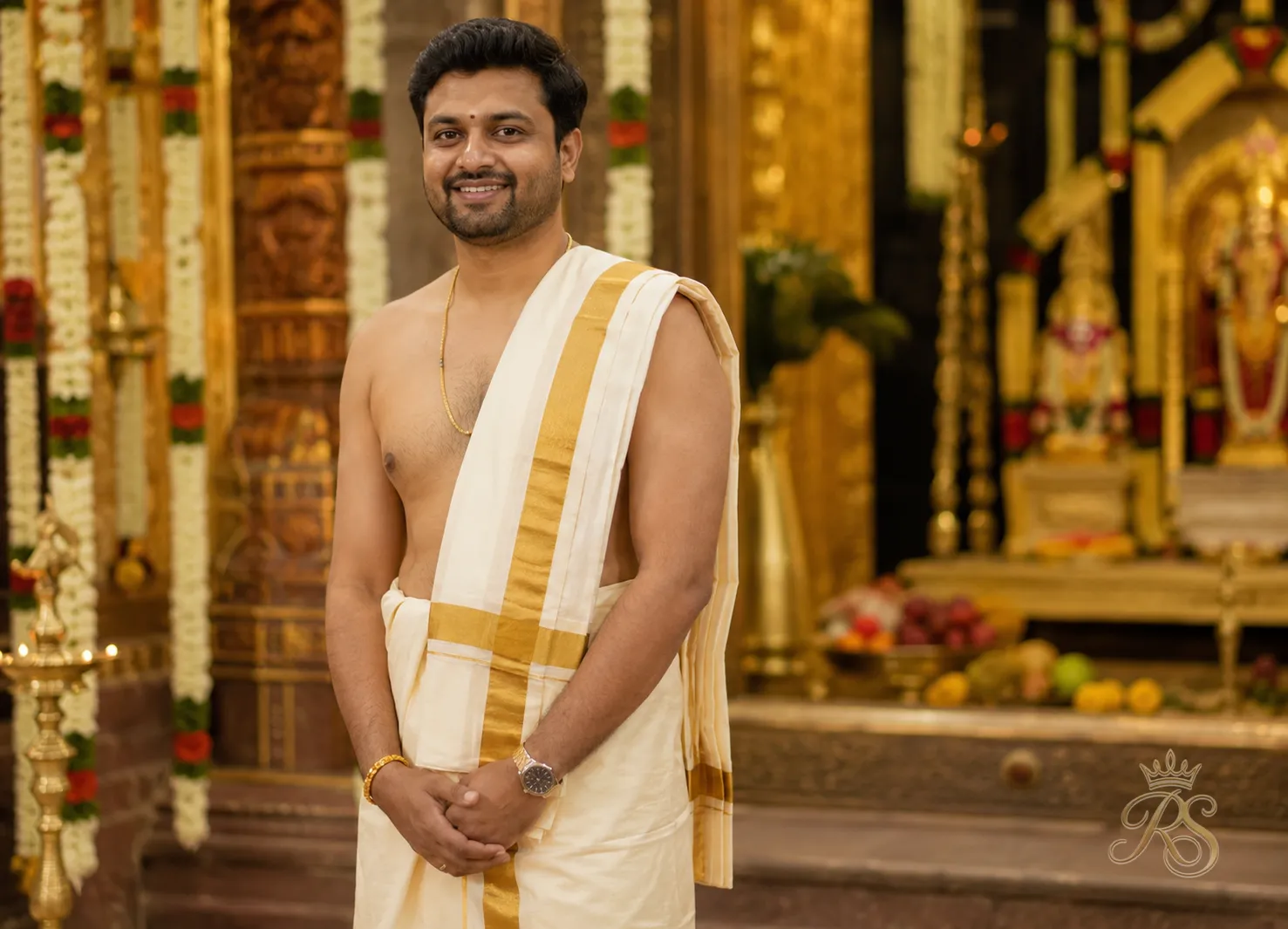
Veshti & Angavastram
A silk veshti draped with an angavastram over fitted upper wear remains the traditional South Indian choice.
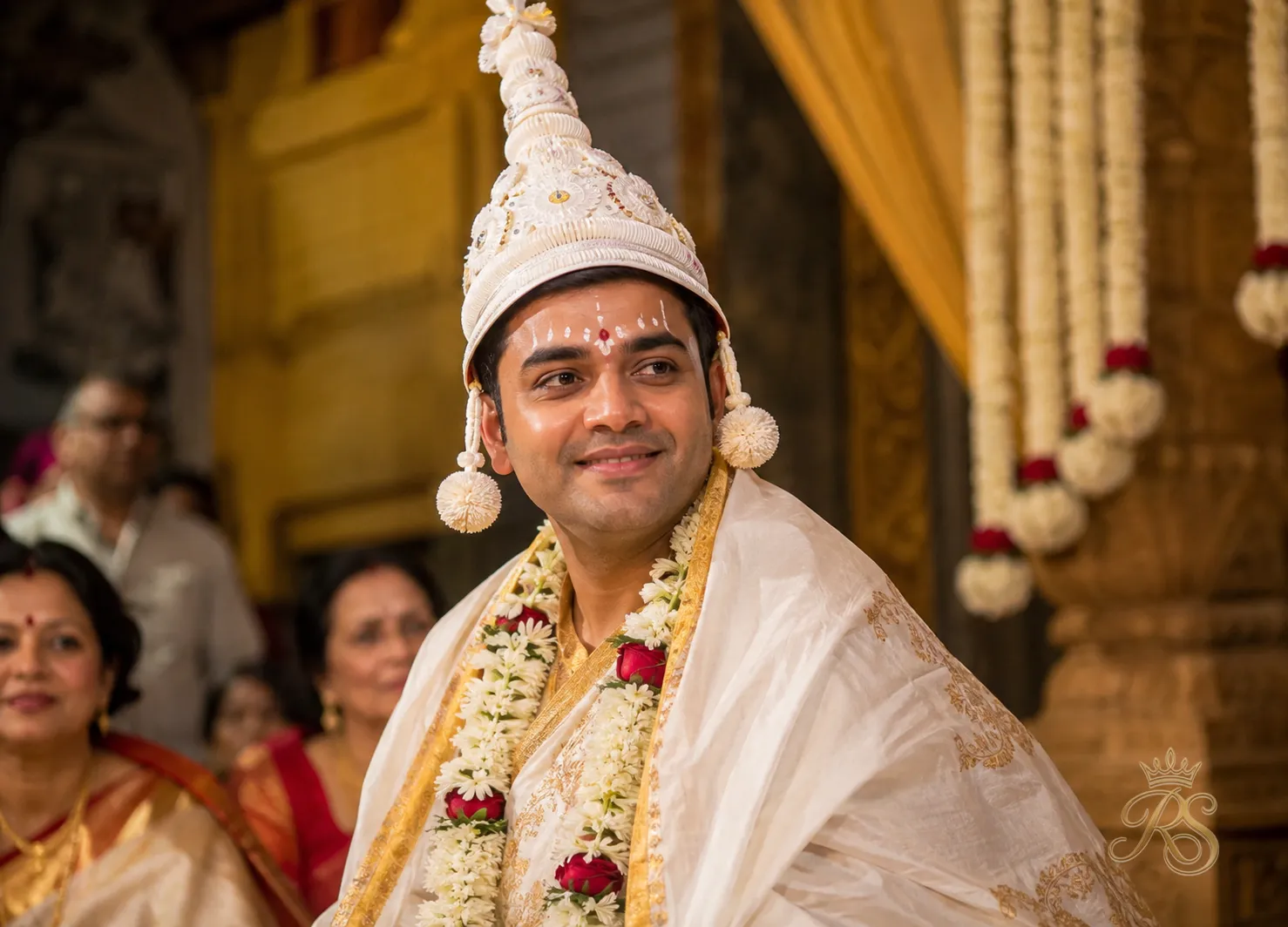
Dhoti with Topor
A white and gold dhoti paired with the iconic conical topor headdress defines the Bengali groom's look.
Budgeting for the Groom's Wardrobe
Groom's wardrobes are easy to underbudget for, since the focus so often lands on the bride's outfits — but five or six quality functions add up fast.
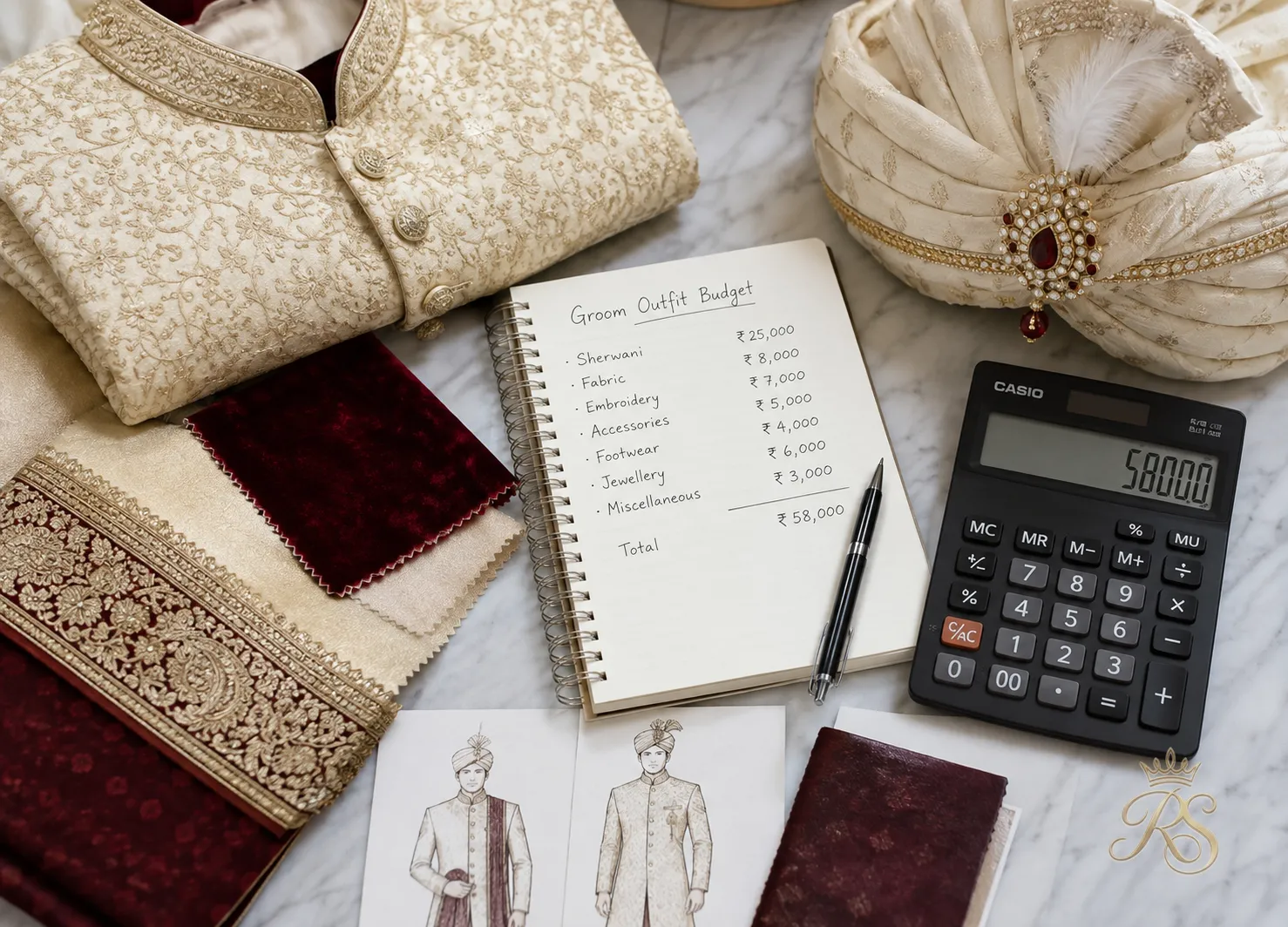
Allocate by function: the wedding day and reception outfits typically deserve the largest share.
| Function | Suggested Share | Why It Matters |
|---|---|---|
| Wedding day outfit | 30–35% | Most photographed look and highest embroidery/fabric cost |
| Reception suit/tuxedo | 20–25% | Formal tailoring costs more per garment than festive wear |
| Sangeet & mehndi outfits | 20% | Split across two lighter, more affordable functions |
| Accessories & footwear | 10–15% | Often forgotten, but adds up across multiple outfits |
| Alterations & buffer | Keep 10% aside | Covers last-minute fitting adjustments |
Common Mistakes to Avoid
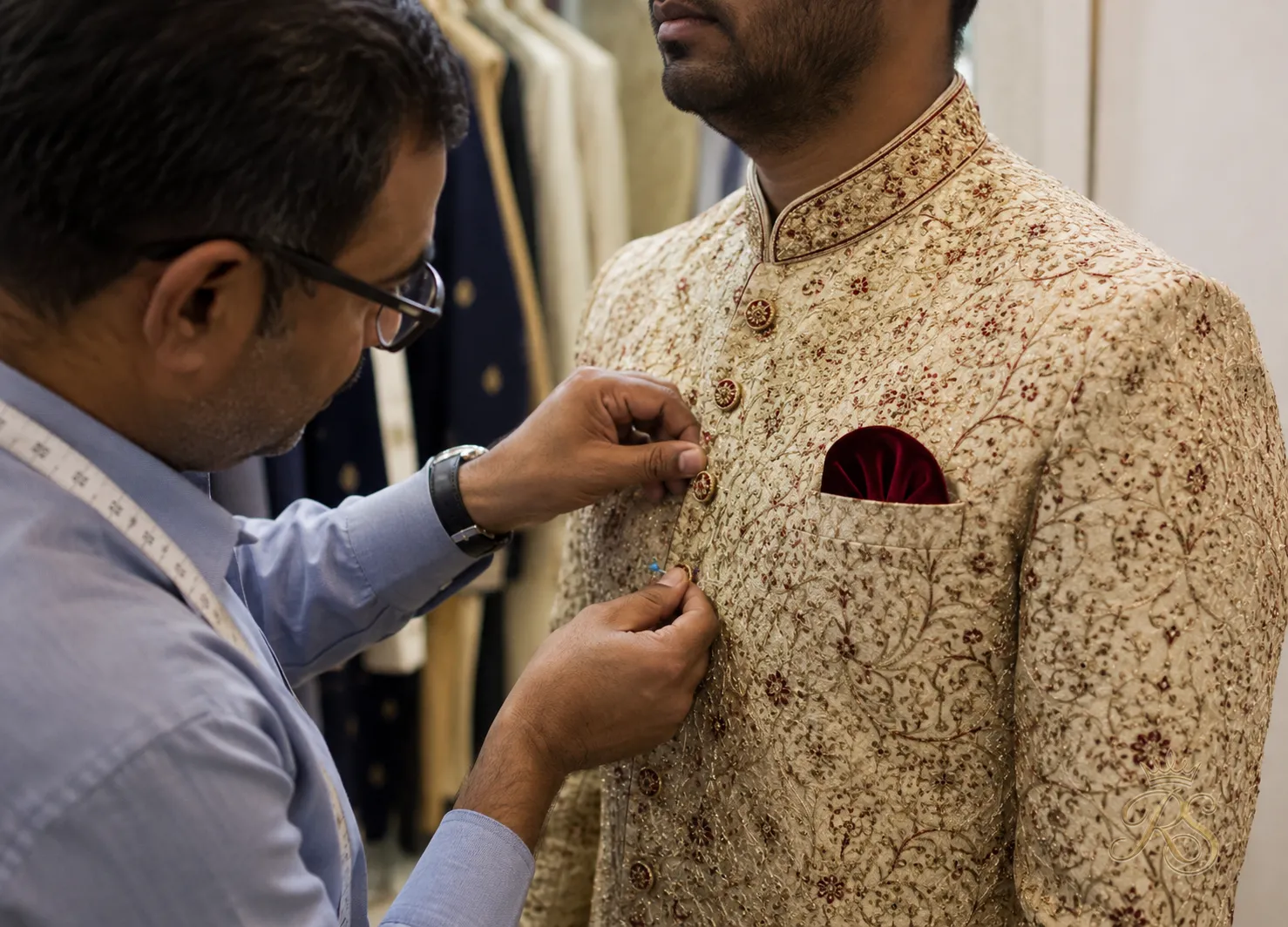
A proper fitting two to three weeks out catches problems before it's too late to fix them.
- Ordering the outfit without a proper trial fitting, especially for heavily embroidered pieces
- Choosing embroidery weight or fabric without considering the season or venue temperature
- Skipping a second fitting after the first round of alterations
- Buying shoes the week of the wedding instead of breaking them in beforehand
Final Thoughts
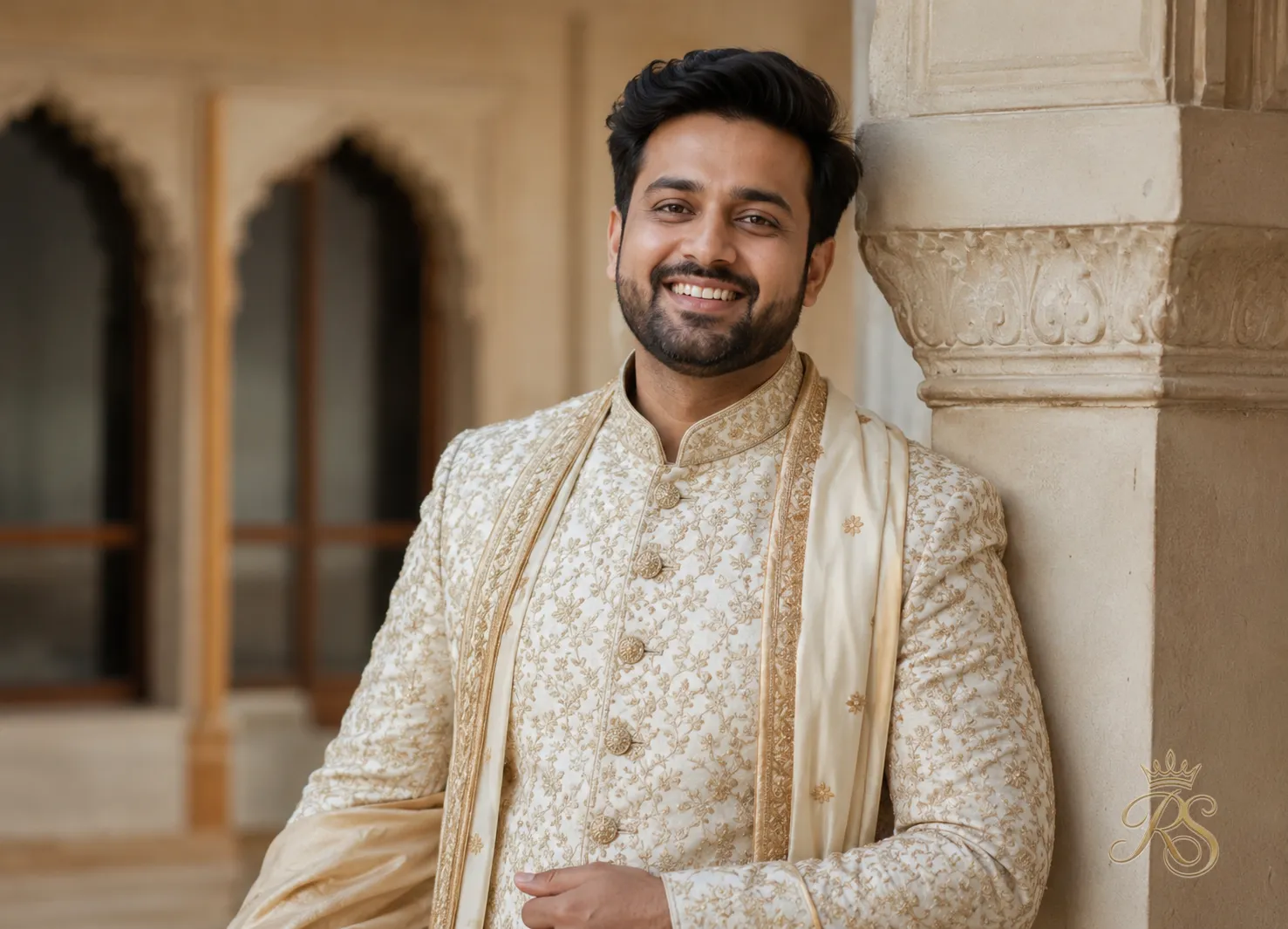
The one you'll remember: comfort and confidence photograph better than any embroidery detail.
The best groom's wardrobe isn't the most expensive one — it's the one planned function by function, fitted properly, and comfortable enough to actually enjoy wearing. Start early, prioritize the wedding day and reception looks, and let the smaller functions be where you have fun with color and fusion pieces.
"A groom's outfit should feel like him on his best day — not like a costume he's wearing for the cameras."