A bridal lehenga can be breathtaking on the hanger and still feel completely wrong the moment it's worn — if the size isn't right. Unlike everyday clothing, a lehenga has three separate pieces that each need their own fit check: the choli, the skirt, and the dupatta. This guide walks through exactly how to measure yourself, read a size chart, judge a fit at the trial, and avoid the sizing mistakes that send brides into a last-minute alteration panic.
Why Getting the Size Right Matters So Much
A wedding lehenga is worn for hours at a stretch — through rituals, photographs, and dancing — so a fit that's slightly off doesn't just look wrong, it becomes genuinely uncomfortable by the end of the day.
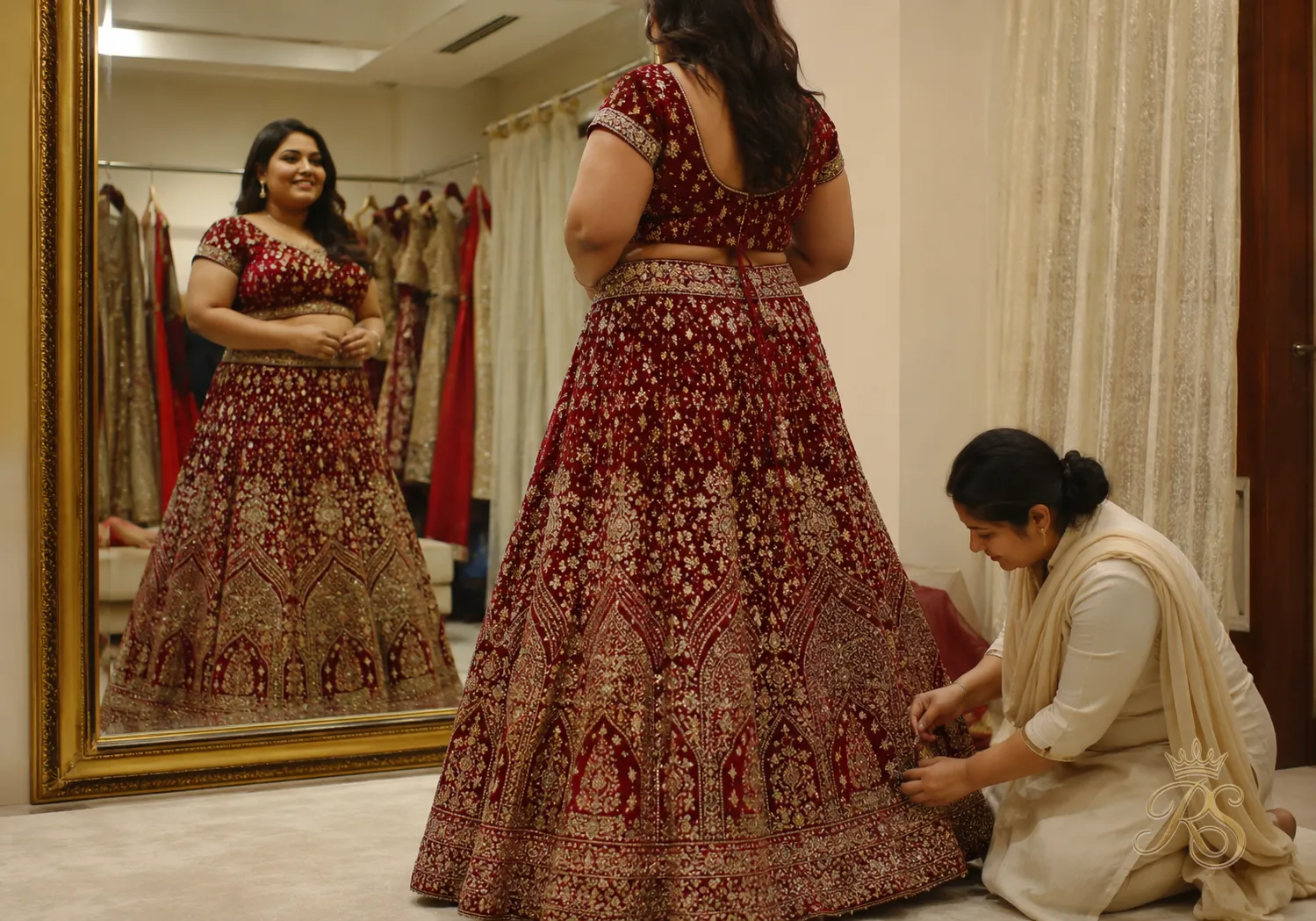
Fit over size: a size label matters far less than how the piece actually sits on your body.
Unlike western sizing, most Indian designer lehengas run on their own scale, which means the label size can be almost meaningless without an actual measurement comparison.
Never order a bridal lehenga by size label alone, especially online. Always cross-check the brand's actual measurement chart in inches or centimeters against your own numbers first.
Understanding the Three Lehenga Components
A lehenga isn't one garment — it's three, and each has its own fit considerations. Knowing what to check on each piece makes the rest of this guide much easier to follow.
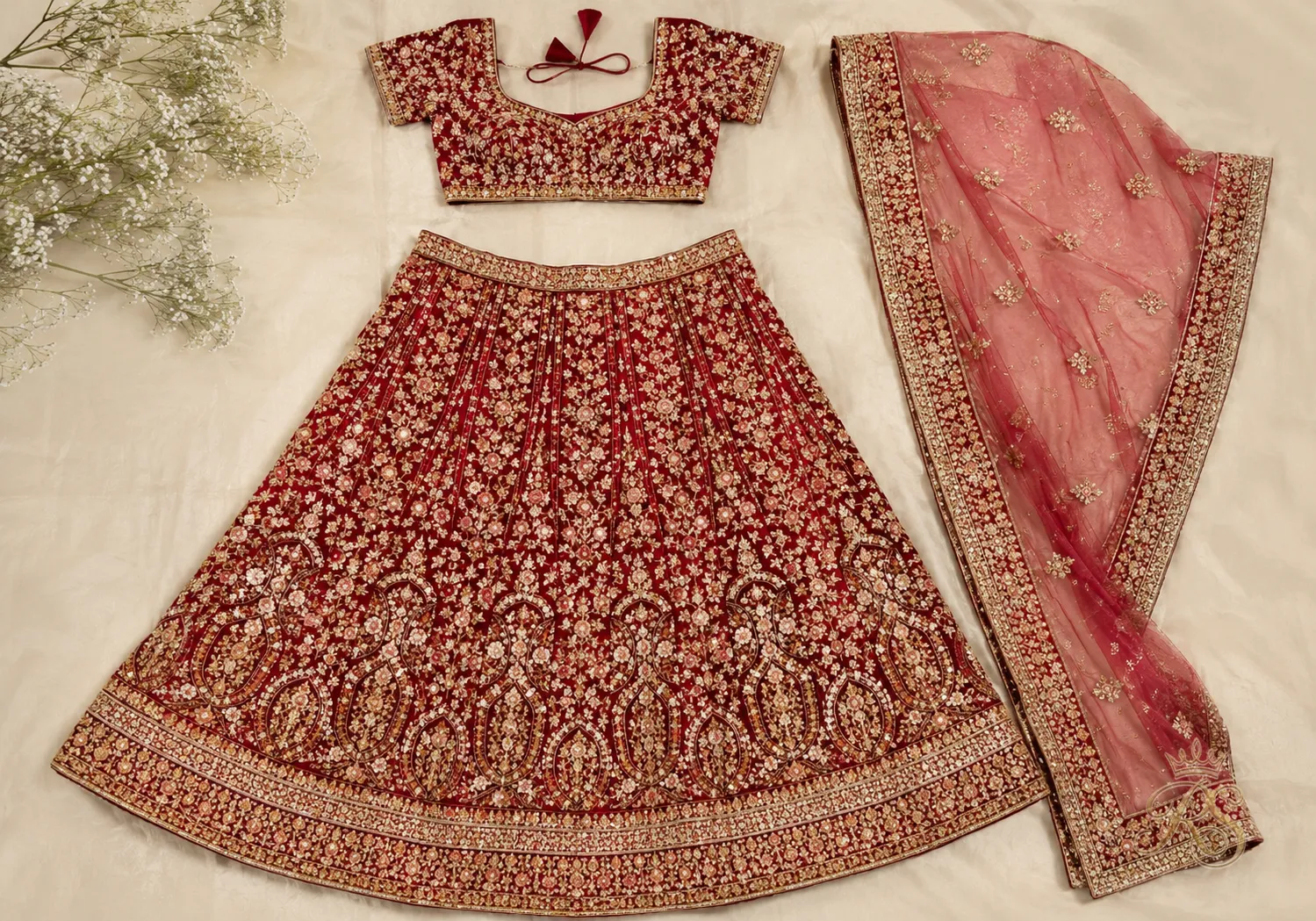
Three pieces, three fits: the choli, the ghera skirt, and the dupatta.
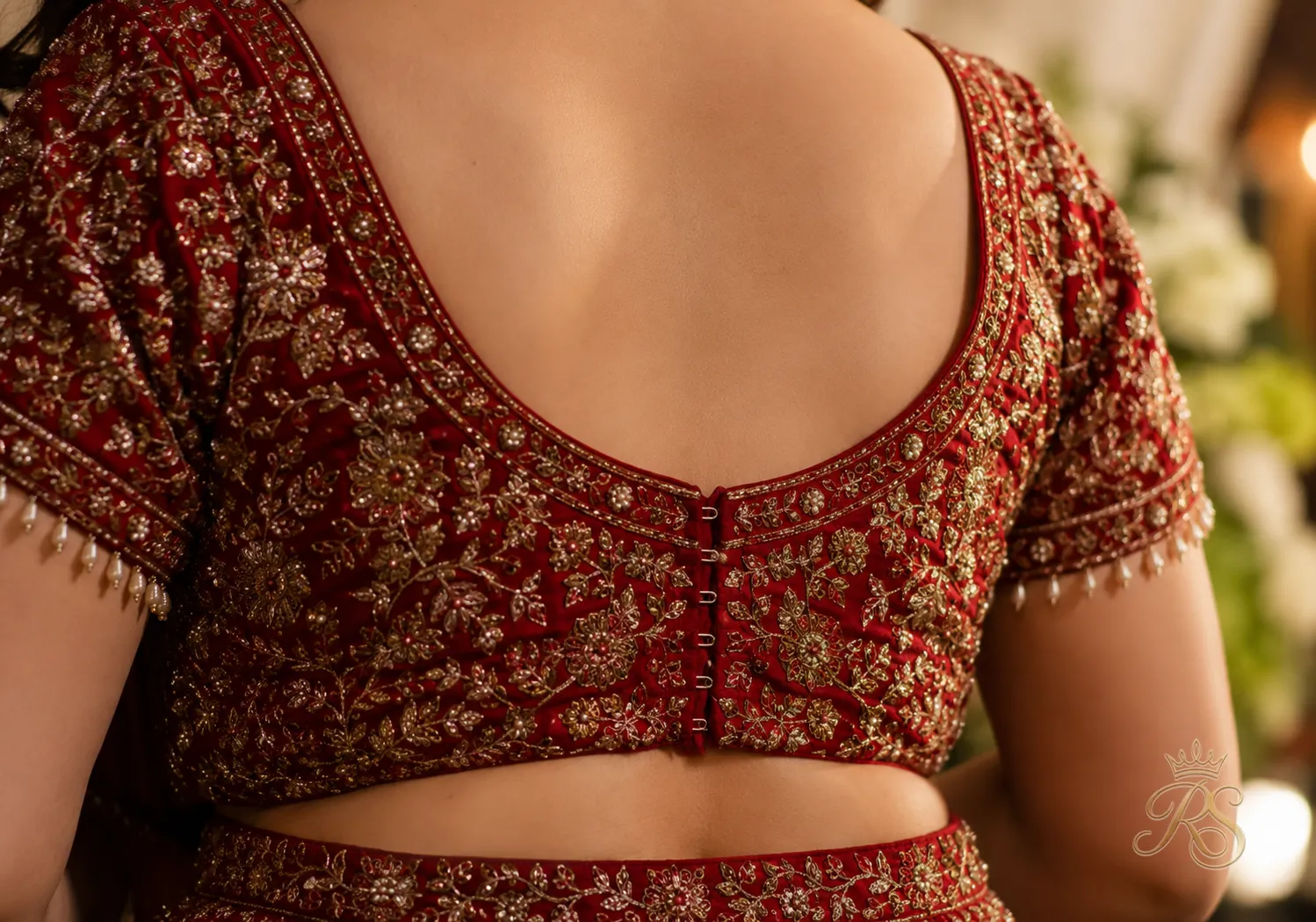
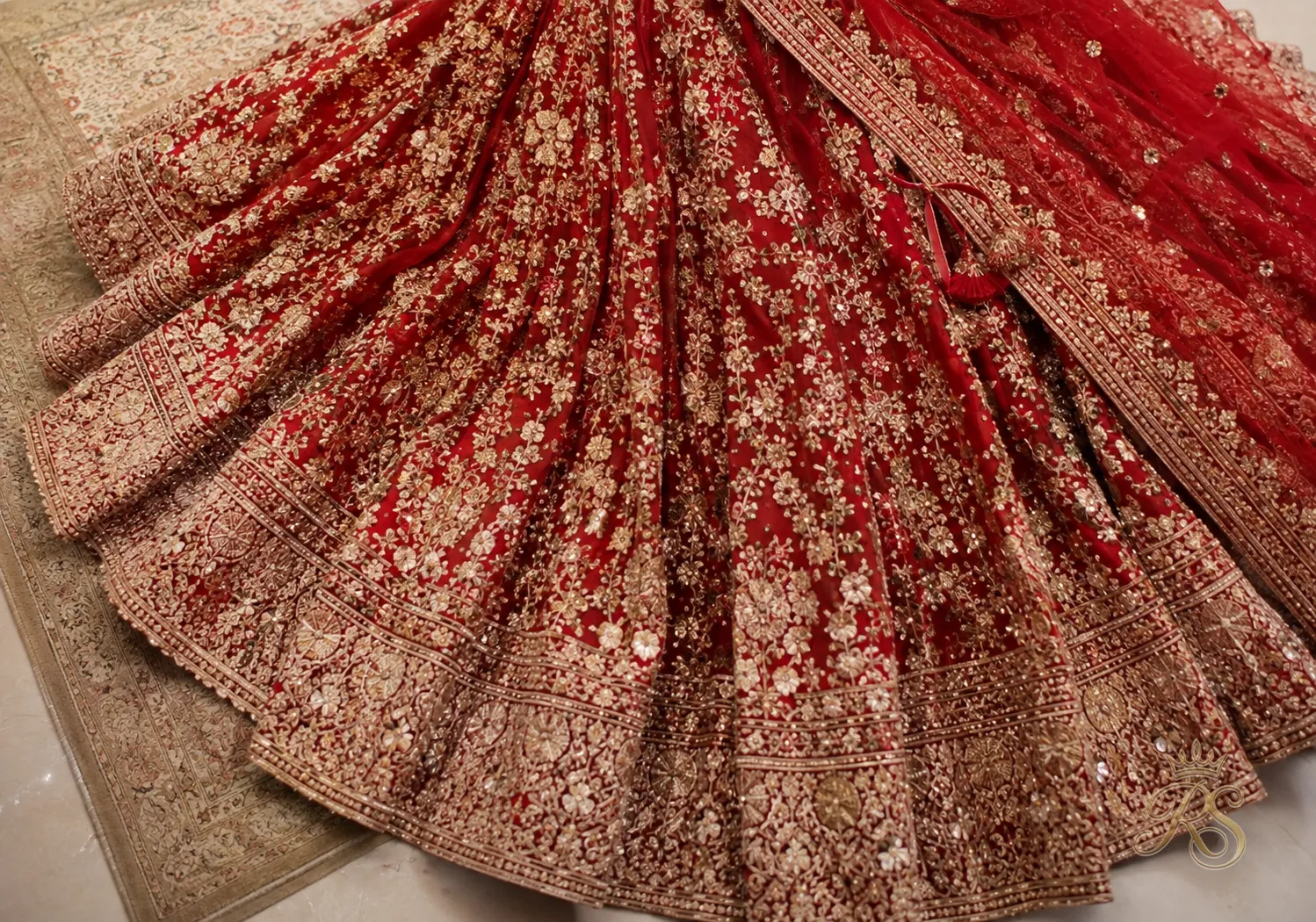
- Choli — the fitted blouse, usually the piece most sensitive to sizing errors
- Ghera (skirt) — the flared bottom, sized by waist, hip, and length
- Dupatta — rarely needs sizing, but its weight affects overall comfort
Taking Accurate Body Measurements
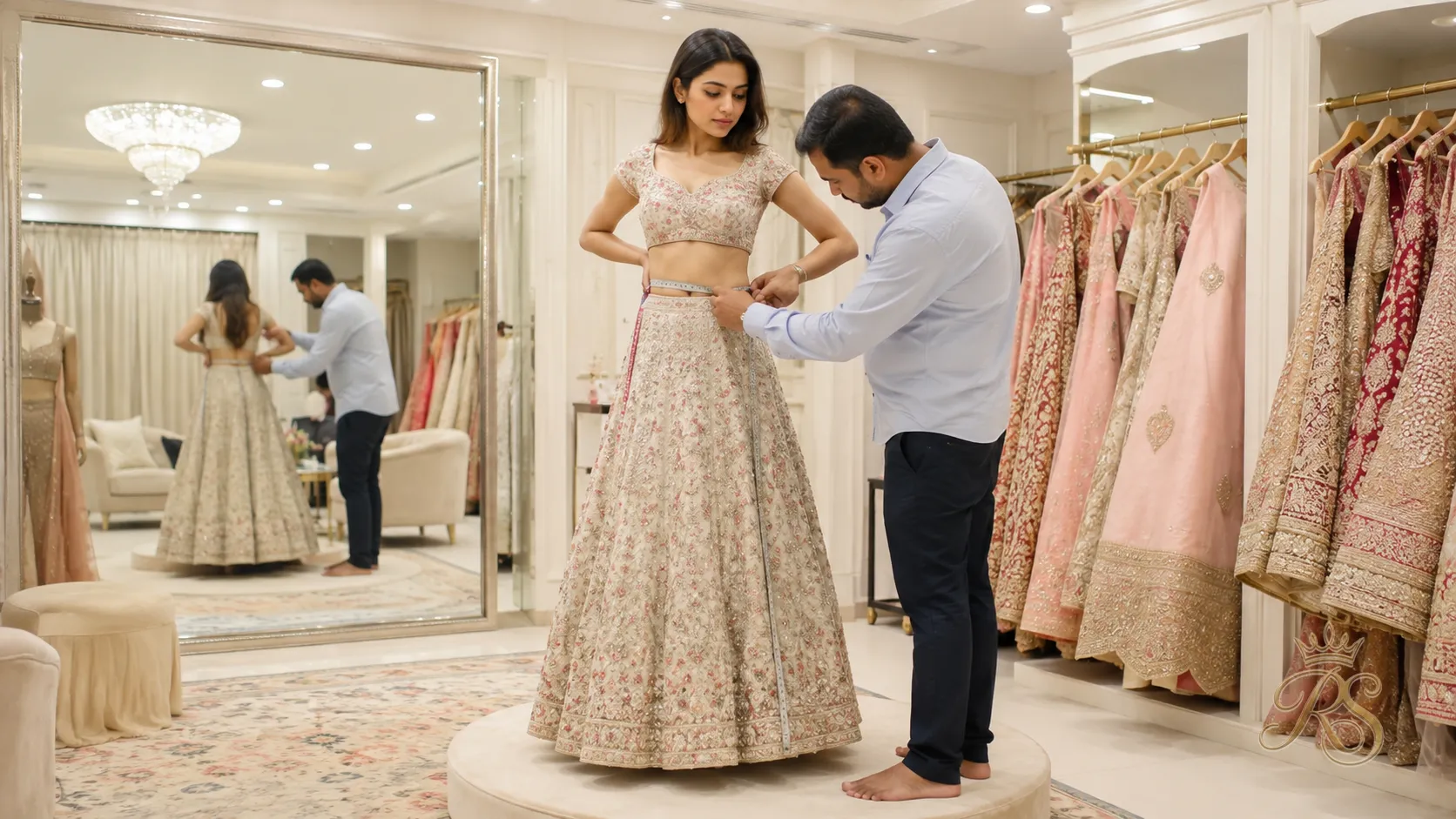
Every good fit starts with accurate numbers. Use a soft measuring tape, wear the undergarments you plan to wear on the wedding day, and have someone help you rather than measuring alone.
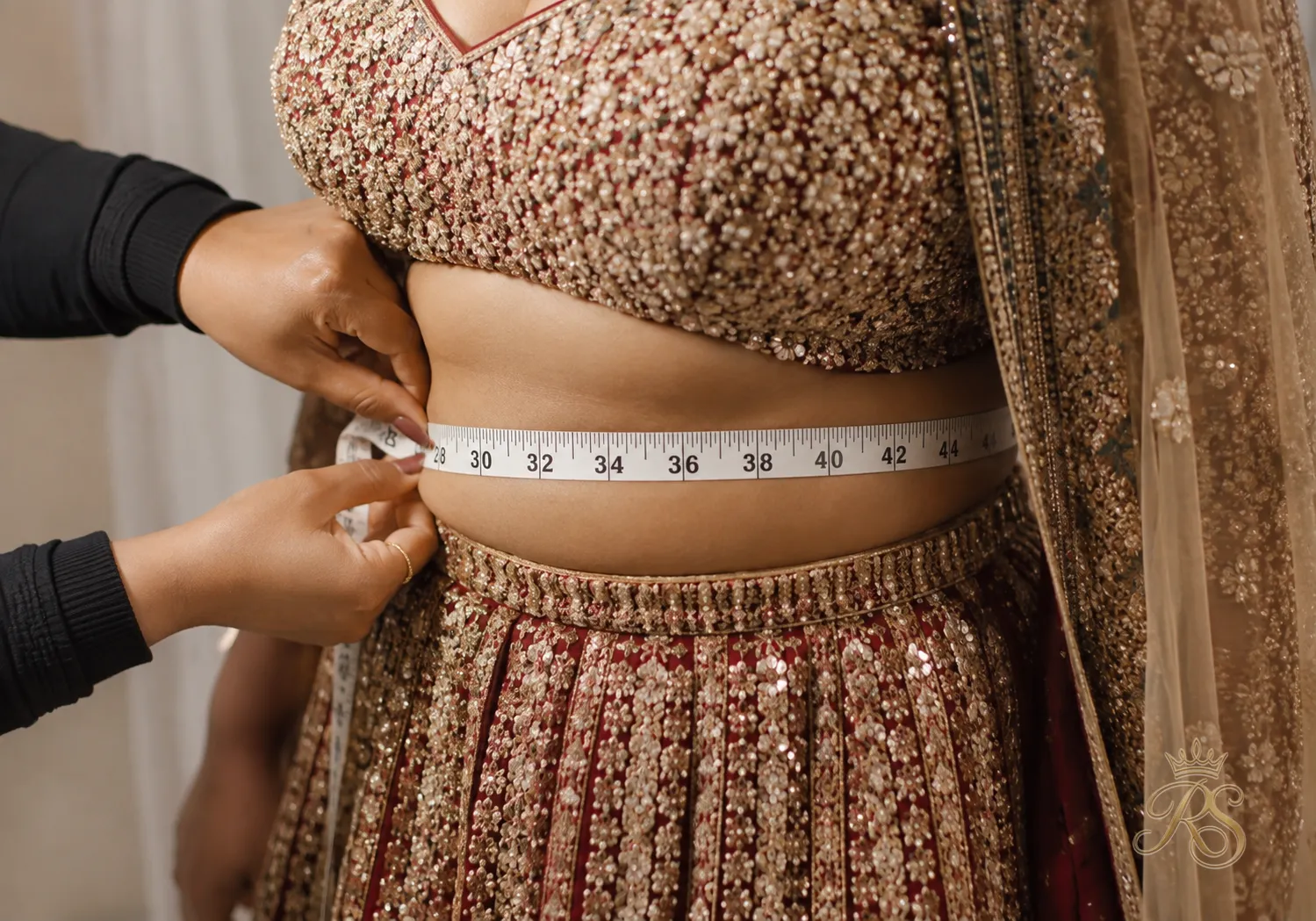
Waist: measure at the narrowest point, keeping the tape snug but not tight.
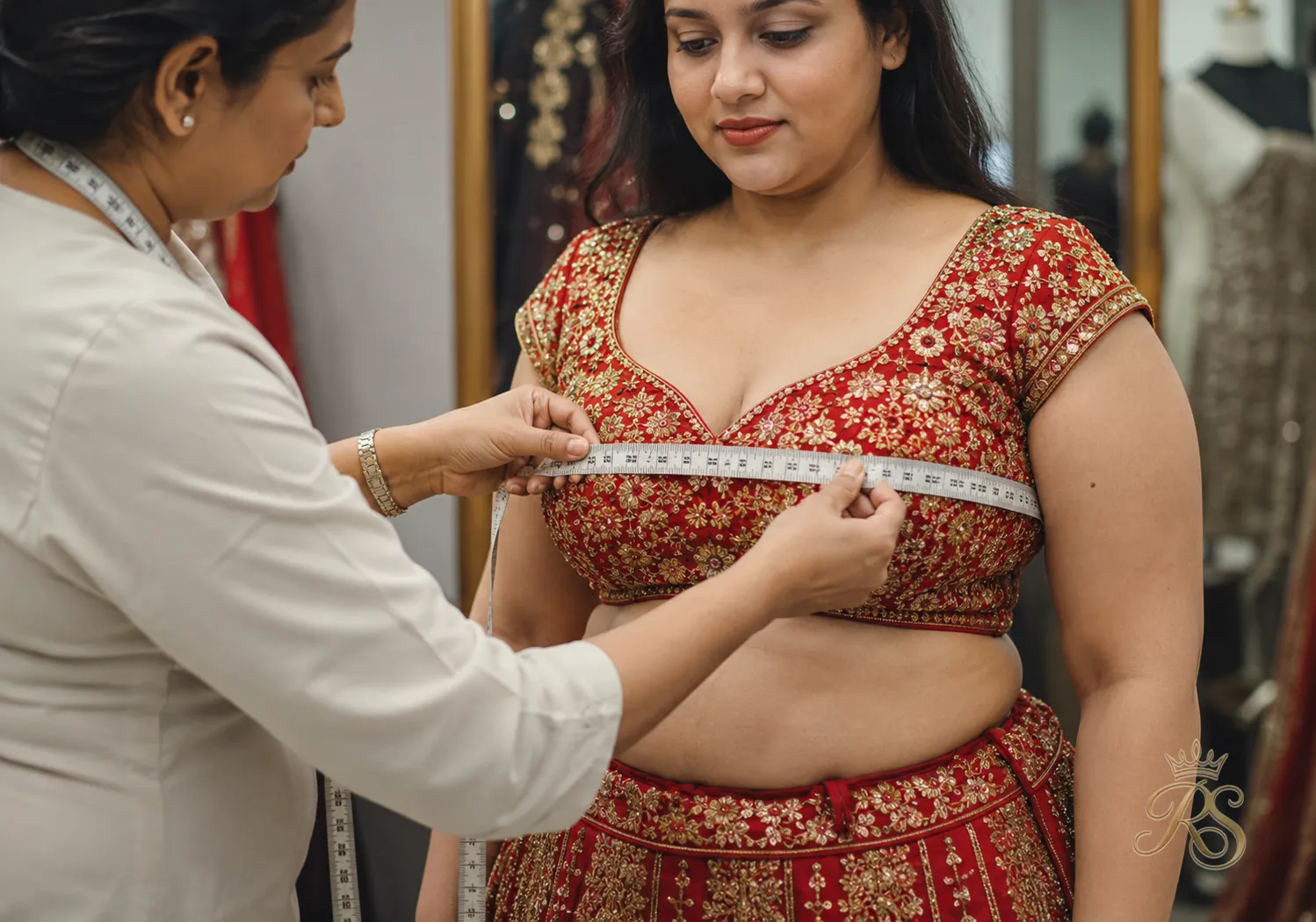
Bust: measure at the fullest point while wearing your bridal-day undergarments.
Also record your hip measurement, blouse length, and shoulder-to-waist length — most designer size charts will ask for at least these five numbers before recommending a size.
How to Read a Lehenga Size Chart
Size charts vary widely between designers, so it's worth understanding how to actually use one rather than relying on the generic S/M/L label at the top.
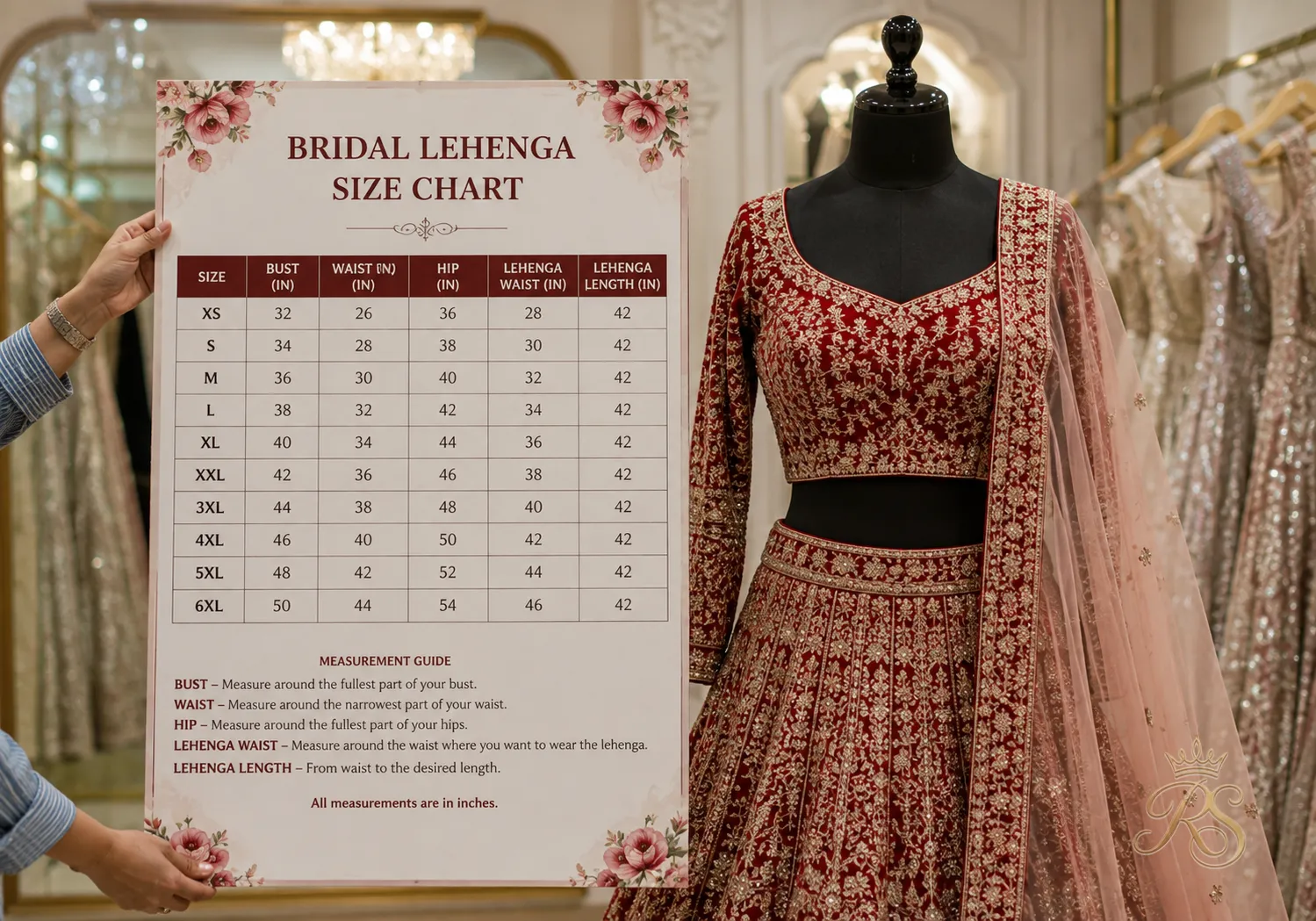
Match numbers, not letters: compare your measurements directly to the chart's inches, not the labeled size.
- Always compare your own numbers to the chart's waist and bust measurements, in inches
- When you fall between two sizes, size up for the choli and plan minor alterations
- Check whether the chart measurement is for the body or the finished garment — these differ
Getting the Choli Fit Right
The choli is the piece most likely to need adjustment, since it sits close to the body and any error becomes immediately visible and uncomfortable.
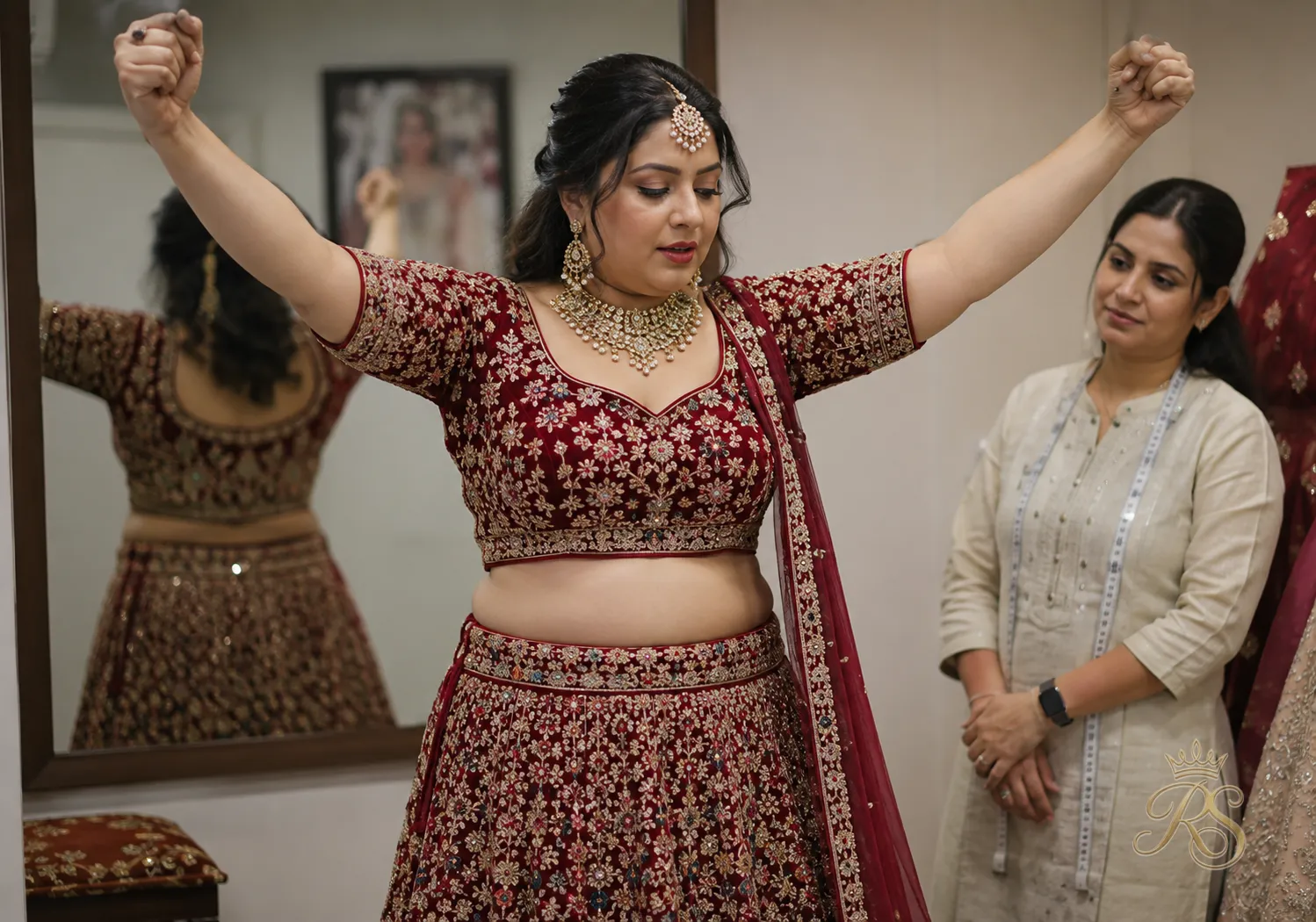
At the trial: you should be able to raise your arms and sit comfortably without strain.
A well-fitted choli sits smoothly across the back with no pulling at the hooks, allows a full range of arm movement, and has armholes that don't dig in when you sit down for long ceremonies.
Waist, Hip & Length Fit for the Ghera
The lehenga skirt is generally more forgiving than the choli, but it still needs to sit at the right point on your waist and skim the floor at the correct length in your wedding shoes.
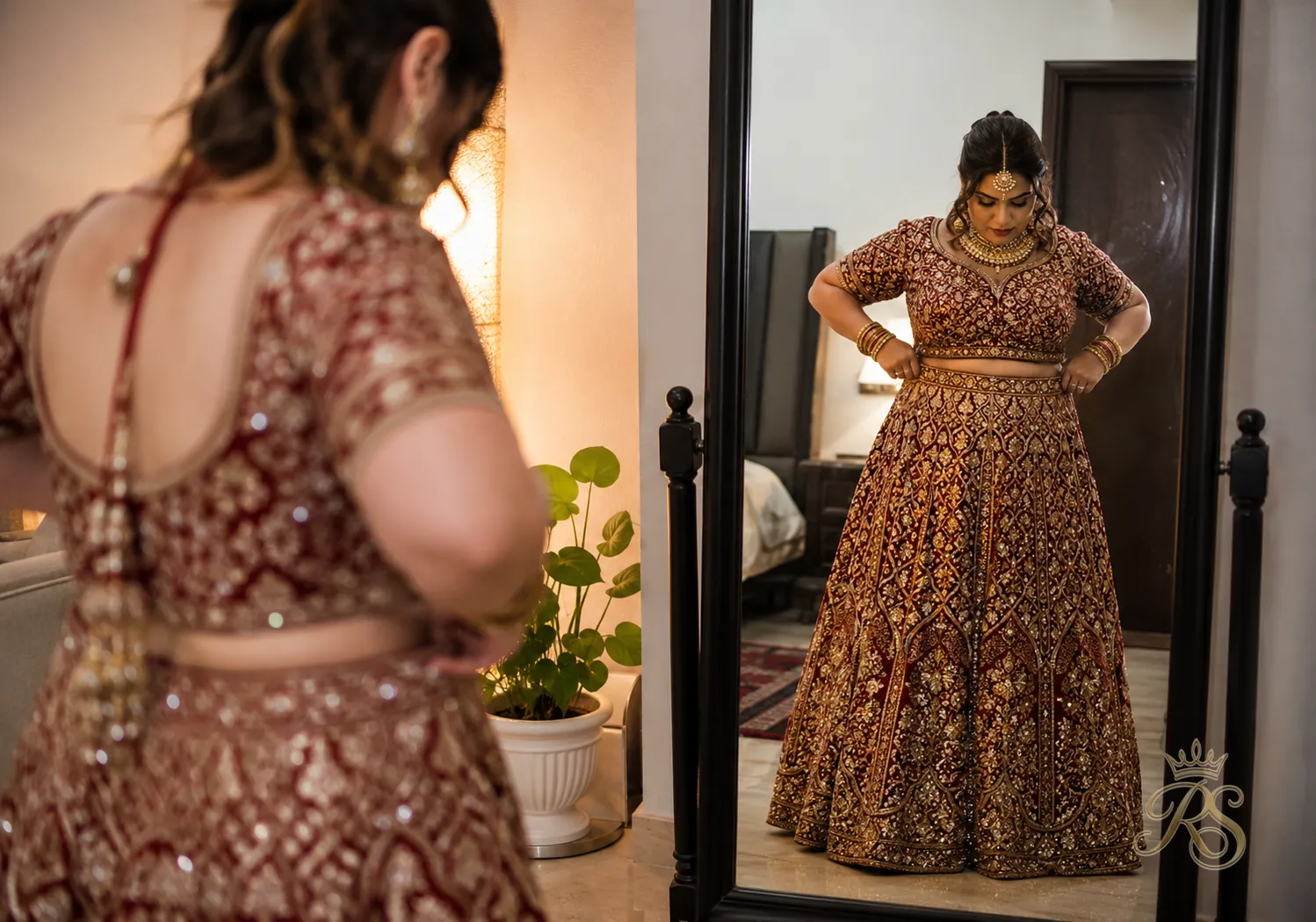
The waistband should sit comfortably without a drawstring pulled to its tightest point.
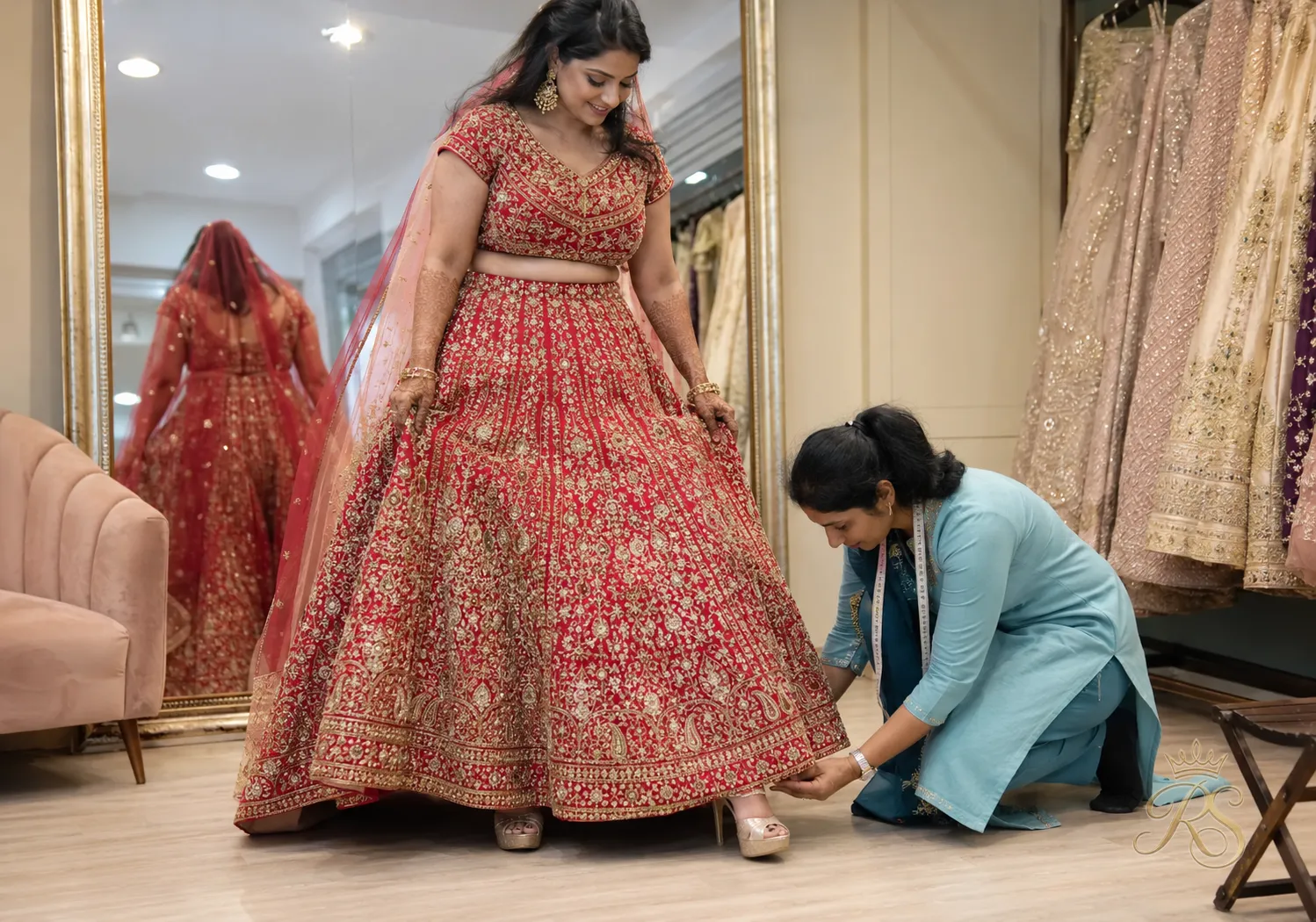
Always check hem length while wearing your actual wedding-day heels.
Most lehenga skirts use an adjustable drawstring or hook-and-eye waistband, which gives a little flexibility — but this should never be relied on to compensate for a skirt that's genuinely the wrong size.
Understanding Ghera Flare
Beyond waist and length, the flare — or ghera — of the skirt affects both how the lehenga looks in photos and how easily you can move, sit, and dance in it.
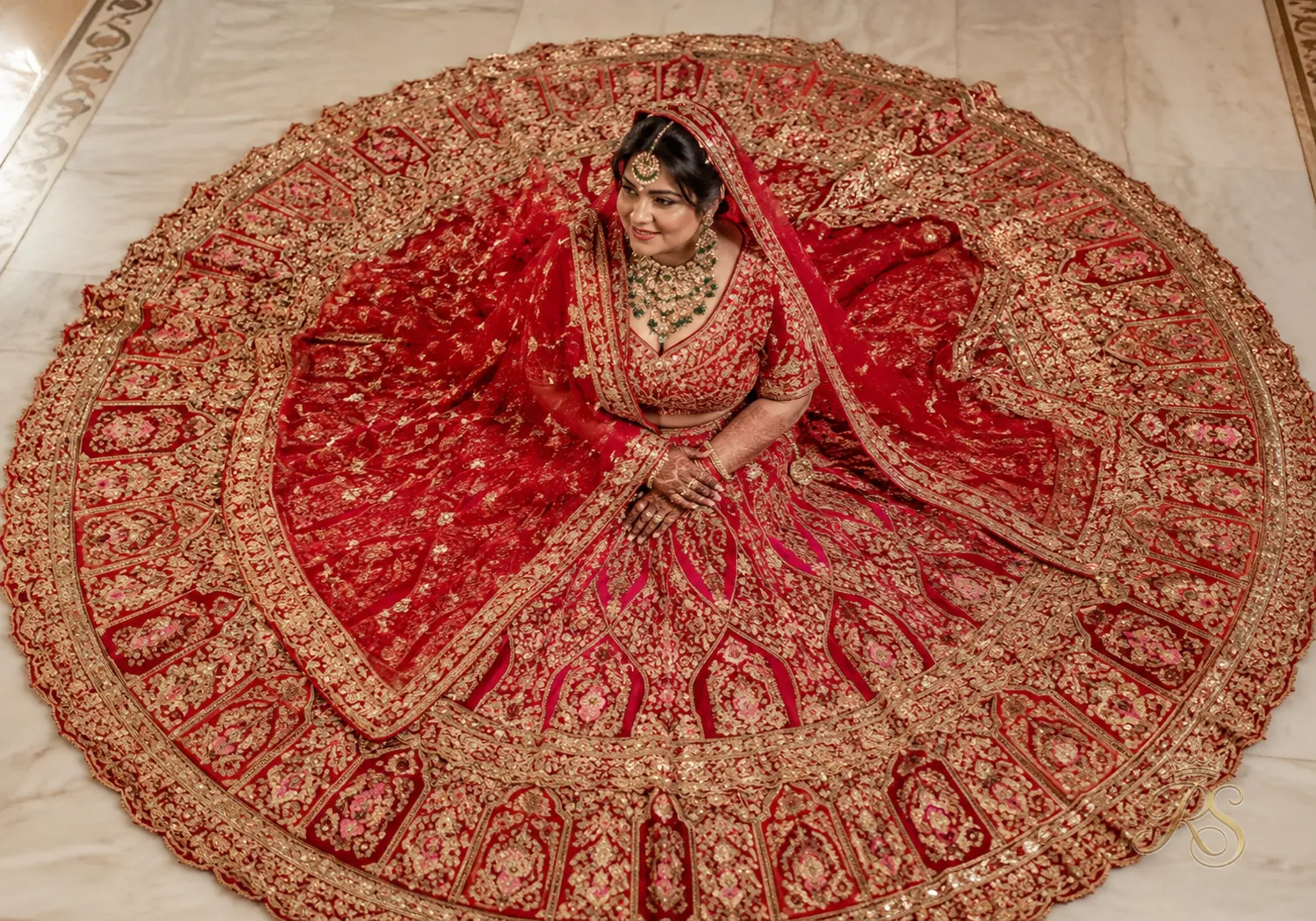
Wide Circular Flare
Maximum volume and movement, ideal for grand ceremonies, but heavier and needs more room to sit.
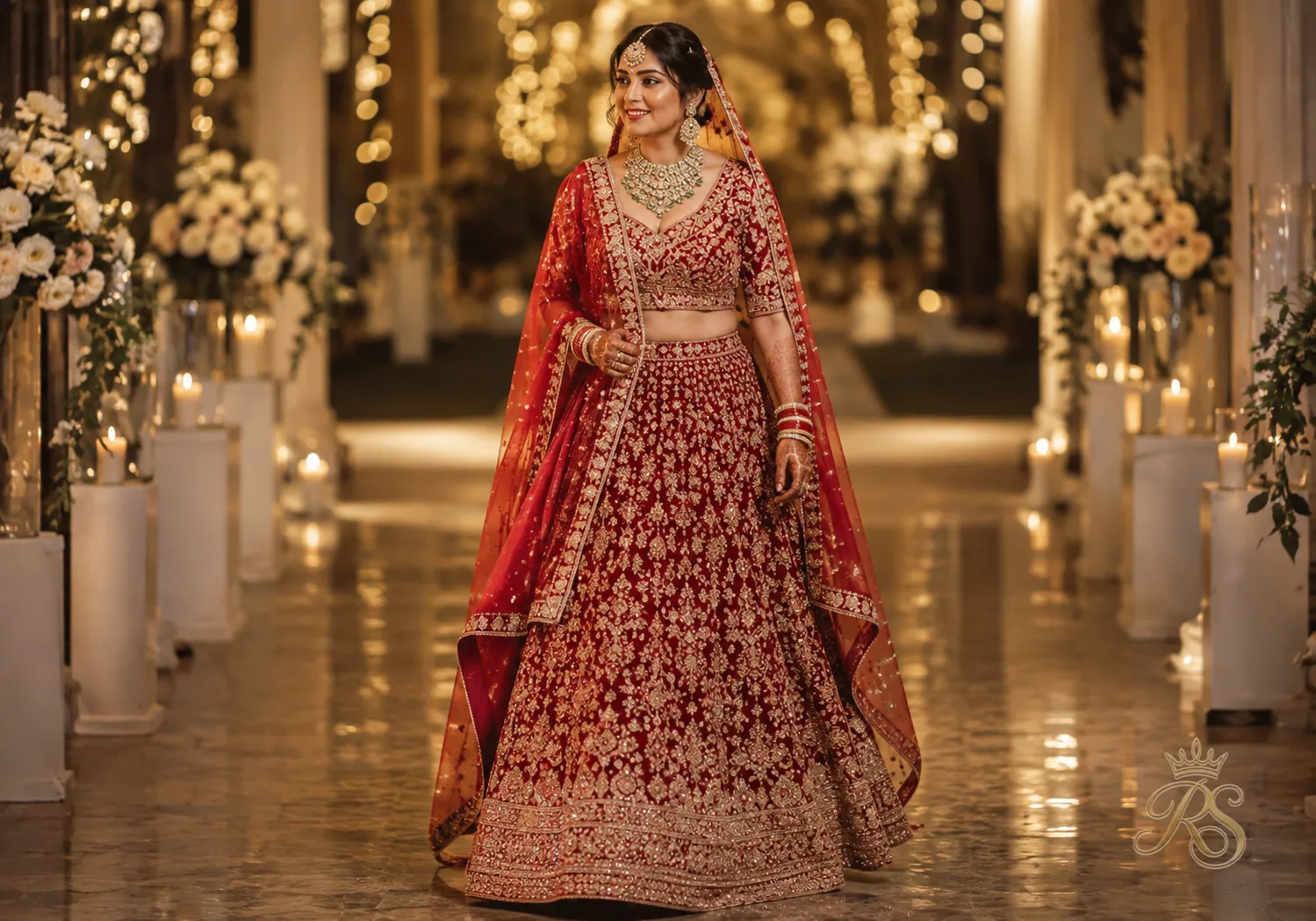
Slim A-Line Flare
Lighter and easier to move in, a good choice for brides with multiple back-to-back events.
If you're unsure, ask to sit, walk, and even attempt a small dance step during your trial — flare that looks perfect standing still can behave very differently once you're actually moving in it.
What to Check During Your Fitting
The trial fitting is your last real chance to catch sizing issues before the wedding, so it's worth going in with a checklist rather than just a general impression.
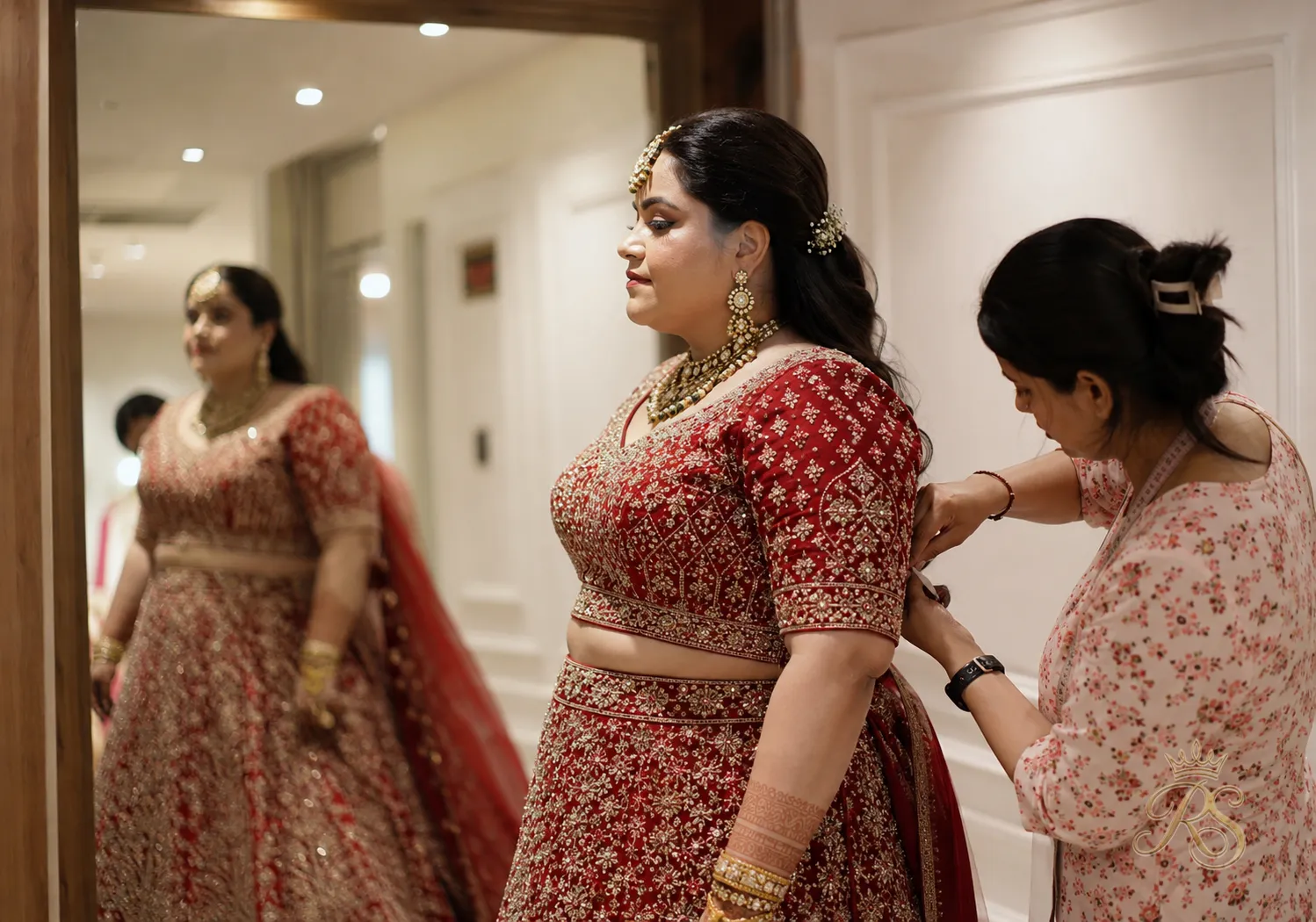
Bring backup: take a trusted friend or family member who can spot fit issues from angles you can't see yourself.
- Sit down fully and check that the waistband doesn't dig in
- Raise both arms overhead to test the choli's range of movement
- Walk a full lap of the room to confirm the hem doesn't drag or trip you
- Check the fit from the back and sides, not just facing the mirror
Custom-Stitched vs. Off-the-Rack Sizing
Whether you're ordering a fully custom lehenga or buying one off the rack and altering it, the sizing process — and the risks — look quite different.
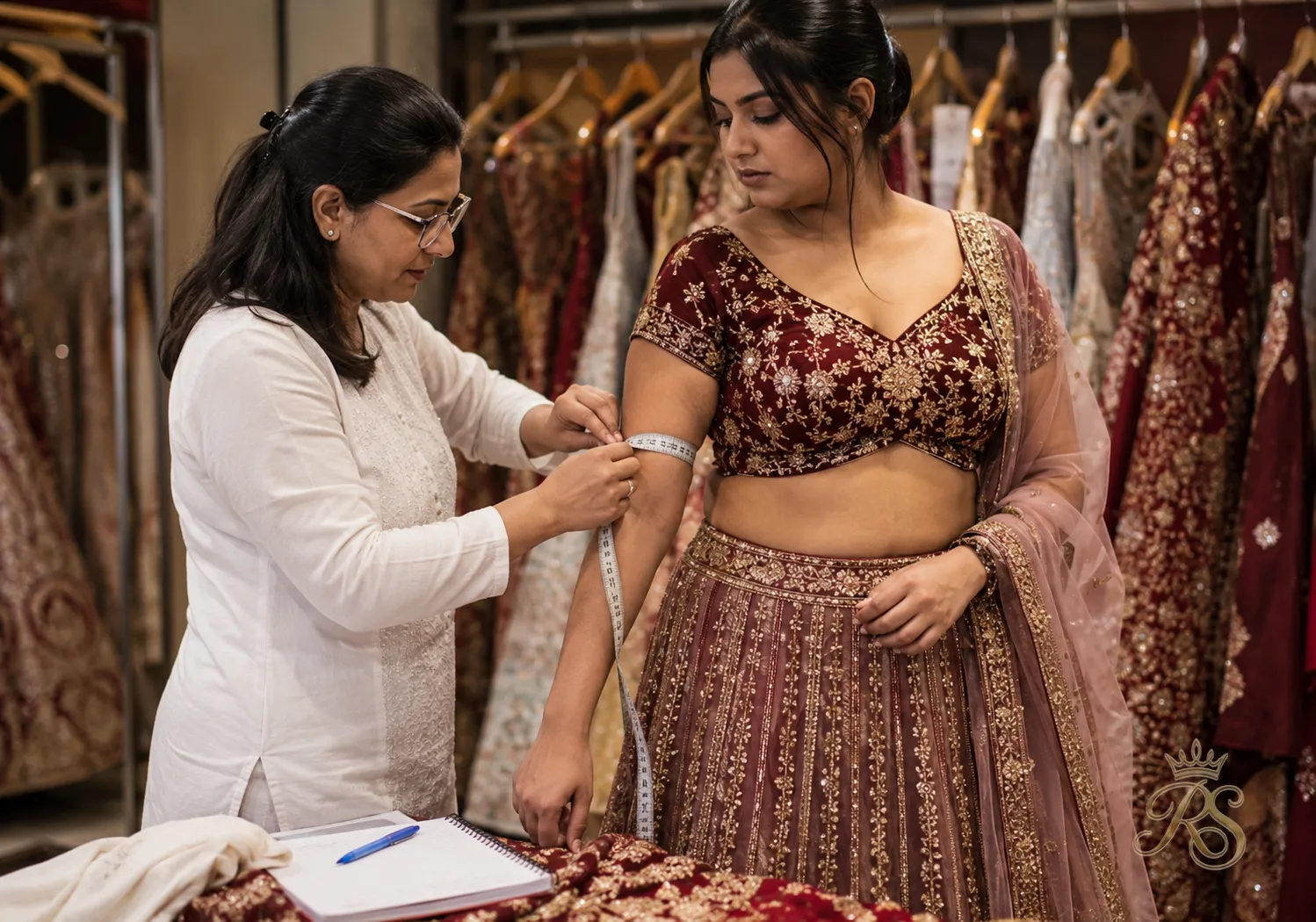
Custom: built to your exact numbers, but needs longer lead time and a mid-way trial.
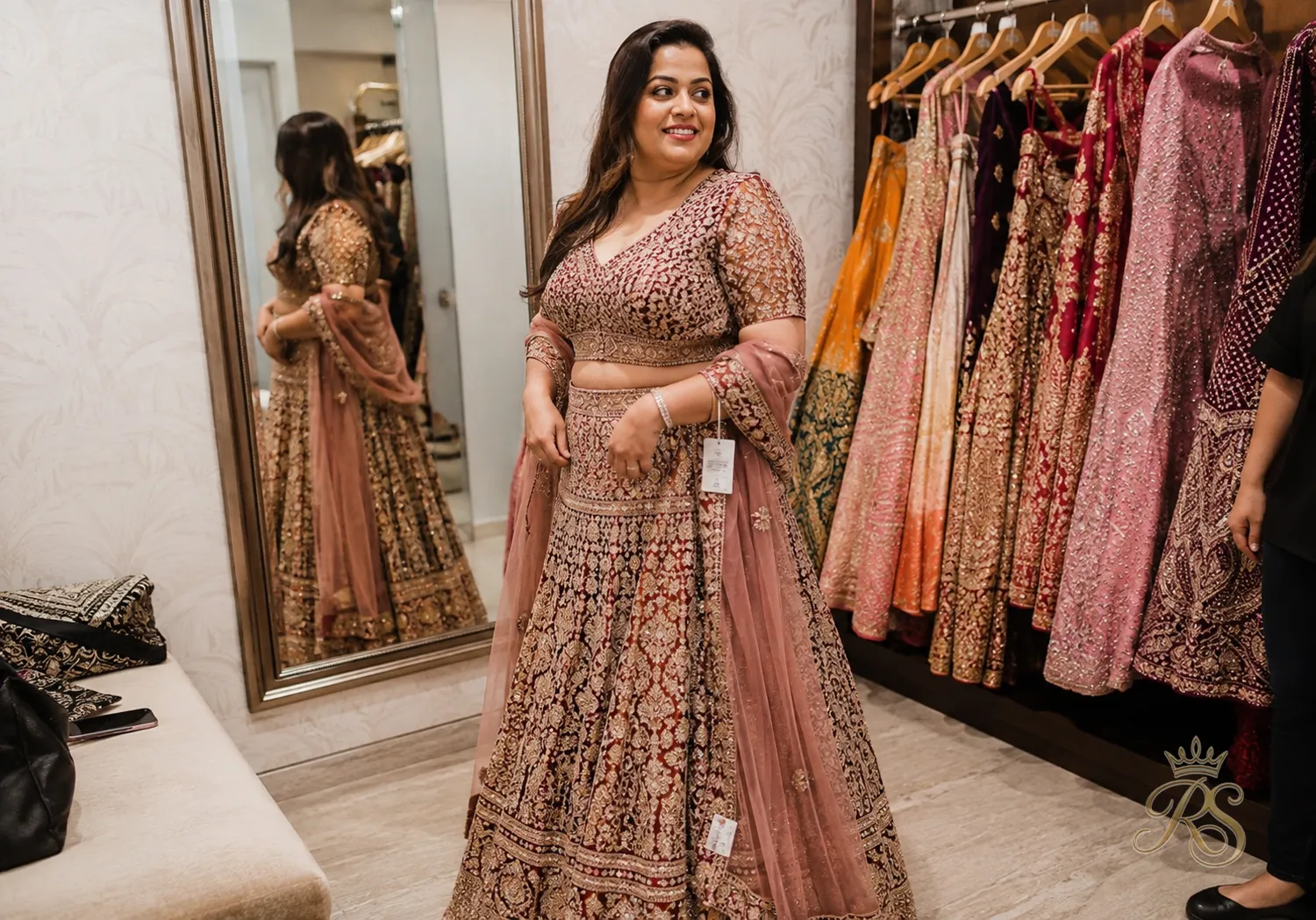
Off-the-rack: faster, but almost always needs some degree of alteration.
If you're ordering custom, insist on at least one mid-way trial before the final stitching is locked in — this single step catches the majority of fit problems before they become expensive to fix.
Alteration Timeline & What to Budget
Even a well-chosen size usually needs some alteration, so it helps to plan the timeline the same way you'd plan any other major wedding vendor.
| Timeline | What Happens | Your To-Do |
|---|---|---|
| 8–10 weeks before | First measurements taken or lehenga ordered | Share accurate, updated measurements |
| 4–6 weeks before | First fitting / trial | Test sitting, walking, and arm movement |
| 2–3 weeks before | Alterations completed | Do a full second trial in wedding shoes |
| 3–5 days before | Final pickup | One last fit check, pack with care |
Set aside a small alteration budget separate from the lehenga cost itself — even designer pieces routinely need choli or waistband adjustments after the first trial.
Planning for Weight or Body Changes
Wedding planning months are unpredictable — stress, diet changes, and travel can all shift your measurements slightly between your first fitting and the wedding itself.
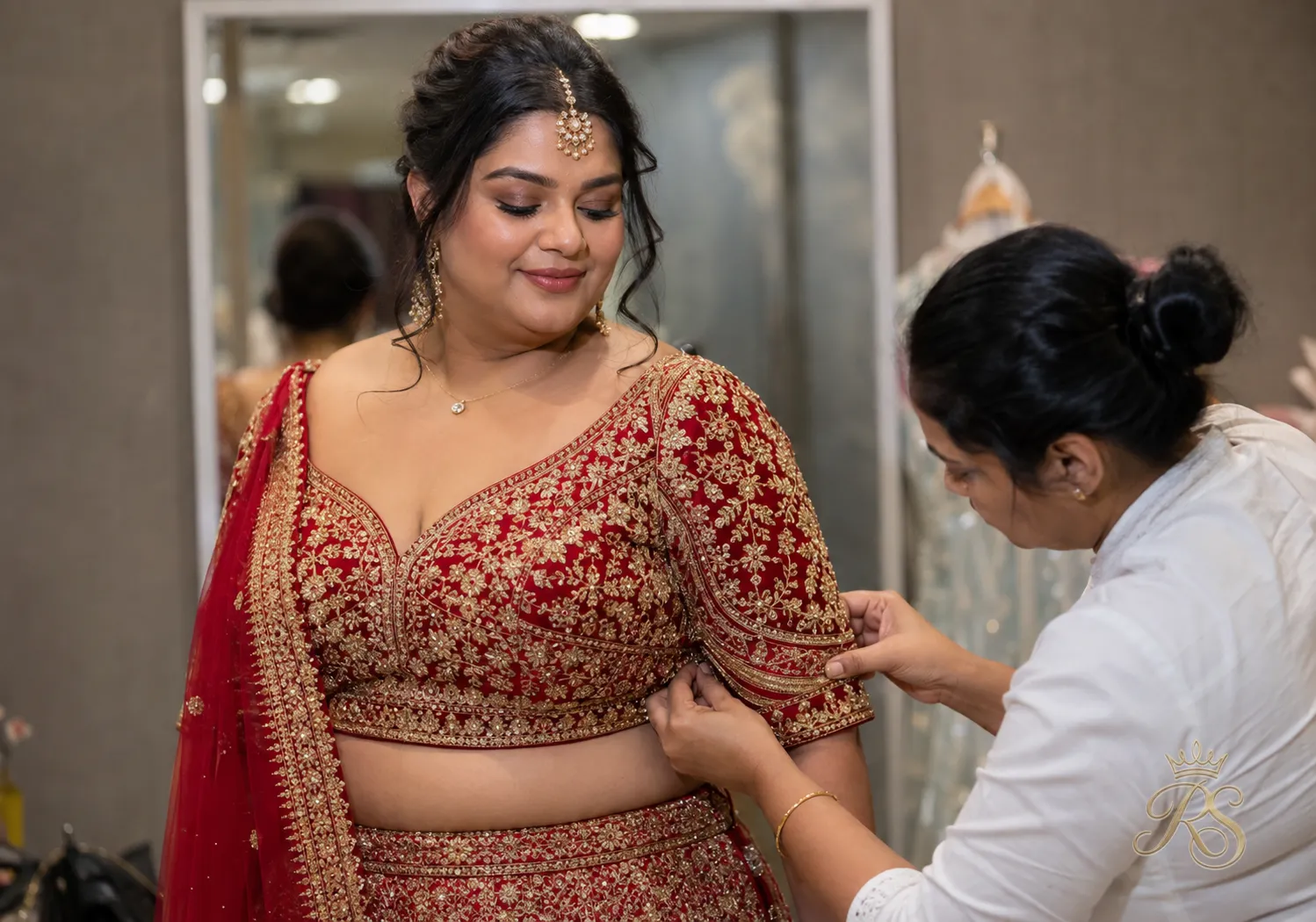
Schedule a buffer: book one final fitting within a week of the wedding, not just after alterations.
Choose a choli style with hooks or lacing rather than a fixed zip wherever possible — it gives your tailor a small margin to adjust the fit even in the final days before the wedding.
Common Lehenga Sizing Mistakes
Most last-minute lehenga panic comes down to a small number of avoidable errors made early in the process.
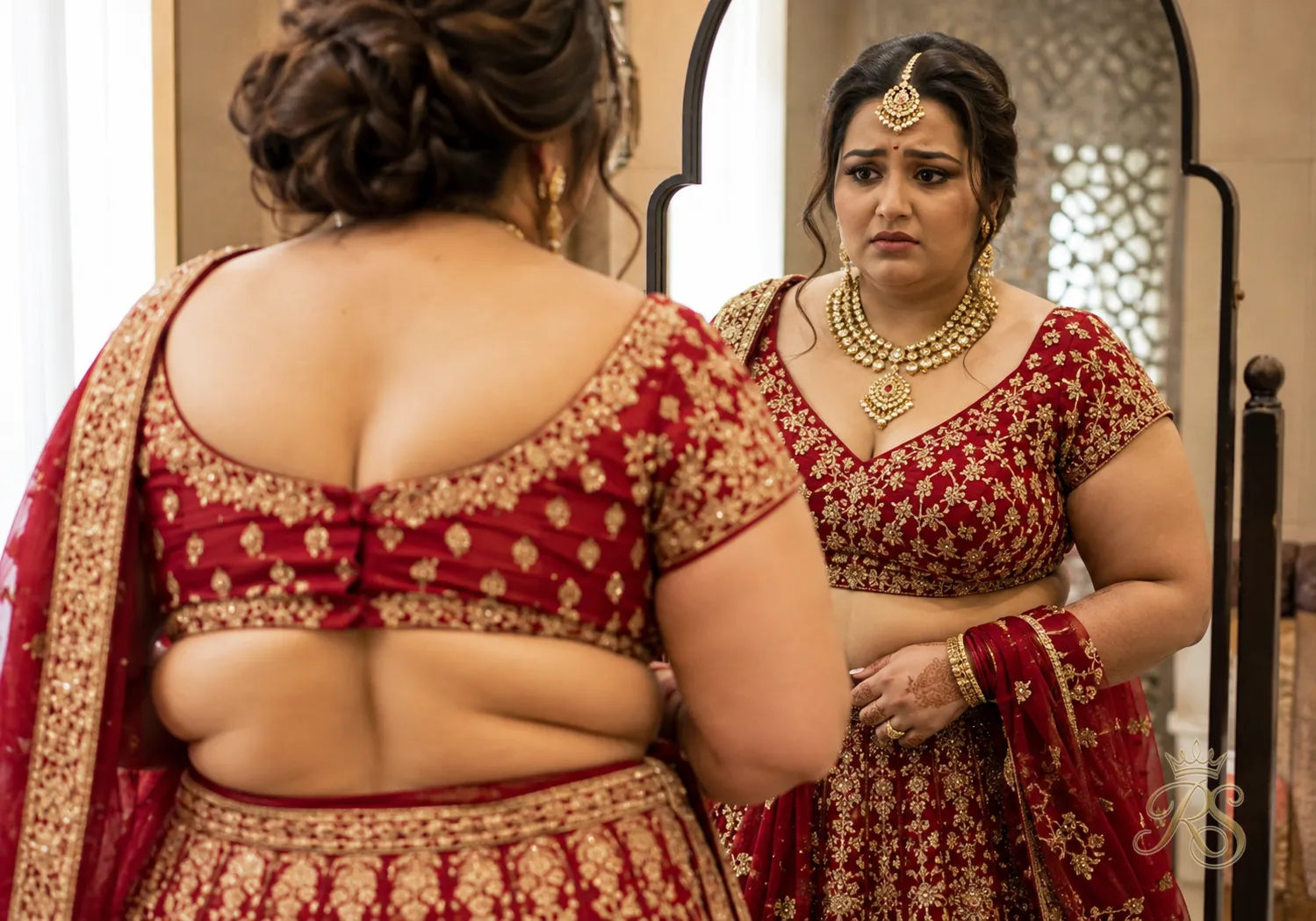
Ordering by size label instead of actual measurements is the single most common mistake.
- Relying on a size label instead of comparing actual body measurements
- Skipping the mid-way trial on a custom-stitched order
- Measuring without the undergarments you'll actually wear on the wedding day
- Leaving the final fitting until the week of the wedding with no buffer time
- Not testing movement — sitting, walking, dancing — before approving the fit
Final Thoughts
Getting your bridal lehenga size right isn't about chasing a specific number — it's about a fit that lets you move, sit, and celebrate comfortably for an entire day of rituals and photographs. Take accurate measurements, insist on a proper trial, and build in time for alterations, and the size will take care of itself.
"A lehenga that fits well doesn't just look effortless in photos — it lets you actually enjoy your own wedding."