Ask any wedding guest what they remember most about a wedding they attended last year, and nine times out of ten the answer involves food — not the centrepiece, not the DJ, not the venue. And within that memory, more often than not, it's a live station that left the deepest impression: the pani puri wala who somehow always had your exact ratio of imli to mint right, the pasta chef who tossed your bowl theatrically while making eye contact, the chaat counter you circled back to three times. Live food stations are no longer a nice-to-have. They are the single highest-ROI investment you can make in your wedding catering. This guide tells you exactly which ones work, which ones don't, and how to do them right.
01
The Pani Puri & Golgappa Counter
Crowd Favourite · All-Time Classic
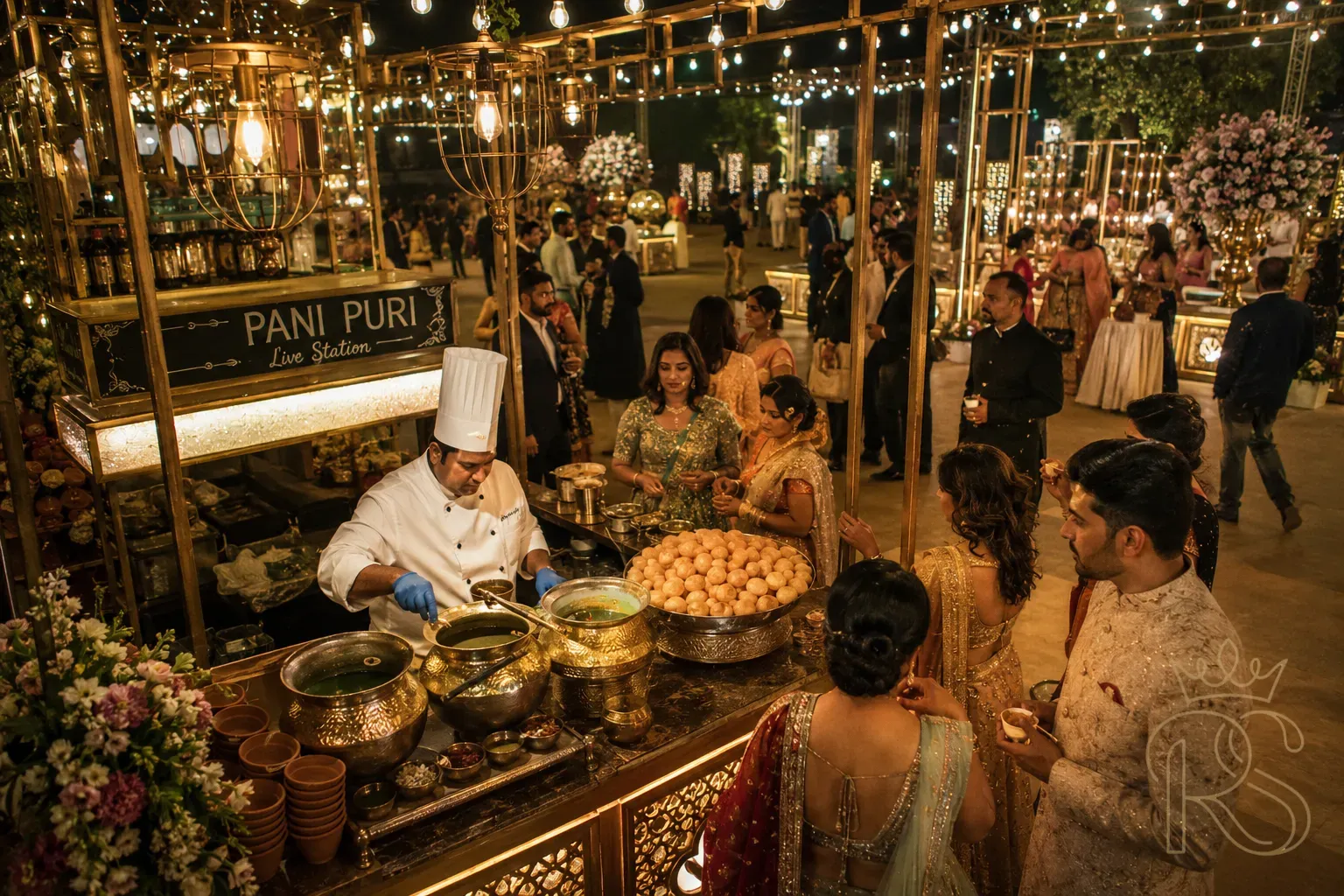
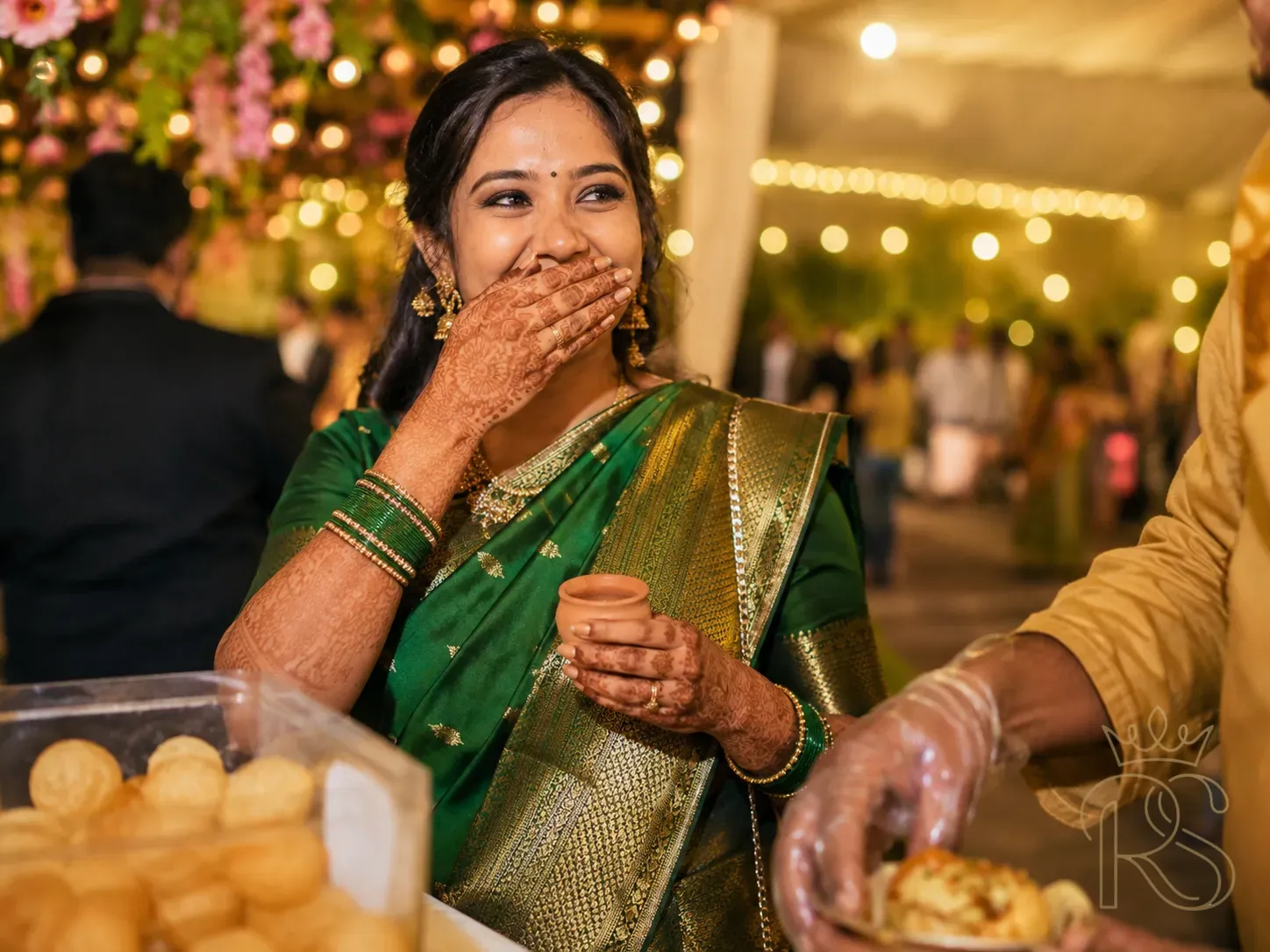
No station generates more smiles per square foot at an Indian wedding than a well-run pani puri counter.
Chaat
Street Food
Always Works
Interactive
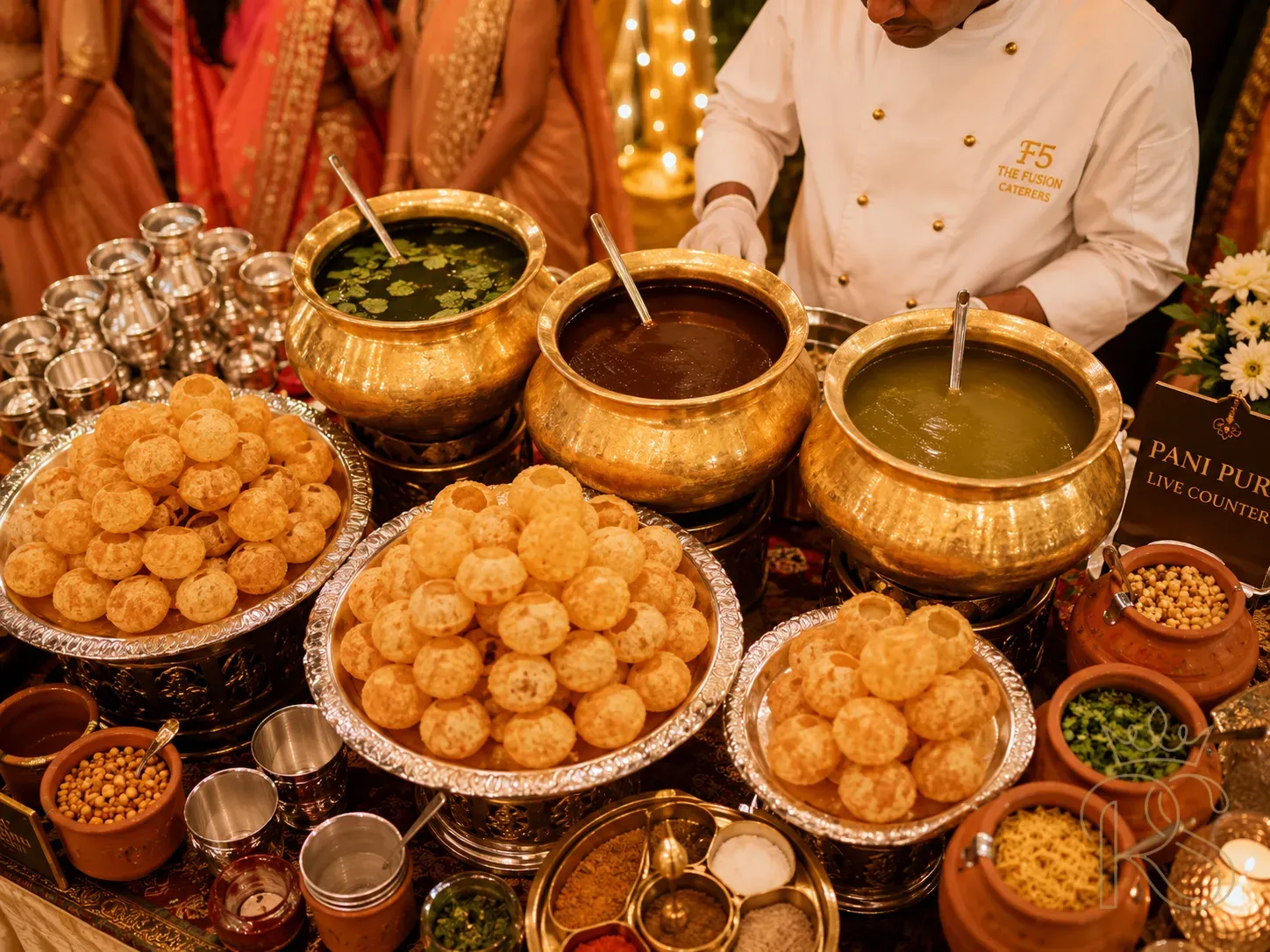
The pani puri counter is arguably the most democratic food experience in India — it cuts across age, region, income bracket, and dietary preference in a way no other dish can claim. At weddings, it works because it is inherently interactive: you watch the chef tap the golgappa, you specify your pani ratio, you eat it immediately. That instant gratification loop creates a moment that is genuinely joyful.
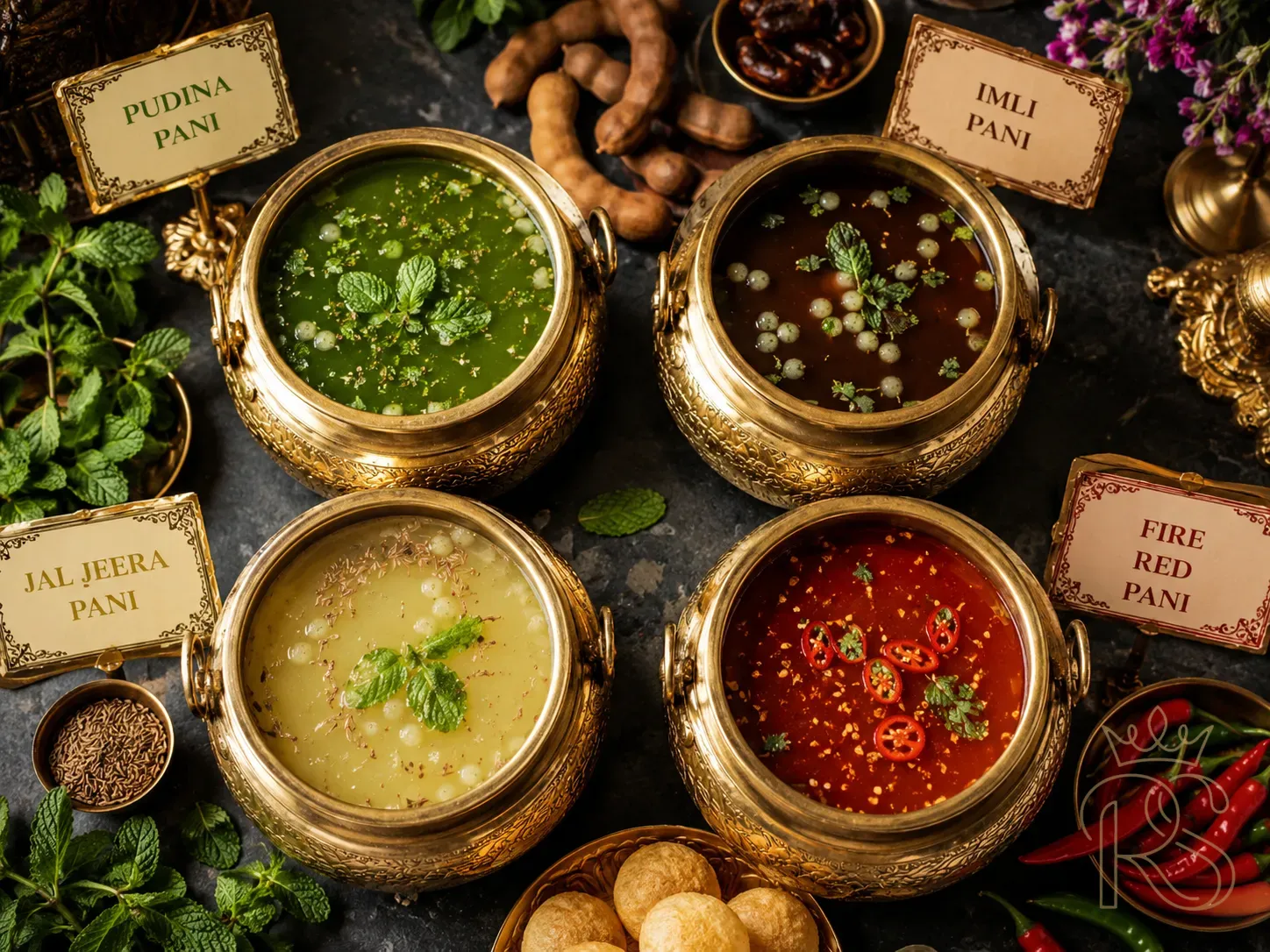
What separates a forgettable pani puri counter from one that people talk about for years is the pani selection. The minimum acceptable standard in 2026 is three varieties: classic hari pudina-imli, jal jeera with black salt, and a meetha (sweet tamarind date) option. The best setups add a fourth: a shot-style "fire pani" with green chillies and raw mango that draws a crowd. Serve it in 40–60ml clay kulhads rather than disposable glasses — the earthy flavour note and the aesthetic make a tangible difference to guests.
"A pani puri counter never fails. In fifteen years of catering Indian weddings, it has never once failed." — Senior wedding caterer, Mumbai
💡
Setup Tip: Staff this counter with one dedicated chef per 80–100 guests. If your guest list exceeds 200, run two counters at opposite ends of the venue — a single pani puri counter with a queue longer than 10 people kills its own vibe. The magic is immediate access, not waiting.
02
The Live Chaat Bar
Most Customisable · High Engagement
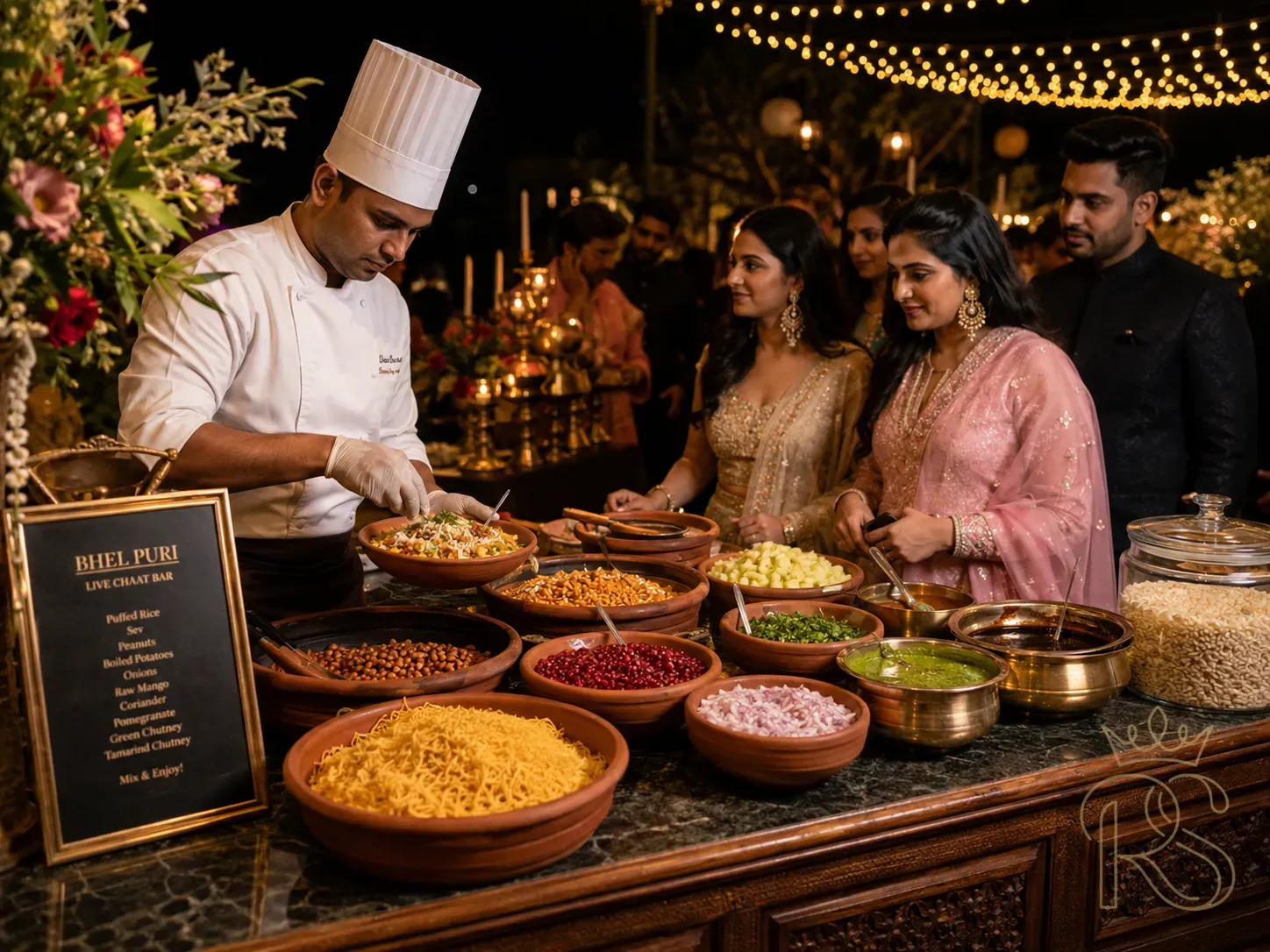
A well-curated live chaat bar can be styled to match your wedding's entire aesthetic — from rustic earthen to contemporary marble.
Chaat
Customisable
Vegetarian-Friendly
North India
Where the pani puri counter is about speed and immediacy, the live chaat bar rewards those who linger. This is a station where guests make choices — they tell the chef what they want in their bhel, how much chutney, whether they want it dry or wet, extra papdi or not — and the chef assembles it live in front of them. That co-creation element is deeply satisfying and drives repeat visits.
A properly set up chaat bar should offer at minimum: bhel puri, dahi papdi chaat, aloo tikki chaat, and tokri chaat (served in a fried potato basket, which doubles as visual theatre). The key operational variable is speed: each bowl should take no more than 60–90 seconds to assemble, or you create a traffic problem. Brief your caterer on this explicitly — many underestimate how quickly the station can bottleneck during peak dinner time.
74%
Wedding guests say they prefer live stations over buffet counters for starters
2.8×
Average number of return visits a guest makes to a chaat bar vs standard buffet starter
₹180–320
Typical per-head cost of a live chaat bar at Indian weddings in 2026
Presentation matters as much as flavour at a live chaat bar. Serving chutneys in wide-mouthed brass or terracotta vessels rather than plastic squeeze bottles, plating finished chaat in terracotta kulhads or small copper bowls, and labelling each ingredient with handwritten chalkboard cards all signal care and intention to guests — and photograph beautifully.
💡
Menu Tip: Add one non-standard offering that surprises guests — a mango lassi shot served alongside each chaat portion, or a miniature dahi vada to accompany the bhel. This "extra" is remembered disproportionately and costs very little to add.
03
Live Pasta & Risotto Station
Continental Showstopper · High Perceived Value
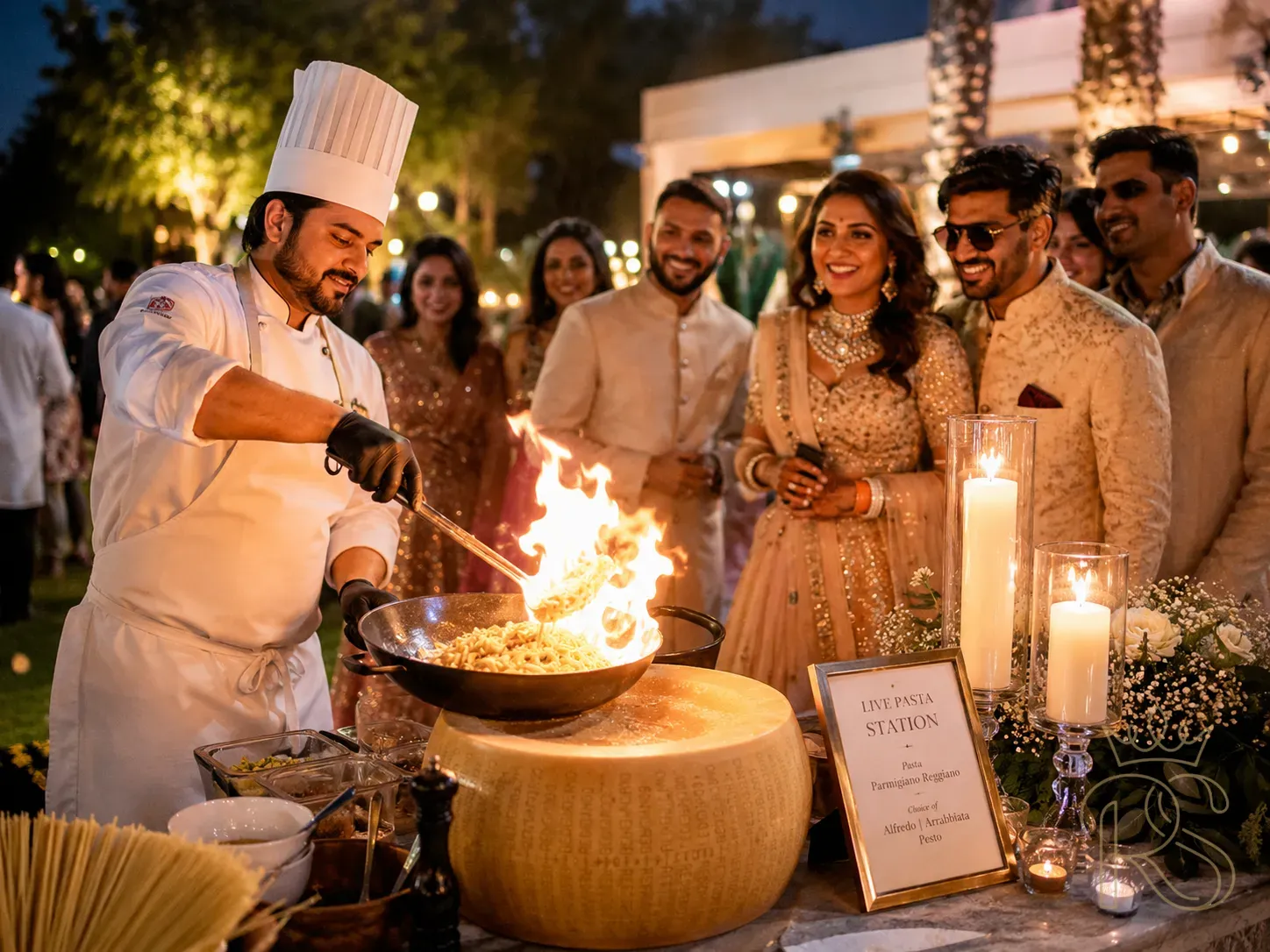
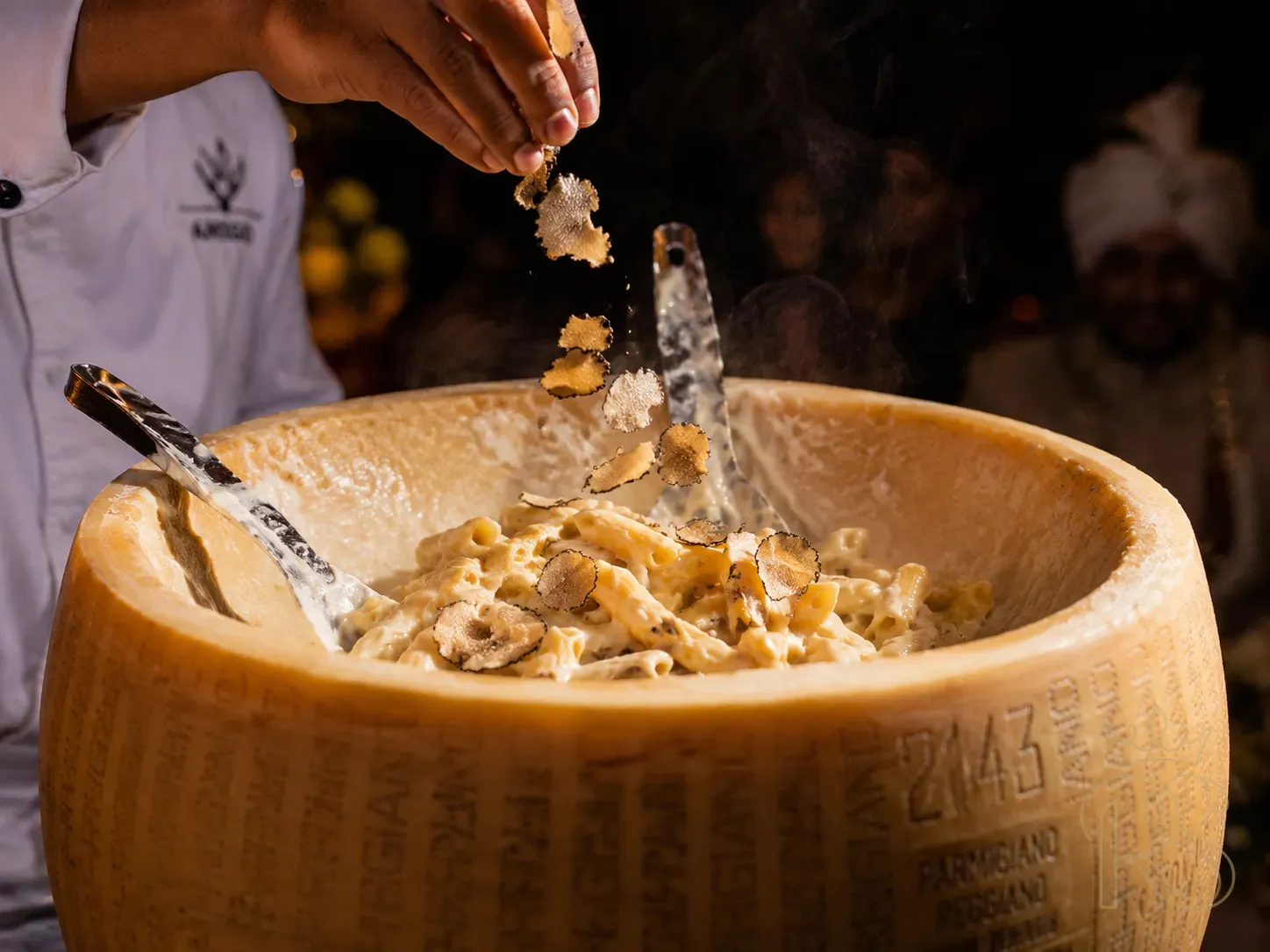
The dramatic parmesan wheel pasta has become one of the most Instagrammed food moments at Indian weddings in 2026.
Continental
High Drama
Instagrammable
Premium
The live pasta station hit Indian wedding circuits around 2022, and far from fading, it has doubled down and evolved. What drove the initial spike — theatrical presentation and broad appeal — is now supercharged by the parmesan wheel technique that has gone genuinely viral across Indian wedding social media. If you have not seen it: the chef scoops out a divot in a wheel of aged parmigiano reggiano, deglazes the interior with white wine, and tosses freshly cooked pasta inside the wheel, coating every strand in melted cheese. It is theatre, it is delicious, and guests will film it.
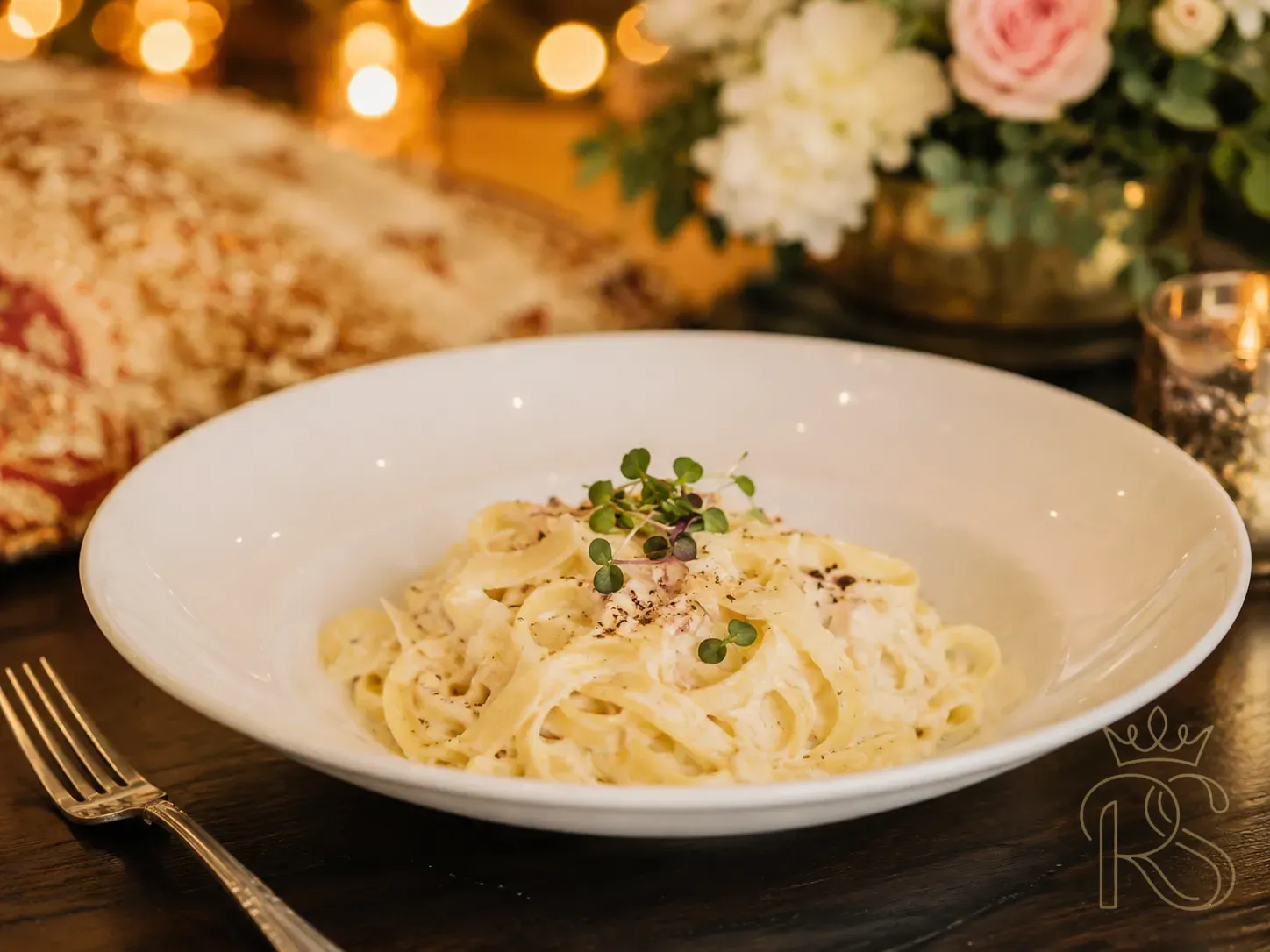
The station works best at evening receptions rather than daytime functions — the warm lighting, the flame from the cooking, and the candles all photograph better, and guests are in a more relaxed, indulgent mood. Offer three pasta options maximum: a classic aglio e olio, a cream-based penne or fettuccine, and a pink sauce penne. More than three options creates decision fatigue and slows the line. Pair the station with a focused garlic bread counter and a simple green salad toss alongside.
⚠️
Watch Out: The parmesan wheel station is expensive to set up correctly — a genuine aged parmigiano reggiano wheel costs ₹40,000–80,000 and is not optional if you want the viral result. Cheaper substitutes produce a greasy, clumpy finish that looks bad on camera and tastes worse. Either commit to the real thing or choose a different station.
04
The Dosa & South Indian Live Counter
Regional Classic · Wildly Underused at North Indian Weddings
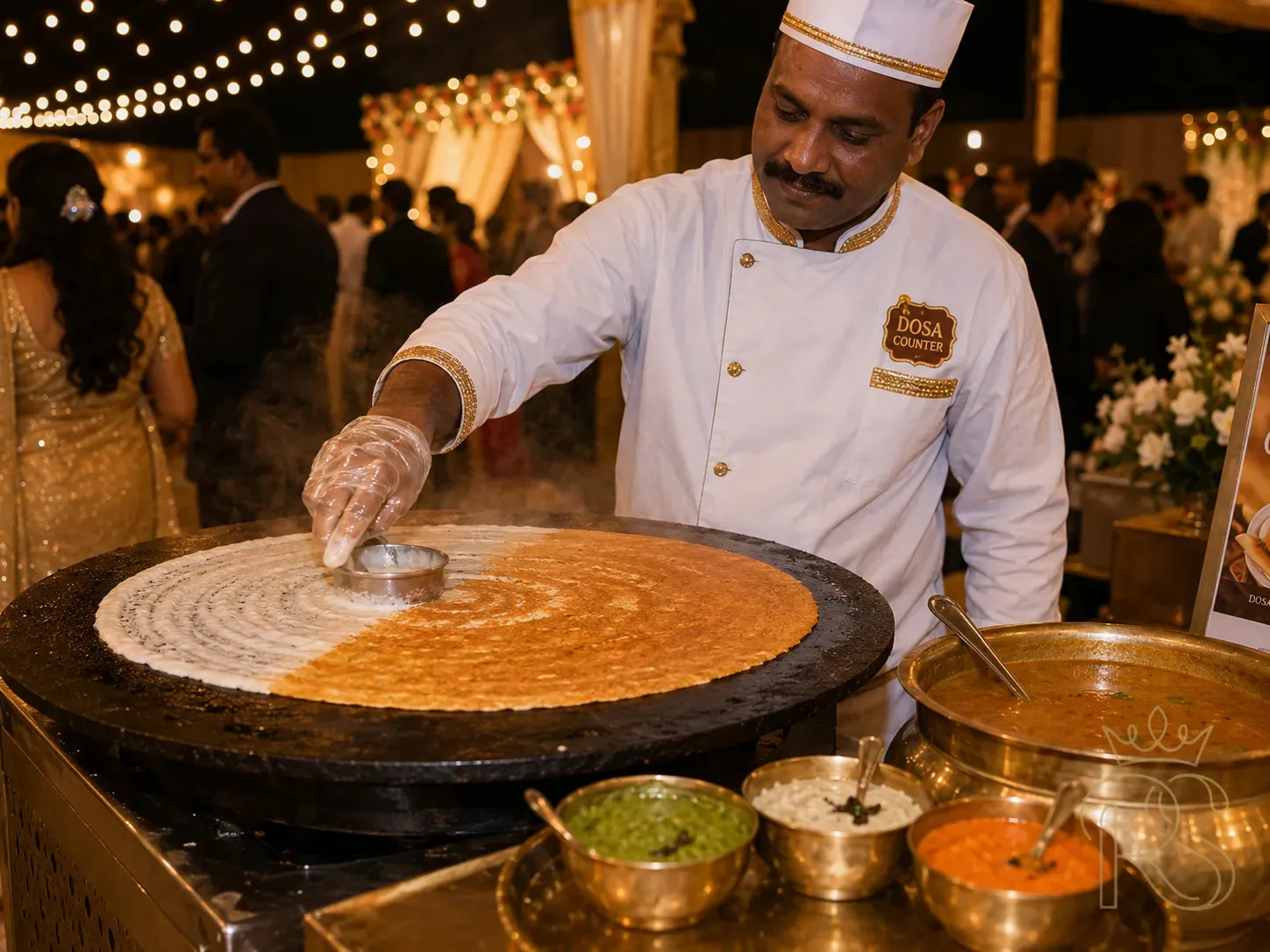
A live dosa counter draws a line from the moment it opens — and keeps drawing one until it closes.
South Indian
Gluten-Friendly
High Volume
Crowd Magnet
The live dosa counter is criminally underused at North Indian weddings, which is exactly why it works so well when you include one. Guests who encounter it treat it as a revelation — at a wedding where everything else is the expected wedding menu, the dosa counter is a breath of fresh air. At South Indian weddings, it is an expectation rather than a delight, but the live execution (versus a pre-made buffet tray) still matters enormously.
The station's operational strength is its speed. A skilled dosa chef can produce a finished dosa in 90 seconds — spread, fill, fold, plate. It is one of the fastest live stations you can run. What creates the line is variety: plain, masala (aloo), cheese-masala, schezwan cheese, and paneer dosa should all be on offer. Accompaniments should include sambar in a warm brass urn, and three chutneys — coconut, tomato-onion, and a raw mango variation — served in individual brass katoris, not shared communal dips.
90s
Average time to produce one dosa at a properly staffed live counter
5+
Dosa varieties minimum to keep the counter interesting for 3+ hour receptions
₹120–200
Per-head cost at most cities — one of the best-value live stations available
💡
Upgrade Tip: Add one indulgent dosa variant that is not available anywhere else that evening — a butter-flooded ghee roast, or a dosa stuffed with paneer bhurji and finished with a drizzle of homemade mango pickle. This single special item gives guests a reason to talk about your counter specifically, not just "the dosa counter."
05
The Live Sushi & Asian Counter
Premium & Adventurous · Works Only When Done Right
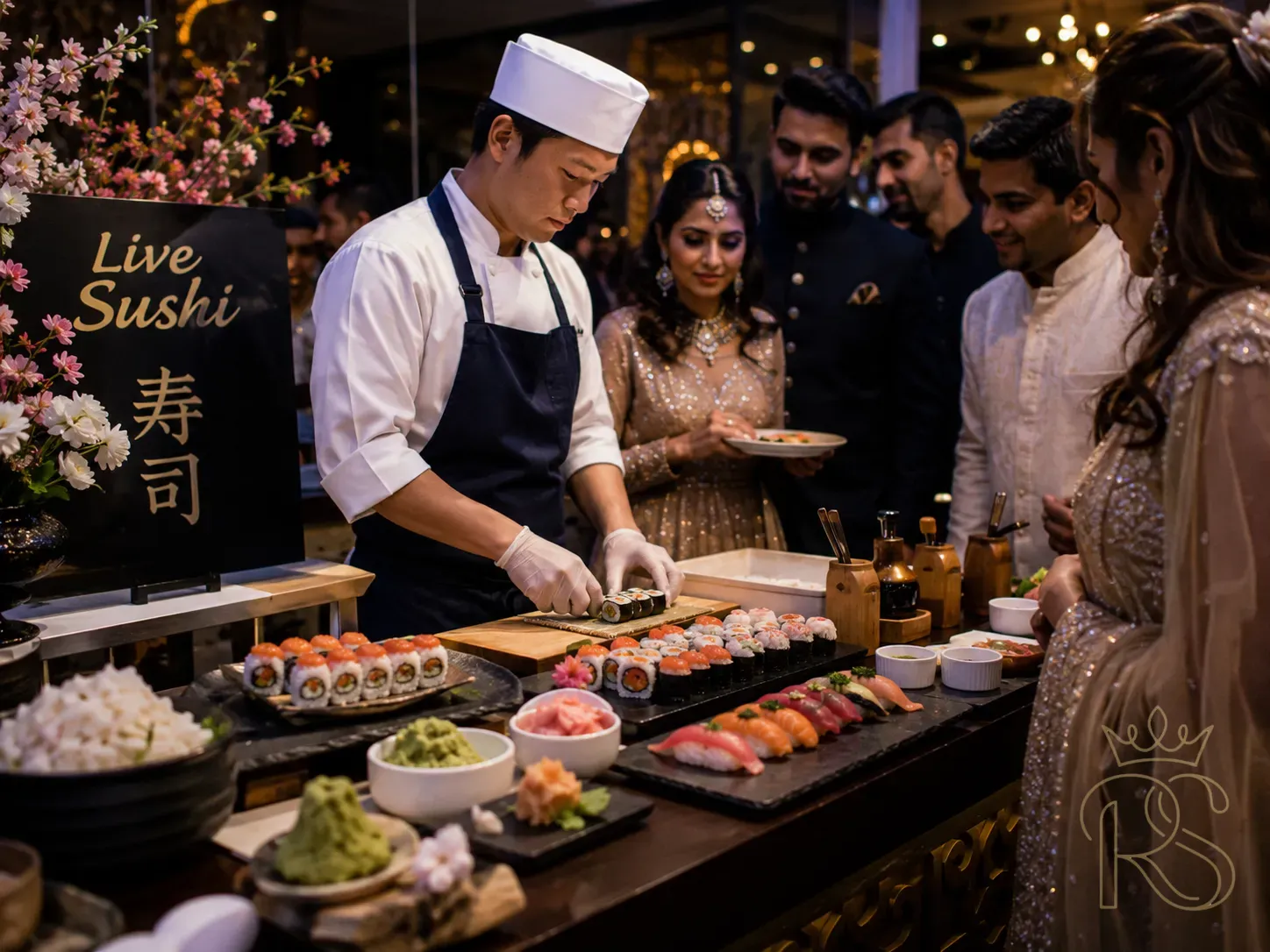
A live sushi counter signals ambition — but cold-chain discipline and a genuinely skilled chef are non-negotiable.
Japanese
Premium
Vegetarian Options
High Skill Required
The live sushi counter at Indian weddings has moved from novelty to a legitimate option at premium receptions — but it carries the steepest execution risk of any station on this list. When it works, it is genuinely memorable: guests who have eaten sushi before appreciate the quality, and guests who have not try it out of curiosity and discover something new. When it fails — because the fish was not fresh enough, or the rice was wrong, or the chef was not genuinely trained in sushi preparation — it is actively damaging to your wedding's food reputation.
The vegetarian version of this station sidesteps most of the risk: avocado and cucumber rolls, asparagus tempura rolls, cream cheese and mango rolls, and edamame with sea salt are entirely achievable without the cold-chain complexity of raw fish. For a market like India, where 30–40% of a typical wedding guest list may be vegetarian, a vegetarian-forward sushi counter with a small selection of cooked prawn or salmon options for non-vegetarians is often the smarter format.
⚠️
Hard Reality: Do not attempt a live sushi counter in Indian summer heat (April–June) without a climate-controlled preparation area and direct cold-chain sourcing. Fish quality degrades visibly and dangerously within 2 hours in 35°C ambient temperature. This is not a vendor-management issue; it is a food safety issue. Either control your environment or choose a different station.
06
The Grilled & Kebab Live Station
Flame, Smoke & Theatre · Non-Veg Guests' Favourite
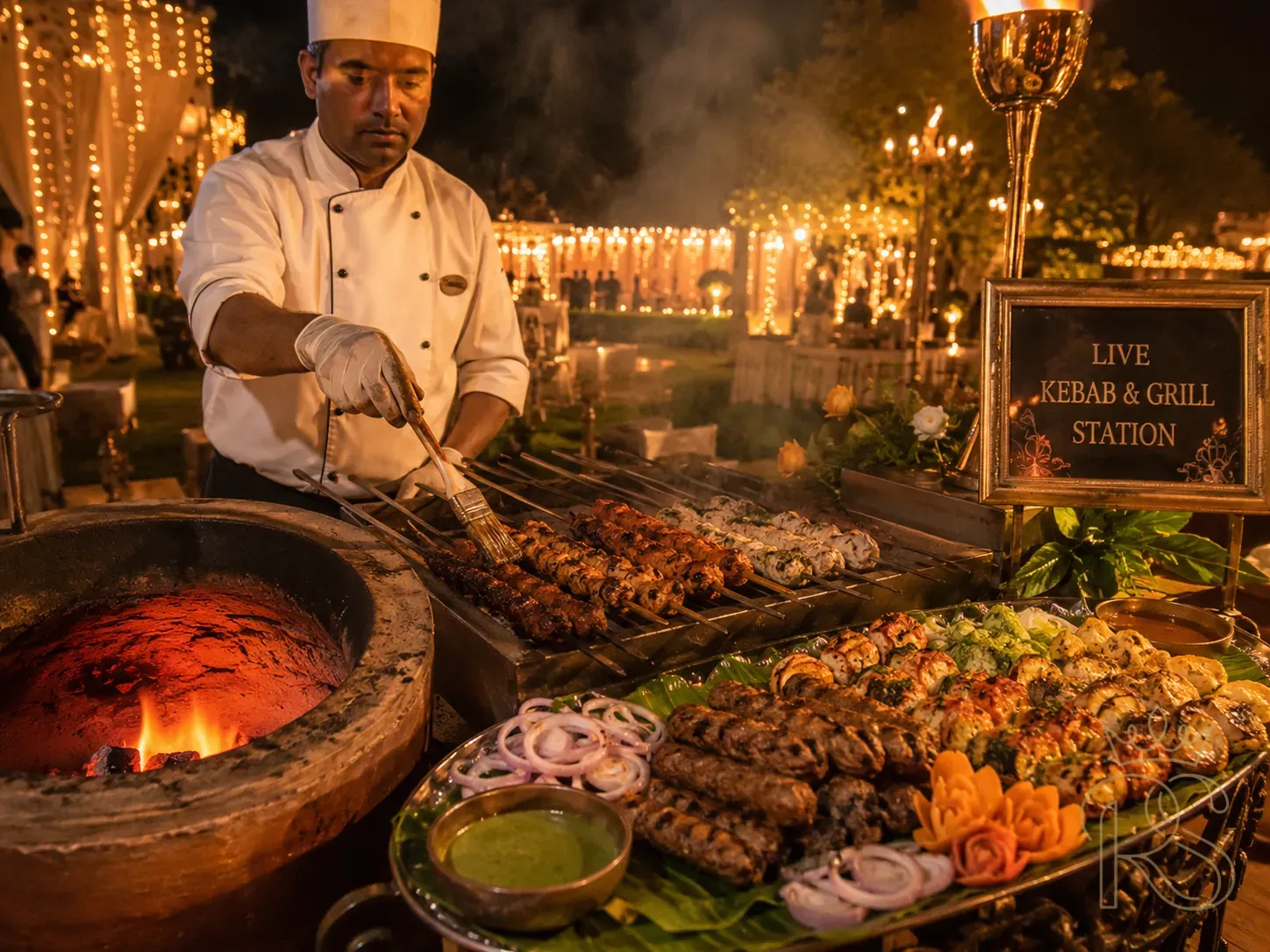
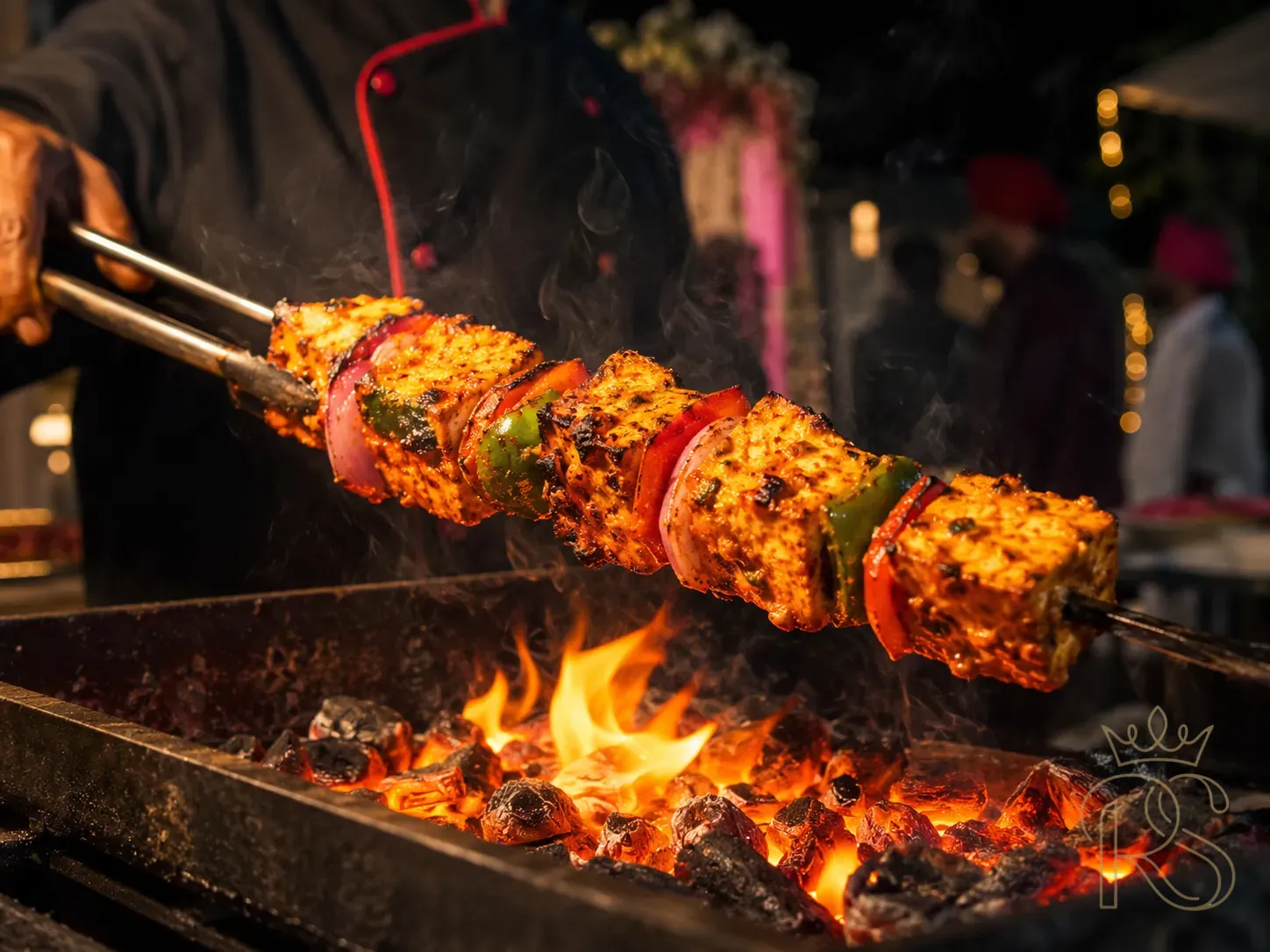
Smoke, flame, and the smell of live coal — the kebab station creates an atmosphere no other station can.
Non-Vegetarian
Tandoor
Smoky Atmosphere
Outdoor Only
If you are having an outdoor evening reception and your guest list includes significant meat-eaters, the live kebab and grill station is your highest-impact investment. The sensory experience it creates — the glow of live coal, the hiss of marinated meat hitting the grill, the smoke curling through warm evening air, the smell — begins working on guests' appetite from 20 metres away. It does not just serve food; it creates an atmosphere.
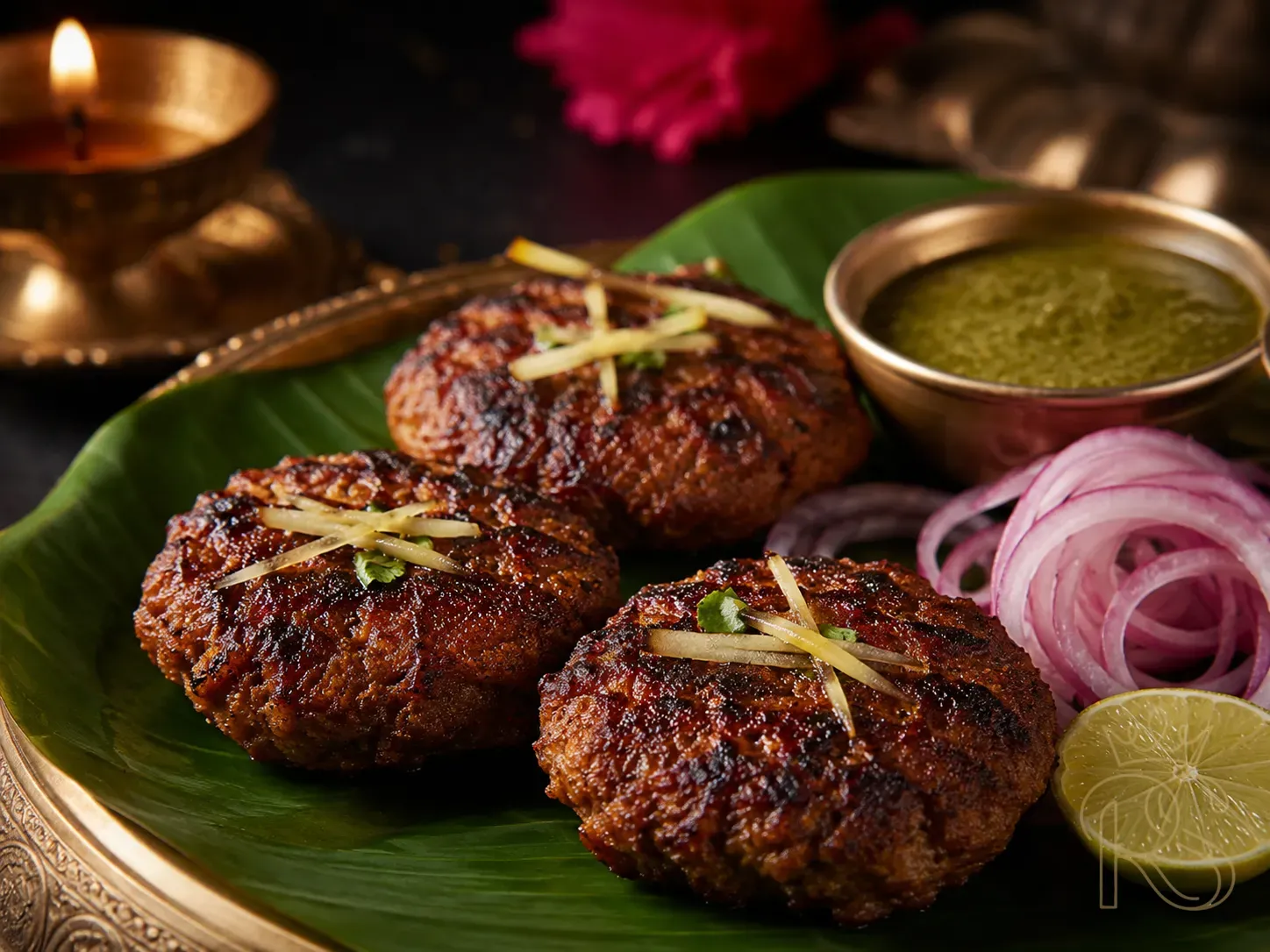
The menu should lean into the variety you genuinely do well. A focused list of five kebabs done excellently beats a sprawling menu of twelve done poorly. The non-negotiables: reshmi chicken, seekh kebab, galouti kebab (for the melt-in-the-mouth crowd), paneer tikka (for the vegetarians who feel left out), and one house special that your caterer makes better than anyone else. Accompaniments should include laccha onions with lemon and chaat masala, green mint chutney, and a small rajma-chawal or dal makhani accompaniment for those who want to make a proper meal of it.
💡
Placement Tip: Position the kebab station downwind from the main seating area, not upwind. Live coal smoke is atmospheric from a distance but overpowering and uncomfortable when it drifts directly into guest seating. A 15-metre buffer and attention to prevailing wind direction at your venue are worth discussing with your caterer during the site visit.
07
The Live Dessert & Mithai Station
The Sweet Finale · Underrated & Overdue
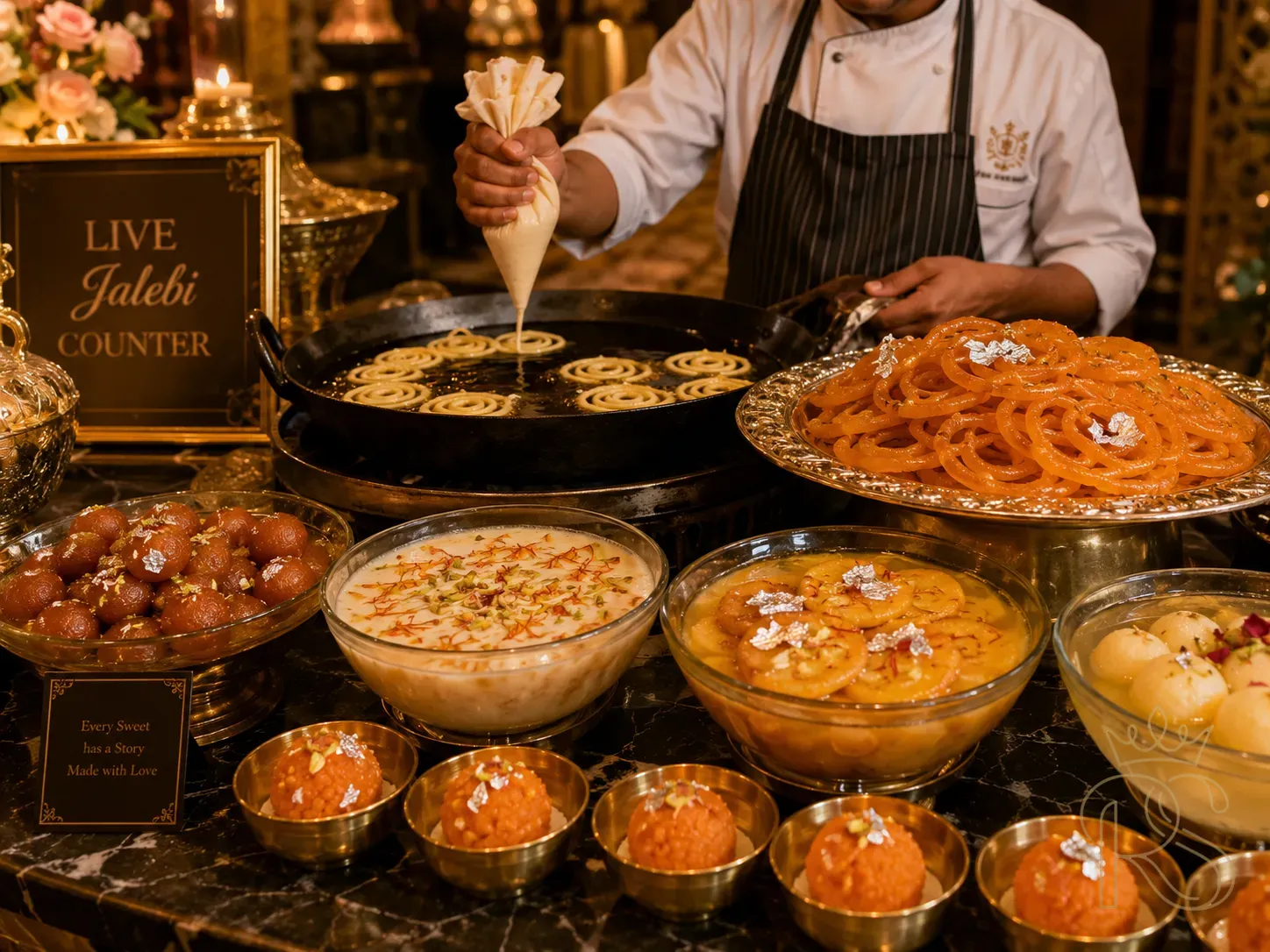
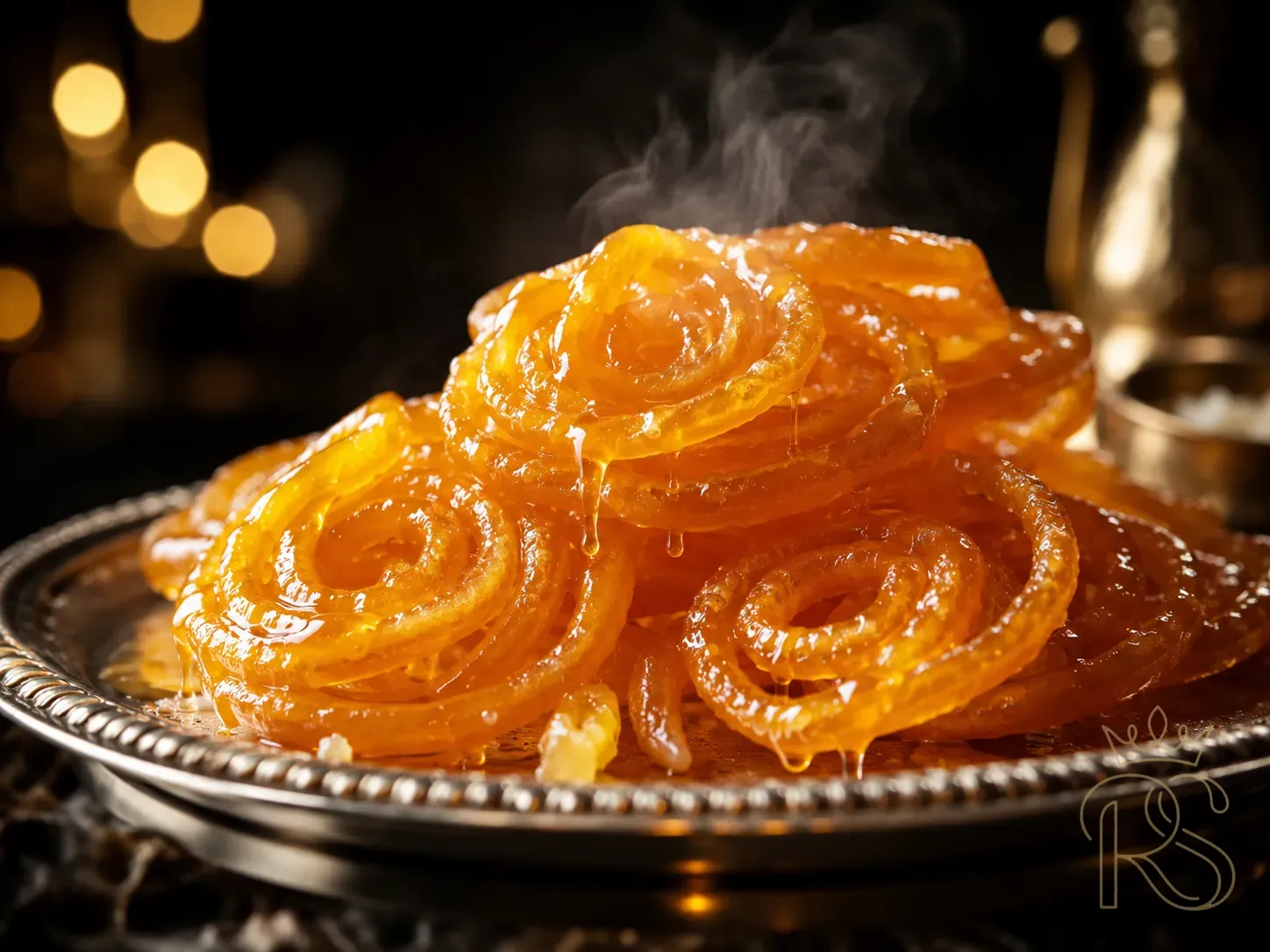
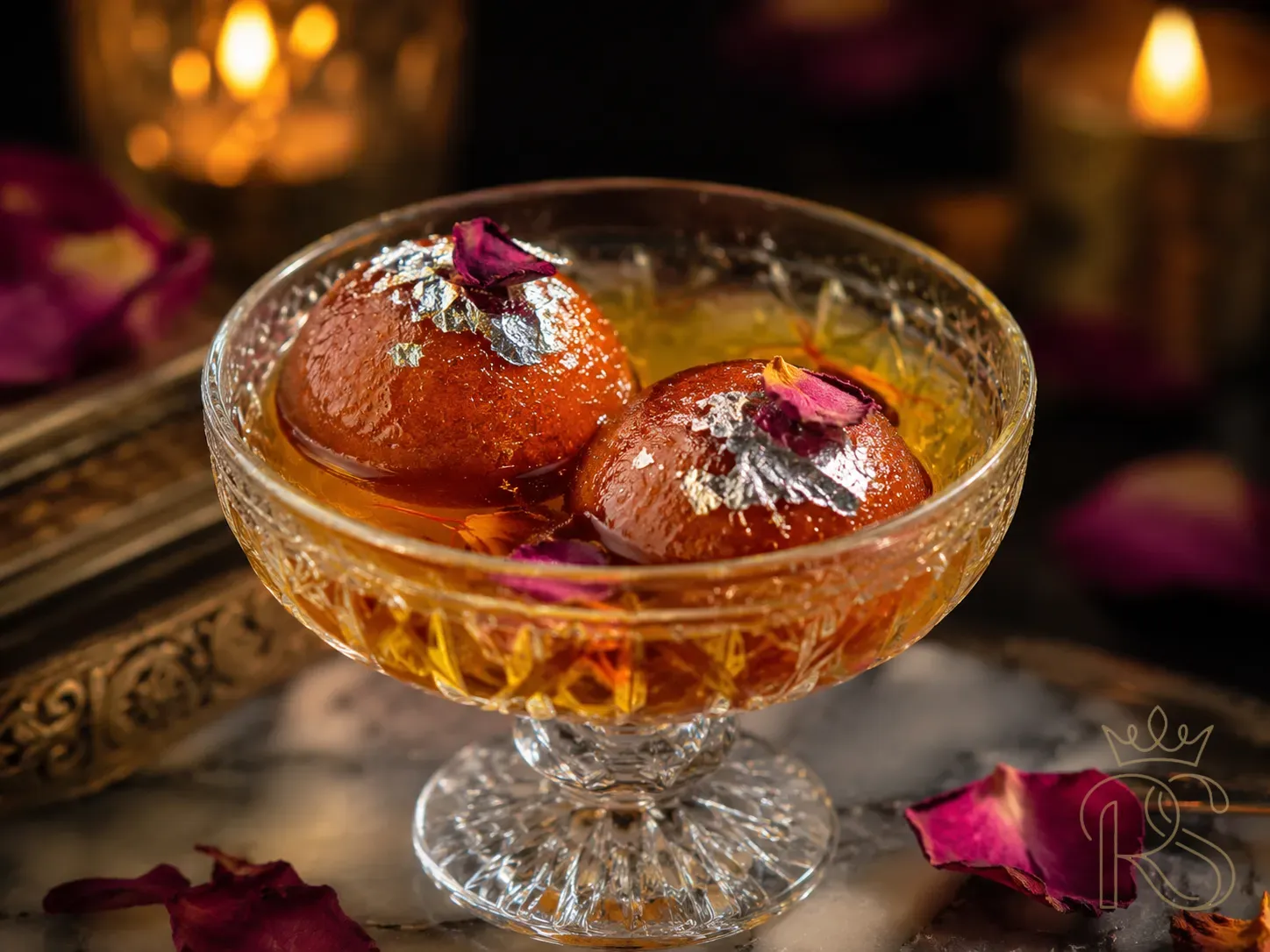
There is nothing quite like freshly made jalebi poured warm into a bowl of cold rabri — and guests know it.
Dessert
Mithai
Live Jalebi
Sweet Finale
The live dessert station is consistently the most underinvested category in Indian wedding catering and represents one of the clearest gaps between what guests remember and what couples budget for. Guests remember the jalebi wala. They do not remember which brand of packaged mithai was in the gift box. Yet budgets are routinely inverted: elaborate boxes of pre-made sweets get significant spend, while the live dessert station is an afterthought.
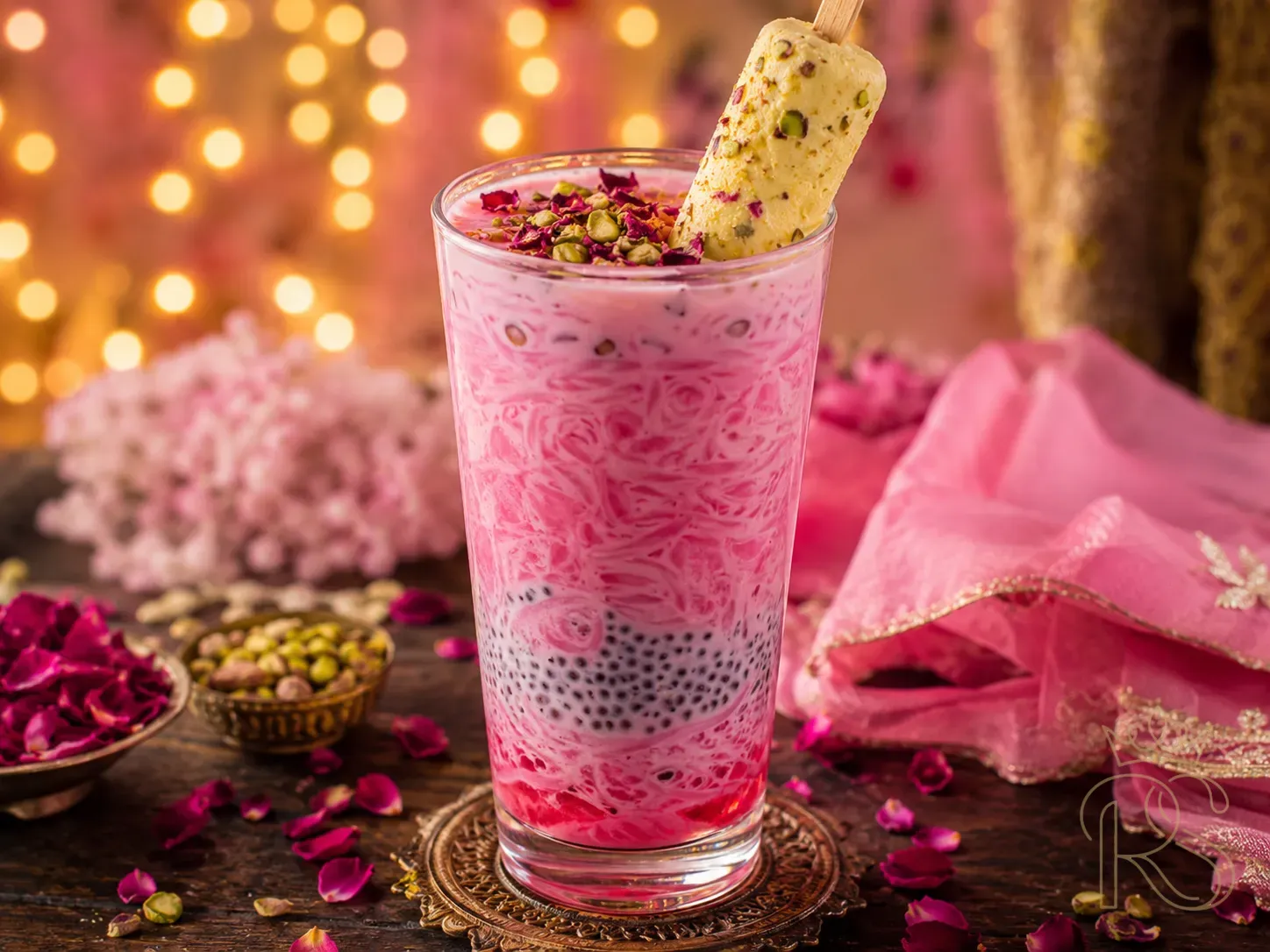
The anchor dish of any live dessert station is fresh jalebi with rabri, and the execution must be live — pre-made jalebi sitting in sugar syrup for two hours is a different dish. Watch the chef pipe the batter, watch it fry to gold, watch it dipped and served warm. Alongside the jalebi counter, a gulab jamun station (served warm in individual small glasses with a drop of rose water) and a kulfi falooda counter (if your event runs past 10 PM and you want something cooling) round out the station beautifully.
💡
Timing Tip: Open your live dessert station 30 minutes before the official end of the reception, not just at the very end. Guests who are circling toward leaving will stay an extra 20–40 minutes when they see fresh jalebi being made. It extends the energy of your reception naturally, without any music or announcement needed.
08
The Regional Speciality Pop-Up
Personal Signature · Most Memorable of All
A regional pop-up rooted in the couple's heritage turns a catering decision into an act of cultural storytelling.
Heritage
Storytelling
Personalisation
Unique
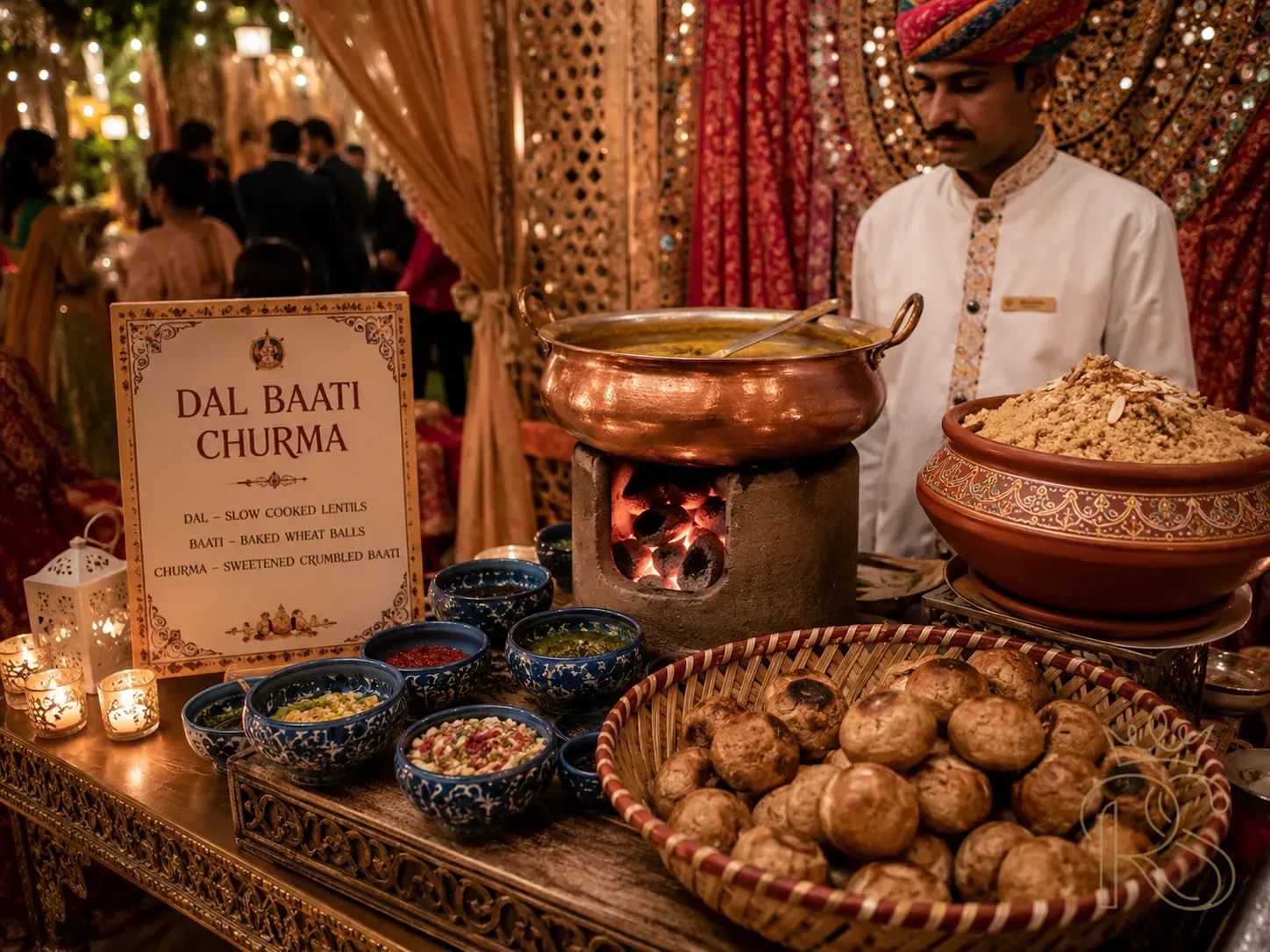
Of all the live station formats in this guide, the regional speciality pop-up has the highest emotional ceiling. When executed with genuine intention — when the station is not just food but a piece of the couple's own story — it creates moments that guests carry for years. A Marwari couple in Mumbai serving live dal baati churma at their reception. A Bengali groom whose caterer runs a small Kolkata street food counter with kathi rolls and luchi alur dom. A family from Lucknow whose live galouti counter comes with the story of the dish's nawabi origins printed on a small card.
The mechanics are simple: identify one regional dish or food tradition from either family's background, find a caterer or home chef who makes it authentically (not a five-star hotel chef attempting it for the first time), style the station to reflect the region's visual culture, and brief your MC or a small signage card to tell the station's story. The food has to be genuinely good — do not let the storytelling become a cover for mediocre execution.
"The stations guests photograph first are usually the flashiest. The stations they talk about for years are usually the most personal."
💡
Ideas by Region: Lucknow families → galouti and basket chaat; Bengali families → kathi rolls and mishti doi; Punjabi families → amritsari kulche with chole; South Indian → filter coffee counter with traditional brass decoction set; Gujarati → live handvo or undhiyu with bajra rotla; Maharashtrian → vada pav with multiple chutneys and a misal counter. The list is as long as India is diverse.
—
Stations to Avoid (and Why)
Honest Advice · Skip These
The wrong station wastes budget and blocks space that a better station could have used.
What Not to Do
Common Mistakes
Not every live station concept delivers on its promise. Here, specifically and without equivocation, are the formats that consistently underperform at Indian weddings — and why.
The Live Pizza Station: This one sounds good in a vendor pitch and almost never works in execution. Pizza requires a proper wood-fired oven running at 400°C+ to produce a genuine result — the "live pizza" counters at most Indian wedding caterers use conveyor ovens or deck ovens that produce a flatbread-with-toppings, not a pizza. Guests who eat actual pizza know the difference immediately. Unless your caterer owns a purpose-built Neapolitan wood-fired oven and a trained pizzaiolo, avoid this.
The "Asian Fusion" Station (Generic): A station labelled "Asian Fusion" with dim sum, spring rolls, and Thai curry in chafing dishes is just a buffet with a name. None of these dishes hold well under a heat lamp, and dim sum in particular becomes rubber within 20 minutes of being made. Either commit to a specific cuisine done live (Japanese sushi, or Chinese noodles tossed to order), or drop it entirely.
The Sandwich & Wrap Counter: This is a hotel banquet staple that has no place at a wedding. It signals a conference, not a celebration. The food is forgettable by definition. Every rupee spent on a sandwich counter would return more value redirected to a better-executed chaat station or live dosa counter.
⚠️
The Overloaded Menu Problem: The single biggest mistake couples make with live stations is trying to have too many — eight or nine stations for 300 guests sounds like abundance, but it means every station is understaffed, presentation quality drops across the board, and guests are overwhelmed rather than delighted. Four to five excellently executed stations beat nine mediocre ones every single time. Edit ruthlessly.
→
How to Plan Your Live Stations: The Practical Guide
Budgets, Staffing & Timing
Planning
Budget
Logistics
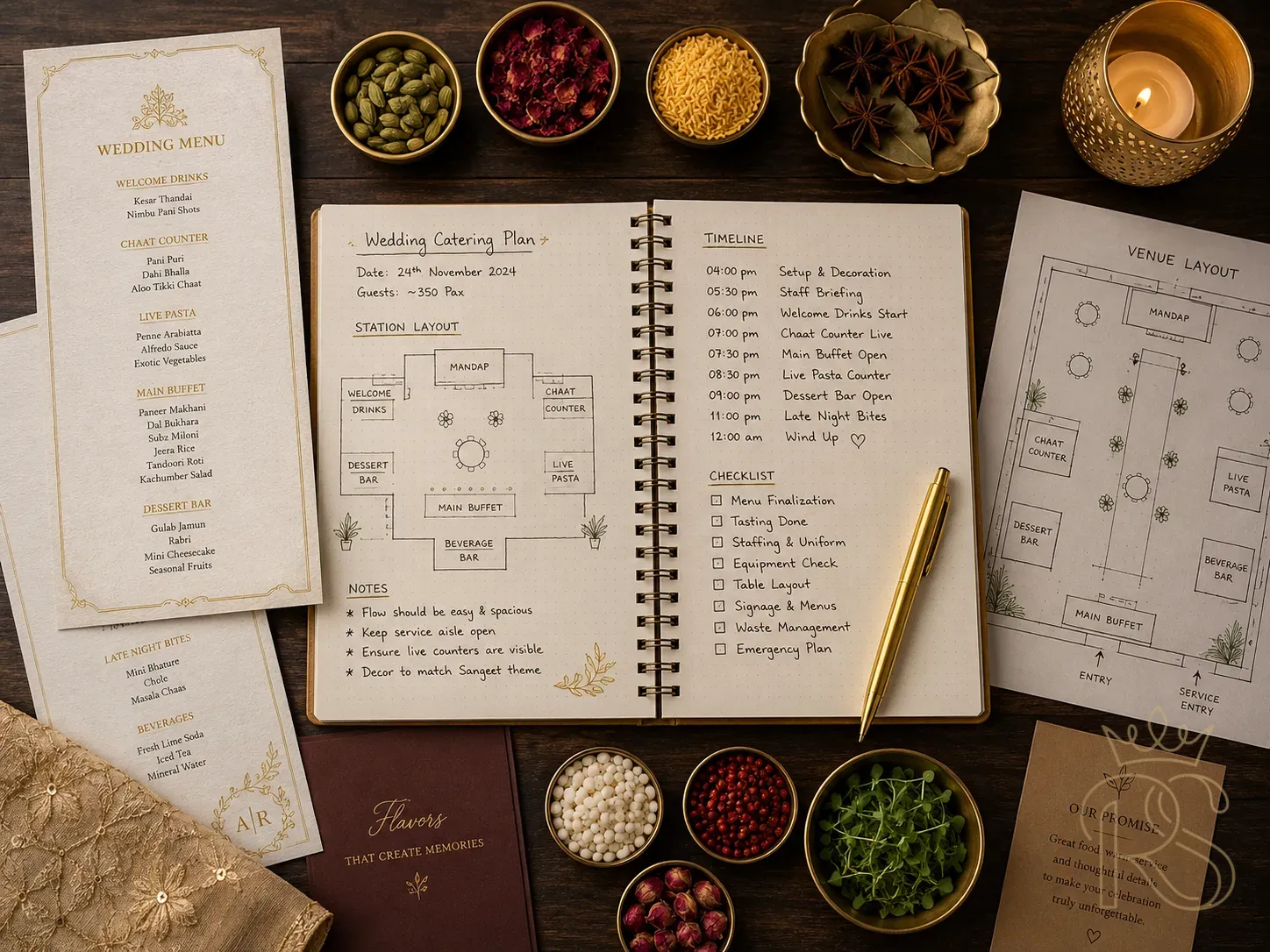
The difference between a live station experience that guests rave about and one that guests barely notice is almost never about the food concept — it is about the execution details: how many staff per station, where the stations are placed relative to each other and the seating, what time they open, and how they close. These are operational decisions, not culinary ones, and they are worth negotiating with your caterer explicitly before signing.
Staffing: The rule of thumb is one chef plus one service assistant per 100 guests for a moderately complex station (chaat, dosa). High-complexity stations (parmesan wheel pasta, live kebab grill) need two chefs per 80 guests. Understaffing a popular station creates queues — and a queue that exceeds 10 people begins to read as a catering failure, not a sign of popularity.
Placement: Stations should be distributed across the venue, not clustered in one corner. Spread them so that guests naturally circulate — this prevents bottlenecks and gives the venue a more active, alive feeling throughout the evening. Keep hot stations (kebab grill, dosa) outdoors or near ventilation; keep cold/delicate stations (sushi, dessert) away from heat sources.
Timing: Live stations should open in sequence, not simultaneously. Chaat and snack stations open as guests arrive (pre-dinner); hot starters and pasta stations open at the dinner call; dessert stations open 45–60 minutes after main dinner service begins. Staggering opening times prevents a single bottleneck rush and creates a sense of progressive celebration through the evening.
4–5
Optimal number of live stations for 200–400 guests at an Indian wedding
15–22%
Typical premium over standard buffet catering for a well-executed live station setup
3 hrs
Minimum active window to get full value from a live station investment at a wedding
💡
Budget Reality: A full live stations package (4–5 stations, properly staffed, with quality ingredients) for 300 guests typically runs ₹600–900 per head over your base catering cost in Tier 1 Indian cities (2026 pricing). This is not a cheap add-on — it is a deliberate upgrade. The couples who regret it are those who budget for it halfheartedly; the couples who do not regret it are those who cut one other catering category to do it properly.
Planning Your Wedding Menu?
Find verified caterers, taste-test live station setups, and build your wedding food plan with Royal Shaadi's vendor directory.
Explore Wedding Caterers →