A ₹50 lakh wedding budget sounds enormous — and it is. But ask any luxury wedding planner in India and they'll tell you the same thing: families with ₹75 lakh budgets routinely overspend by 30–40%. Not because they're reckless, but because no one gave them a clear, category-by-category framework before bookings began. This guide does exactly that. Every number here is grounded in 2025–2026 market data from India's metro and Tier-1 wedding markets, not wishful thinking.
01
The Real Cost of a Luxury Indian Wedding in 2026
Market Benchmarks & What ₹50 Lakh Actually Buys
A ₹50 lakh budget can deliver genuine luxury — if allocated correctly from day one.
Budget Planning
Market Data
Luxury Wedding
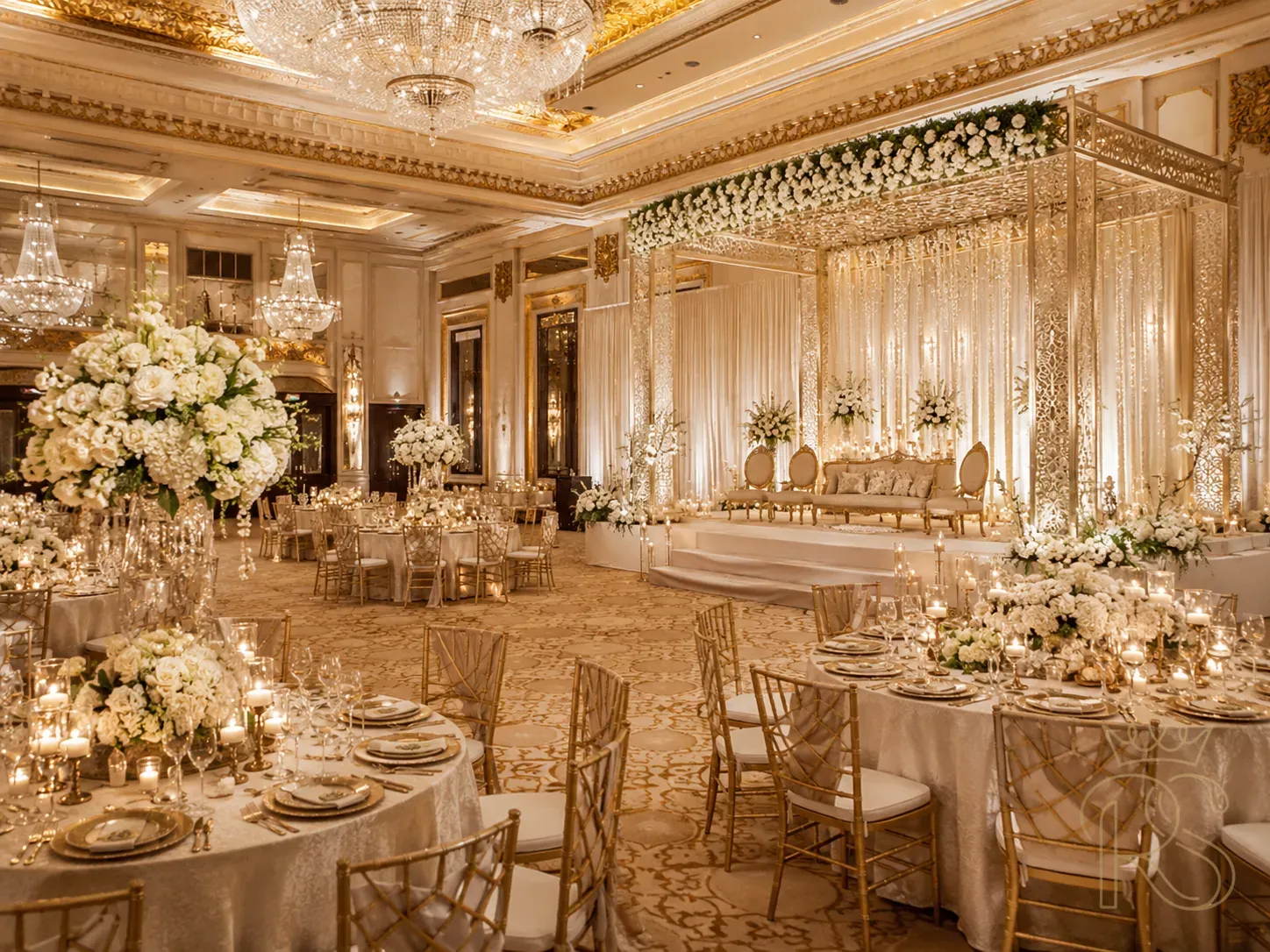
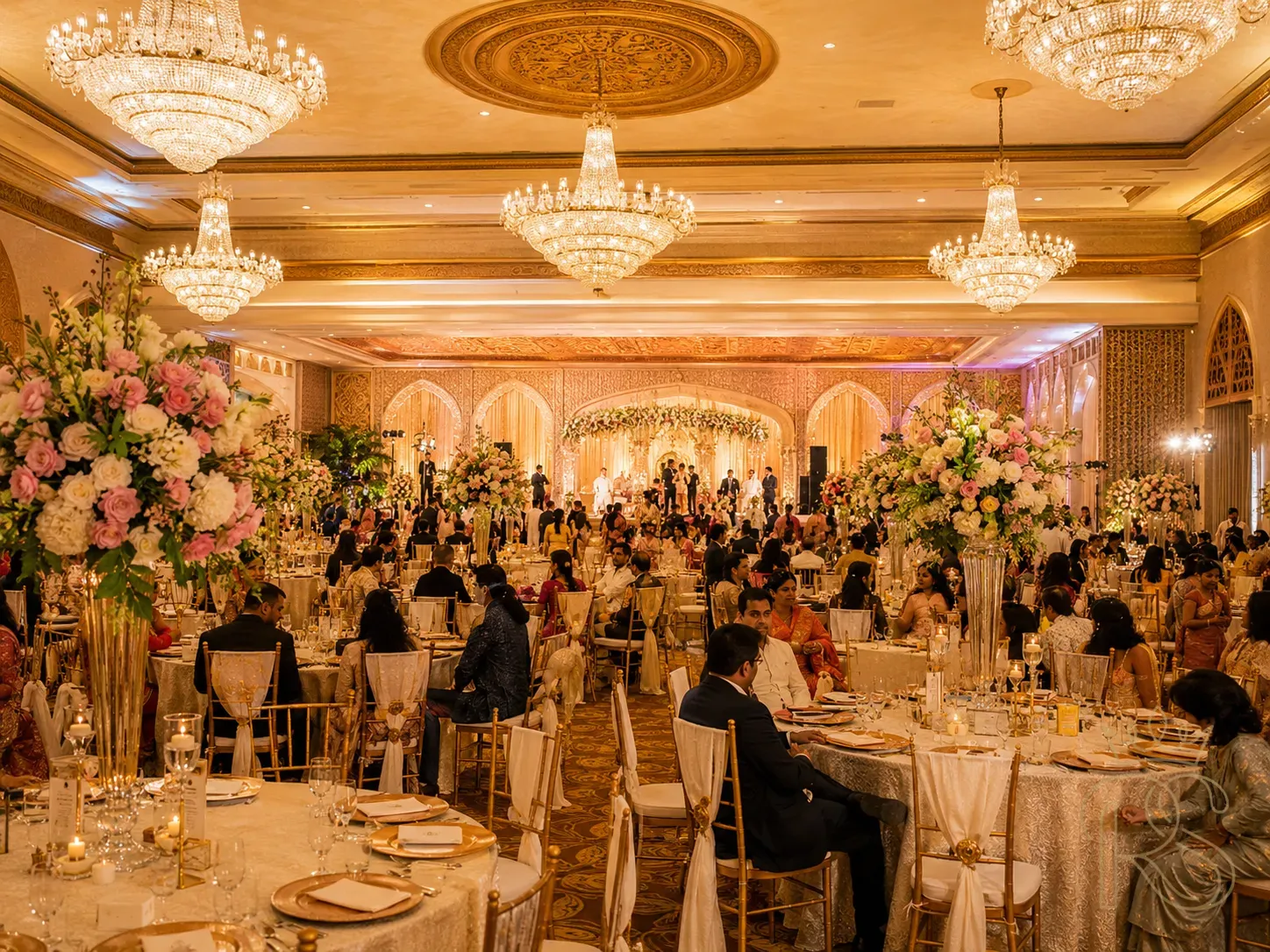
Let's be direct about what ₹50 lakh delivers in 2026 before you start dreaming about floral ceilings and celebrity performers. In Delhi NCR, Mumbai, and Bengaluru — India's three most expensive wedding markets — a competently planned wedding for 300–400 guests with a good (not extraordinary) hotel venue, solid catering, and decent décor will consume your ₹50 lakh almost entirely. Nothing luxurious, nothing memorable. Just respectable.
For actual luxury — a 5-star or heritage venue, designer bridal wear, destination photoshoot, premium décor, and live entertainment — you are realistically looking at ₹75 lakh to ₹1.5 crore for a 2–3 event wedding (mehendi, sangeet, ceremony, reception) with 250–400 guests in metro markets. Tier-2 cities like Jaipur, Udaipur, and Pune bring this down by 25–35%, which is why destination weddings at heritage havelis in Rajasthan remain extremely competitive on a per-rupee value basis.
₹85K
Average per-head spend at a luxury Indian wedding in metro cities (2026)
38%
Average budget overrun at Indian weddings without a professional planner
₹1.2Cr
Median spend at "premium" multi-day Indian weddings (Delhi NCR, 2025–26)
The Indian wedding industry was valued at approximately ₹6 lakh crore in 2024 and is projected to cross ₹10 lakh crore by 2030, growing at roughly 12–15% annually. Critically, the luxury and premium segment is growing fastest — couples are having fewer events and fewer guests, but spending significantly more per head to create experiences that are genuinely memorable and photographically extraordinary. This means vendor pricing in the luxury segment has outpaced general inflation significantly over the past three years.
"In 2026, ₹50 lakh is the floor of luxury — not the ceiling. The couples who don't overspend are the ones who know exactly where each rupee is going before signing a single vendor contract."
💡
Reality Check: Before you set a budget, lock your guest count. Every guest at a luxury wedding in India costs ₹60,000–₹1,20,000 all-in (venue per-head minimums, catering, return gifts, seating, lighting share). Cutting guest count from 400 to 250 is the single highest-impact budget decision you can make.
02
The Master Budget Allocation Framework
Category-by-Category Breakdown for ₹50–₹1.5 Crore
Budget Allocation
Cost Breakdown
Planning Framework
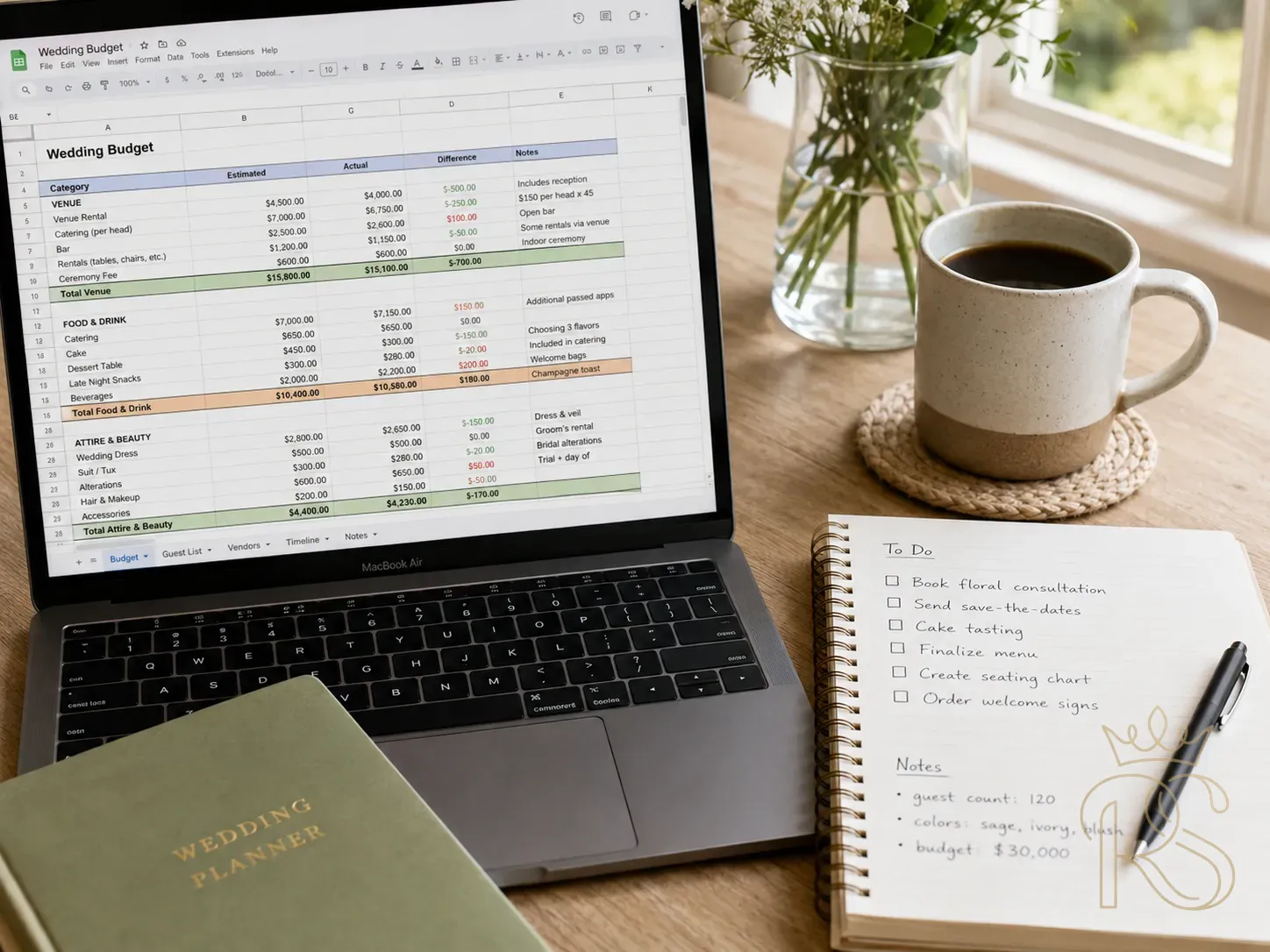
The most common mistake is not budget size — it's budget sequencing. Families book the venue first, paying a large advance, then discover they have allocated 35–40% of their total budget to a single vendor before catering, décor, photography, or anything else has been priced. The correct approach is to allocate percentages first, then negotiate vendors within those ceilings.
The framework below is built on real market data from luxury weddings across Delhi NCR, Mumbai, and Rajasthan destination venues. These percentages hold across budget scales from ₹50 lakh to ₹2 crore — they scale linearly because the vendors serving those tiers price proportionally.
| Category |
% of Total Budget |
₹50L Budget |
₹1Cr Budget |
Notes |
| Venue (all events) |
22–28% |
₹11–14L |
₹22–28L |
Includes F&B minimums, set-up charges, security deposits |
| Catering & Beverages |
20–25% |
₹10–12.5L |
₹20–25L |
Per-head ₹2,500–₹6,000 depending on menu complexity and bar service |
| Décor & Floral |
15–20% |
₹7.5–10L |
₹15–20L |
Most variable category — ceiling installations add 30–50% to base decor |
| Bridal & Groom Wear |
8–12% |
₹4–6L |
₹8–12L |
Couture lehenga alone is ₹3–15L; groom's sherwani ₹80K–₹3L |
| Photography & Video |
8–10% |
₹4–5L |
₹8–10L |
Top-tier photographers command ₹4–12L; albums extra |
| Entertainment & Music |
5–8% |
₹2.5–4L |
₹5–8L |
DJ ₹80K–₹2L; live band ₹2–6L; celebrity performer ₹15L+ |
| Makeup & Hair |
3–5% |
₹1.5–2.5L |
₹3–5L |
Celebrity MUAs ₹1.5–4L; include family members in brief |
| Invitations & Stationery |
1–2% |
₹50K–1L |
₹1–2L |
Luxury box invitations ₹800–₹3,000 per set |
| Return Gifts & Favours |
2–3% |
₹1–1.5L |
₹2–3L |
₹300–₹1,500 per guest depending on category |
| Wedding Planner |
5–8% |
₹2.5–4L |
₹5–8L |
Non-negotiable at this budget tier — saves far more than the fee |
| Contingency Buffer |
10–12% |
₹5–6L |
₹10–12L |
The single most important line. Do not spend this until D-Day |
| Total |
100% |
₹50L |
₹1Cr |
Based on 2–3 events, 300–400 guests, metro market |
⚠️
Critical Warning: Venue and catering together cannot exceed 48% of your total budget. If your venue quote alone is 35%+ of your budget, you will overspend in every other category. Either renegotiate the venue, change the venue, or adjust your total budget upward — there is no third option.
03
Where Luxury Budgets Actually Bleed: The 7 Overspend Traps
Budget Management & Vendor Negotiation
Most luxury wedding budgets don't blow up dramatically — they erode through dozens of small "upgrades" that feel minor in isolation. Here are the seven categories where even experienced planners see consistent budget creep:
-
🔴
Scope creep on décor. The décor brief you approved at ₹8 lakh silently becomes ₹13 lakh by wedding day. Every addition — extra floral columns, a photo booth backdrop, upgraded centrepieces, aisle runner lighting — is priced individually and feels negligible. Get a fully itemised quote with a clause that locks the final scope at a fixed price.
-
🔴
Hotel F&B minimums. Many 5-star hotels require a minimum food and beverage spend per head regardless of your catering choice. Read every hotel contract line by line. The "venue rental" fee is often just the door opener — the real cost is buried in per-head F&B minimums, corkage, and mandatory cake-cutting fees.
-
🔴
Guest accommodation blocks. When you block 40 rooms at ₹12,000/night at a 5-star venue for two nights, that's ₹9.6 lakh that many families never budget for. Decide upfront whether you are subsidising guest rooms and by how much — and factor it in from day one.
-
🔴
Day-of logistics. Buses, taxis, coordination staff, valet parking, generator backup — these combine into ₹2–4 lakh at a large luxury wedding and are almost never line-itemised early enough. Budget ₹1,500–₹2,000 per head for logistics when planning multi-venue events.
-
🔴
Photography overruns. You book a 2-photographer team. Then you add drone footage. Then a same-day reel. Then a dedicated mehendi photographer. Then a "family portraits" session. These additions are each ₹25,000–₹80,000. Brief your photography requirements exhaustively upfront and get everything on one invoice.
-
🔴
GST blindness. GST on wedding services ranges from 5% on basic catering to 18% on many venue and décor services. On a ₹50 lakh budget, GST alone can cost ₹5–8 lakh — nearly 15% of your budget. Always verify whether vendor quotes are inclusive or exclusive of GST, and budget accordingly.
-
🔴
Last-minute guest additions. "We can't not invite them" conversations happen at every wedding. Every 25-guest addition at a luxury wedding costs ₹15–25 lakh in incremental venue, catering, accommodation, and gifts. Lock your guest list 4 months before the event and do not reopen it.
💡
Pro Tip: Build a "decision log" — a shared document where every addition to any vendor's scope is recorded with its cost and who approved it. Most overspends are invisible because they're spread across 15 small decisions. The log makes the cumulative impact visible before it's too late.
04
Venue: The Most Consequential Budget Decision
Venue Selection & Pricing in India's Top Wedding Markets
Heritage venues in Rajasthan offer extraordinary value compared to 5-star hotel banquets in metro cities — often at 40–60% lower all-in cost.
Venue Selection
Cost Comparison
Destination Wedding
Venue choice single-handedly determines whether your budget is adequate or impossible. Here is a realistic pricing map for 2026 that most blogs won't tell you plainly:
-
🏙️
Delhi NCR (5-star hotel ballroom, 300 guests, 1 event): ₹12–22 lakh for the venue, plus ₹2,500–₹4,500/head F&B minimum. Total: ₹19–36 lakh per event before décor, entertainment, or anything else. Leela, Taj, Oberoi, Hyatt Regency cluster at the top of this range.
-
🏙️
Mumbai (premium banquet, Bandra–BKC corridor, 300 guests): ₹14–26 lakh for venue, F&B minimums ₹3,000–₹6,000/head. Space constraints in Mumbai mean premium is paid per sq ft, not per table. Weekend premiums add 20–30%.
-
🏰
Rajasthan heritage (Jaipur, Udaipur, Jodhpur — full property buyout): ₹8–18 lakh for venue access on full buyout, with F&B typically external or negotiated separately at ₹1,800–₹3,500/head. For a 3-day wedding with 200 guests, total venue + accommodation can still undercut a single-event Delhi 5-star by 30–40%.
-
🌿
Farmhouse venues (Delhi NCR, Gurugram outskirts): ₹5–12 lakh for venue hire with no F&B minimum. You bring your own caterer, which adds flexibility but also adds coordination cost. Best for couples who want full creative control over catering and décor.
⚠️
Hidden Cost Alert: Always ask venues for their "all-in" quote covering: rental fee, security deposit, setup and teardown time charges, power/generator charges, parking, mandatory decorator tie-ins, overtime charges, and whether outside vendors are permitted. A venue quoted at ₹8 lakh can easily become ₹13 lakh all-in once these are added.
05
Photography & Video: The Only Thing That Lasts
Where to Spend and Where to Hold Back
Wedding Photography
Videography
Investment
This is the one category where almost every experienced wedding professional will tell you the same thing without hesitation: do not cut your photography and videography budget. Flowers die in 24 hours. Catering disappears. The décor gets dismantled. The only lasting evidence of how beautiful your wedding actually was is the photos and film.
In 2026, India's luxury wedding photography market is well developed, with a clear tiering. Budget ₹1.5–₹3 lakh and you get competent, technically sound photographers. Budget ₹4–₹7 lakh and you access the mid-tier artisan photographers whose work circulates on wedding platforms and Instagram with some regularity. Budget ₹8–₹15 lakh and you reach the genuine top tier — photographers whose images appear in Vogue India, Brides Today, and WedMeGood's premium editorial content, whose calendars are booked 18+ months ahead.
₹4–7L
Mid-tier luxury wedding photography package (2 photographers, 3 events, edited album)
₹8–15L
Top-tier editorial photographers (single team, multi-event, destination surcharge extra)
18+mo
Advance booking required for India's top 20–30 luxury wedding photographers
💡
Smart Allocation: If your total photography brief includes a pre-wedding shoot, drone footage, same-day edit reel, and wedding film — get a single package quote covering all of it. Piecemeal additions after the main contract is signed are 25–40% more expensive than bundling everything upfront.
06
The Contingency Rule: Why 10–12% Is Non-Negotiable
Risk Management & Budget Discipline
Contingency Planning
Risk Buffer
Financial Discipline
Every wedding planner who has managed 50+ weddings will confirm this: something always costs more than expected, and something always changes. Not sometimes — always. The professional difference is whether you have the budget architecture to absorb those changes without entering crisis mode or taking on debt.
At a ₹50 lakh budget, a 10% contingency reserve is ₹5 lakh. Do not mentally spend this money during planning. Treat it as if it doesn't exist until 30 days before your wedding. Common draws on contingency include: last-minute vendor replacement (average ₹80K–₹2.5L), weather-triggered venue or logistics changes (₹1–3L at outdoor or destination events), guest accommodation overflow (₹50K–₹1.5L), decorator day-of overruns, and GST reconciliation surprises.
"The couples who arrive at their wedding day relaxed and present are the ones who have an untouched contingency buffer. The ones who don't are managing vendor calls at the mandap."
⚠️
Debt Warning: India's wedding loan market has grown sharply — multiple fintech platforms now offer instant loans marketed specifically for weddings. At ₹50 lakh+ budgets, taking on unsecured debt at 16–24% interest rates to fund a wedding is a serious financial risk. If your actual budget is ₹35 lakh, plan for ₹35 lakh — not ₹50 lakh with financing.
07
Do You Actually Need a Wedding Planner? (Yes, At This Budget)
Planner Value & How to Choose One
Wedding Planner
Vendor Management
ROI
At budgets below ₹15–20 lakh, a wedding planner is optional. At ₹50 lakh and above, they are not — not because of logistics complexity alone, but because of vendor negotiation leverage and budget protection.
A professional luxury wedding planner in India charges 5–8% of the total budget (₹2.5–4 lakh on a ₹50 lakh budget, or ₹6–10 lakh on a ₹1 crore budget). In exchange, they typically save you 12–18% through established vendor relationships, volume discounts passed through, and preventing the budget bleed described in Section 3. The net return on a good planner is strongly positive at this tier.
-
✅
What a planner should do for you: Develop a master budget with category ceilings before any vendor is contacted; prepare detailed briefs for every vendor category; review all contracts for hidden costs before you sign; serve as the single point of coordination on wedding day; and be financially accountable to the budget ceiling throughout.
-
✅
What a planner should not do: Push you toward their preferred vendors without disclosure of referral relationships; add services without transparent cost discussion; or fail to provide monthly budget-vs-actuals tracking throughout the planning period.
-
🔴
Red flag: Any planner who gives you a verbal "we'll manage within your budget" without producing a written, category-level budget document within the first two meetings is not operating at a professional standard for this price tier.
💡
Vetting Tip: Before hiring, ask any prospective planner for the last three weddings they managed at your budget level, the total planned vs. actual spend for each, and contact references from the families. Budget accountability is the single most important differentiator between adequate and excellent planners.
08
Your 12-Month Budget Timeline: When to Commit Each Rupee
Planning Calendar & Payment Milestones
Planning Timeline
Payment Schedule
Milestones
Budget discipline requires a payment timeline, not just a budget document. Knowing when to commit money is as important as knowing how much. Here is a realistic 12-month milestone map for a ₹50 lakh+ luxury wedding:
-
📅
12 months out: Lock date and venue (30–50% venue advance). Hire wedding planner. Finalise guest count ceiling. Do not book any other vendor yet.
-
📅
10 months out: Book photographer and videographer (typically 50% advance). Begin bridal wear consultations — couture lehengas require 6–9 months for crafting. Book caterer and negotiate F&B package.
-
📅
8 months out: Sign décor vendor with fully itemised scope. Book live entertainment. Send save-the-dates. Finalise accommodation block with hotel.
-
📅
6 months out: Dispatch invitations. Book makeup artist. Finalise return gifts. Begin any destination event logistics (travel, transfers).
-
📅
3 months out: Finalise and freeze all vendor briefs. No new scope additions without explicit budget impact discussion. Review actuals-vs-budget. Confirm contingency reserve is intact.
-
📅
6 weeks out: Final RSVP count. Pay outstanding vendor balances per contracts. Prepare day-of logistics brief. Brief all vendors on timeline and contact hierarchy.
-
📅
1 week out: Final planner walkthrough at venue. Confirm all vendor arrival times. Release contingency reserve only if confirmed overruns require it — otherwise hold until after the wedding.
💡
Payment Strategy: Never pay a vendor 100% upfront, regardless of how reputable they are. Standard for luxury Indian weddings: 30–40% on signing, 30% at 60 days before event, 25% at 2 weeks before event, 5% balance on satisfactory delivery after the event. This structure protects you while keeping vendors appropriately incentivised.
Ready to Plan Your Luxury Wedding?
Use Royal Shaadi's free budget planner to build your category-by-category wedding budget — and connect with vetted luxury planners and vendors across India's top wedding markets.
Start Planning Free →