Long after the baraat has gone home and the last string of fairy lights has been packed away, one more ritual waits quietly on every North Indian wedding calendar. Pag Phera has no DJ, no hashtag, and almost never a paid vendor — and yet ask any bride, mother, or grandmother which post-wedding moment she remembers most clearly, and this is often the one she names. This is the complete story of the homecoming that follows the wedding: where the custom comes from, how it changes shape across India's communities, what the bride and groom actually wear for it, and why a ritual built on something as small as a daughter walking back through her own front door has outlasted nearly every reinvention of the modern Indian wedding.
1–3 Days
After the wedding when Pag Phera is traditionally held
Brother
Usually the family member who comes to escort the bride home
5+ Names
Regional names used for this same homecoming across India
01
What Is Pag Phera?
Meaning & Origins
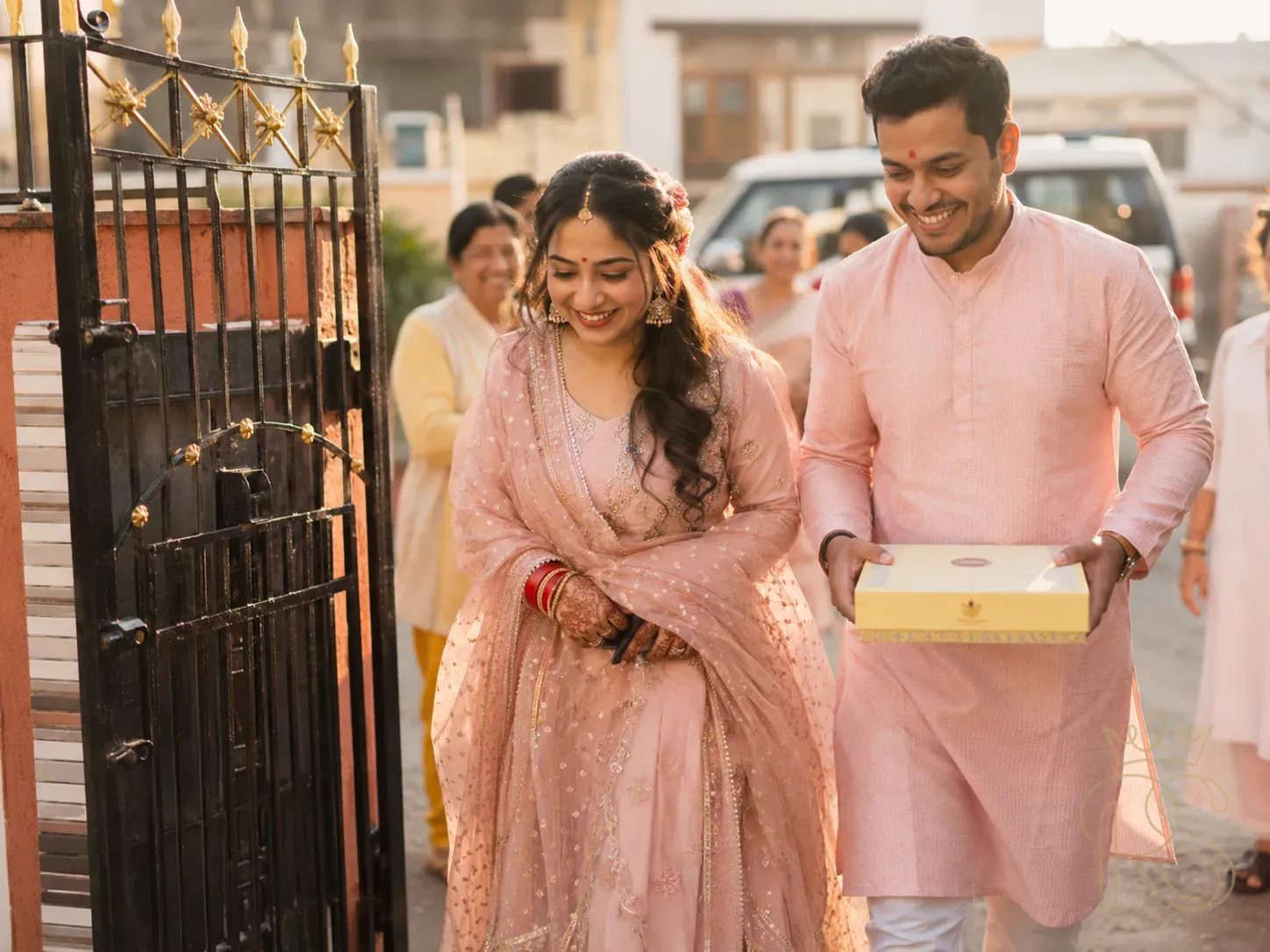
Pag Phera marks the bride's first return to her parents' home after the wedding — usually within a day or two of the Vidaai.
Post-Wedding Rituals
North Indian Weddings
Hindu Traditions
Bride's Homecoming
Translated literally, "pag" refers to the foot or the footstep, and "phera" describes a turn or a return. Put together, the phrase is usually rendered as "the turning of the feet" — a wonderfully literal description of what actually happens: the bride's own footsteps carry her back through the door she walked out of only days earlier as someone's daughter, except now she returns to it as someone's wife.
The shape of the ritual is simple by wedding standards. Somewhere between one and three days after the wedding, the bride is escorted back to her parents' home, almost always by her brother or a close male cousin. She stays for a short, unhurried visit, and then her husband arrives — typically a day or two later — to formally collect her and take her home again. With that second departure, the long arc of the wedding finally closes: a cycle that began months earlier with the Roka and reached its most emotional peak at the Vidaai now ends on a far gentler note.
What makes Pag Phera worth understanding in depth is not its complexity — there is no priest, no fire, no elaborate sequence of mantras — but its endurance. Nearly every Hindu wedding tradition across the country contains some version of this same homecoming, even though the name, the exact timing, and the smaller customs around it shift considerably from one community to the next. We'll walk through those regional differences shortly, but first, it helps to understand why this particular visit was ever considered important enough to formalise into a ritual at all.
02
Why a Daughter's Return Is Considered Auspicious
Belief & Symbolism
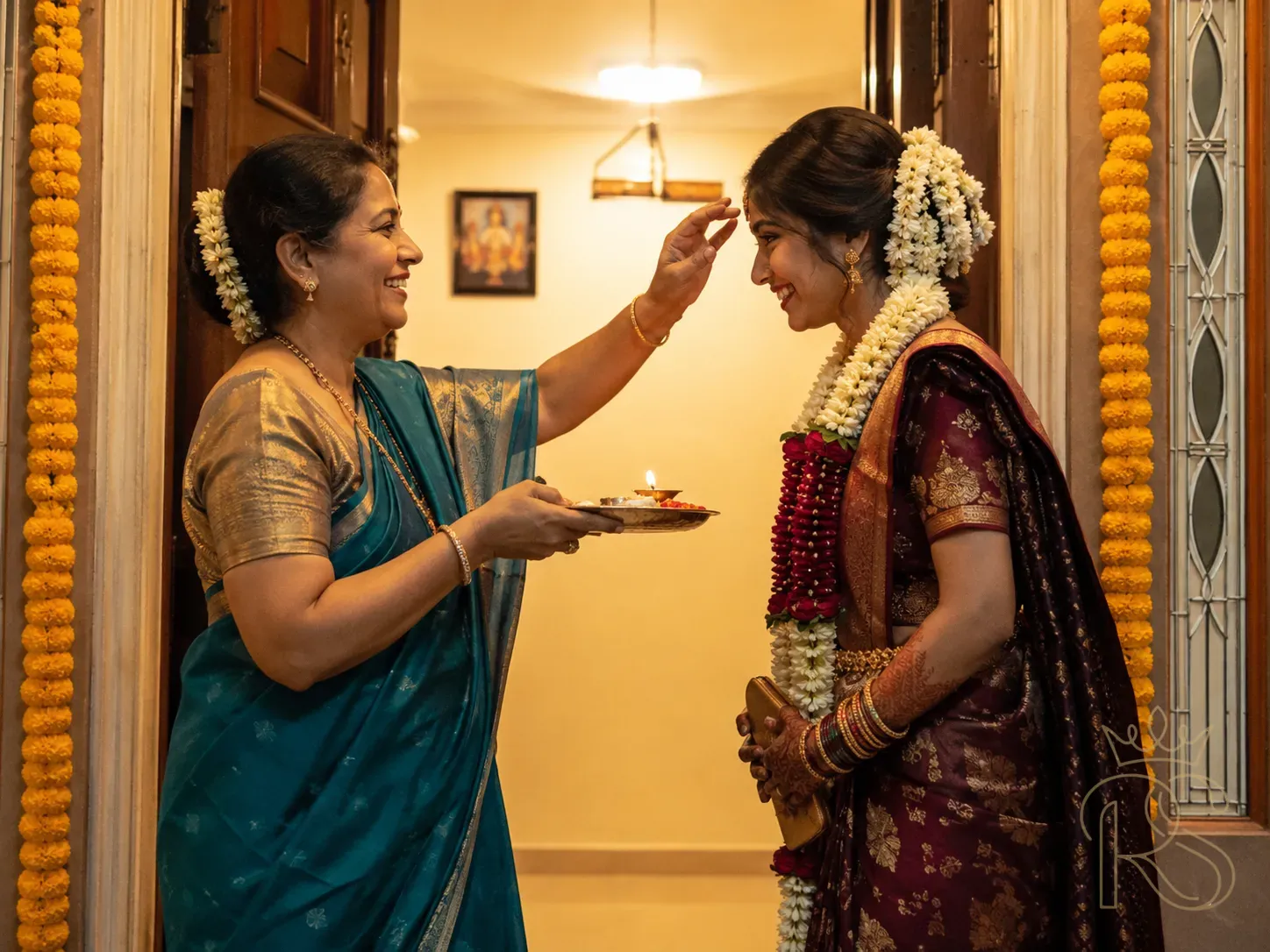
A short aarti at the threshold is one of the few fixed rituals within Pag Phera — performed to welcome the bride and ward off ill fortune.
Hindu Symbolism
Goddess Lakshmi
Aarti
Wedding Beliefs
In many Hindu households, a daughter is considered a living embodiment of Lakshmi, the goddess of wealth and good fortune — a belief that doesn't end the moment she marries. Her presence in a home, even for a brief visit, is thought to carry that same blessing with her. This idea quietly threads through several wedding-day customs, including the moment at Vidaai when the bride tosses a handful of rice backward over her shoulder as she leaves her parents' home for the first time, returning her symbolic share of the household's prosperity rather than carrying it away with her. Mothers often gather this rice afterward and keep it, treating it less like leftover grain and more like a blessing left behind on purpose.
Pag Phera reverses that gesture in a small but meaningful way. Where Vidaai is about a daughter leaving, this is about her being welcomed straight back in — and many families mark that re-entry with a short aarti at the door, performed by the mother with a lit diya and a small thali. It's a protective ritual as much as a celebratory one, meant to ward off the evil eye and bless the home with her safe, happy return.
"A wedding asks a daughter to leave one home for another. Pag Phera is the custom that quietly insists she never has to choose between them."
None of this requires elaborate staging. The emotional weight of the moment comes from its ordinariness — a mother lighting a lamp at her own front door, the way she might on any festival evening, except this time the person walking through it is no longer quite the same person who walked out.
03
Many Names, One Homecoming
Regional & Community Variations
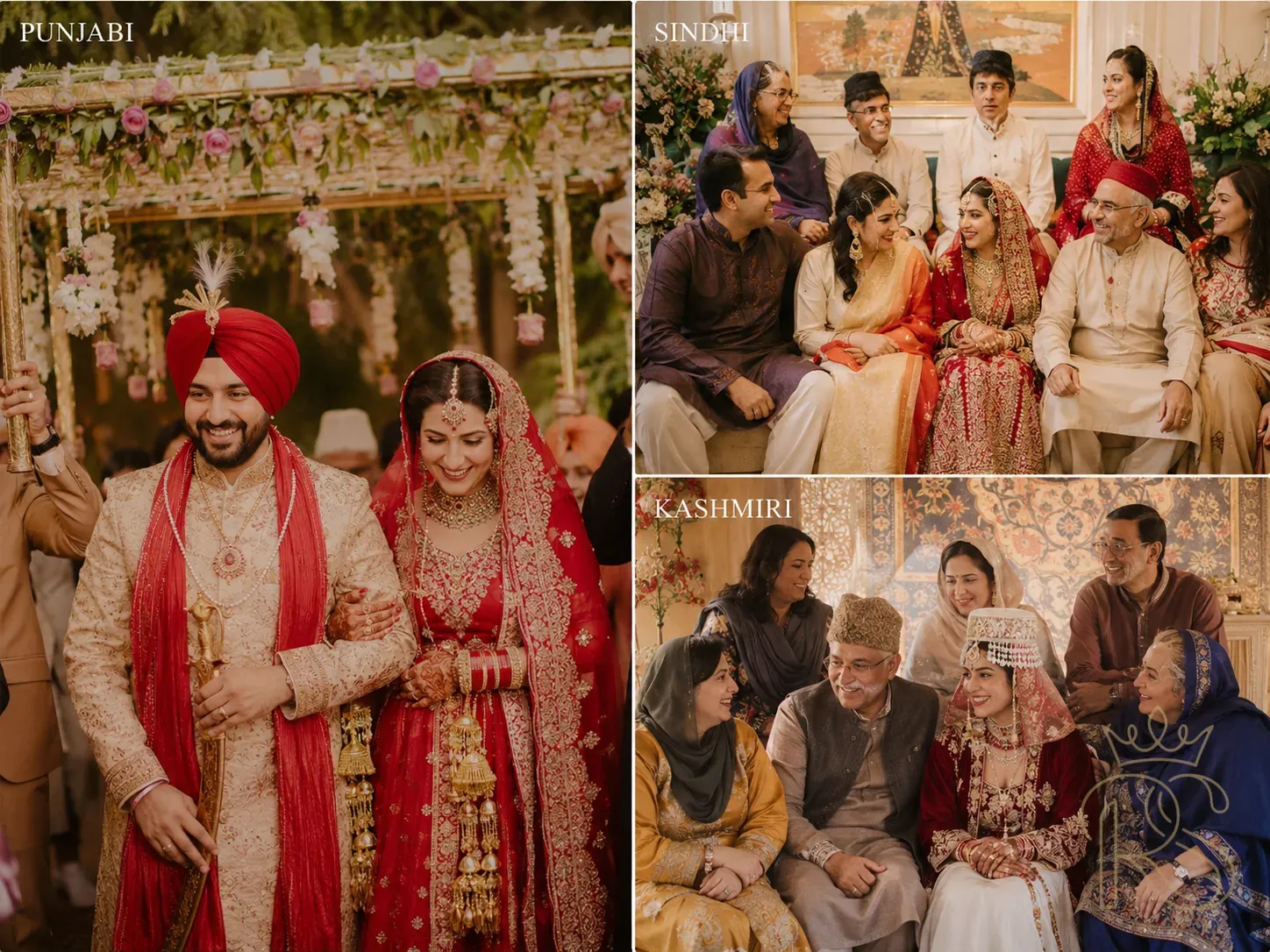
The same homecoming ritual is celebrated under different names and slightly different customs depending on the community.
Punjabi Weddings
Sindhi Weddings
Kashmiri Pandit Customs
Regional Rituals
Punjab is where this ritual is most visibly and energetically celebrated, and even within Punjabi households you'll hear it called by more than one name — Pag Phera, Phera Dalna, and Phere Pauna are all used interchangeably to describe the same short, joyful back-and-forth journey between the two homes.
In Sindhi families, the equivalent occasion is known as Sataurah. Here, the newlyweds typically visit the bride's parental home together for the first time as a couple, rather than the bride going alone first, and are sent off again with gifts and blessings before returning to their own home.
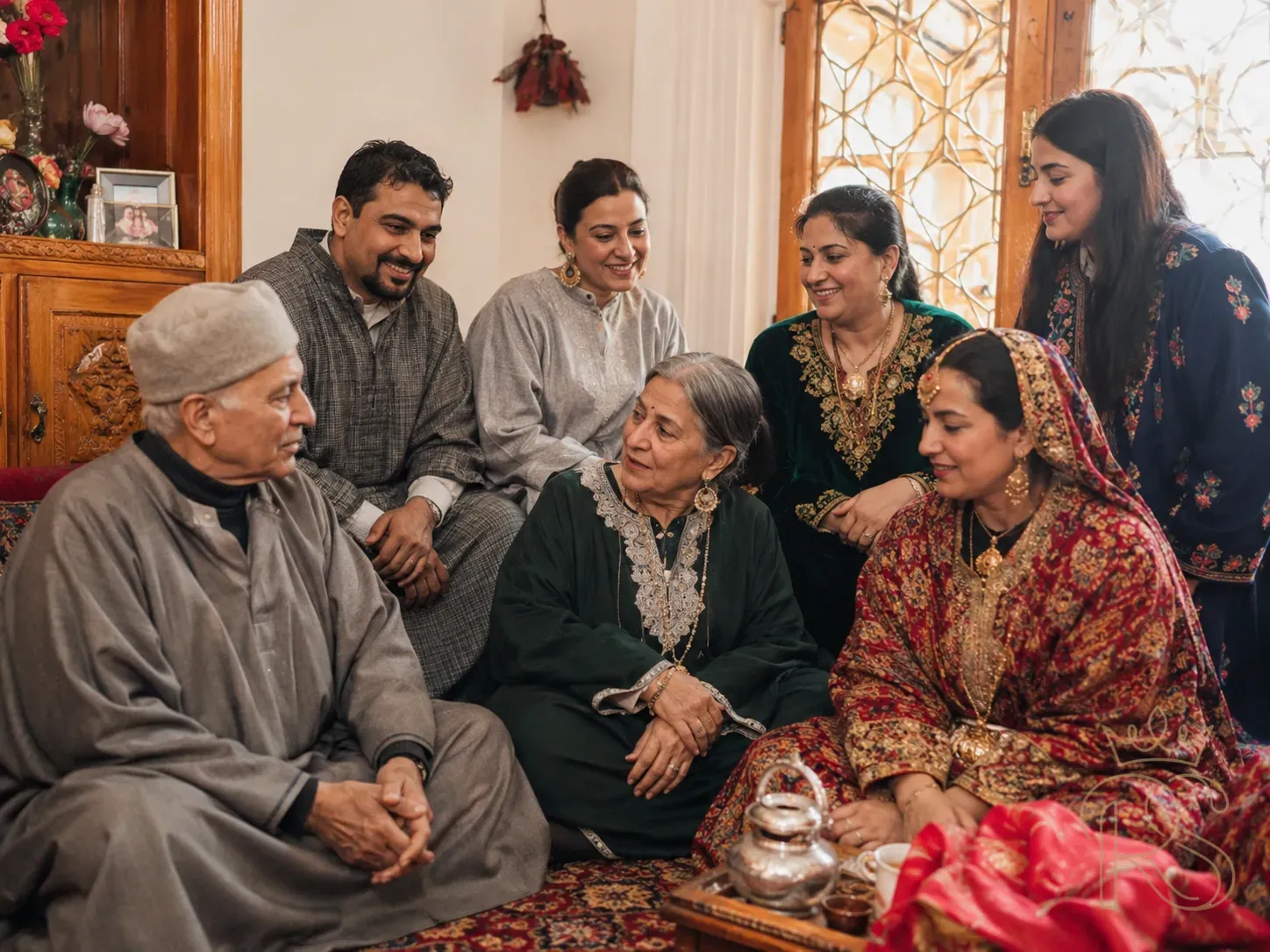
Kashmiri Pandit households often stretch this homecoming over a noticeably longer window than other communities, treating it less like a single day's event and more like an extended settling-in period for the bride. Rajasthani and Haryanvi families broadly follow the same core structure as well, sometimes folding it into their own dialect-specific names for post-wedding visits, while still keeping the central idea — brother fetches sister, sister stays a while, husband comes to collect her — intact.
What's worth remembering is that the name changes by region, dialect, and even individual family — but the emotional engine underneath stays remarkably consistent everywhere it appears: a bride is allowed, almost immediately after her wedding, to walk back through the door she grew up behind.
04
The Pag Phera Timeline
How the Ritual Unfolds, Step by Step
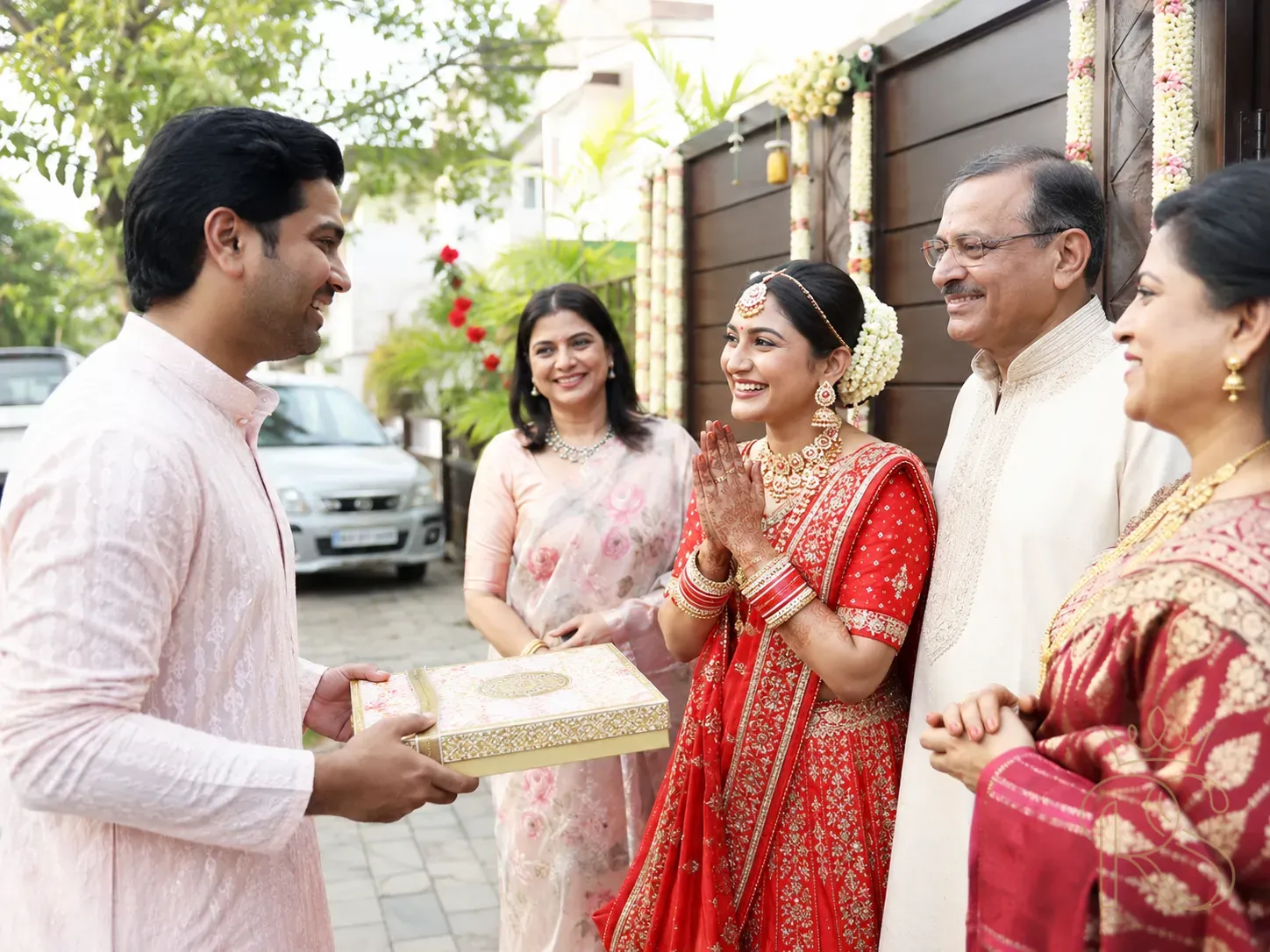
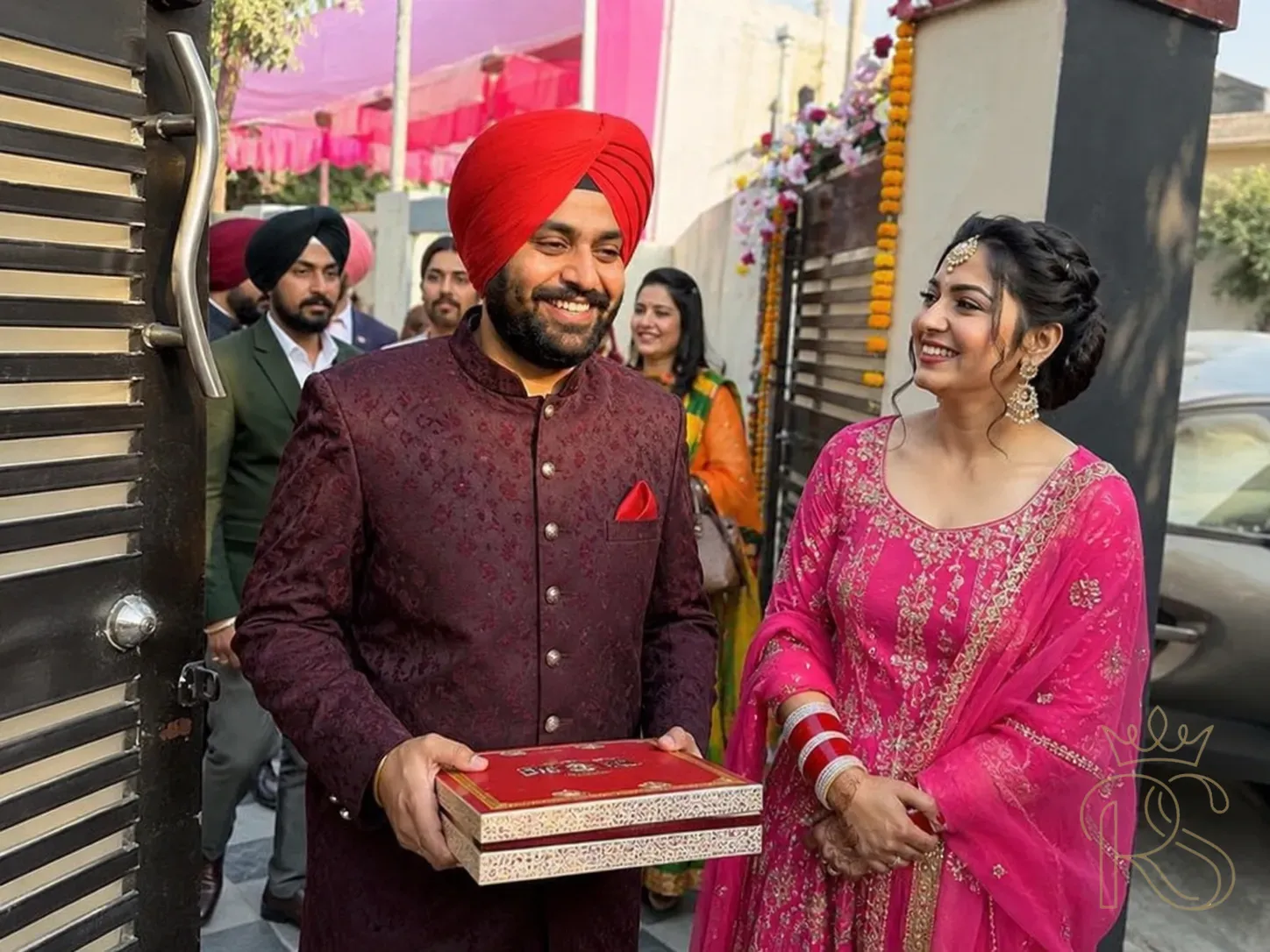
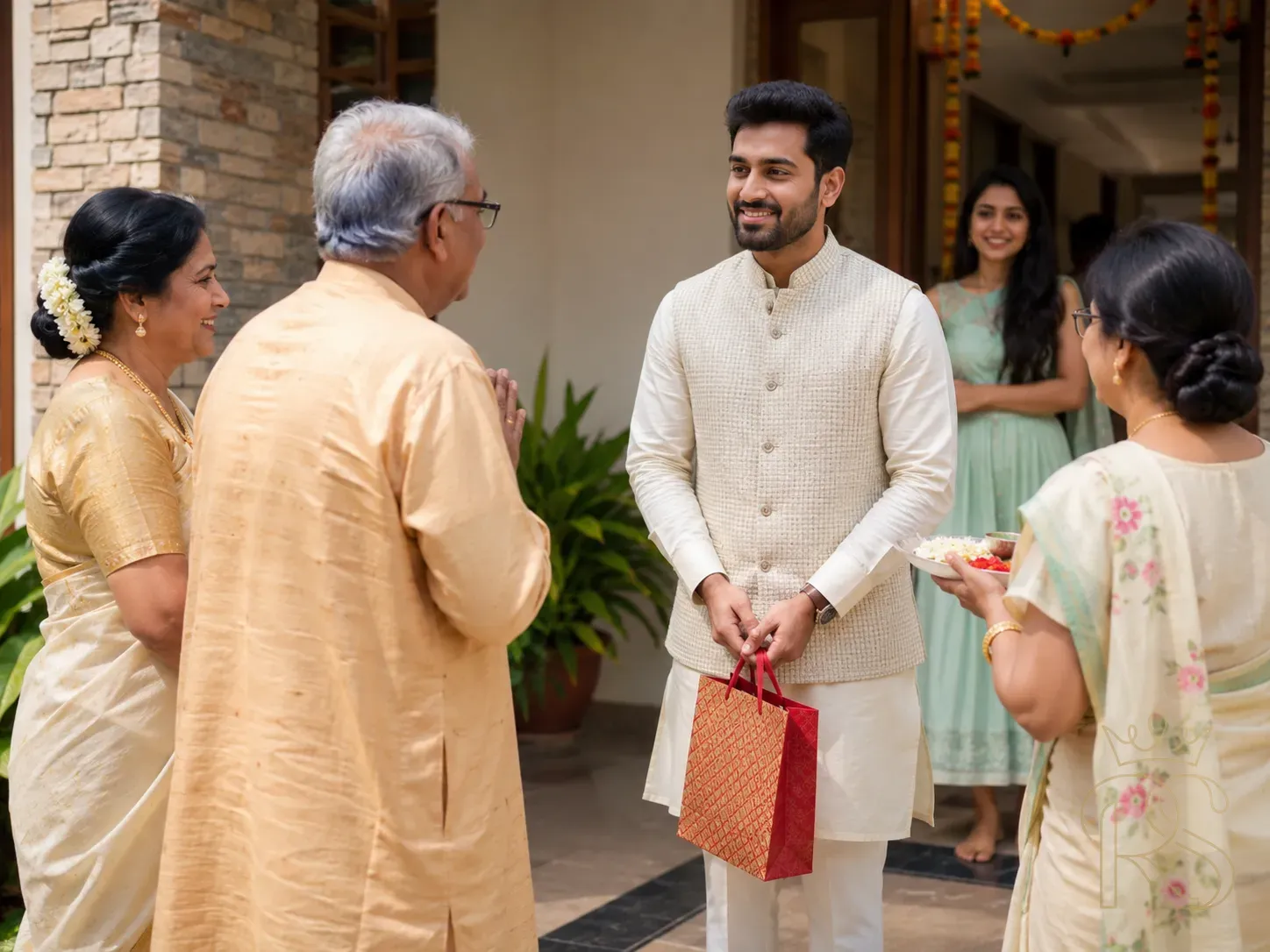
The visit usually begins with the bride's brother arriving at her marital home, sweets in hand, to ask for a short visit home.
Wedding Timeline
Family Rituals
Homecoming Customs
Unlike the wedding day itself, which runs on a tight, choreographed schedule, Pag Phera unfolds at a noticeably slower, more relaxed pace. Most families recognise it as having four loose beats, even if no two households celebrate it in exactly the same order or with exactly the same flourishes.
Day 1 — The Brothers Arrive
The bride's brother, often joined by a cousin or two, arrives at her new marital home carrying a box of sweets and small gifts for the groom's family. After warm greetings, they ask — almost ceremonially, even though everyone already knows the answer — for permission to take their sister home for a short visit. The in-laws agree happily, and the bride is sent off again, sometimes only a day or two after her own Vidaai.
Day 1–2 — Settling Back In
Back at her parents' house, the mood shifts entirely. The mother frequently greets her at the door with a brief aarti, and the time that follows is deliberately unhurried: home-cooked meals made from childhood favourites, no fittings, no photographers, no schedule to keep. For many brides, these one or two days are the first real chance to exhale after weeks of wedding preparation.
Day 2–3 — The Groom's Visit
The groom then travels to his in-laws' home to formally collect his wife. This is rarely treated as a small affair — he's welcomed with genuine warmth, served a generous home-style meal, and often gently teased by the bride's sisters and cousins, a rite of passage in its own right as the family's newest son-in-law settles into some affectionate ribbing.
Final Departure
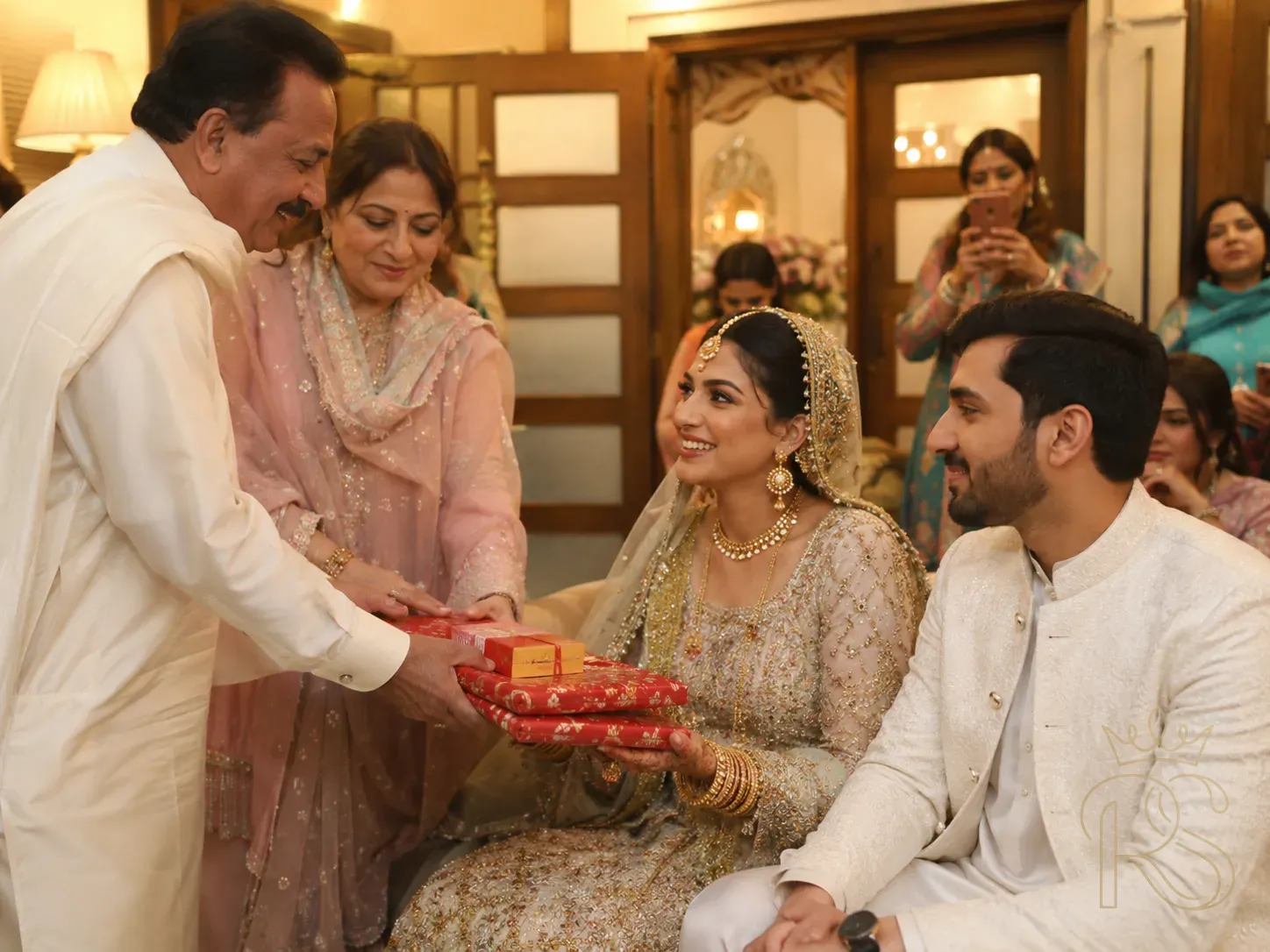
Before the couple leaves together, the bride's parents offer their blessings along with a small exchange of gifts — clothing, jewellery, sometimes cash shagun. This second departure feels markedly lighter than the Vidaai that preceded it; there are rarely tears at the gate this time, just a quieter, settled sense that two homes are now formally connected through her.
💡
Planning Tip: Pag Phera doesn't need to be locked to a specific date. Many modern families simply slot it into whatever gap exists between the wedding and the couple's honeymoon or return to work — the ritual holds its meaning regardless of whether it happens the next morning or the following weekend.
05
Who's Involved, and What Each Role Means
Family Roles in the Ritual
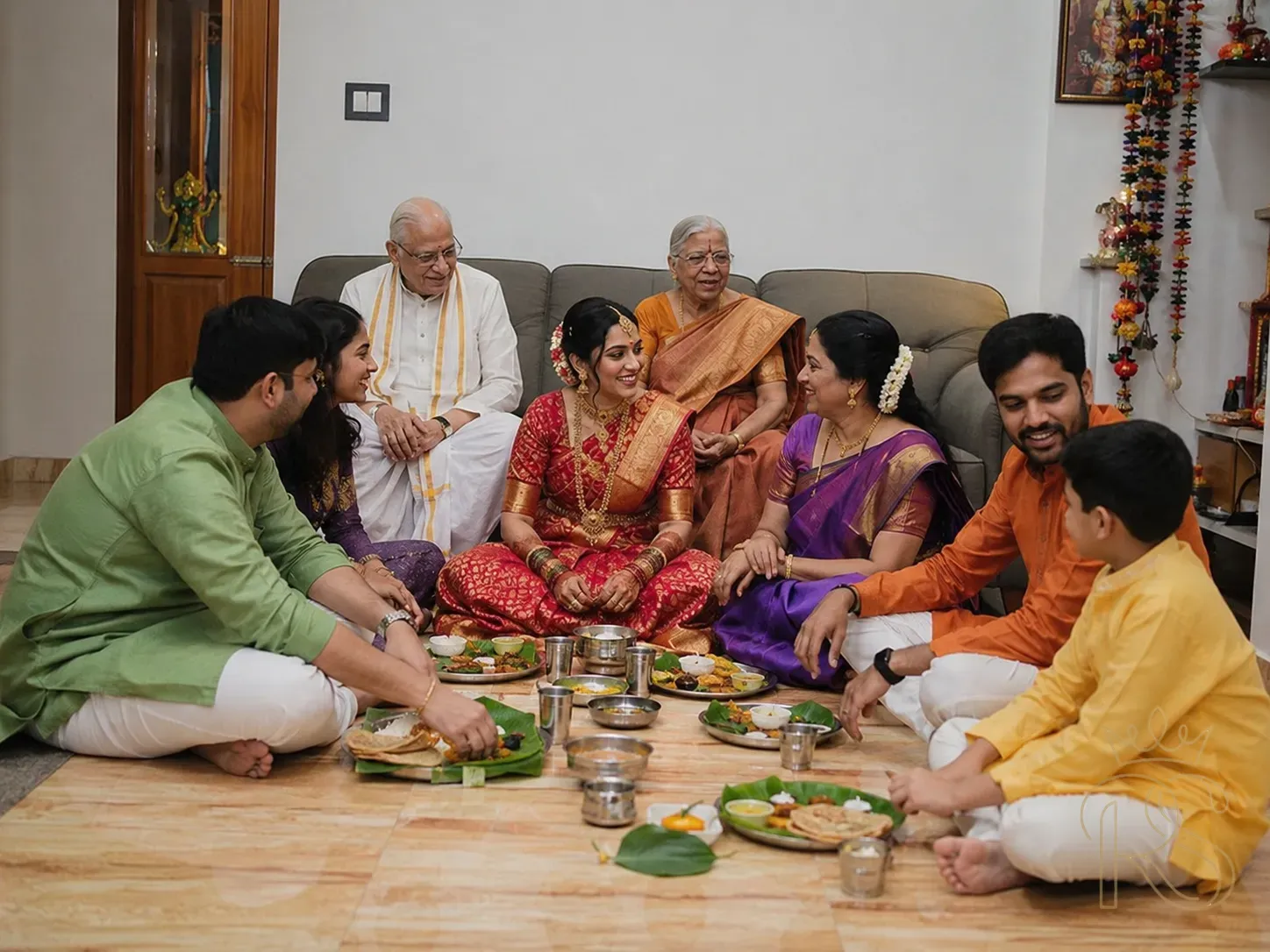
Pag Phera is built almost entirely around family roles rather than vendors — its warmth comes from who shows up, not what's arranged.
Family Roles
Brother-Sister Bond
In-Laws
Wedding Customs
The brother or male cousin traditionally carries the responsibility of fetching his sister. It's a small but pointed reaffirmation of the lifelong promise siblings make to look out for one another — a theme that resurfaces later at festivals like Raksha Bandhan and Bhai Dooj, where the bond between brother and sister is formally celebrated all over again.
The bride's parents shift, almost overnight, from being hosts of a wedding to simply being parents welcoming their child home. There's no décor budget here, no guest list to manage — just the comfort of familiar food and a familiar room.
The groom steps, often for the first time without the chaos of a baraat or a mandap full of relatives, into a quieter, far more personal relationship with his in-laws. How comfortable this visit feels frequently sets the emotional tone for his relationship with that side of the family for years afterward.
The groom's family makes a quiet but generous gesture simply by letting the bride go, even briefly, right after welcoming her into their home. It's an understated signal of trust and respect toward her parents — proof that her place in this new household doesn't come at the cost of her place in the old one.
"Pag Phera asks very little of the groom's family except trust — and that, more than any gift, is what it gives back."
06
What to Wear for Pag Phera
Bridal & Groom Style Guide
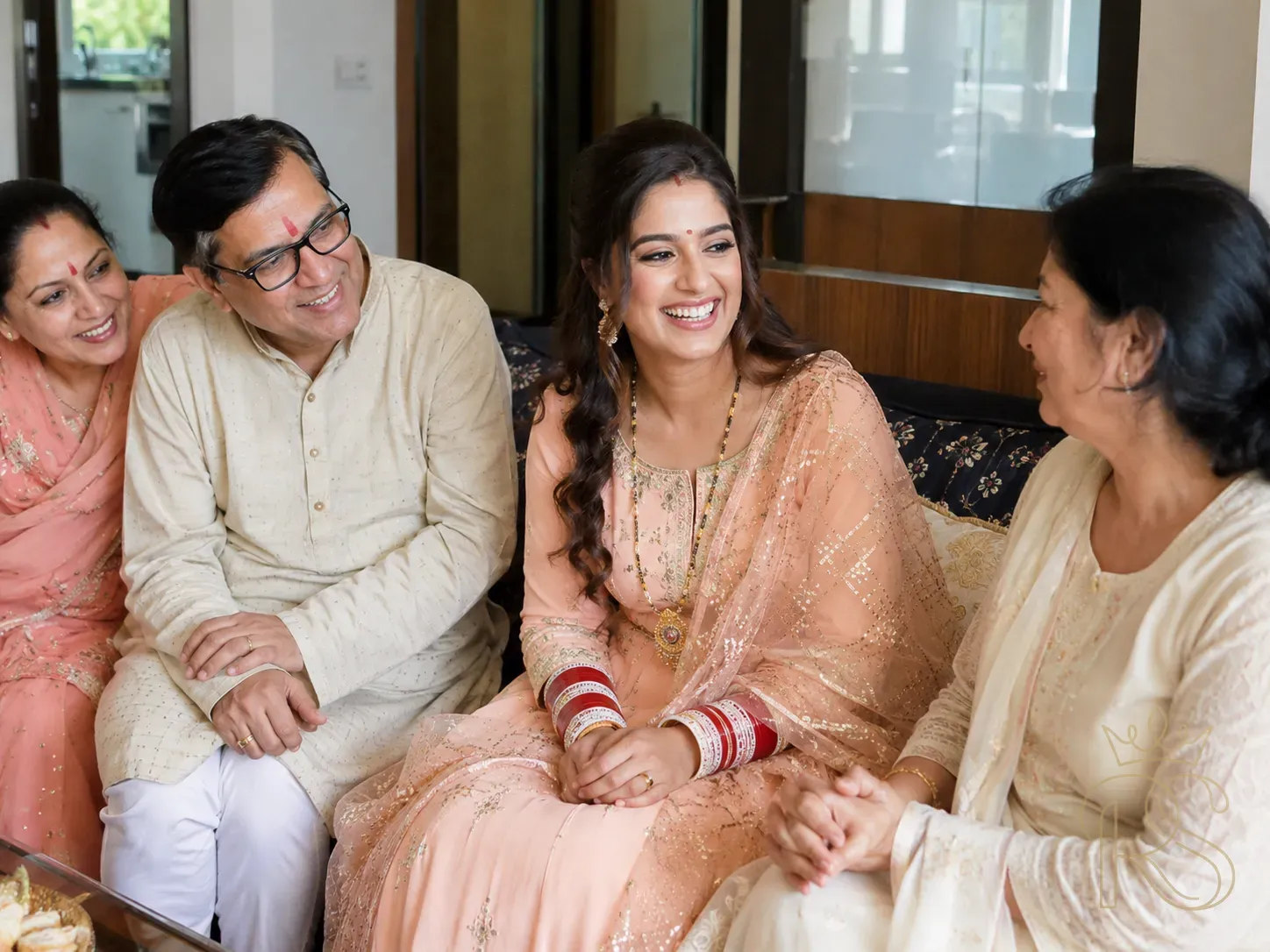
Pag Phera fashion trades wedding-day grandeur for soft, breathable festivity — comfortable enough to sit, eat, and relax at home in.
Bridal Fashion
Post-Wedding Style
Mangalsutra
Groom Style
The heavy bridal lehenga, the layered jewellery, the elaborate updo — all of it gets packed away for this one. Pag Phera calls for something far gentler: soft, breathable suits in colours that feel like a sigh of relief after the wedding's reds and golds. Peach, coral, soft mustard, fuchsia, and mint all work beautifully here.
Anarkali suits and Patiala salwars remain the go-to choice because they balance festivity with the practical comfort of actually being at home — sitting on the floor, hugging relatives, eating second helpings without fighting a heavily structured outfit. Lightweight fabrics like georgette, chiffon, or soft silk, finished with restrained gota-patti or simple thread work, keep the look celebratory without tipping back into wedding-day formality.
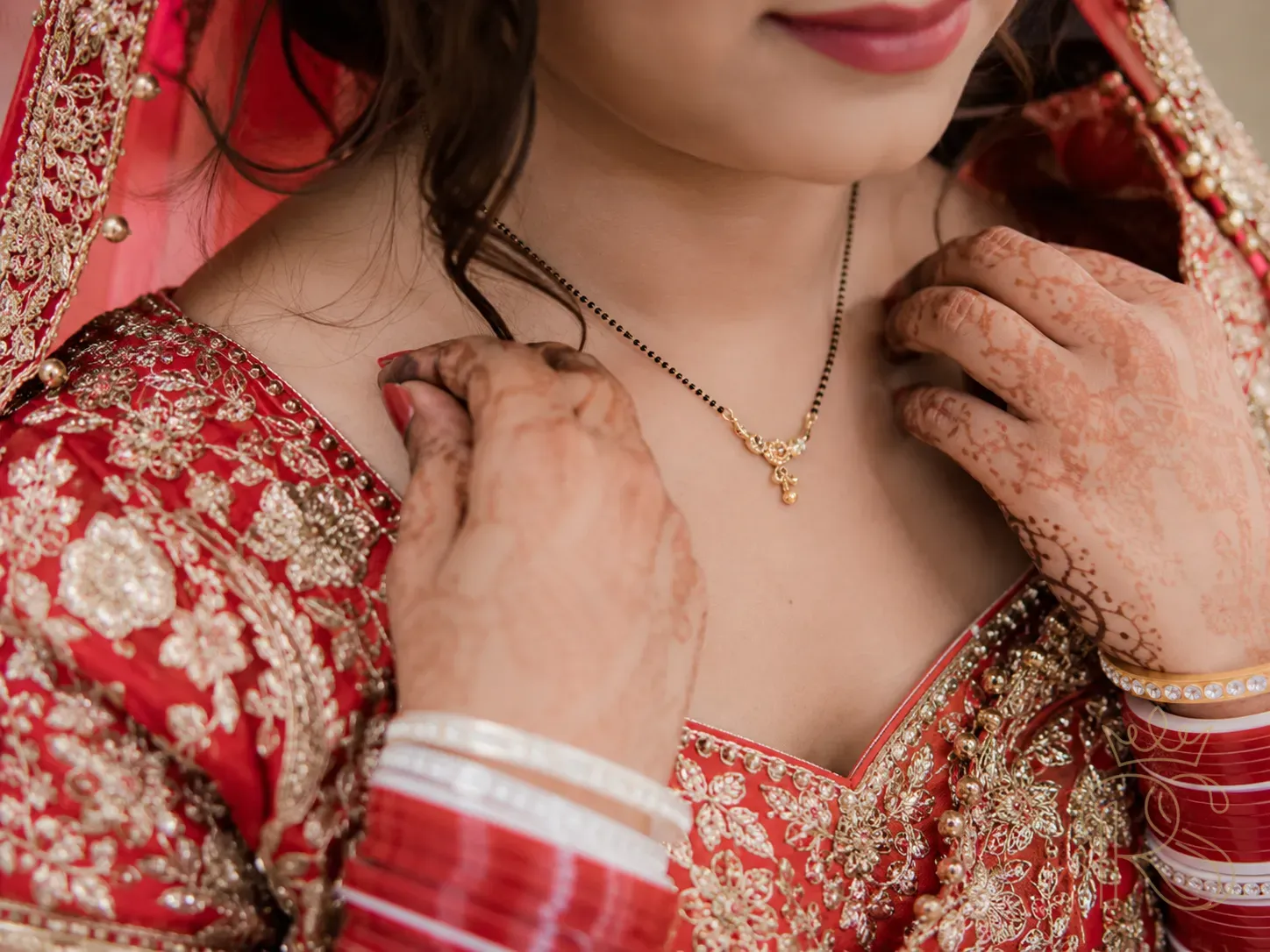
Jewellery is deliberately pared back, though two pieces almost always stay on: the mangalsutra and the chooda — the red-and-ivory bangles given during the bride's pre-wedding rituals — both worn now as everyday markers of her new marital status rather than as wedding decoration. Heavy chokers and statement earrings give way to simple gold studs or a single delicate pendant.
For the groom, the equivalent shift takes him from sherwani to a relaxed kurta-pajama — cream, beige, mint, or pale blue are all popular choices — occasionally finished with a textured Nehru jacket for the visit to his in-laws. Mojris or comfortable leather sandals round off the look, with jewellery kept to the bare minimum: a watch, a thin chain, perhaps a ring gifted by the bride's family.
💡
Styling Tip: Since most of Pag Phera is spent sitting, eating, and being hugged by relatives, prioritise breathable fabric and a comfortable fit over heavy embellishment — this is one wedding event where comfort genuinely outranks photographs.
07
Gifts, Shagun & the Welcome Feast
Tokens of Blessing
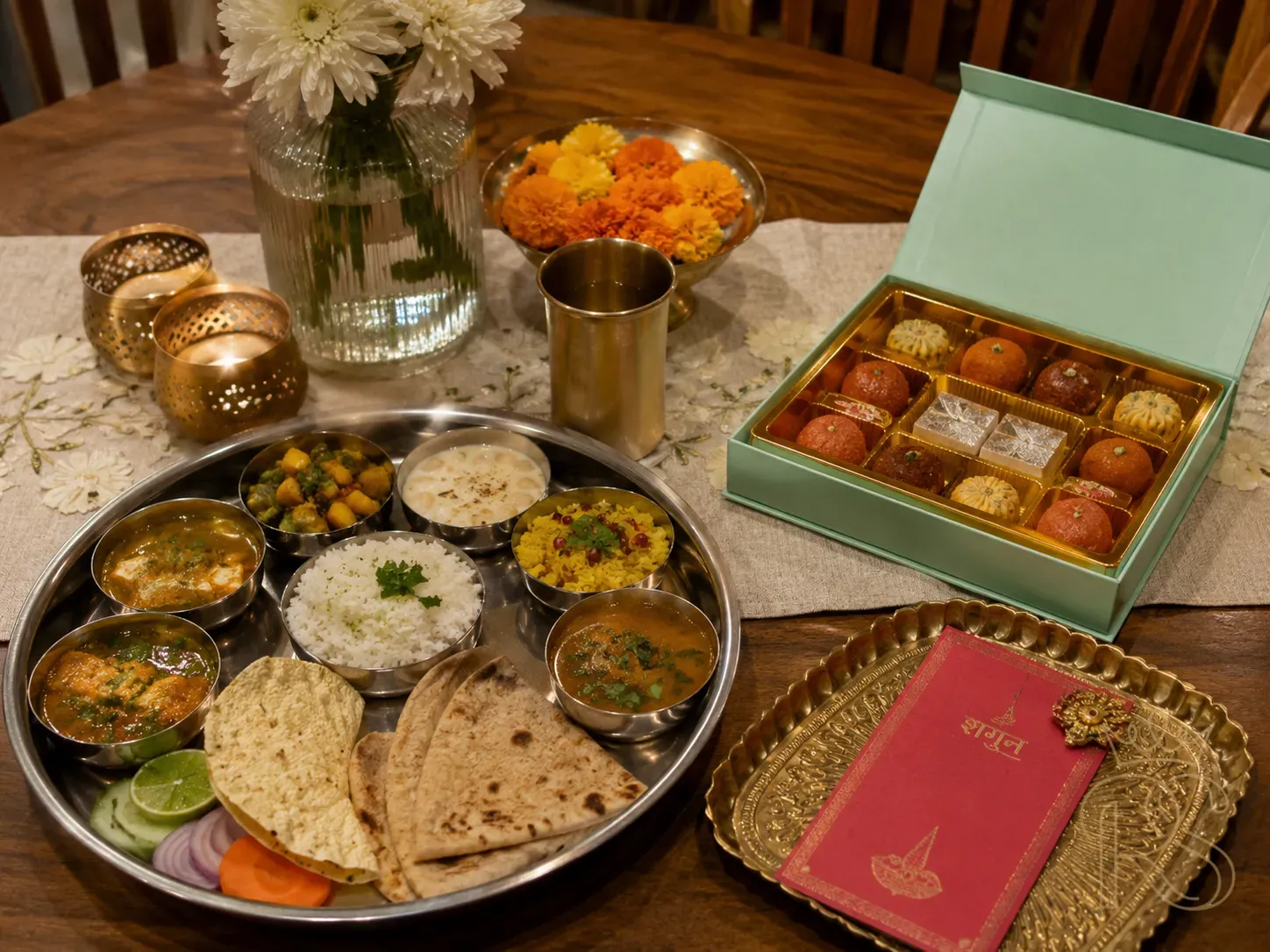
Food and small gifts do most of the talking at Pag Phera — far more than any formal ceremony.
Shagun
Wedding Gifts
Family Feast
Blessings
Sweets arrive first, carried by the bride's brothers as a small offering to the groom's family when they come to collect her — a gesture of goodwill rather than an obligation, more about warmth than tradition for tradition's sake.
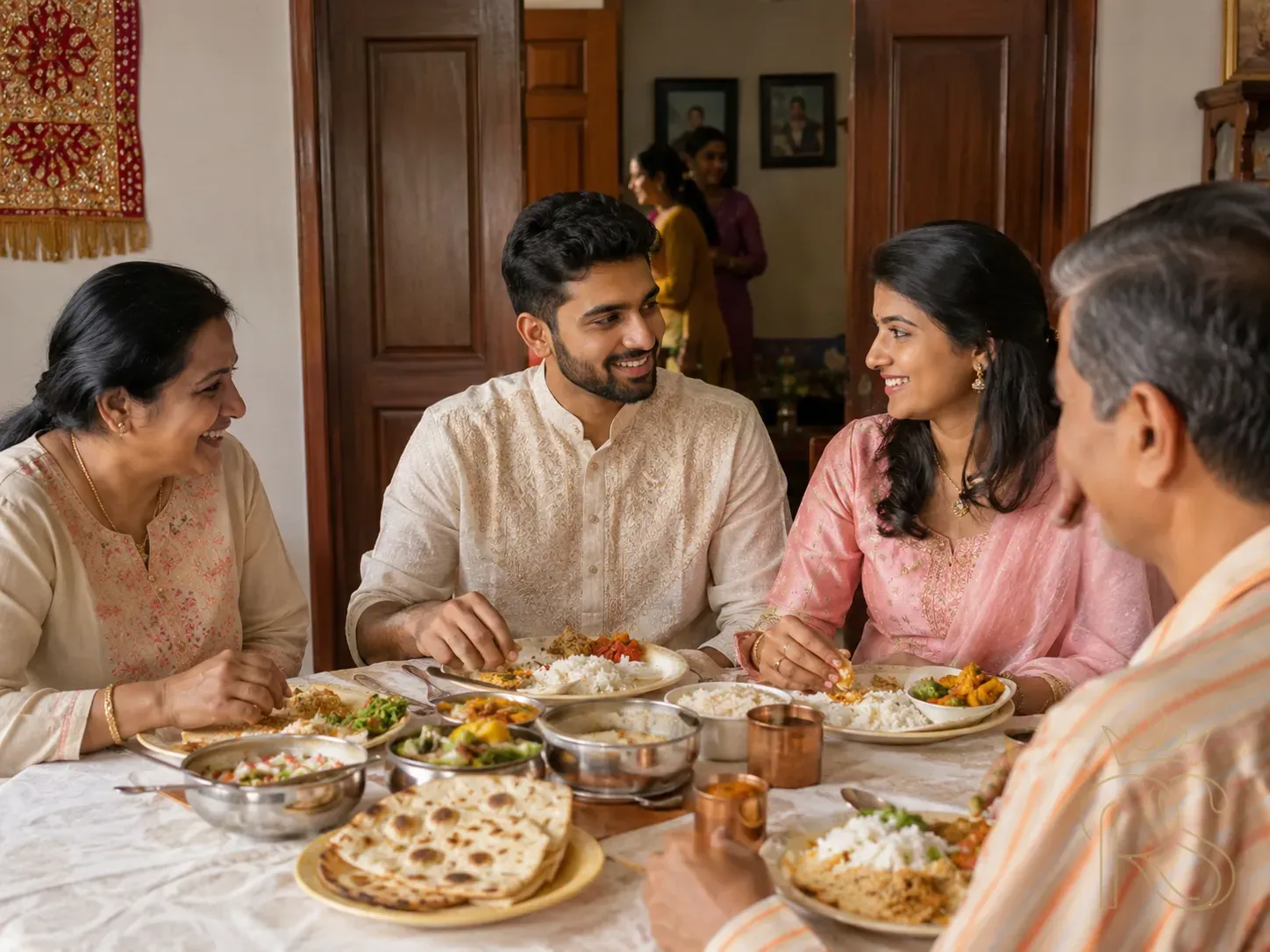
At the parental home, food does most of the emotional heavy lifting. The bride's favourite childhood dishes, cooked without a caterer anywhere in sight, are the real centrepiece of these one or two days. When the groom arrives to collect her, the meal scales up considerably — frequently the most personal, home-cooked feast he's served during the entire wedding season, prepared and offered with the warmth typically reserved for a son.
Before the couple departs, gifts move in both directions, though mostly from parents to daughter: clothing, jewellery, small household items for her new life, and cash shagun. Each of these is understood less as a transaction and more as a tangible form of reassurance — proof, in physical form, that her parents are still very much present in her life.
"At a wedding, gifts mark celebration. At Pag Phera, they mark reassurance."
08
Pag Phera in the Modern Wedding
Destination Weddings, NRI Families & New Adaptations
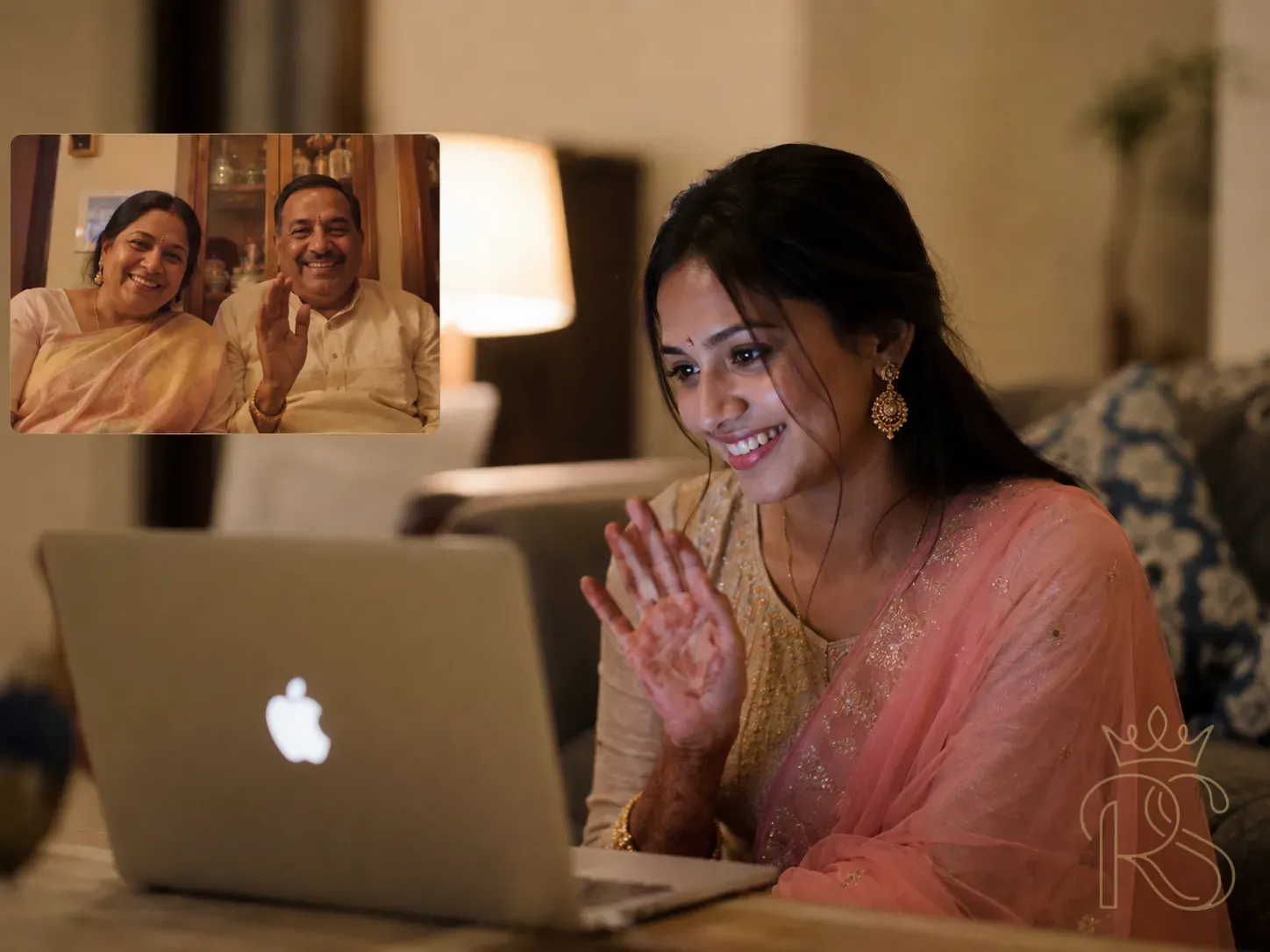
When geography makes an immediate homecoming impossible, families are finding gentler, more flexible ways to keep Pag Phera's spirit alive.
Destination Weddings
NRI Weddings
Modern Traditions
Wedding Planning 2026
Destination weddings complicate the geography of Pag Phera considerably, since the bride's parents' home might be a thousand kilometres from the wedding venue itself. Most families solve this simply by waiting — the ritual is performed once everyone has returned to their home city, even if that ends up being a week or two after the wedding day rather than the traditional one to three.
For NRI couples and families split across countries, the visit is increasingly compressed into a single afternoon, or in some cases reimagined as a video call between the bride and her parents when an in-person visit simply isn't possible right away. The literal homecoming may have to wait, but the emotional gesture behind it doesn't have to.
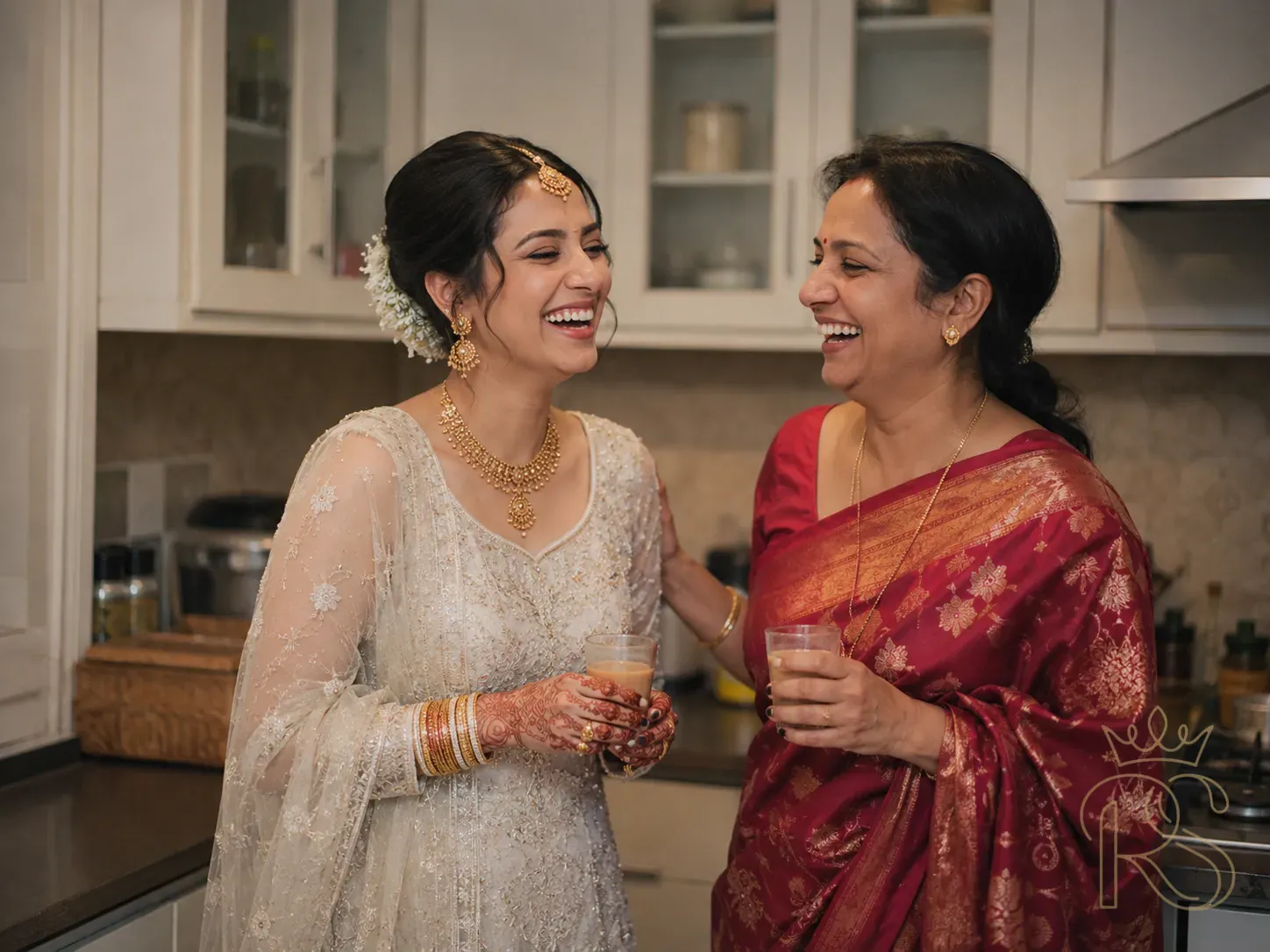
A growing number of couples now treat Pag Phera as a quiet, unstaged photography opportunity rather than a formal event. A documentary-style photographer is invited for an hour or two to capture candid, off-duty moments — the bride in her mother's kitchen, the family laughing over lunch — and these images frequently end up meaning more to the couple years later than the polished, posed wedding album.
Some families are also pairing the visit with the couple's first short trip away together — a brief "mini-moon" weekend before a longer honeymoon later — treating Pag Phera as the gentle bridge between the noise of the wedding and the quieter rhythm of the couple's new everyday life.
💡
Modern Couple Tip: If a destination wedding or overseas travel makes an immediate Pag Phera impossible, don't skip it outright — simply move the date. A delayed homecoming a few weeks later still carries the same meaning as one held the next day.
Why a Small Ritual Still Matters
Across very different kinds of weddings — joint family or nuclear, traditional or destination, same-city or cross-continent — Pag Phera has survived for one simple reason: it directly answers an anxiety that almost every bride quietly carries, even amid the joy of her own wedding. Marriage is framed, culturally, as a daughter leaving home. Pag Phera is the custom that gently corrects that framing within days of the wedding itself, proving — not through words, but through an actual visit — that leaving and belonging were never mutually exclusive.
It costs almost nothing to organise, requires no vendors, and follows no strict script beyond a handful of warm, repeatable gestures: a brother showing up with sweets, a mother lighting a small lamp at the door, a home-cooked meal made with no occasion in mind except love. In an industry that increasingly measures weddings in décor budgets and guest counts, Pag Phera is a useful reminder that some of the most memorable moments in an Indian wedding cost nothing at all — they just require everyone to show up.
Pag Phera: Frequently Asked Questions
How soon after the wedding does Pag Phera happen?
Most families hold it within one to three days of the wedding, though the exact timing varies by region and family preference. Kashmiri Pandit households, for instance, often extend this homecoming window noticeably longer.
Is Pag Phera the same as Vidaai?
No — they're closely connected but distinct. Vidaai is the emotional farewell when the bride first leaves her parents' home after the wedding ceremony. Pag Phera is what follows shortly after: her first return visit, and the groom's subsequent visit to collect her.
Do all Indian communities celebrate Pag Phera?
Some version of this homecoming appears in most Hindu wedding traditions across India, though the name and finer customs differ — Pag Phera, Phera Dalna, and Phere Pauna in Punjabi households, Sataurah among Sindhi families, and region-specific equivalents elsewhere.
Who is responsible for organising it — the bride's family or the groom's?
Both families play a role, but the bride's parents typically host the core of the visit, while the groom's family is responsible for graciously sending her off and later welcoming the groom back warmly when he returns to collect her.
Can Pag Phera be skipped or shortened?
Yes — many modern families, especially those managing destination weddings, NRI logistics, or simply tight schedules, condense it into a short visit, a single shared meal, or even a heartfelt video call rather than skipping it altogether. The emotional gesture matters more than the length of the visit.
Planning Every Ritual of Your Wedding?
Explore our curated guides on pre-wedding ceremonies, post-wedding rituals, bridal fashion, and regional wedding traditions on Royal Shaadi.
Explore Wedding Ritual Guides