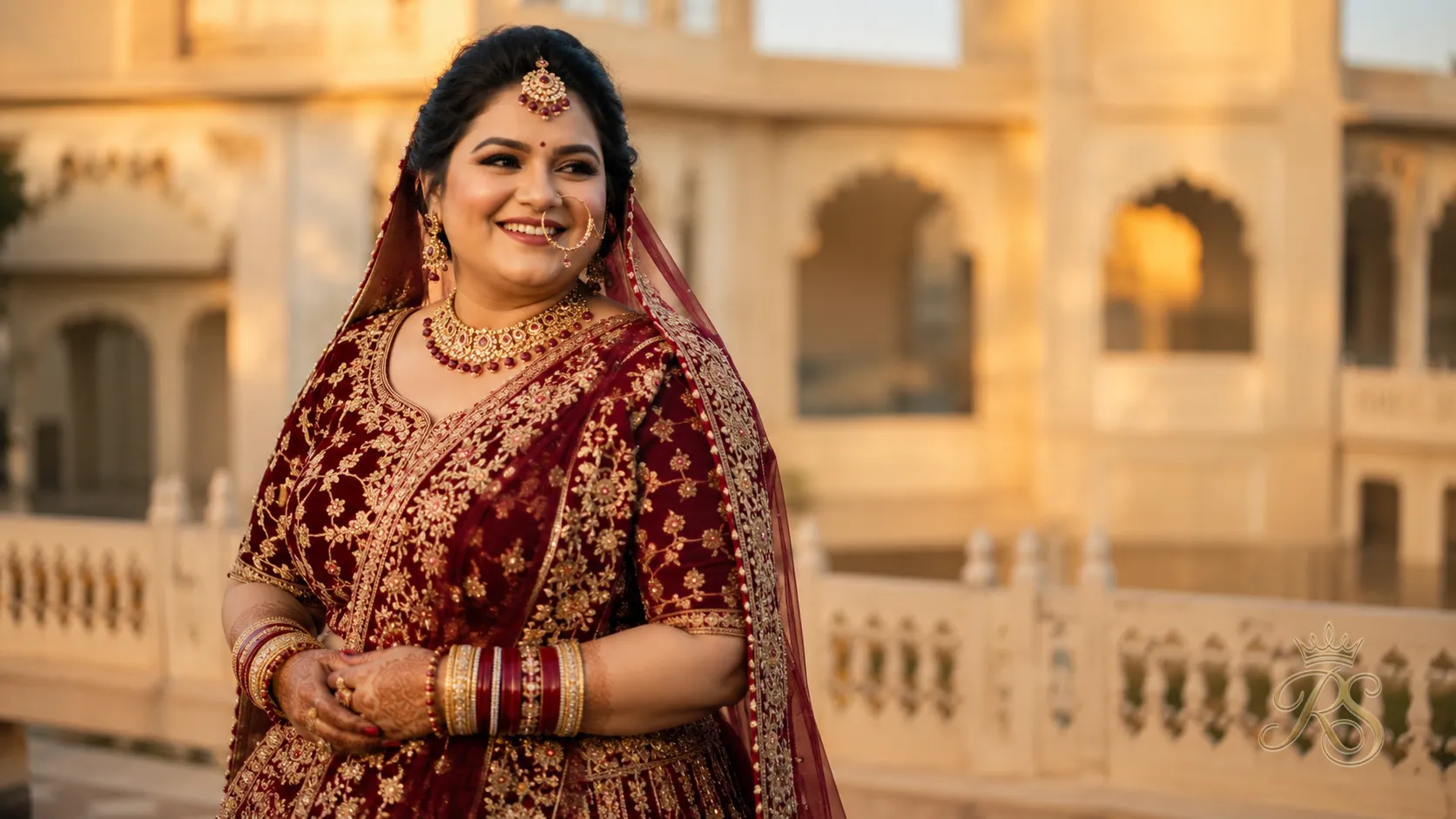
Plus size bridal styling has long been an afterthought in mainstream wedding fashion — treated as a "special section" instead of a genuine design category. That's changing fast, and for good reason: curvy brides deserve the same access to silhouette, structure, and drape knowledge that goes into every other bridal look. This guide walks through exactly what to look for, section by section, so you can build a bridal outfit that celebrates your shape instead of apologizing for it.
Why Fit Comes Before Trend
The single biggest difference between a bridal outfit that looks stunning and one that looks uncomfortable is fit — not size, not trend, not price. A well-structured outfit tailored to your actual measurements will always outshine an off-the-rack piece a size too small, however fashionable the design.
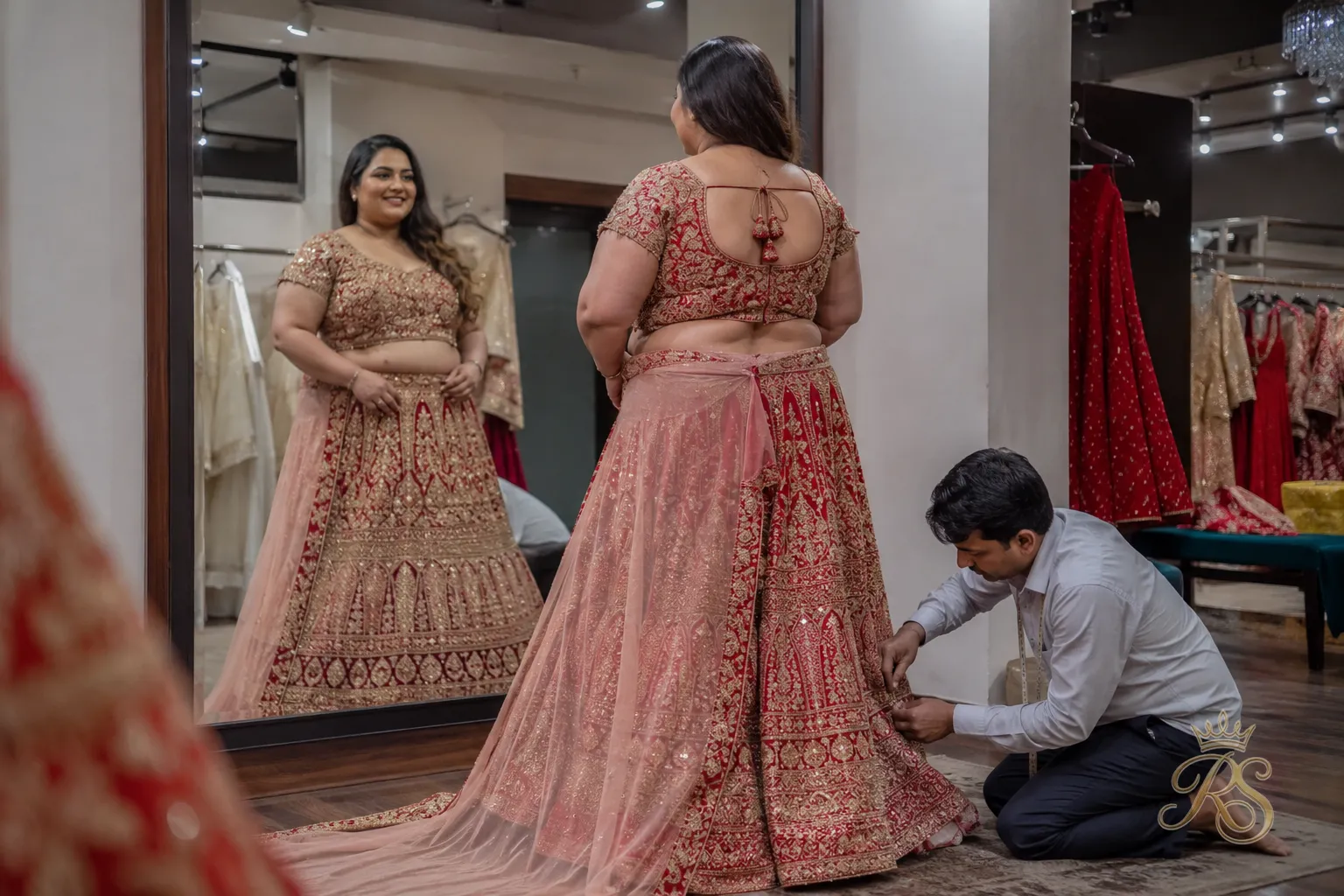
Start here: a proper measurement session before you fall in love with any design.
Every recommendation in this guide assumes one non-negotiable first step — get measured by a tailor who works regularly with plus size clients, and bring reference photos rather than just a size label.
Ask your designer to build the outfit around your largest measurement point and tailor inward, not the other way around — it's far easier to take a garment in than to let it out.
Choosing the Right Silhouette for Your Body
Silhouette does more work than fabric, color, or embellishment combined. The right structural shape can visually elongate, balance proportions, and create movement — all before a single embroidery thread is added.
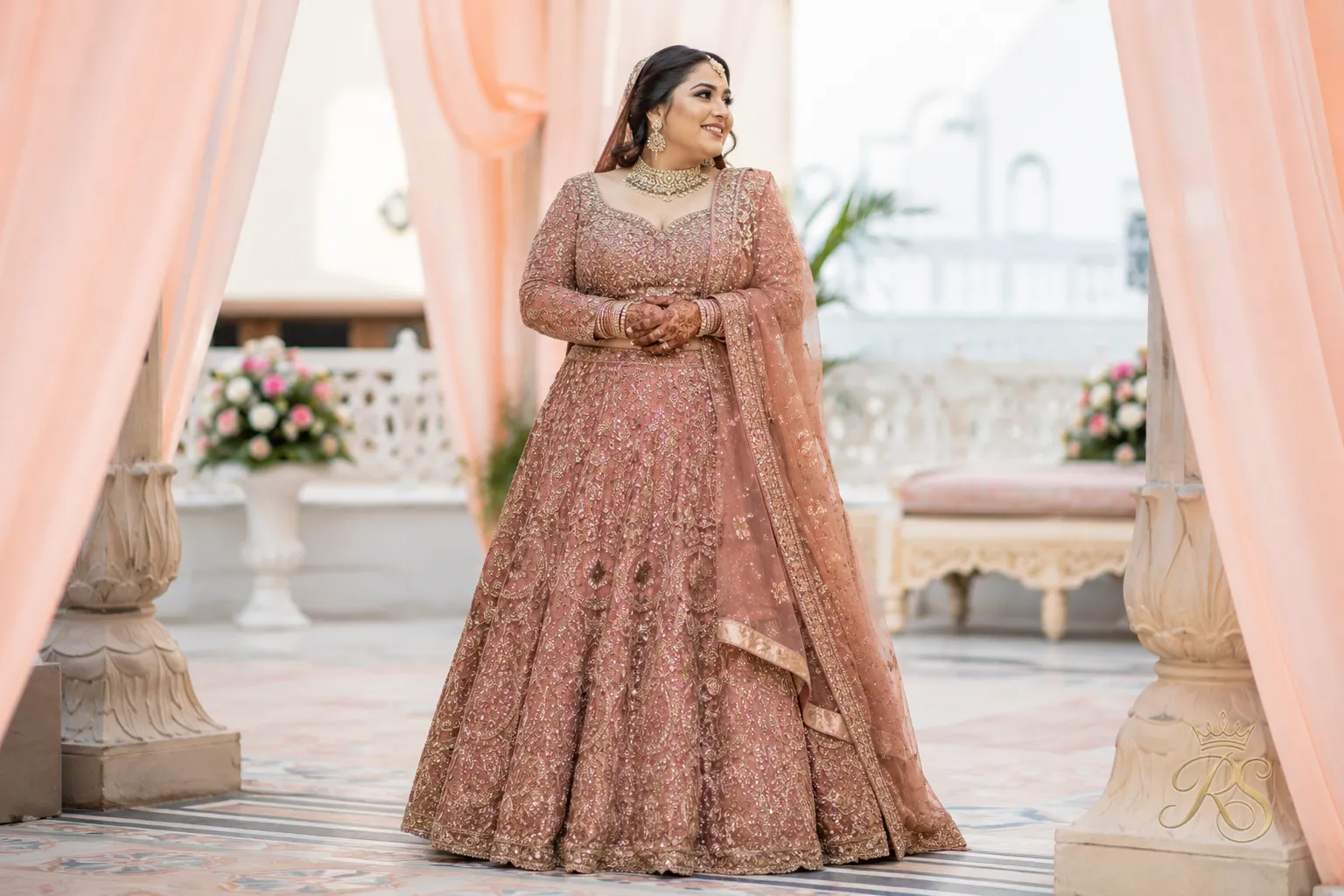
An A-line lehenga skims rather than clings, creating a balanced, elongated line.
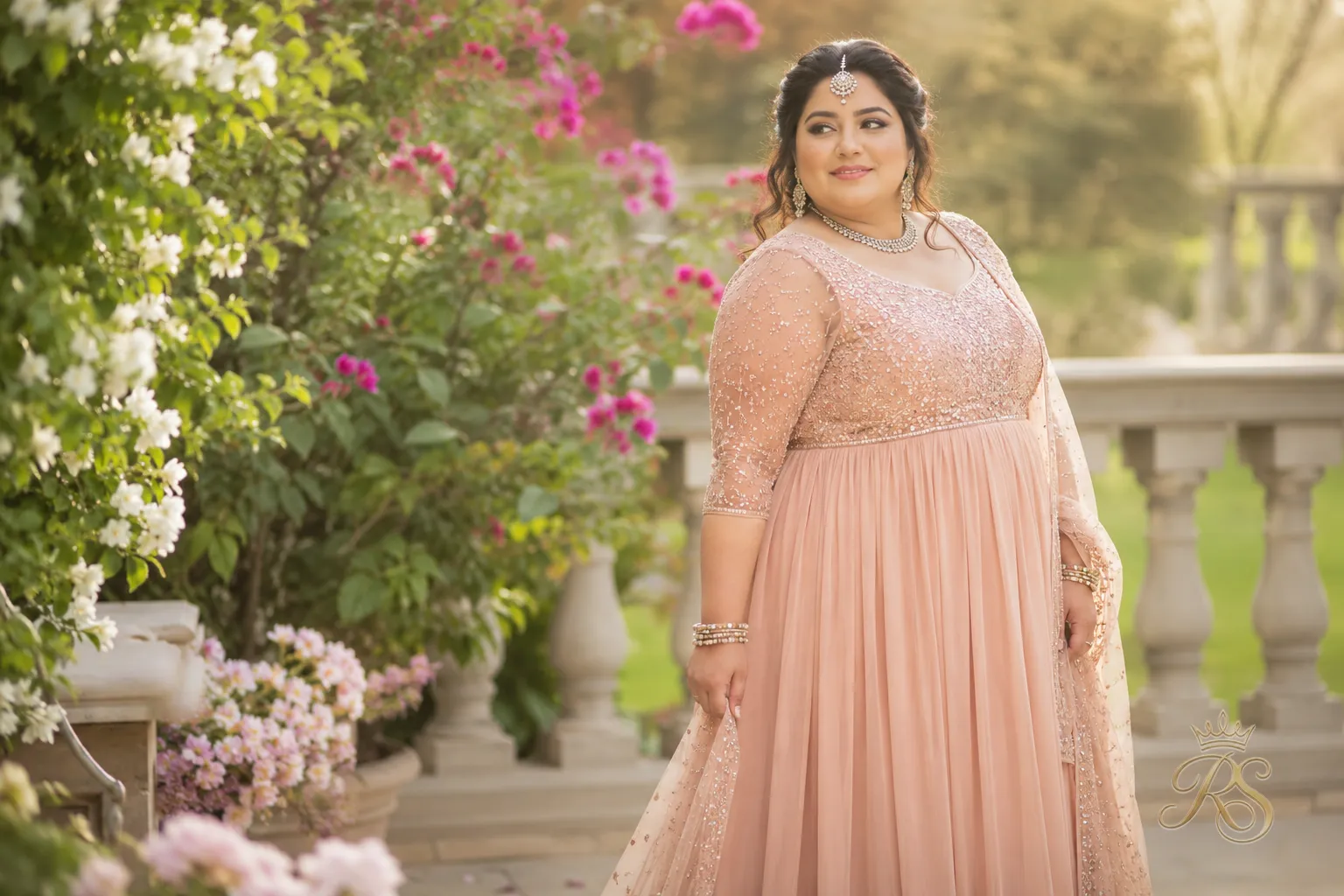
Empire waistlines sit just below the bust, softening the midsection entirely.
Avoid anything that cinches tightly at the natural waist and then flares abruptly — the sharp transition draws the eye exactly where most brides want less focus. A gradual flare reads far more elegant in photographs.
Lehenga Ideas for Plus Size Brides
The lehenga remains the most popular bridal choice across India, and it happens to be one of the most forgiving silhouettes for curvy figures when the cut is right.
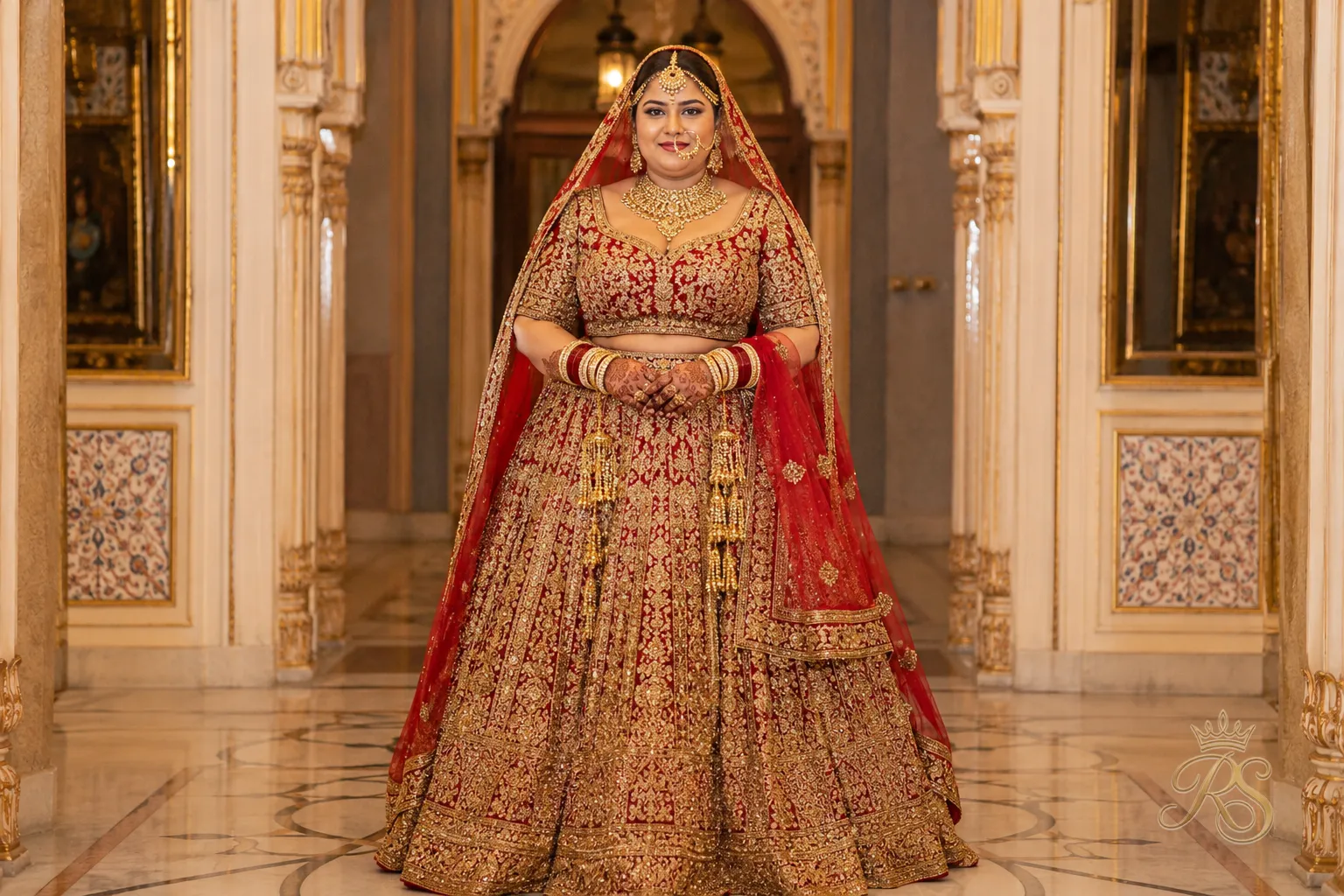
High-Waist Lehenga
Sits above the natural waistline to visually lengthen the legs and define the torso.
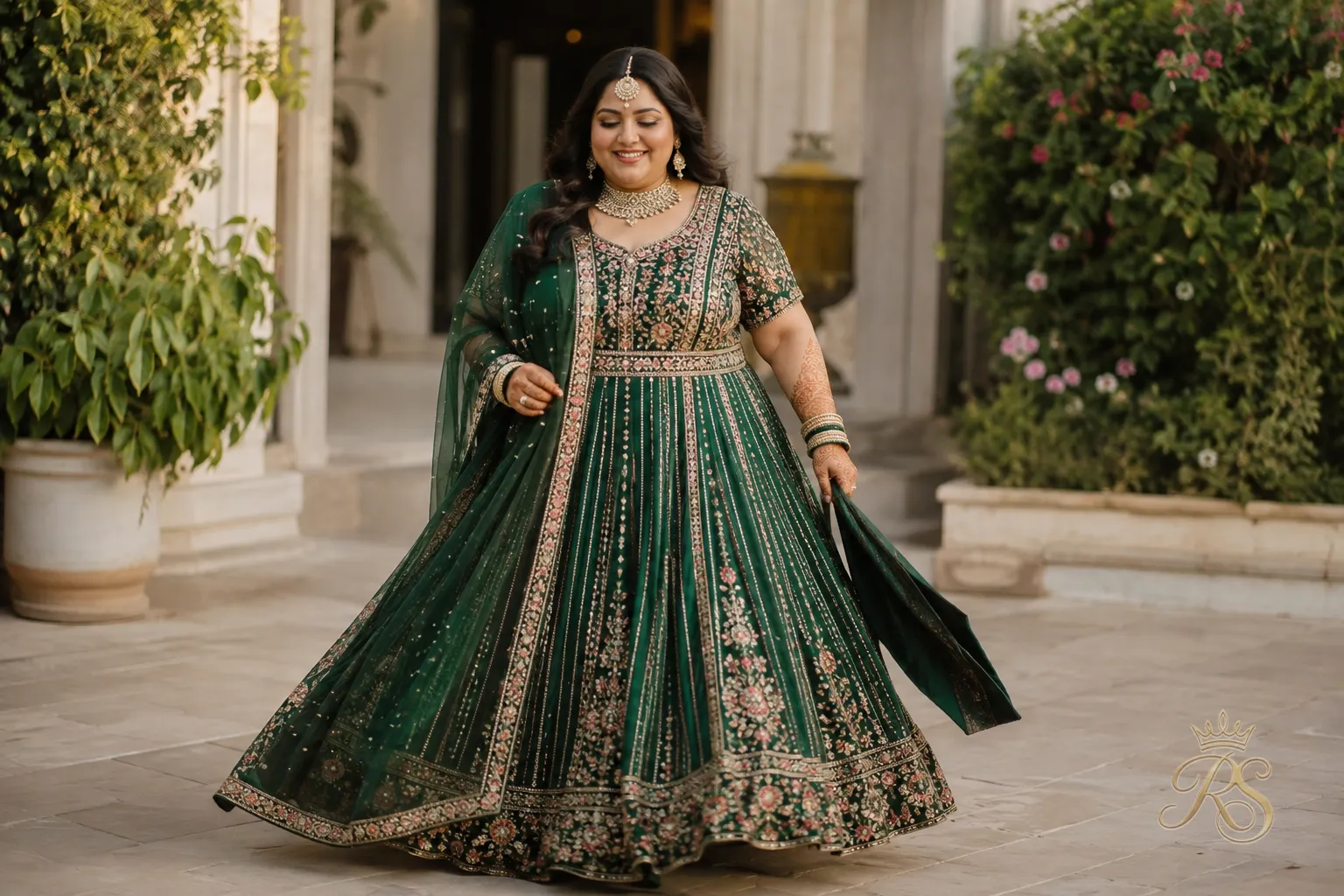
Anarkali-Style Lehenga
Floor-length panels create continuous vertical lines that flatter every body type.
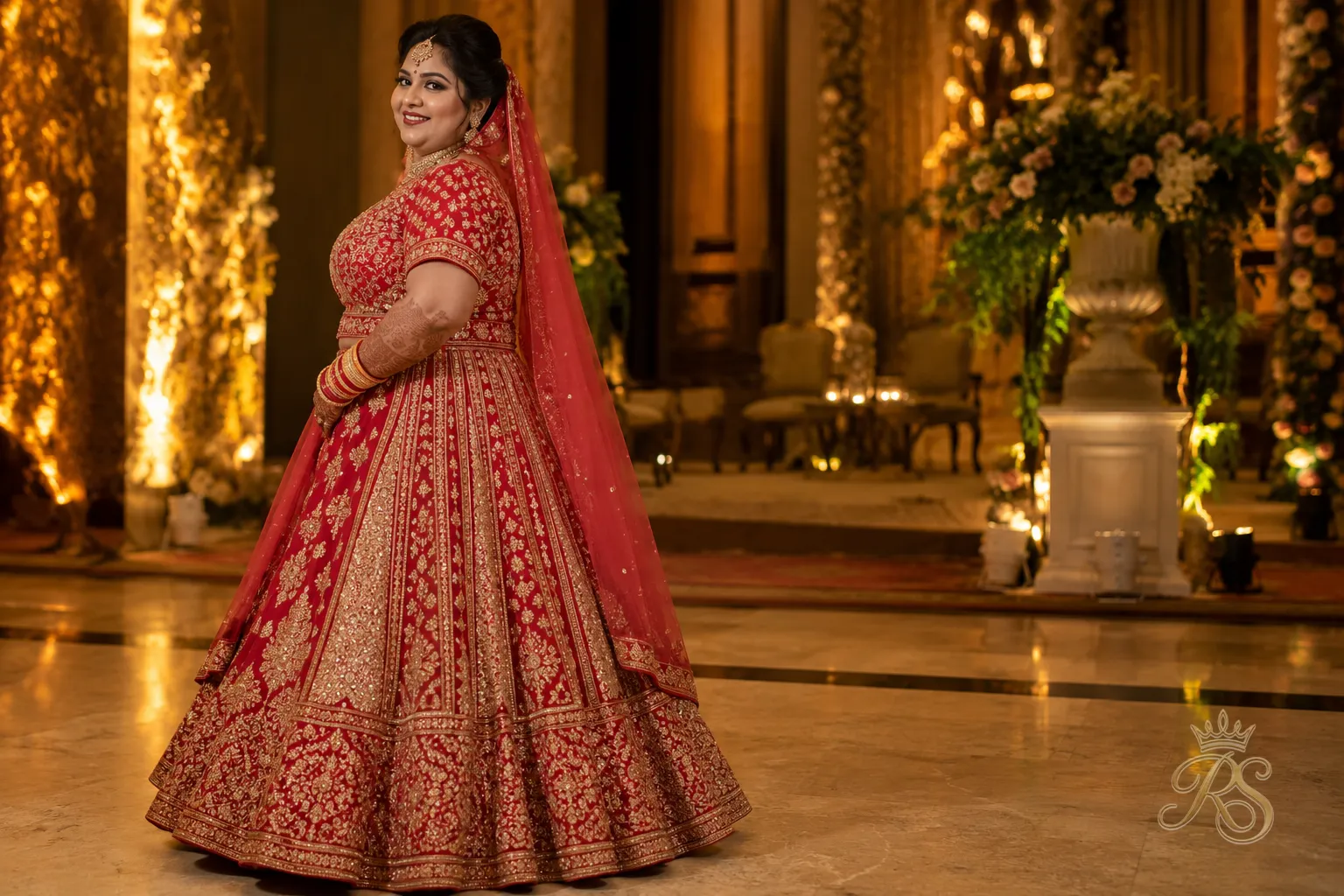
Panelled Flare Lehenga
Structured godet panels add volume at the hem without adding bulk at the hips.
- Choose a fitted, well-boned blouse as the anchor — it holds the entire silhouette together
- Ask for a mermaid-cut lining underneath a flared outer layer for shape without stiffness
- Keep heavy embellishment concentrated on the hem and dupatta rather than spread evenly
"A lehenga doesn't need to hide your shape — it needs to be engineered around it."
Saree Draping Styles That Flatter
A saree's drape matters just as much as its fabric — the right pleating technique can create waist definition and vertical flow that a standard drape simply doesn't offer.
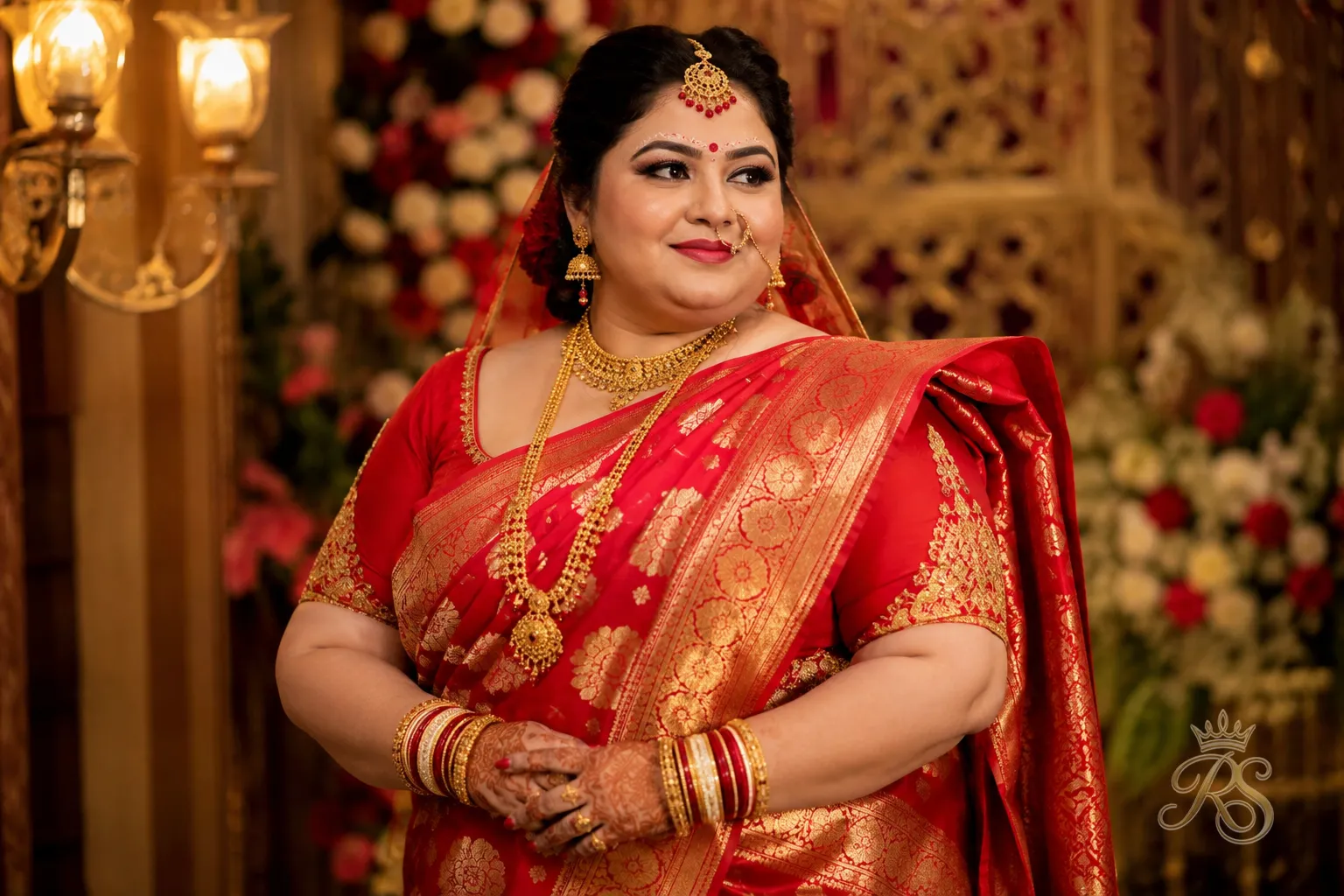
Bengali drape: the double-wrapped pallu adds structure across the upper body.
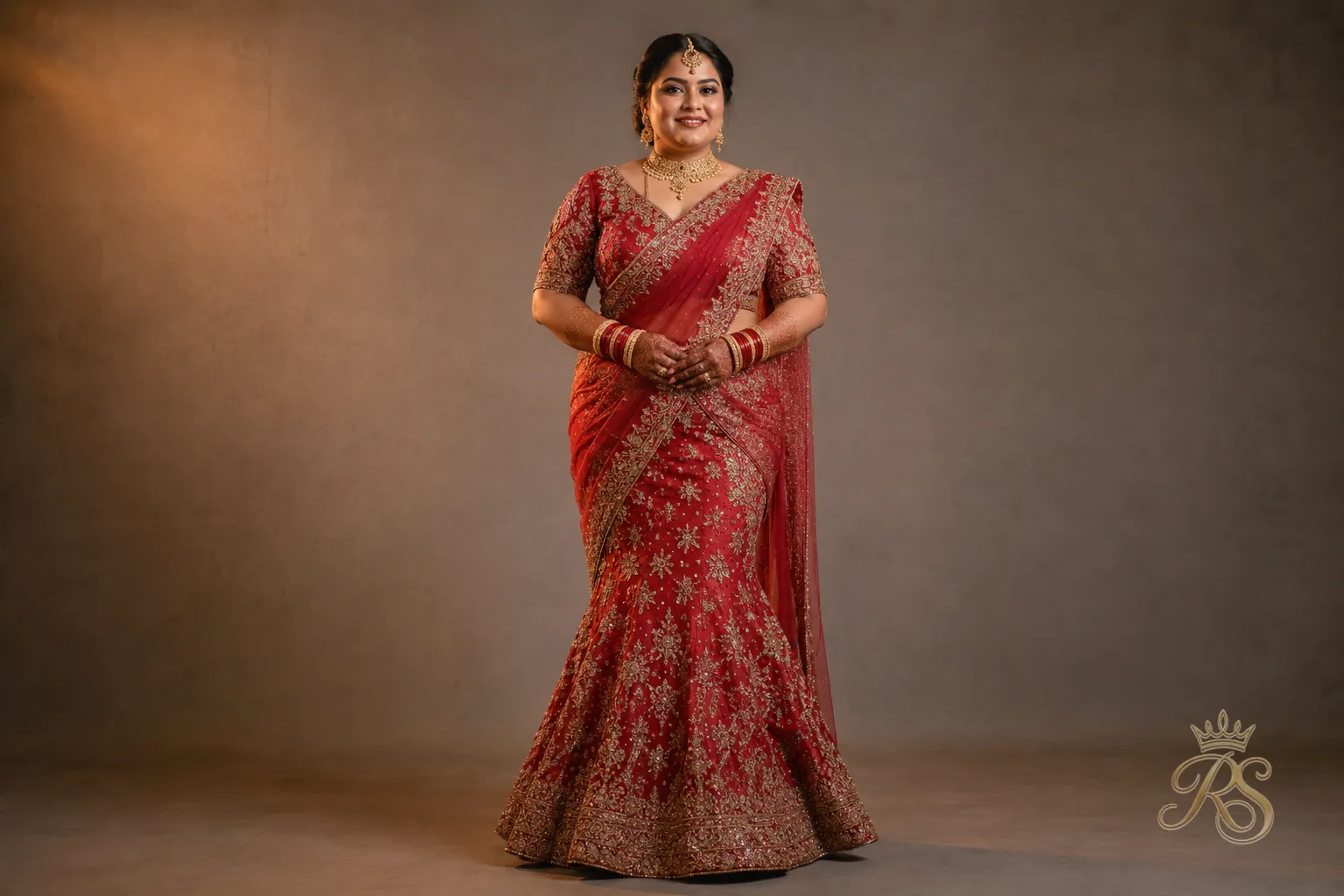
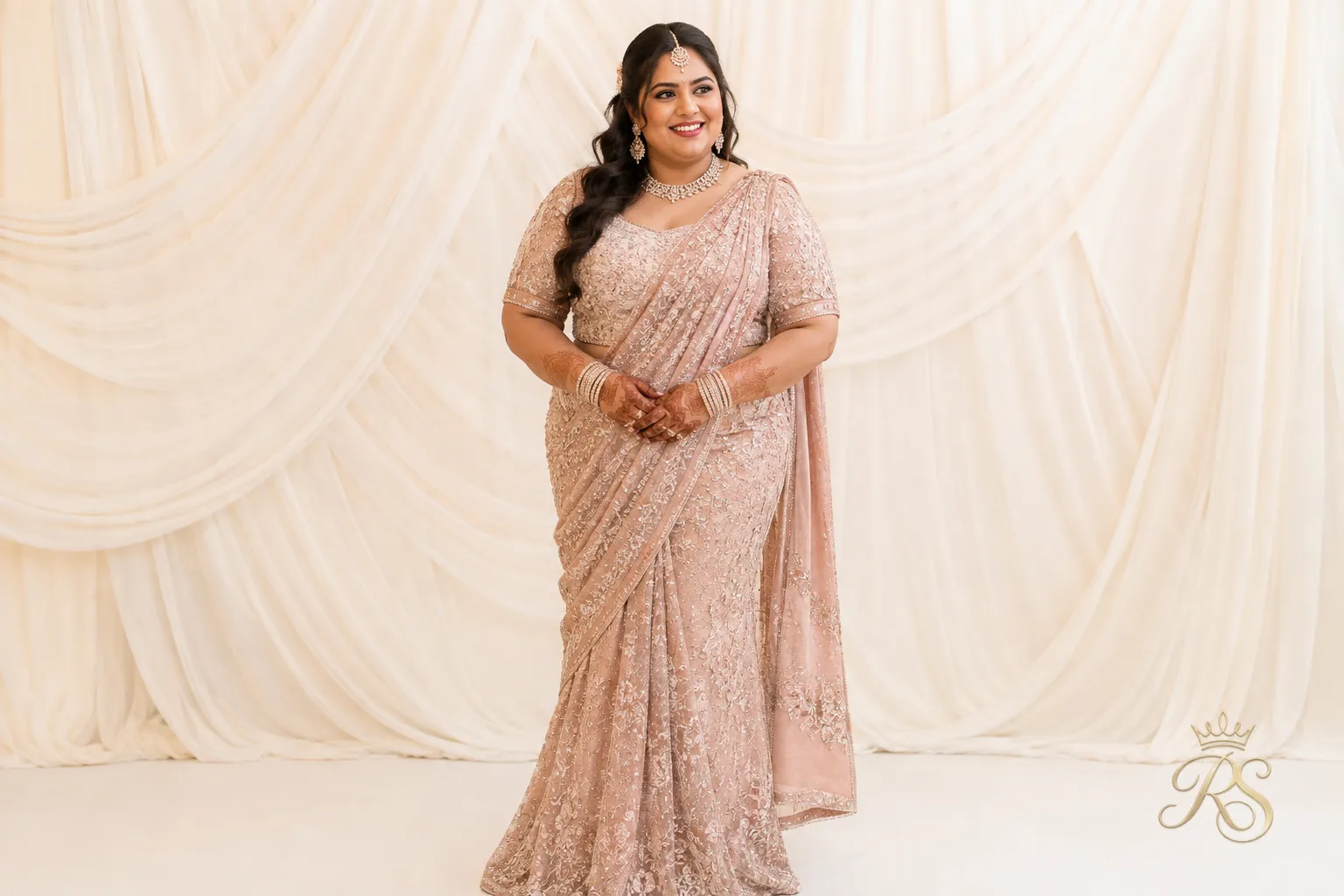
Pre-stitched saree gowns have become especially popular with plus size brides because the pleats are permanently set into place — no risk of a drape loosening or shifting through a long ceremony.
Gown & Indo-Western Bridal Ideas
For reception looks or destination weddings, structured gowns and Indo-western pieces offer tailoring precision that traditional draped garments can't always match.
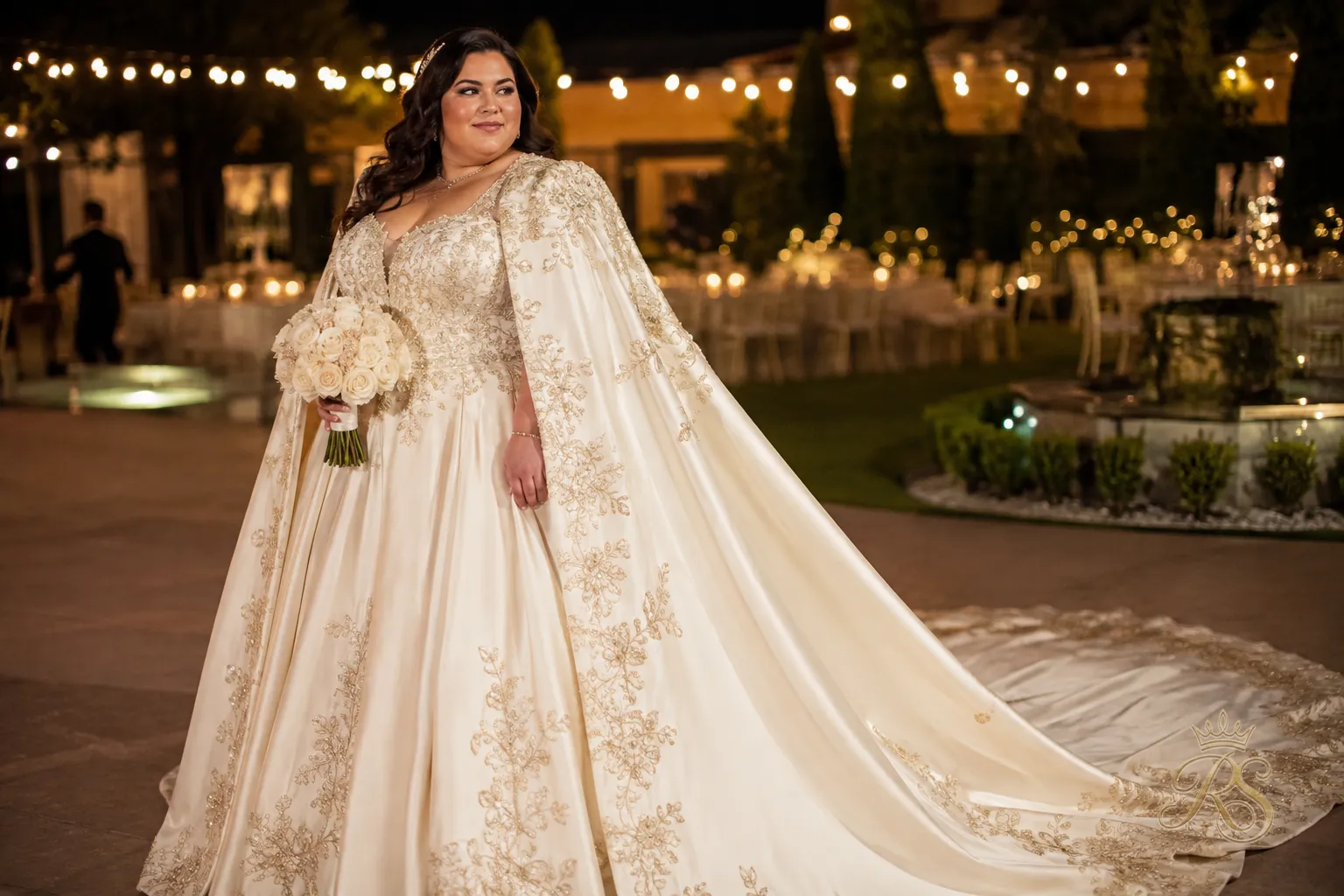
Cape sleeves add drama at the shoulder line while keeping the arms comfortably covered.
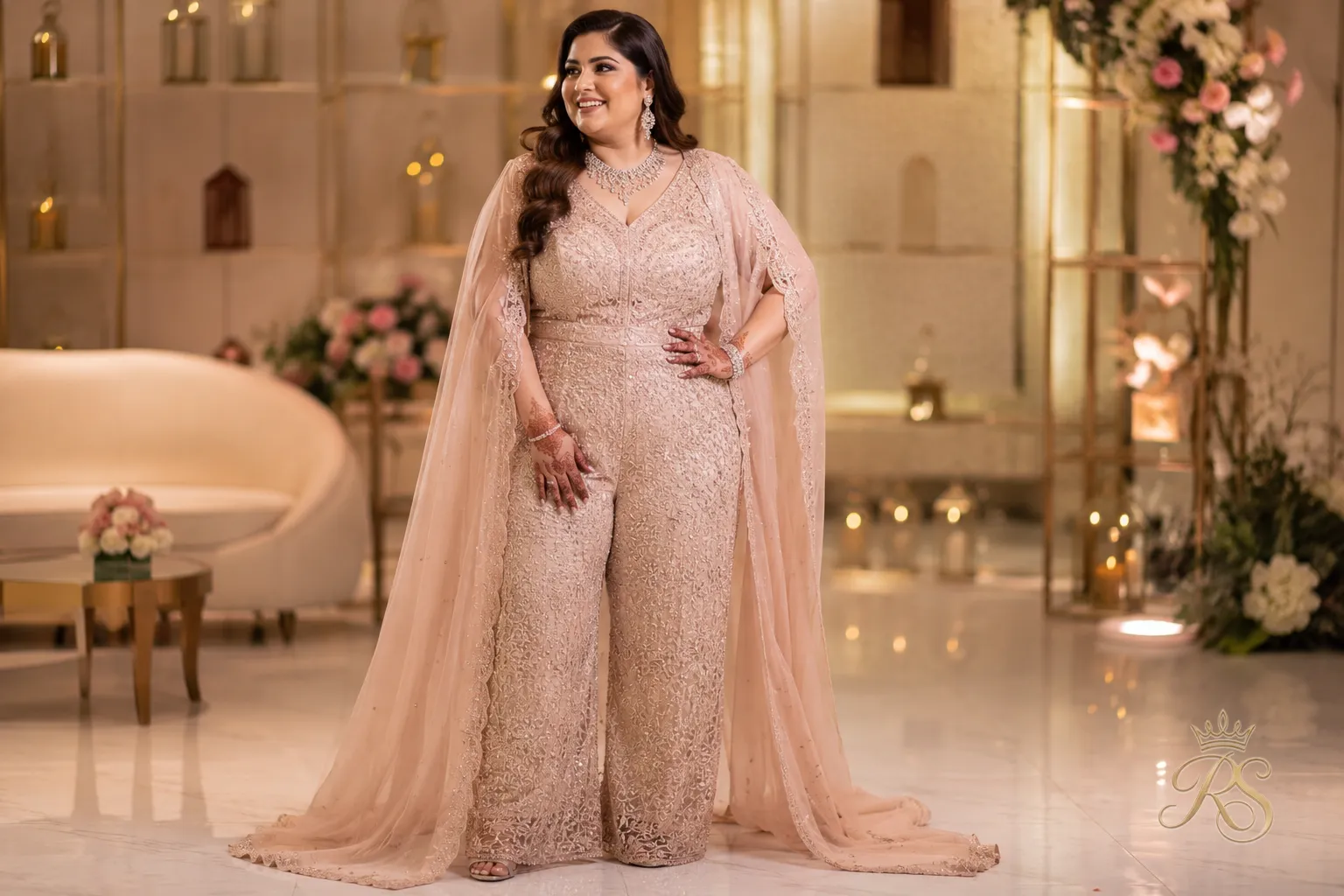
A tailored jumpsuit with a detachable cape gives two looks from one outfit.
Fabric & Structure: What Works Best
Soft, clingy fabrics rarely do curvy brides any favors — structured fabrics that hold their own shape do the flattering work for you, before tailoring even comes into play.
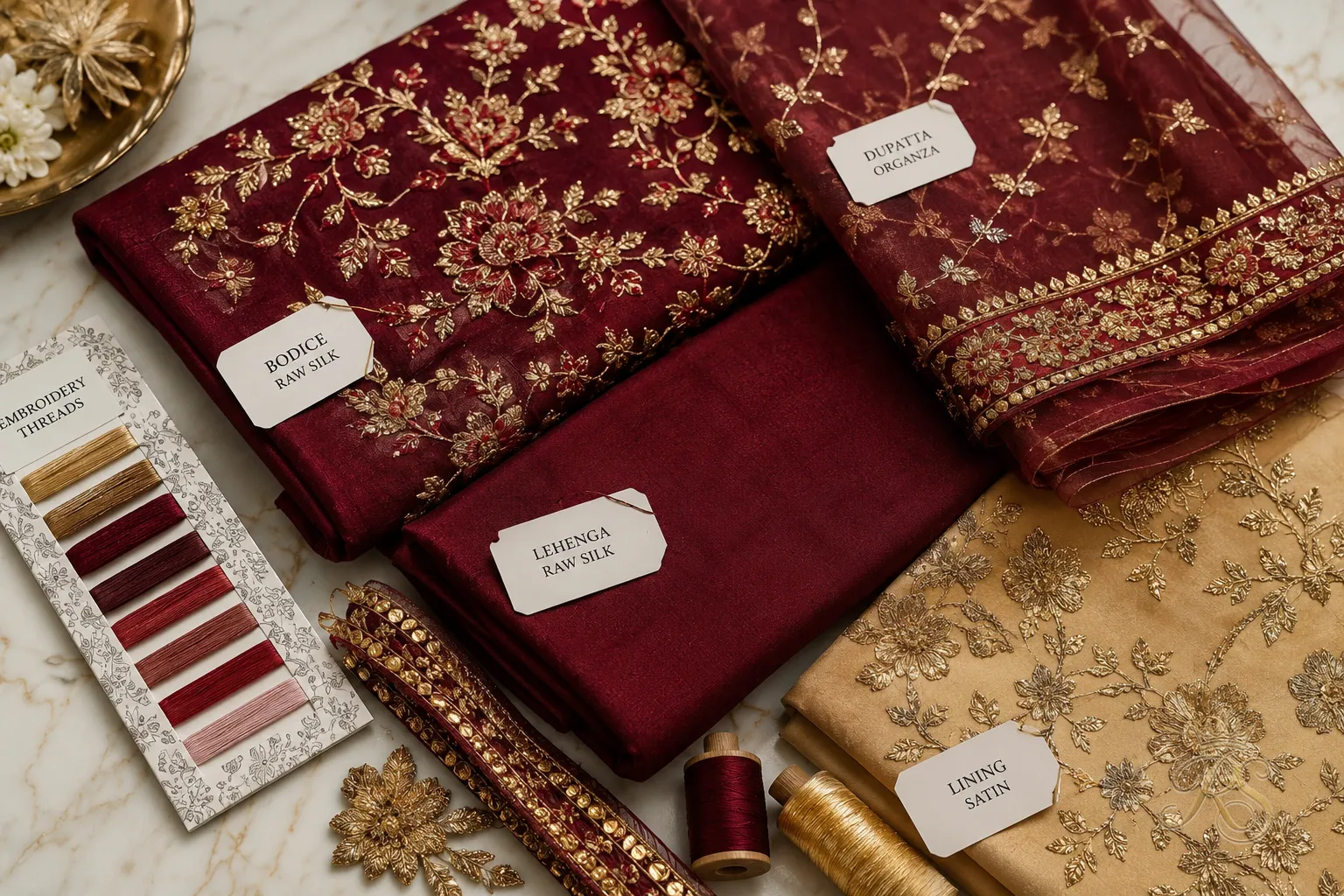
Best picks: raw silk, structured organza, and lightweight brocade hold shape without clinging.
Reserve soft chiffons and georgettes for dupattas and overlays rather than the base garment — they drape beautifully as a second layer without adding visual bulk underneath.
Color & Print Choices That Elongate
Color placement can visually reshape an outfit far more than most brides expect. Deep, jewel-toned solids and vertically-oriented prints both work in your favor.
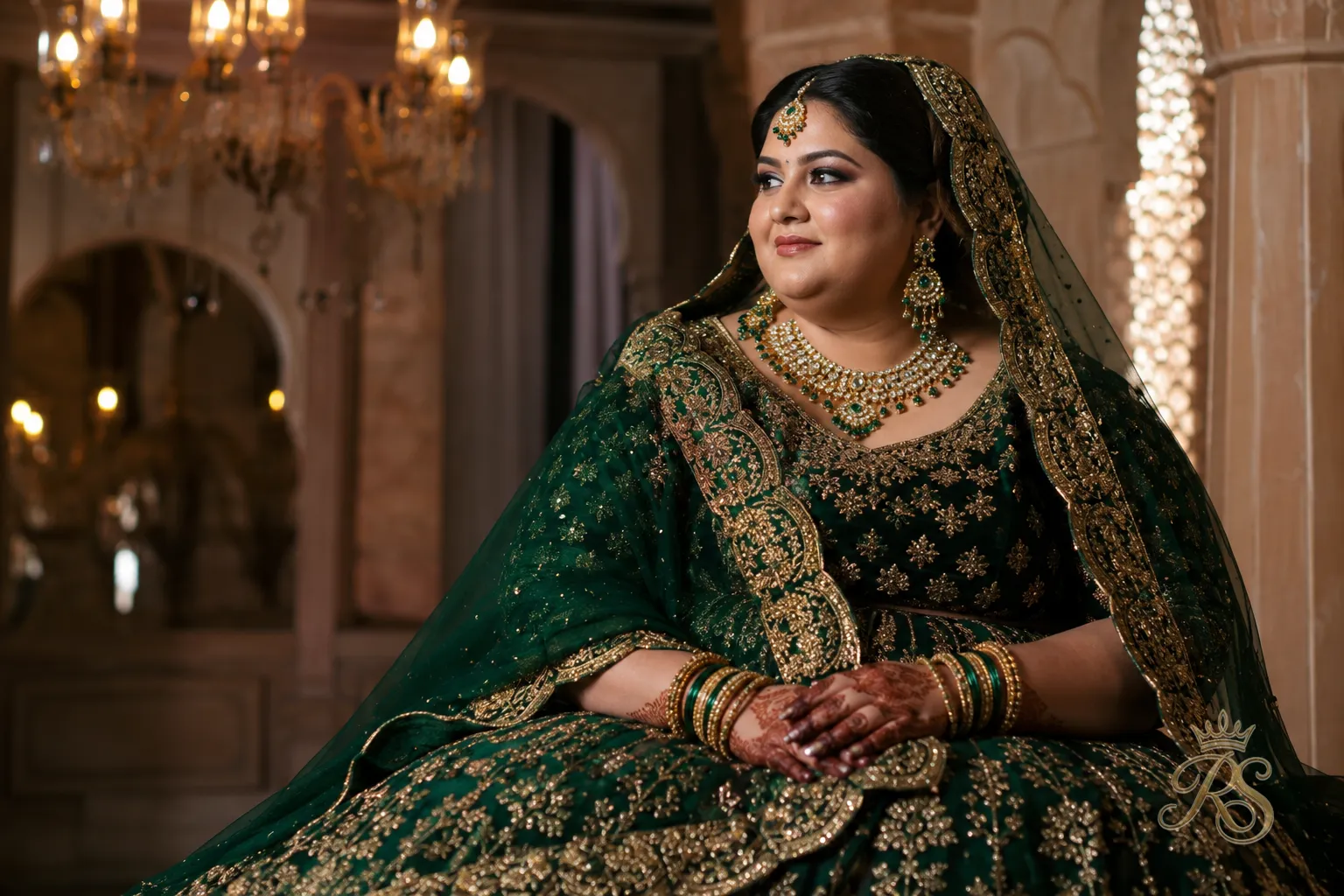
Deep jewel tones like emerald, wine, and midnight blue read as rich rather than heavy.
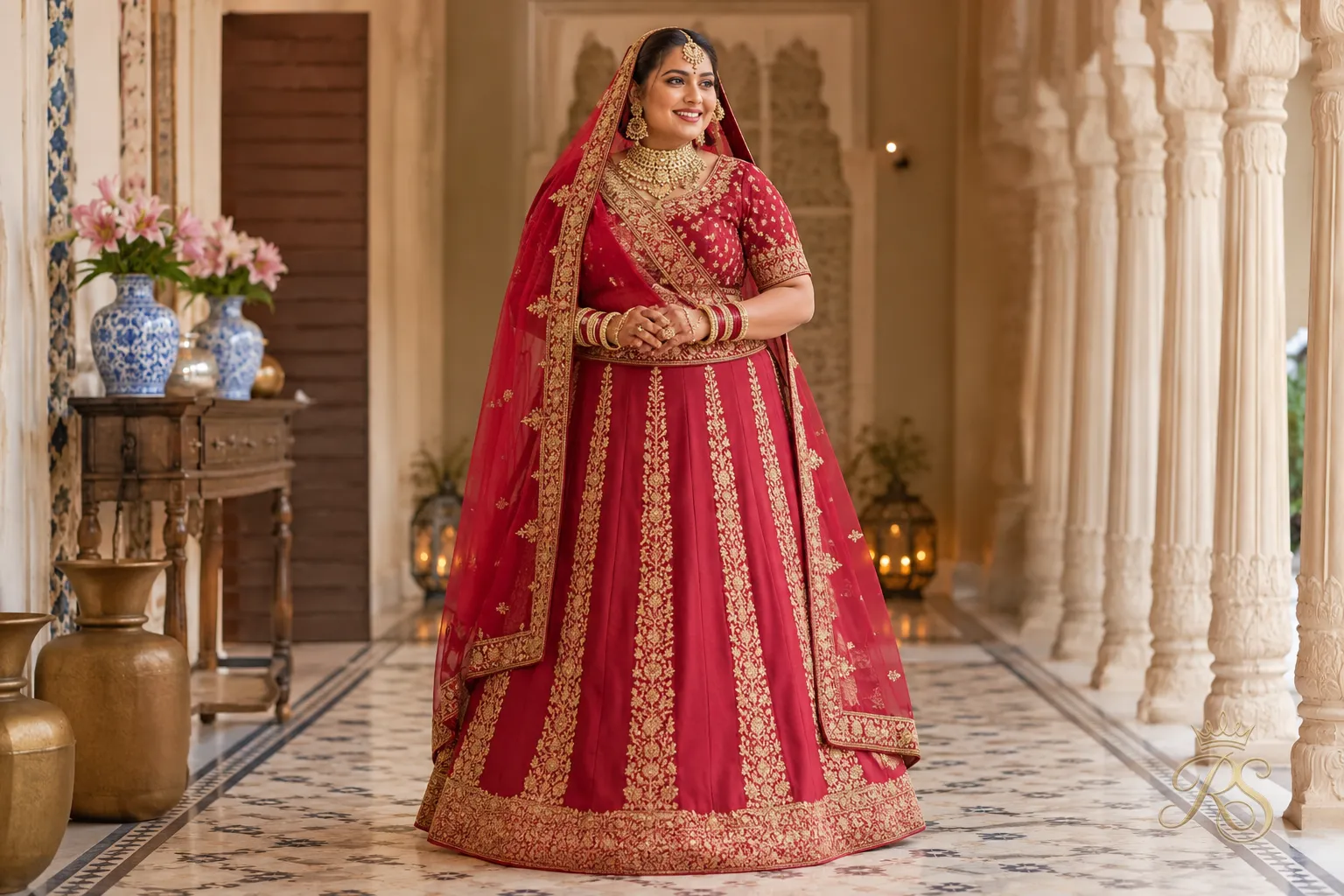
Vertical zari or gota lines create a continuous eye path from shoulder to hem.
Avoid large horizontal borders or oversized motifs placed directly at the widest point of the hip — scale the print size down slightly and let it run vertically instead.
Blouse Designs & Necklines
The blouse is the most fitted part of any bridal outfit, which makes neckline and sleeve choice one of the highest-impact decisions in the entire look.
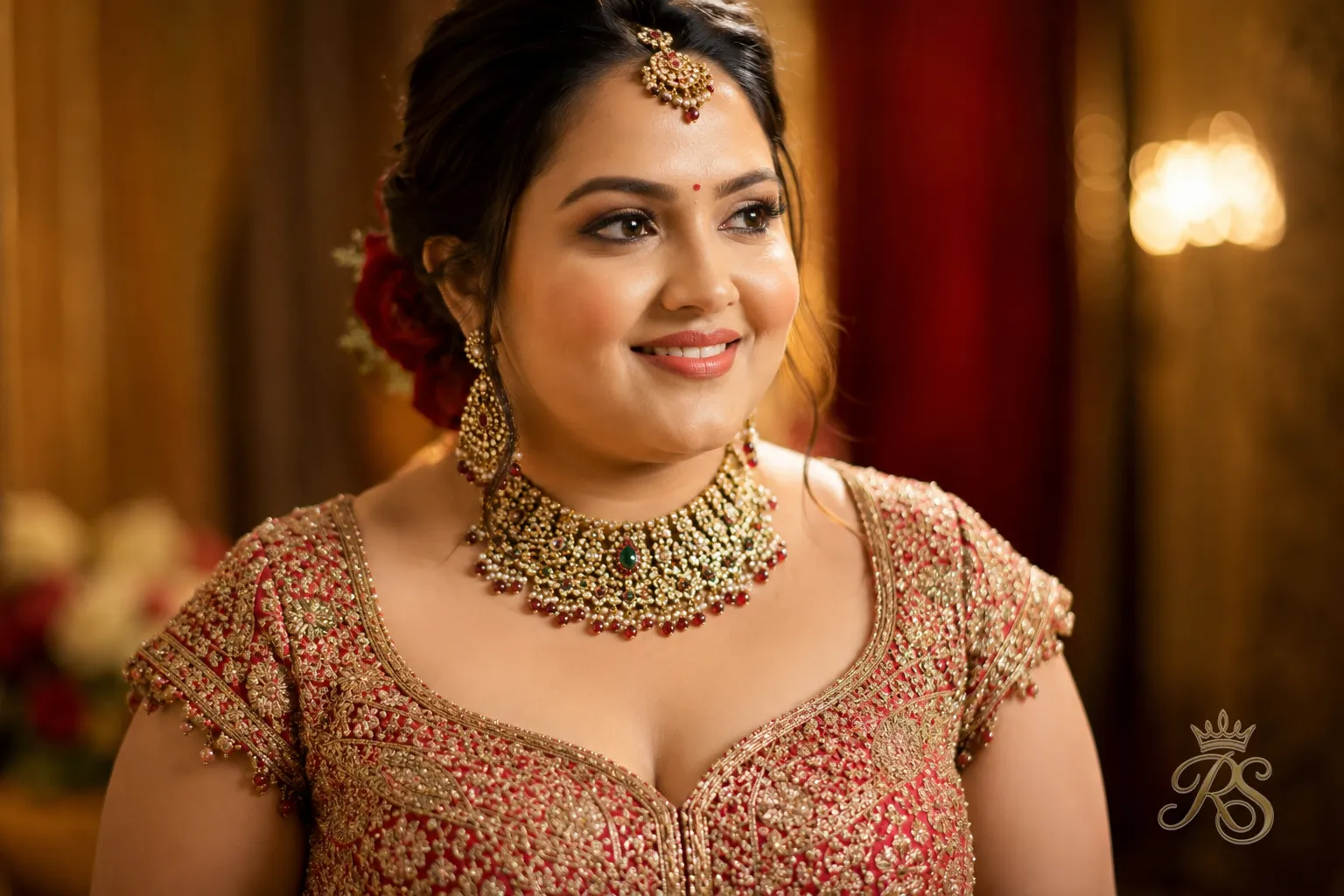
Sweetheart Neckline
A curved neckline softens the collarbone area and frames the face gently.
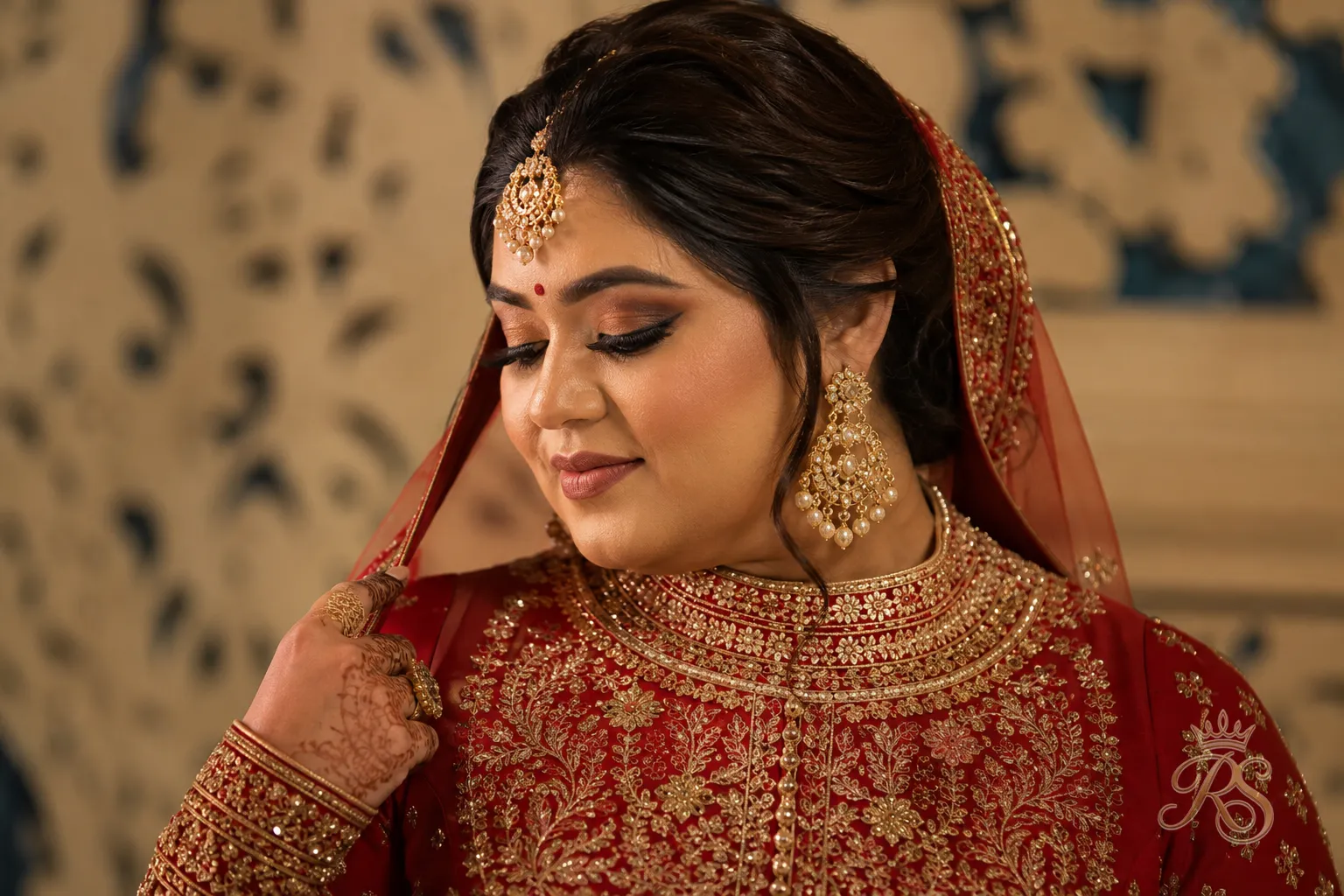
High Neck, Full Sleeve
A vertical neckline seam draws the eye upward and lengthens the torso.
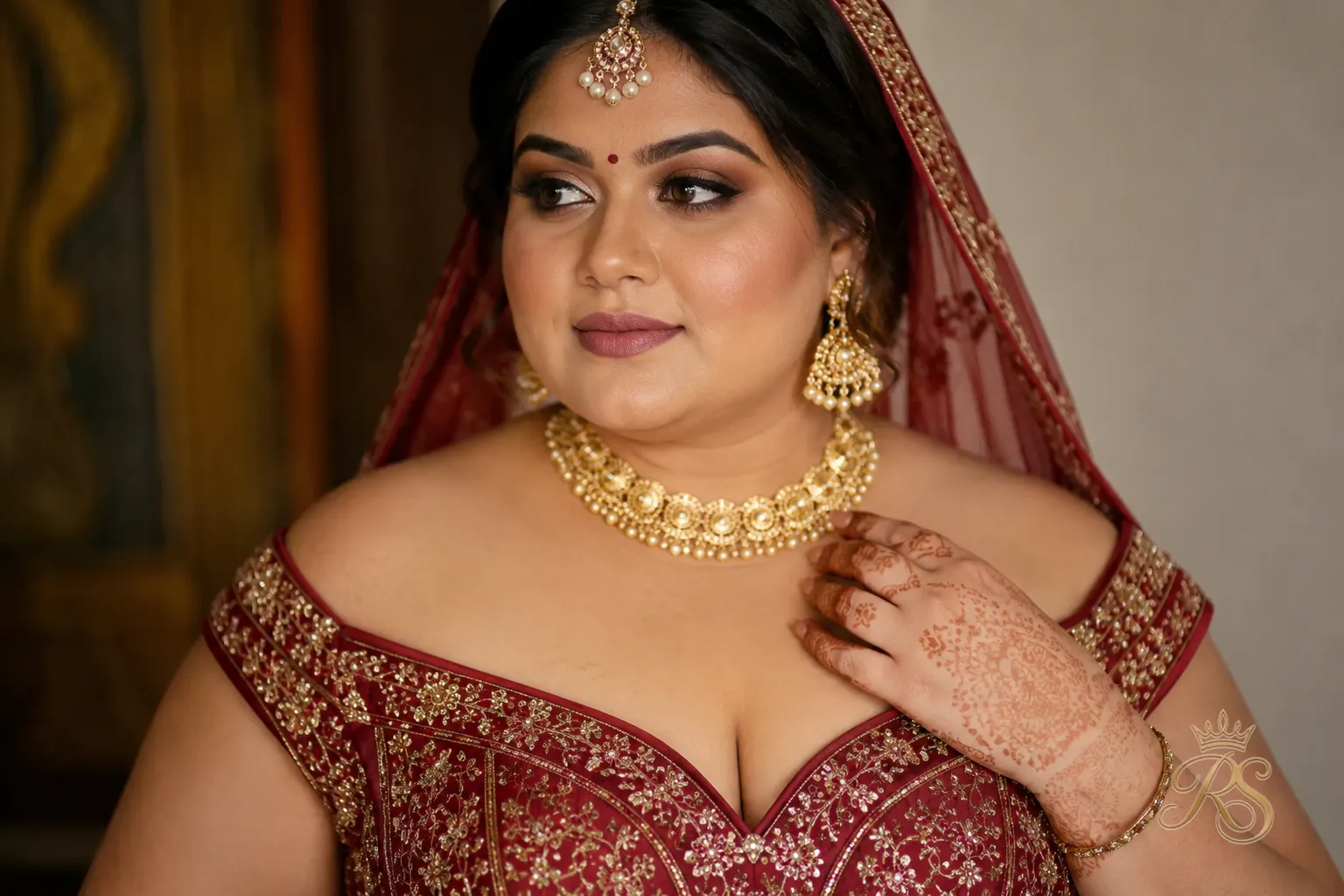
Structured Off-Shoulder
Internal boning keeps the shoulder line clean and fully supported all day.
Layering, Dupatta & Draping Tricks
How a dupatta is draped can add or remove visual width instantly. A few small adjustments make a noticeable difference in photographs.
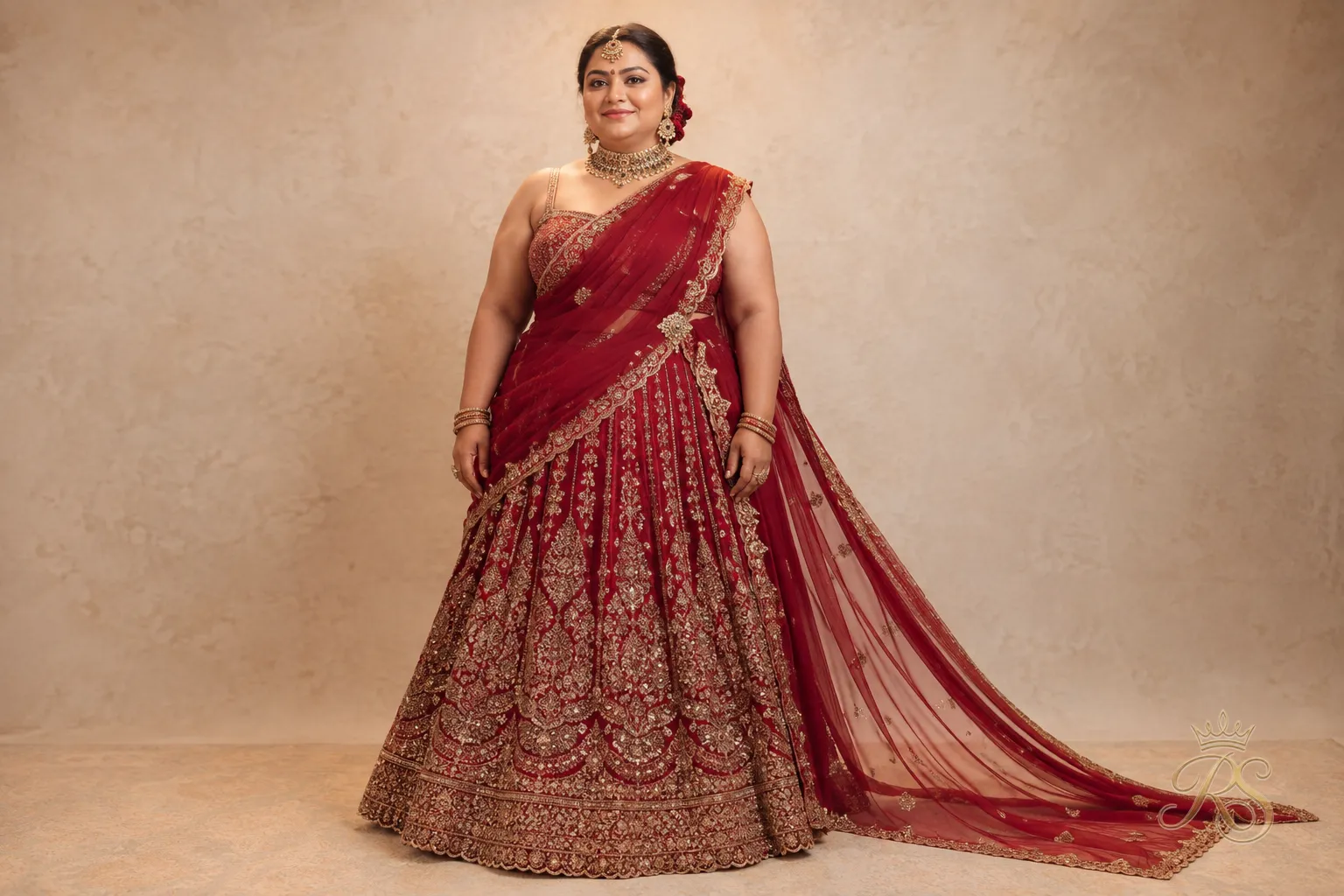
Try this: pin the dupatta at one shoulder and let it fall diagonally rather than draping it flat across both.
- Pin the dupatta at an angle instead of laying it flat and symmetrical across the chest
- Let a portion of the dupatta trail rather than bunching it entirely at the shoulder
- Use a lightweight fabric for the dupatta even if the lehenga itself is heavier and structured
Jewelry & Accessorizing Tips
Jewelry scale should match the outfit's neckline and proportions — the goal is balance, not minimizing or maximizing any one feature.
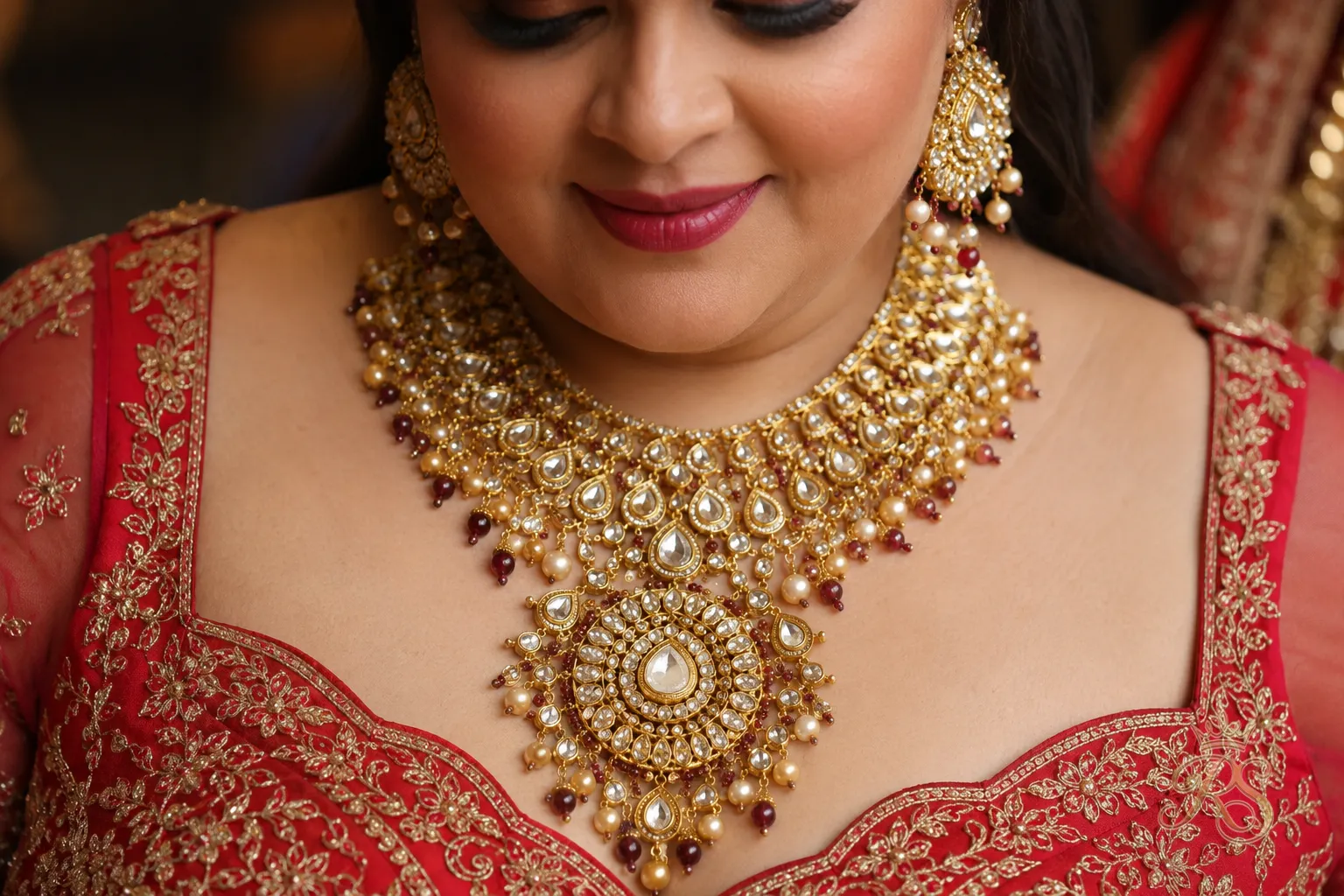
A single statement necklace pairs best with a simpler neckline.
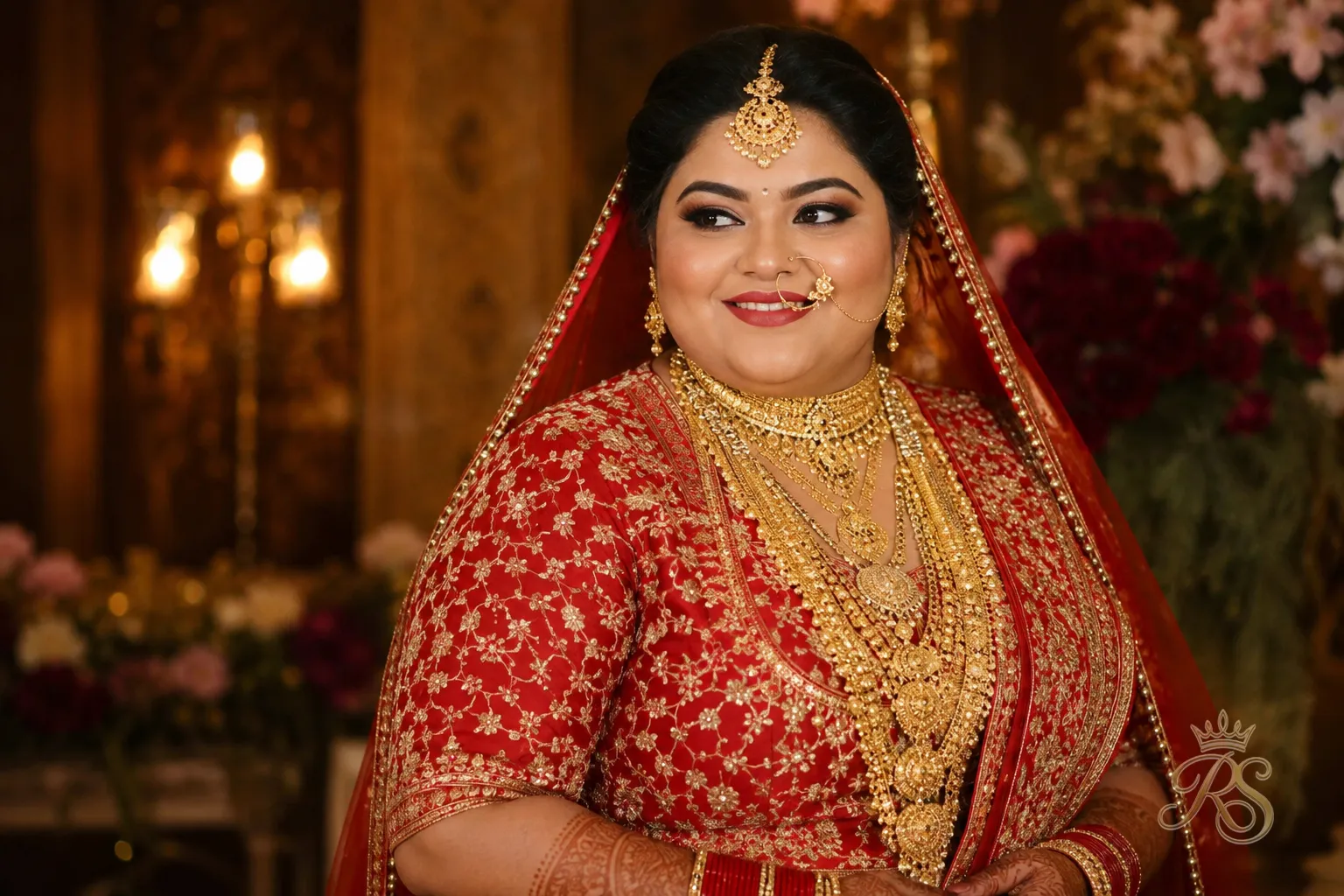
Layered necklaces work beautifully with a high-neck blouse that leaves room for them.
Shapewear & Undergarment Essentials
The right base layer is what makes an outfit sit smoothly for an entire wedding day — this step gets skipped far too often, and it shows in photos.
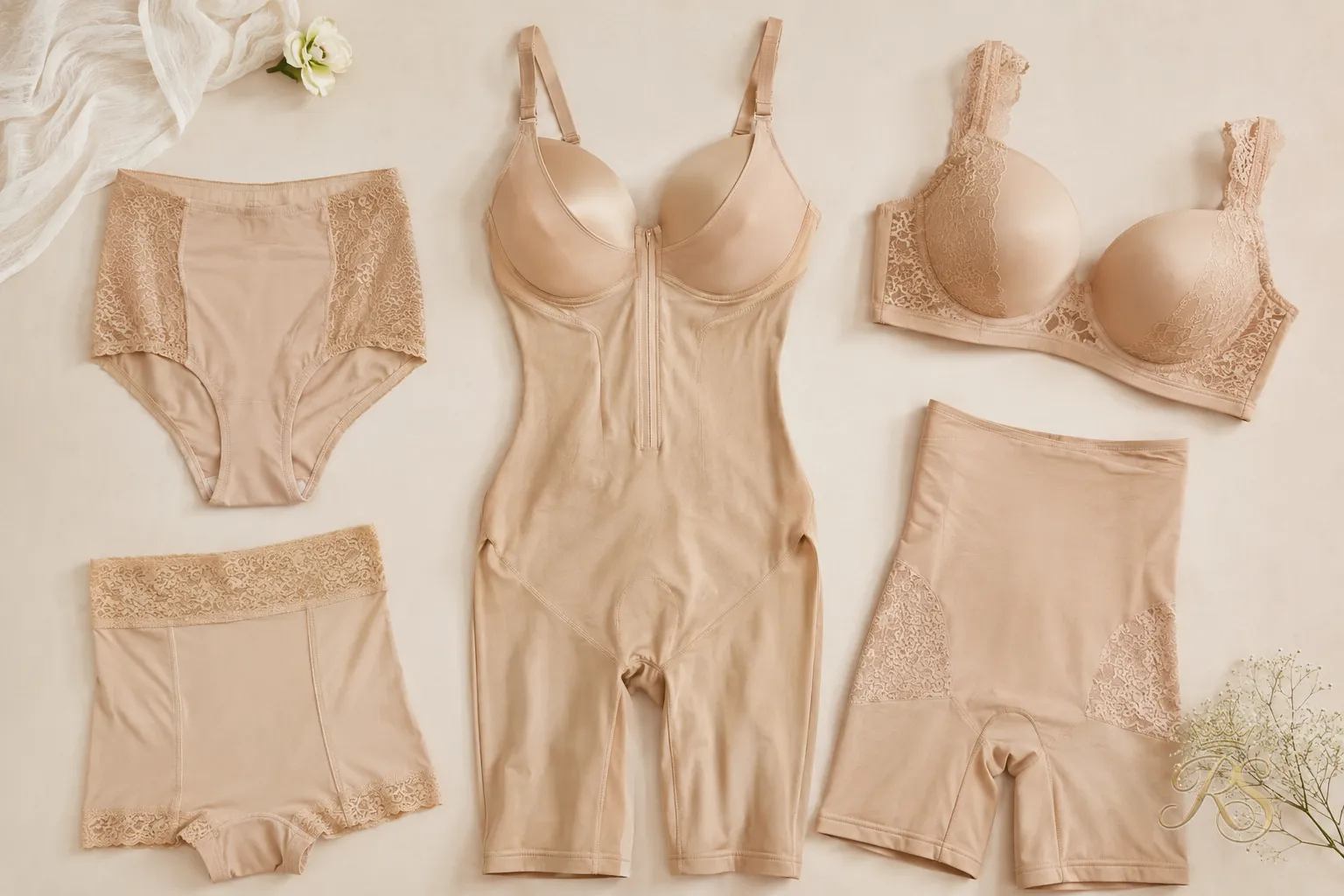
Non-negotiable: a well-fitted, breathable shapewear layer built for long wear, not just photos.
Choose shapewear that's a full size correct for comfort rather than compression alone — an outfit worn for eight-plus hours needs to allow you to eat, dance, and breathe easily.
Regional Plus-Size Bridal Inspiration
India's regional bridal traditions each offer distinct silhouettes worth exploring — many were already designed with structured layering in mind, which works naturally in your favor.
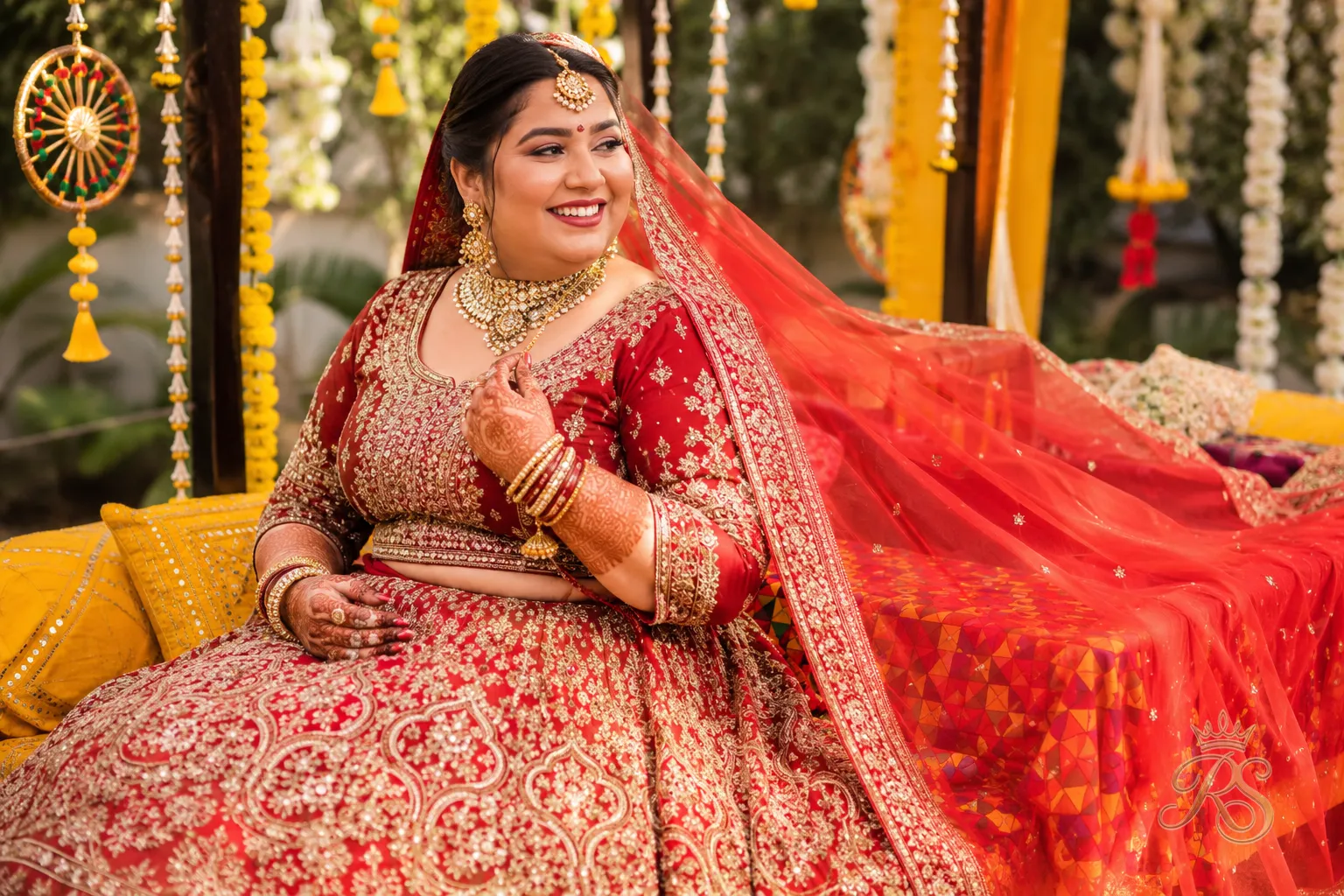
Heavy Embroidered Lehenga
Structured, layered construction built for volume and movement alike.
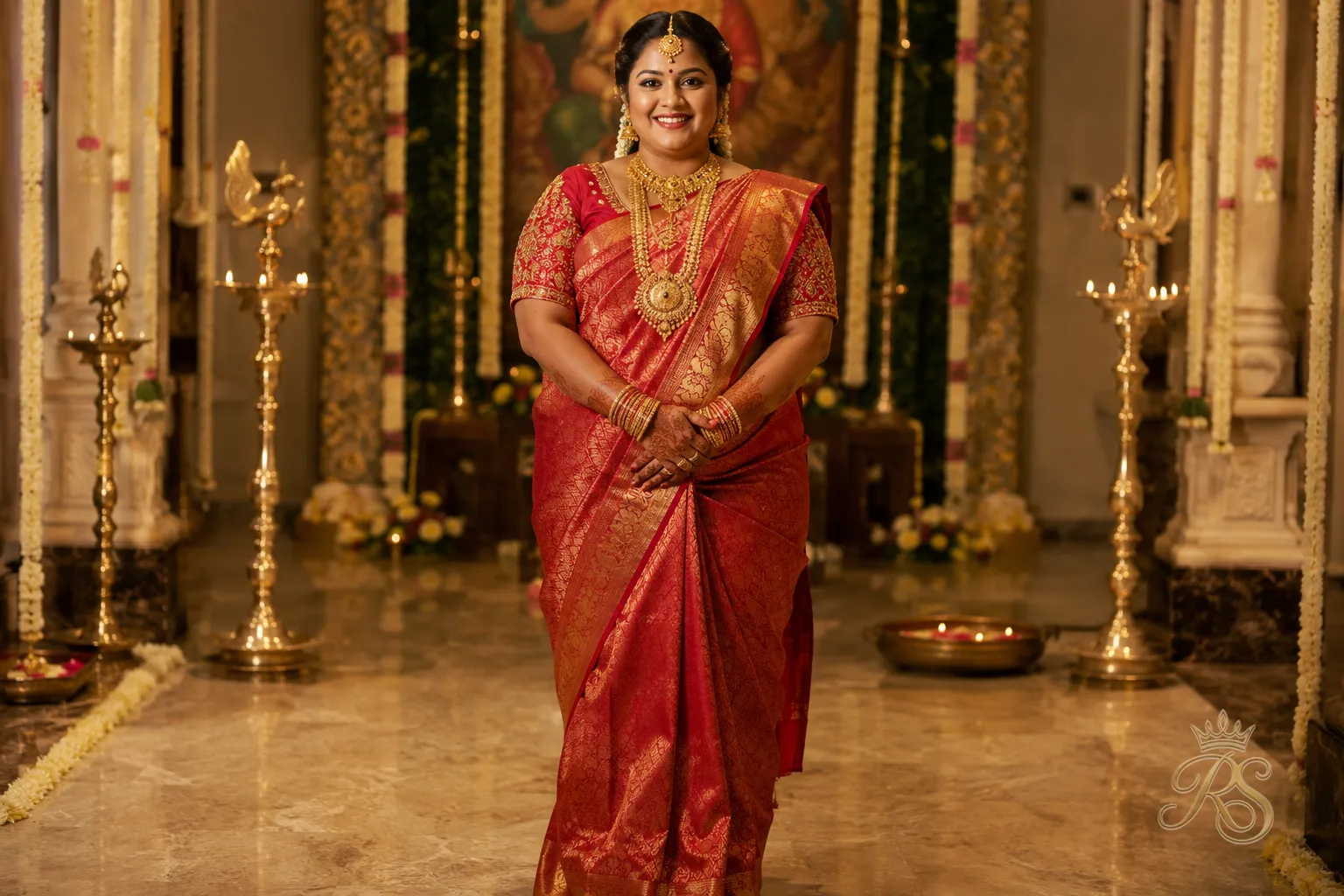
Kanjeevaram Silk Saree
Rich, structured silk that holds its drape beautifully through a long ceremony.
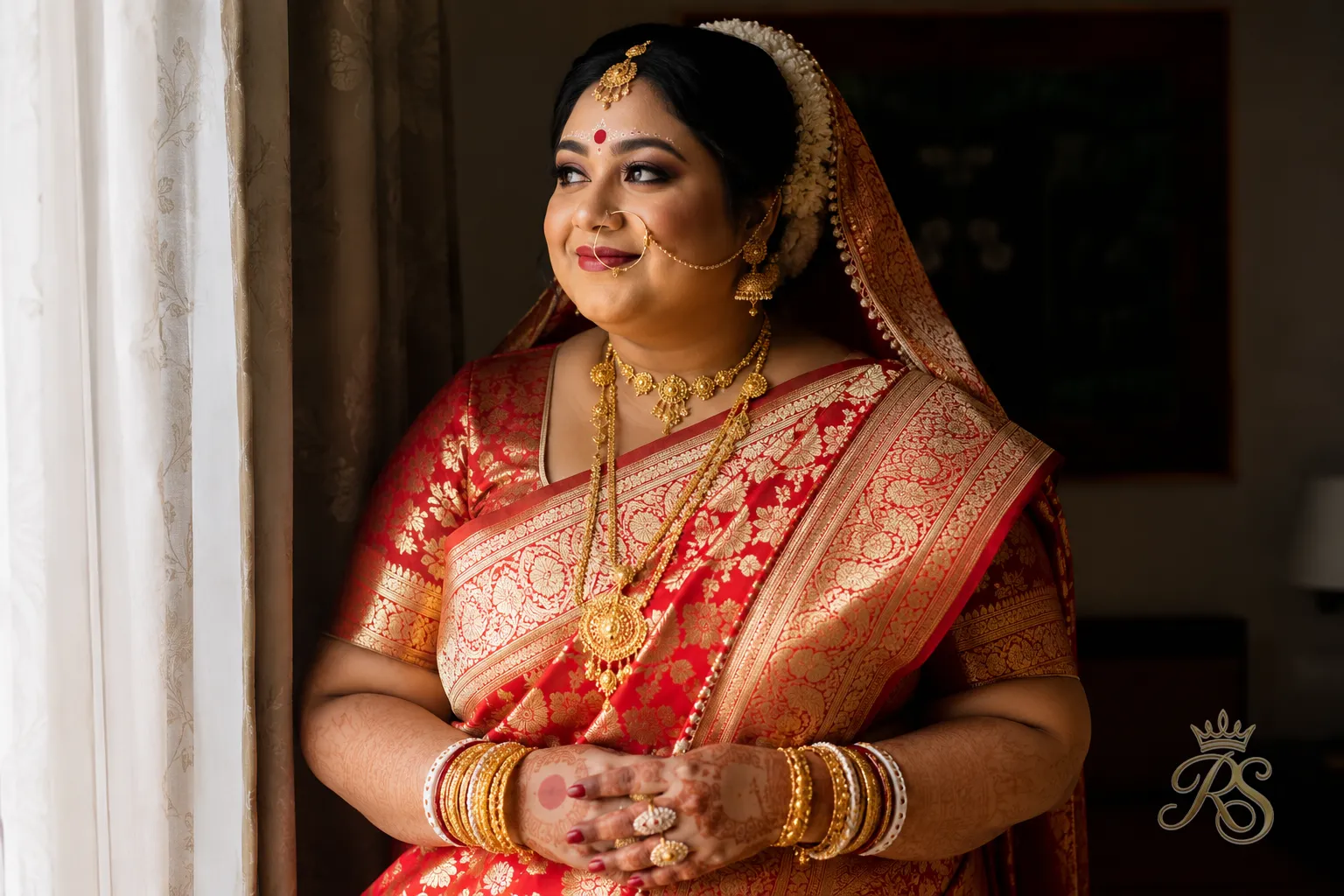
Red & Gold Benarasi
Dense zari borders anchor the drape while the body fabric stays lightweight.
Common Mistakes to Avoid
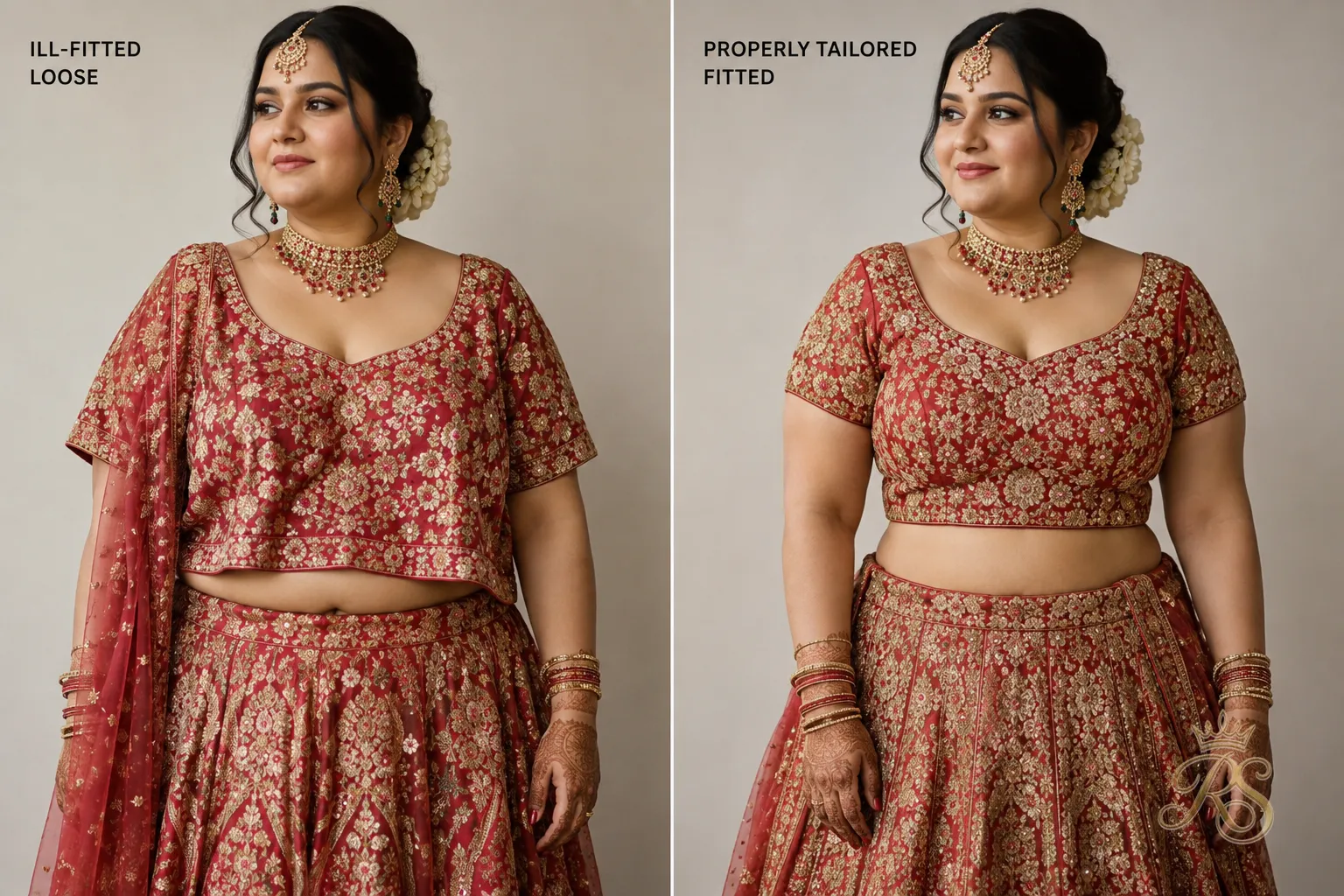
A properly tailored fit transforms the same fabric and design entirely.
- Choosing a design purely because it looked good on a sample size at the store
- Skipping a trial fitting closer to the wedding date after any weight change
- Layering too many heavy embellished pieces on top of one another
- Ignoring how the outfit moves — always test sitting, walking, and raising your arms
Final Thoughts
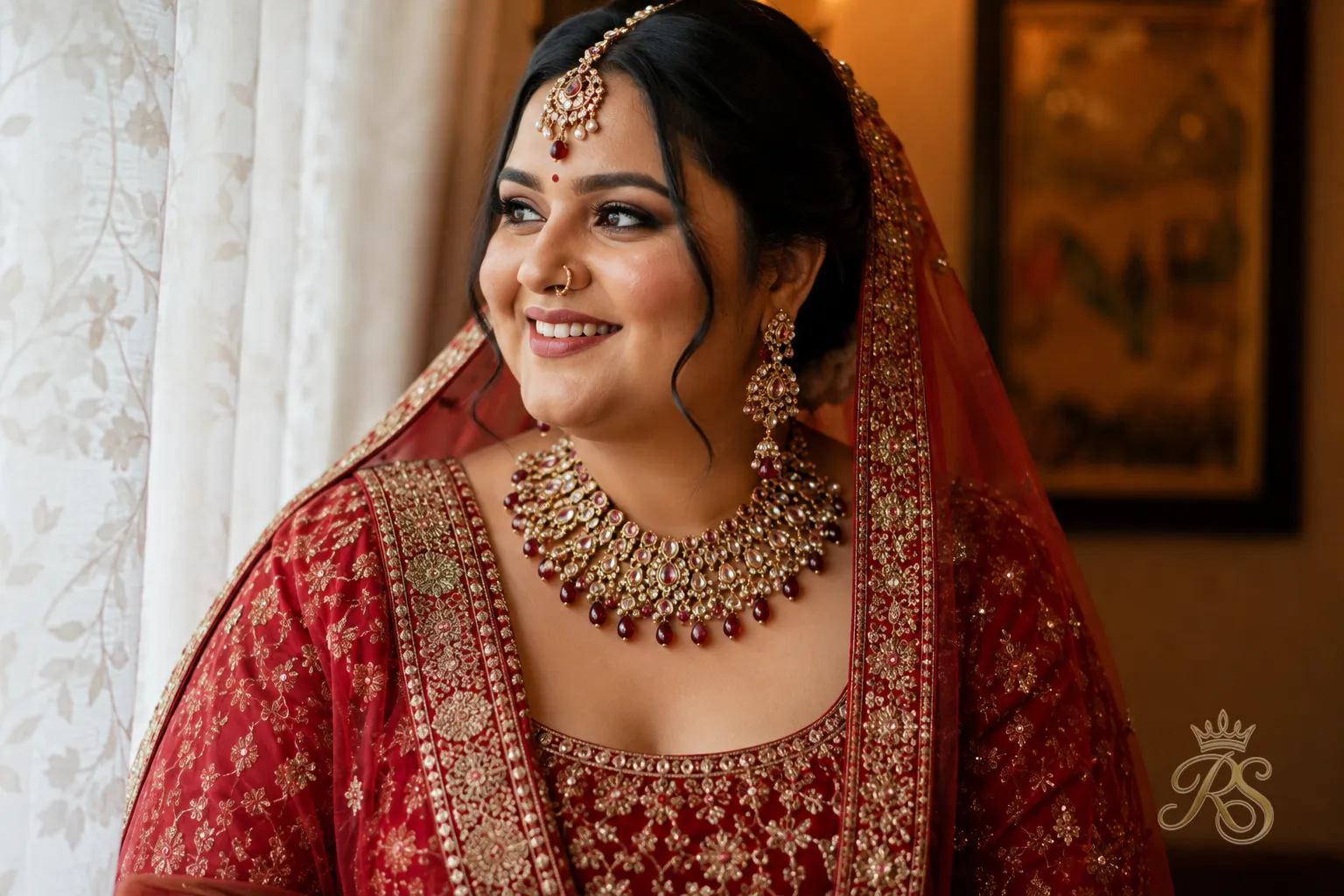
The real goal: an outfit that lets you move, laugh, and feel like yourself all day.
The most beautiful bridal outfit isn't measured by size at all — it's measured by how confident and comfortable you feel wearing it for every hour of your celebration. Silhouette, structure, and a tailor who listens will always matter more than chasing a trend that wasn't designed with your body in mind.
"Style was never meant to have a size limit — it was only ever waiting for better tailoring."