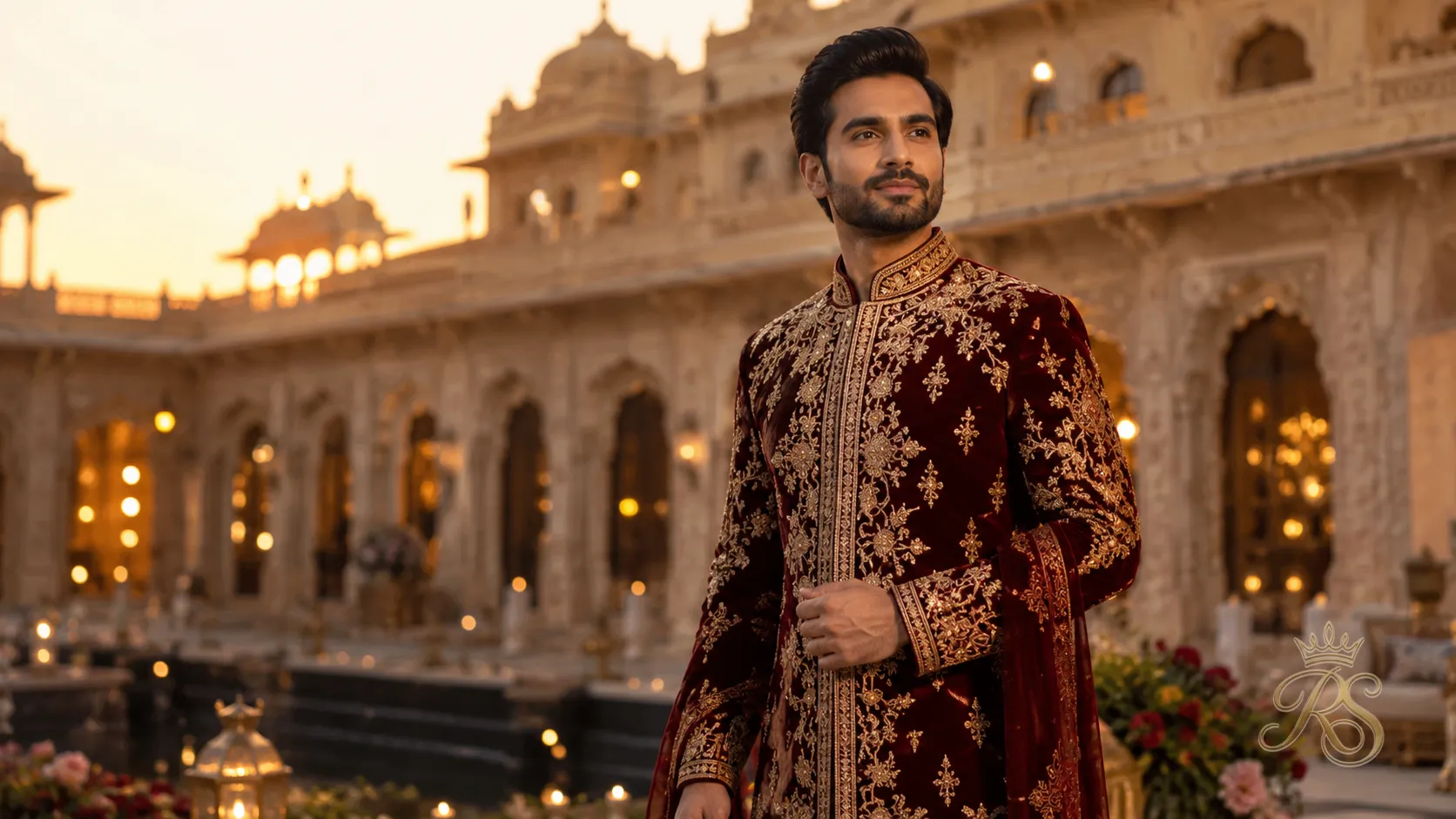
Groom fashion has spent years playing second fiddle to bridal wear — one safe maroon sherwani, borrowed from a catalog, and done. That's shifting fast heading into 2026, with grooms now treating silhouette, fabric, and embroidery choices with the same intentionality brides do. This guide breaks down exactly what's trending and why, so your sherwani holds its own in every photograph.
Why the Groom's Sherwani Deserves Equal Attention
The sherwani is worn for the same number of hours, in front of the same cameras, as the bridal outfit beside it — yet it's often the last booking made and the least customized. That gap is closing quickly as more grooms request custom fittings rather than off-the-rack rentals.
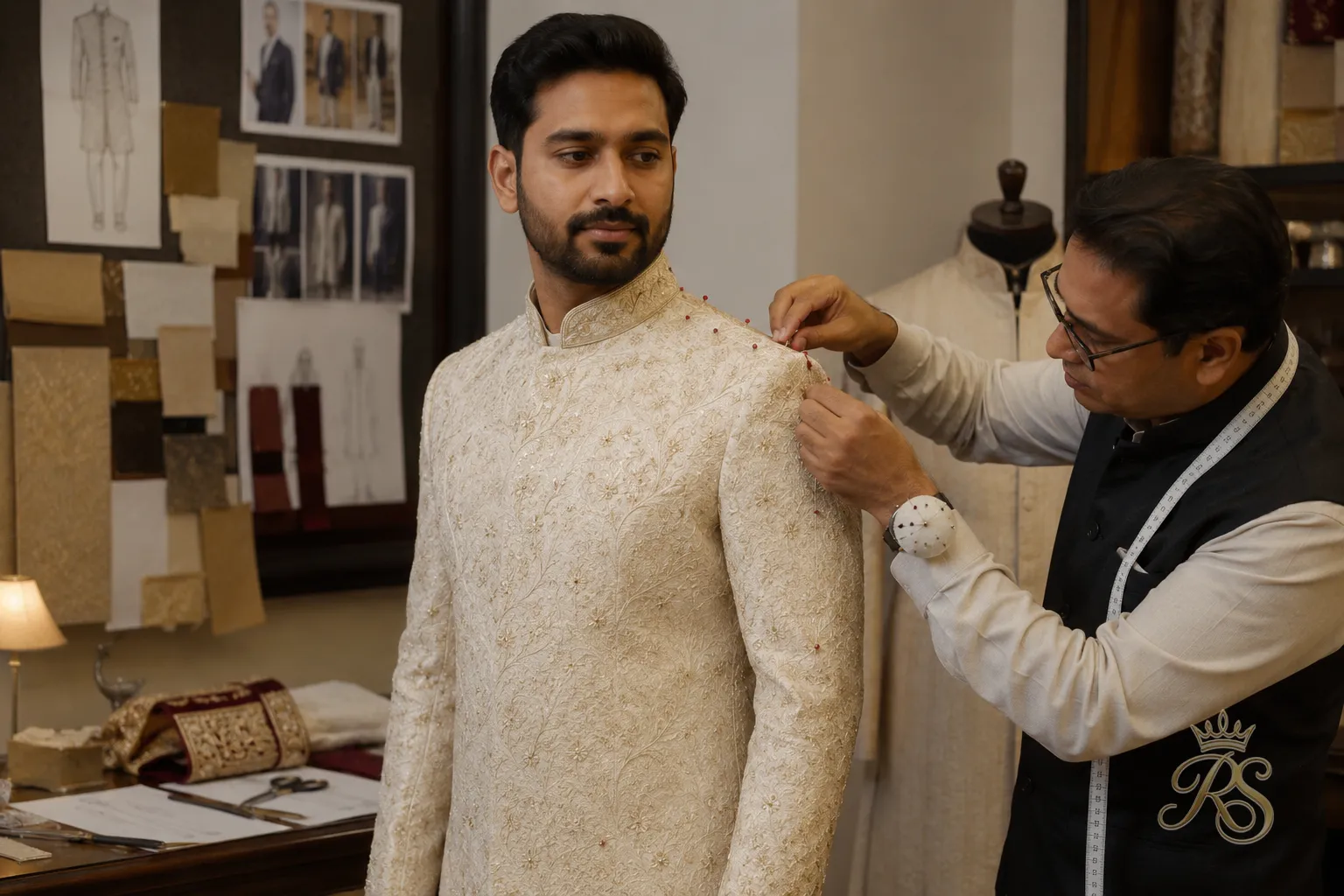
Start early: a custom sherwani needs at least six to eight weeks for fitting and handwork.
Coordinate fabric weight and color tone with the bride's outfit before finalizing either — a heavily embroidered bride photographs best next to a groom with complementary, not competing, detail.
Classic vs Contemporary Sherwani Silhouettes
The base silhouette sets the tone for the entire outfit — a classic straight-cut sherwani reads traditional and regal, while a contemporary cut leans sharper and more tailored to the body.
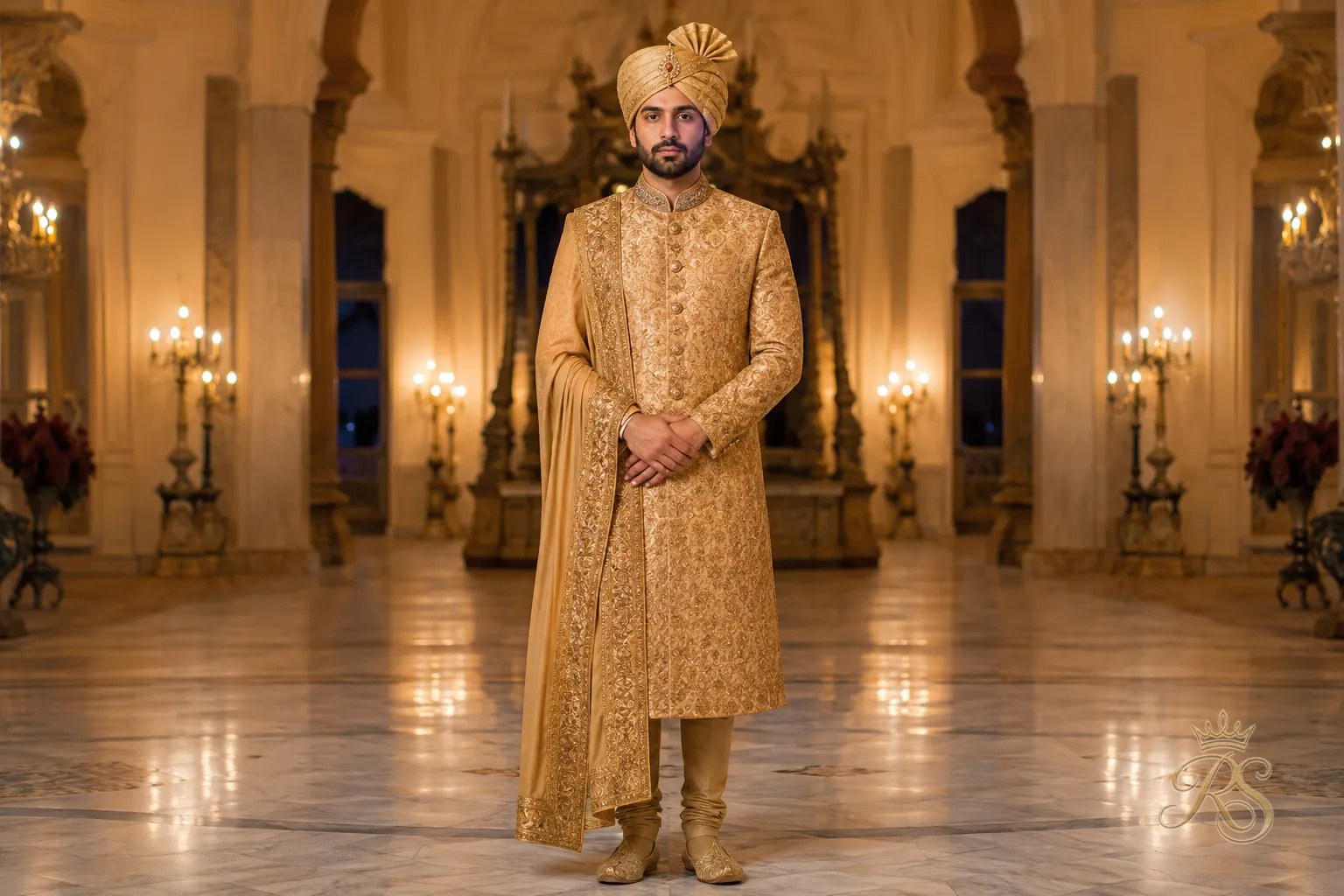
The classic straight cut falls loosely from the shoulder to the ankle.
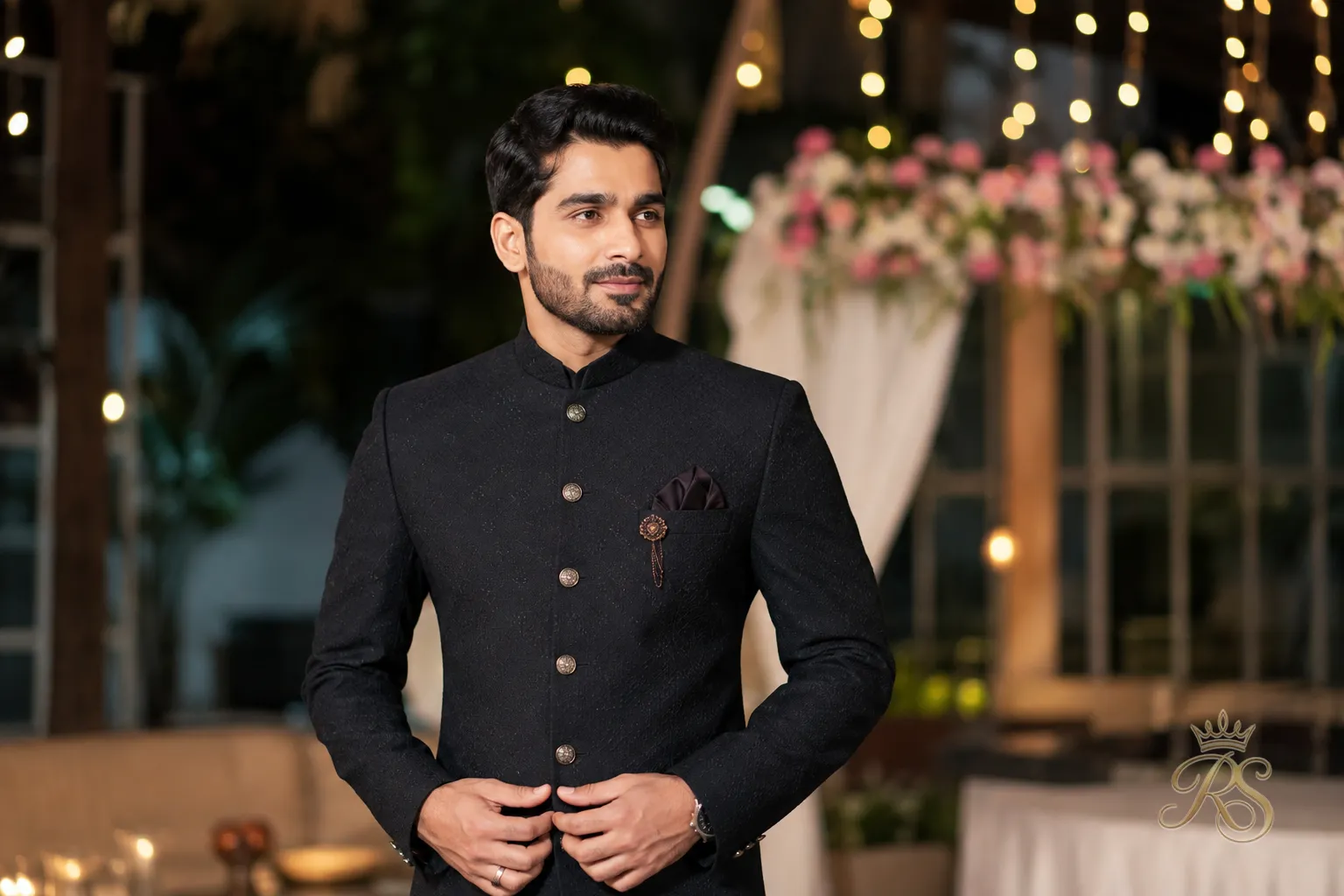
Contemporary cuts are tailored at the waist for a sharper, more structured line.
Tall, slim grooms tend to suit the flowing classic cut, while a tailored waist works well for grooms who want more shape definition in photographs.
Fabric Trends for 2026
Fabric choice determines both the drape and the formality level of the sherwani, and 2026 is seeing a clear shift toward textured, richly woven materials over flat, printed ones.
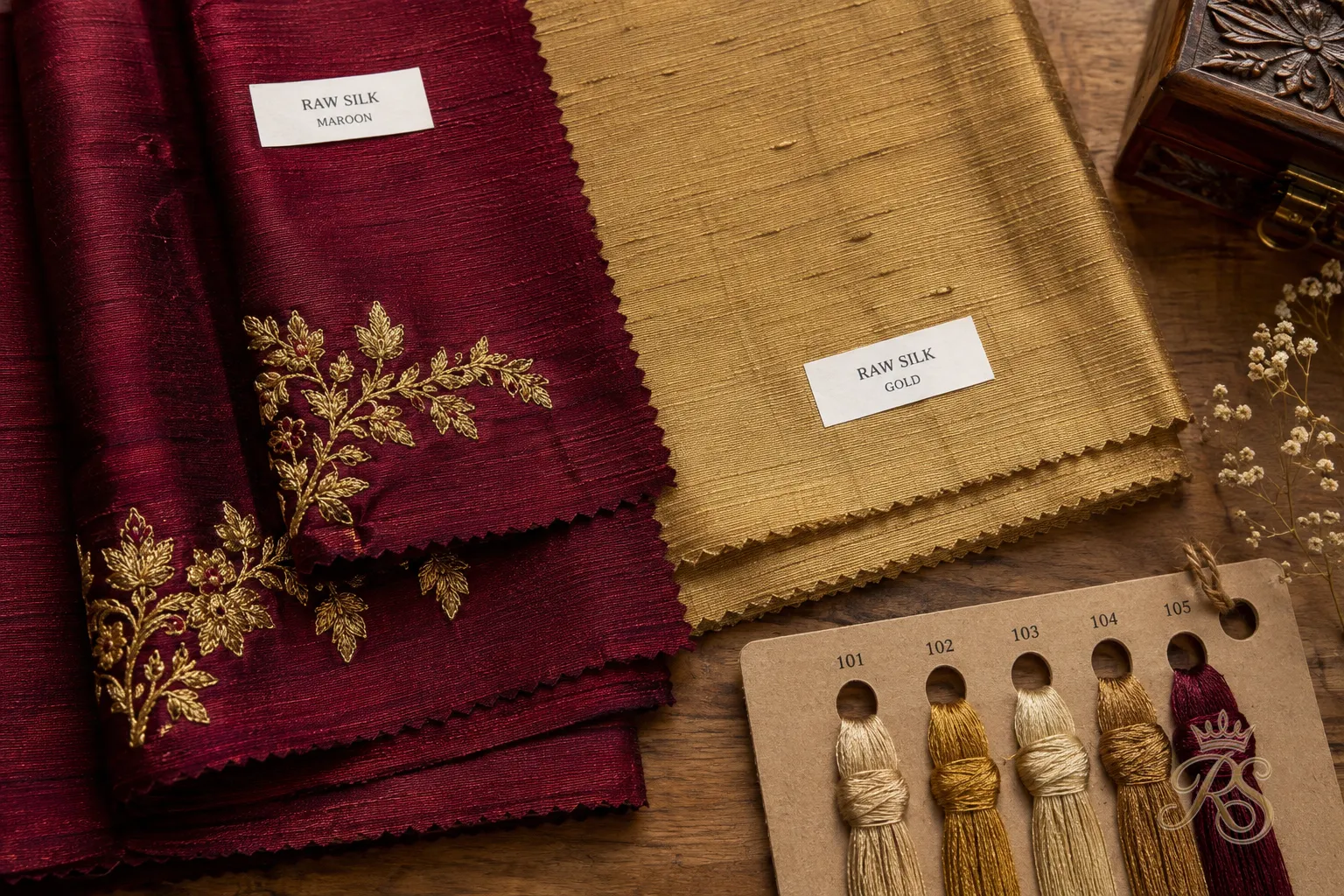
Raw Silk
A slightly nubby, matte silk that holds embroidery beautifully without excess shine.
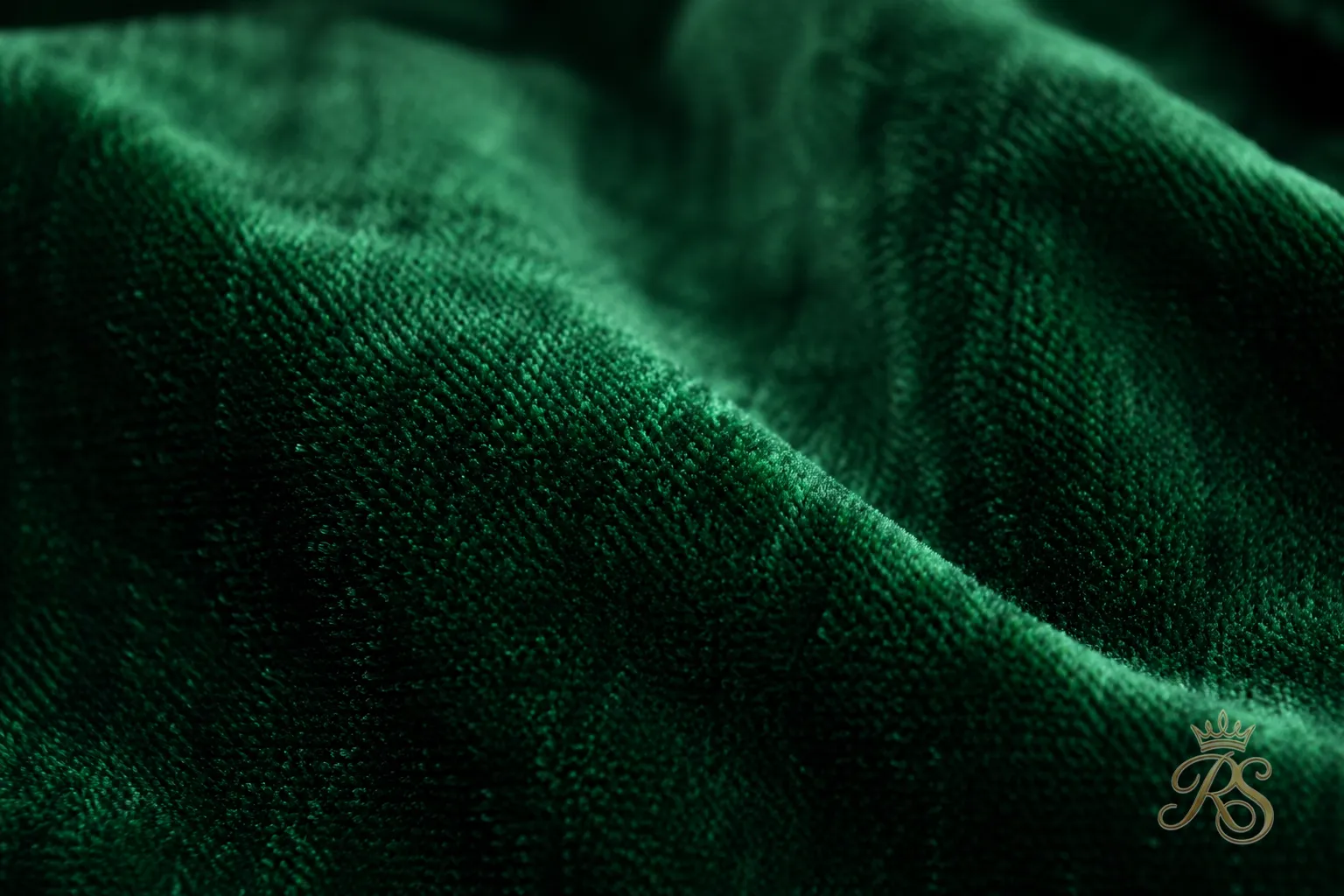
Velvet
Rich and heavy, velvet is trending strongly for cooler-season wedding dates.
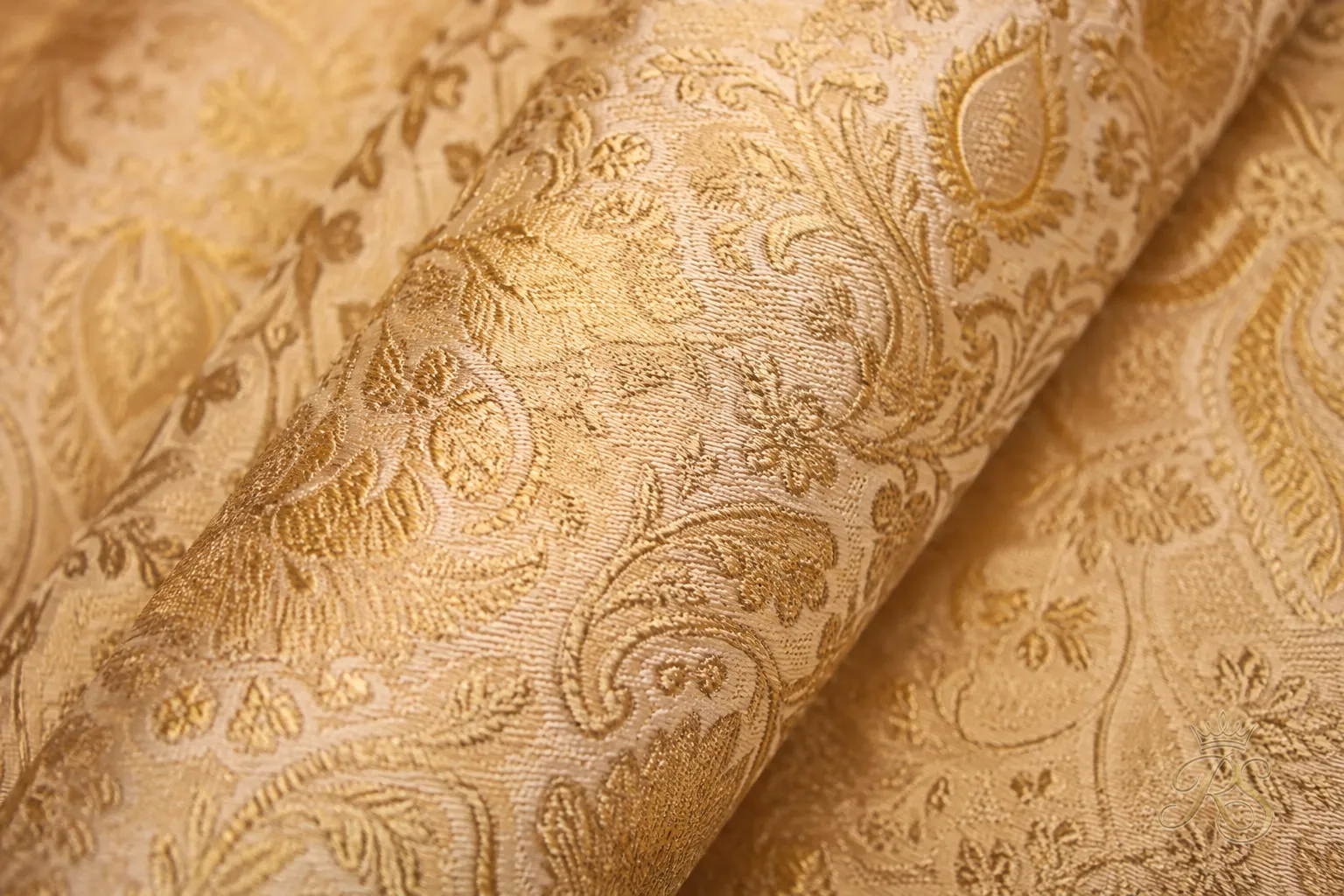
Brocade
Self-woven patterns give texture and shine without needing extra embellishment.
Color Palettes Trending This Season
Deep jewel tones remain a wedding staple, but 2026 is also seeing a rise in muted pastel sherwanis for daytime ceremonies and reception looks.
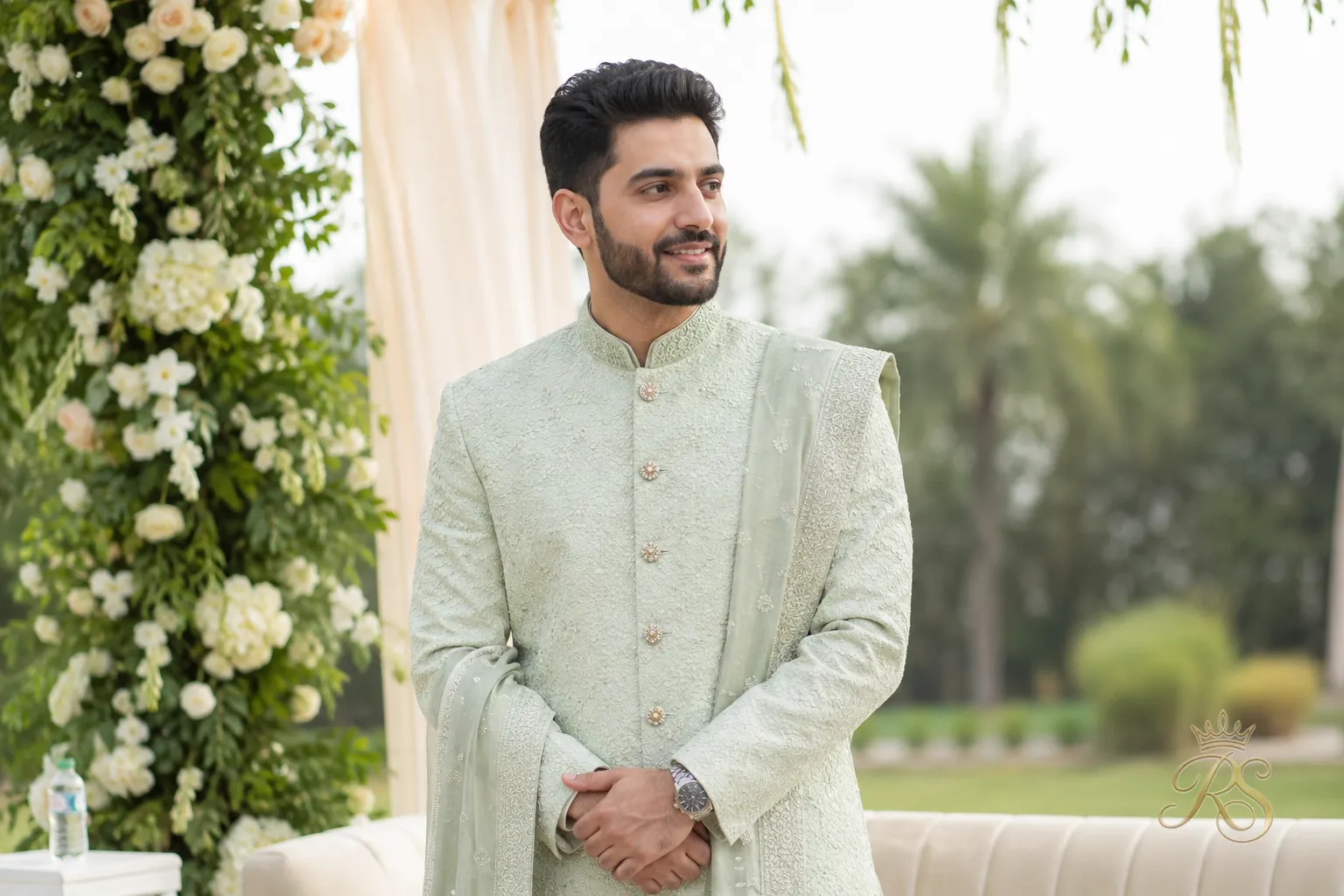
Pastel tones like sage, dusty blue, and champagne suit daytime and destination weddings.
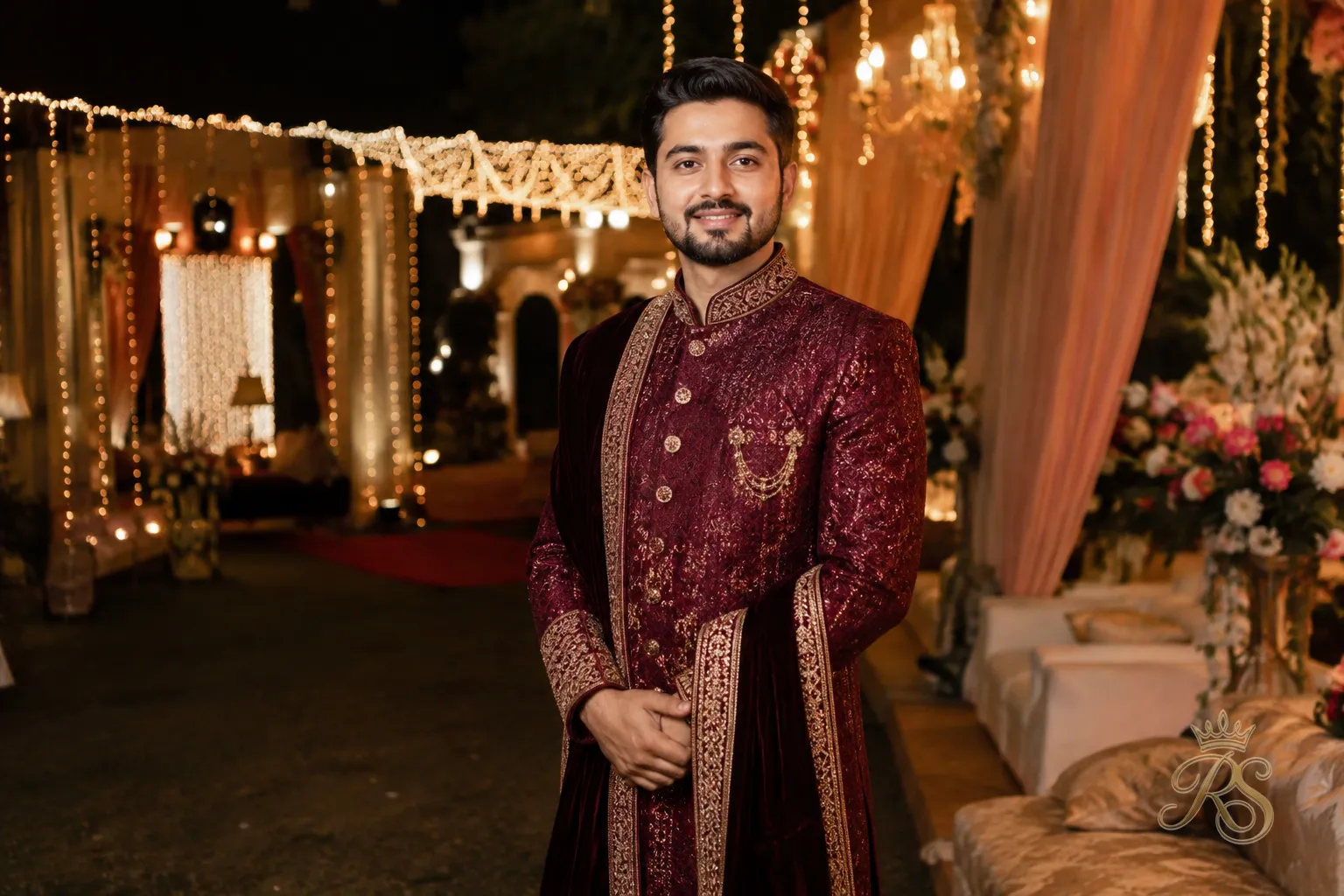
Deep maroon and bottle green remain the most-requested colors for evening ceremonies.
Embroidery & Handwork Styles
Embroidery is where a sherwani goes from formal to unforgettable — the technique used affects both the visual weight and the price point significantly.
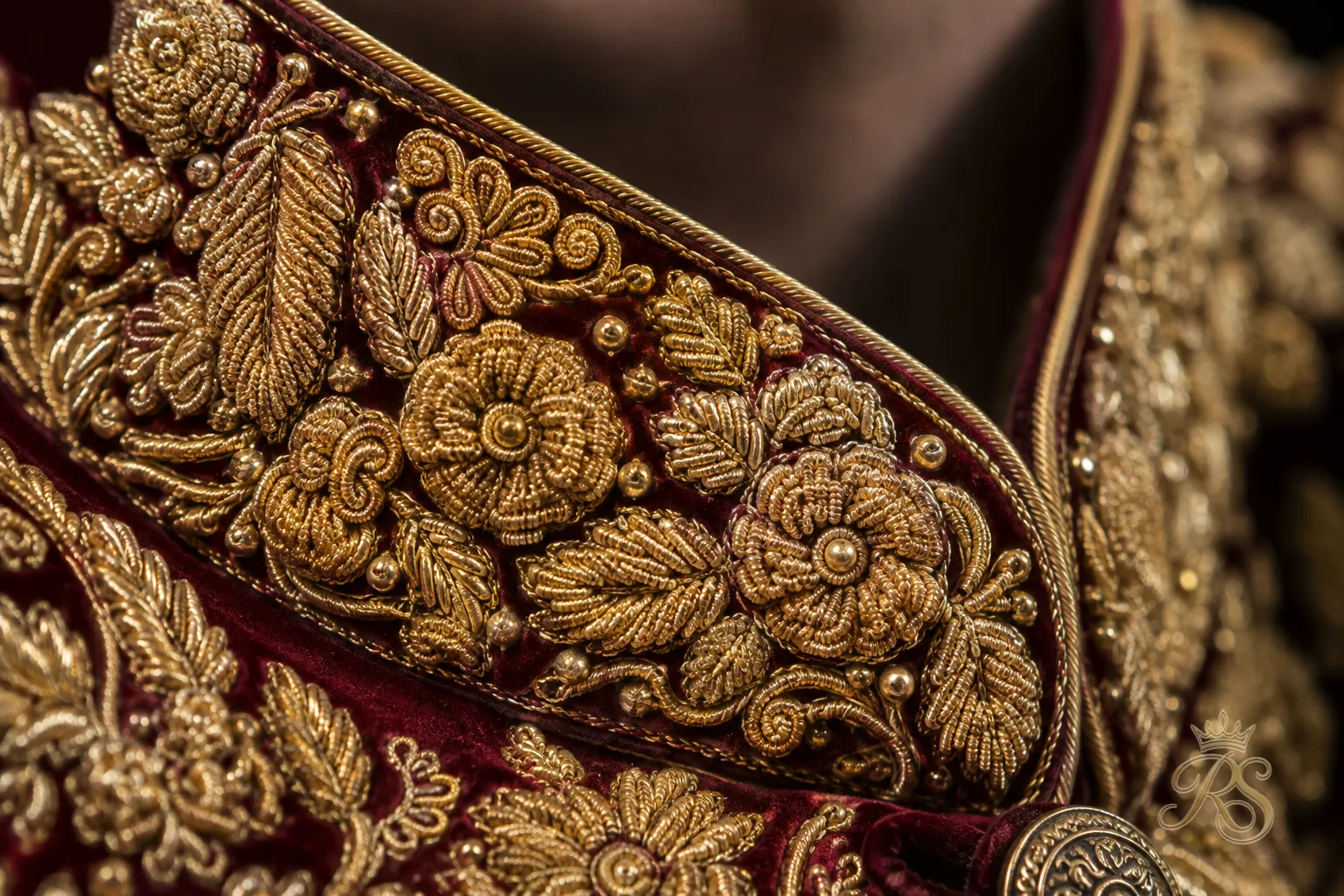
Zardozi: metallic thread and wirework for the most opulent, heaviest look.
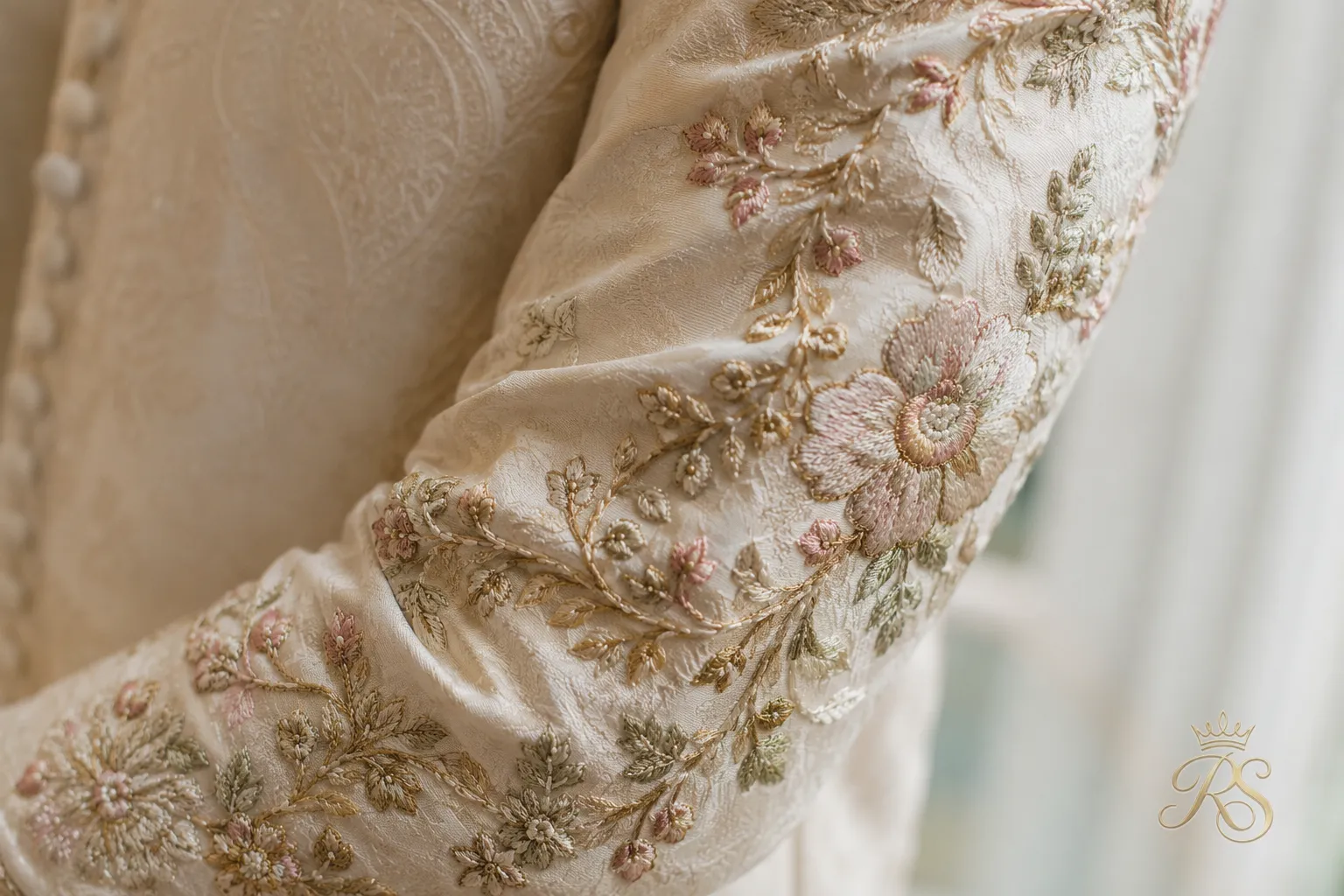
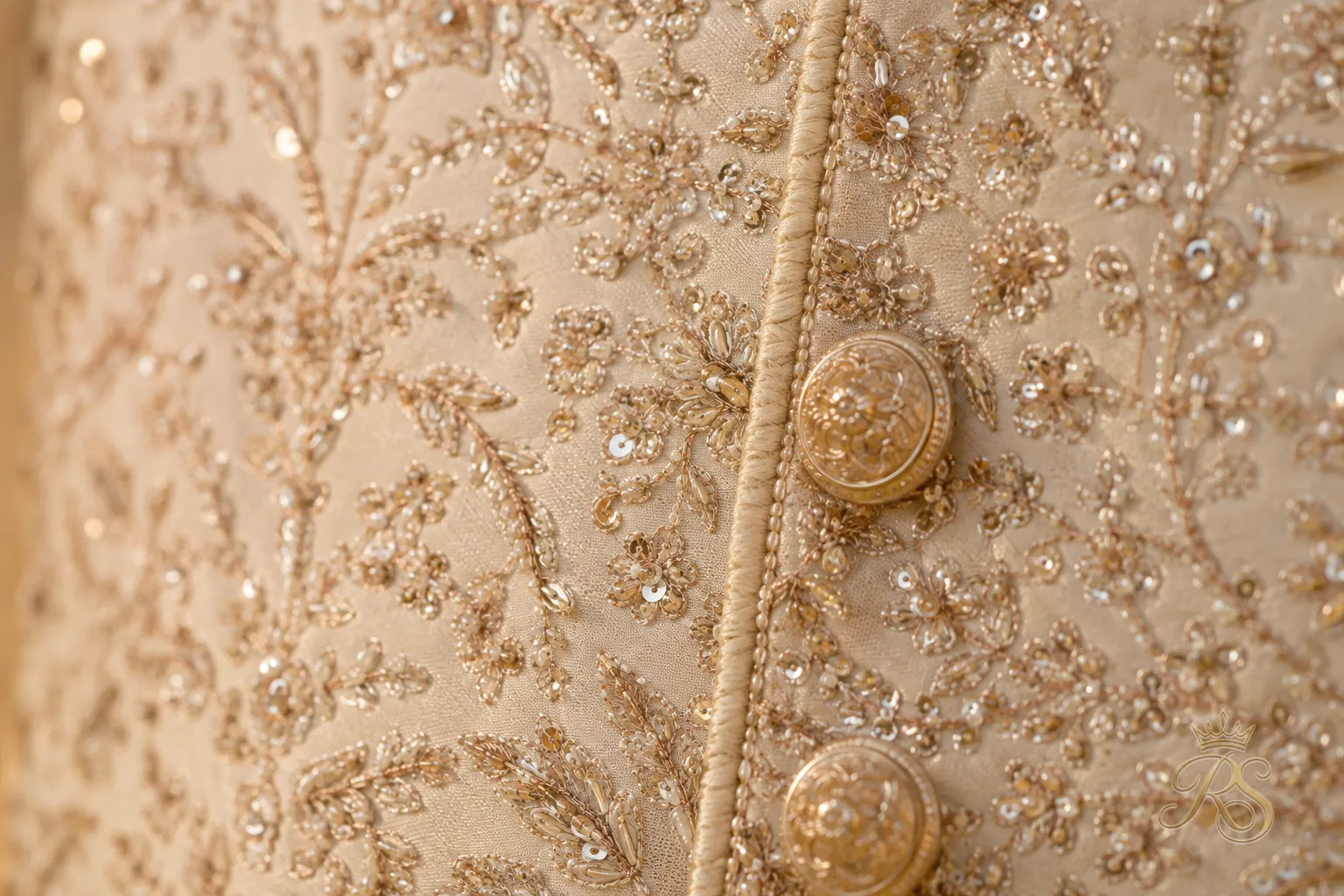
Resham thread work is lighter and more breathable for long ceremonies, while sequin and bead detailing photographs especially well under evening lighting.
Collar & Neckline Styles
Collar shape changes the whole formality level of the outfit, and it's one of the easiest details to get wrong if it's not matched to the groom's neck and jaw shape.
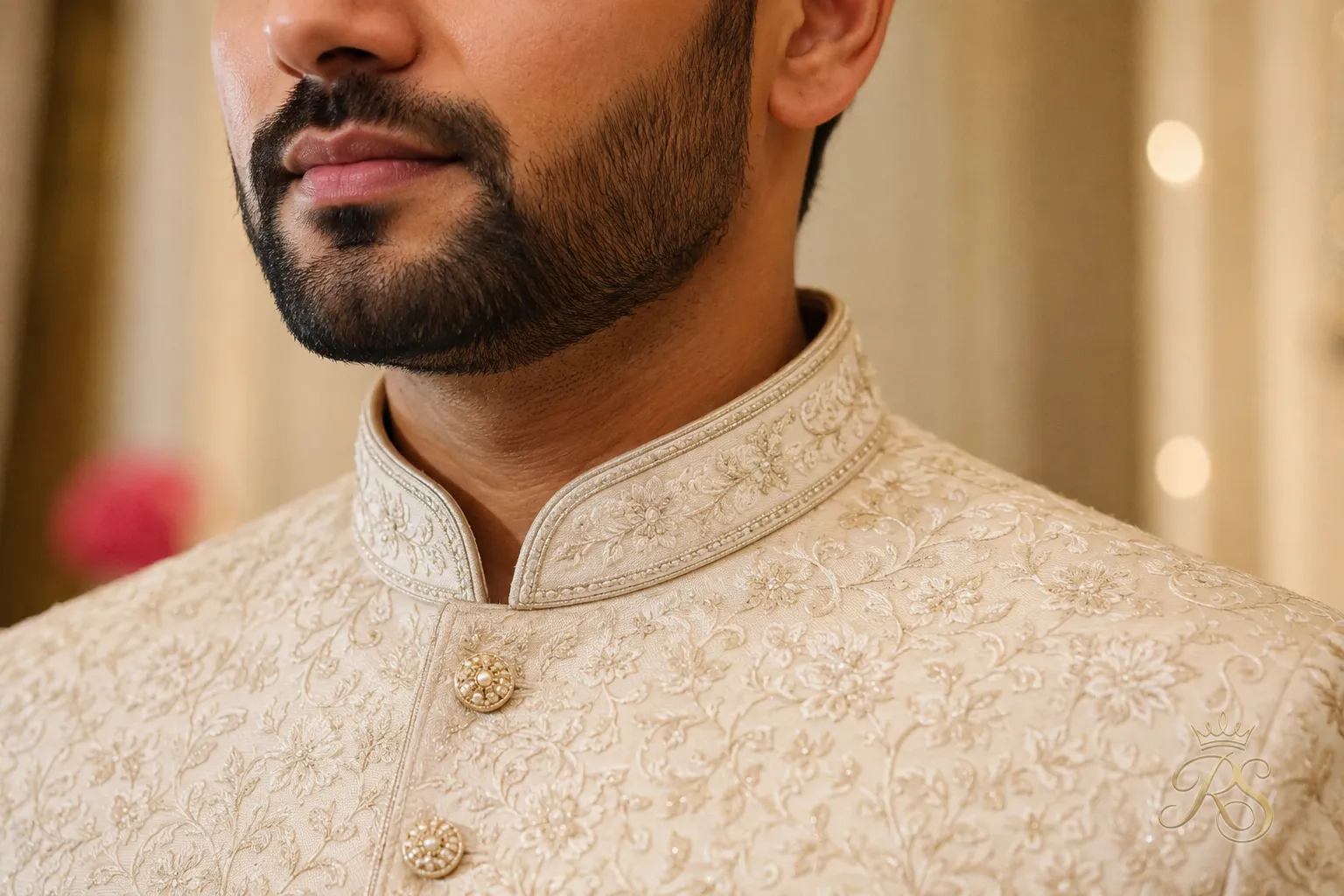
The mandarin collar is the most classic and universally flattering choice.
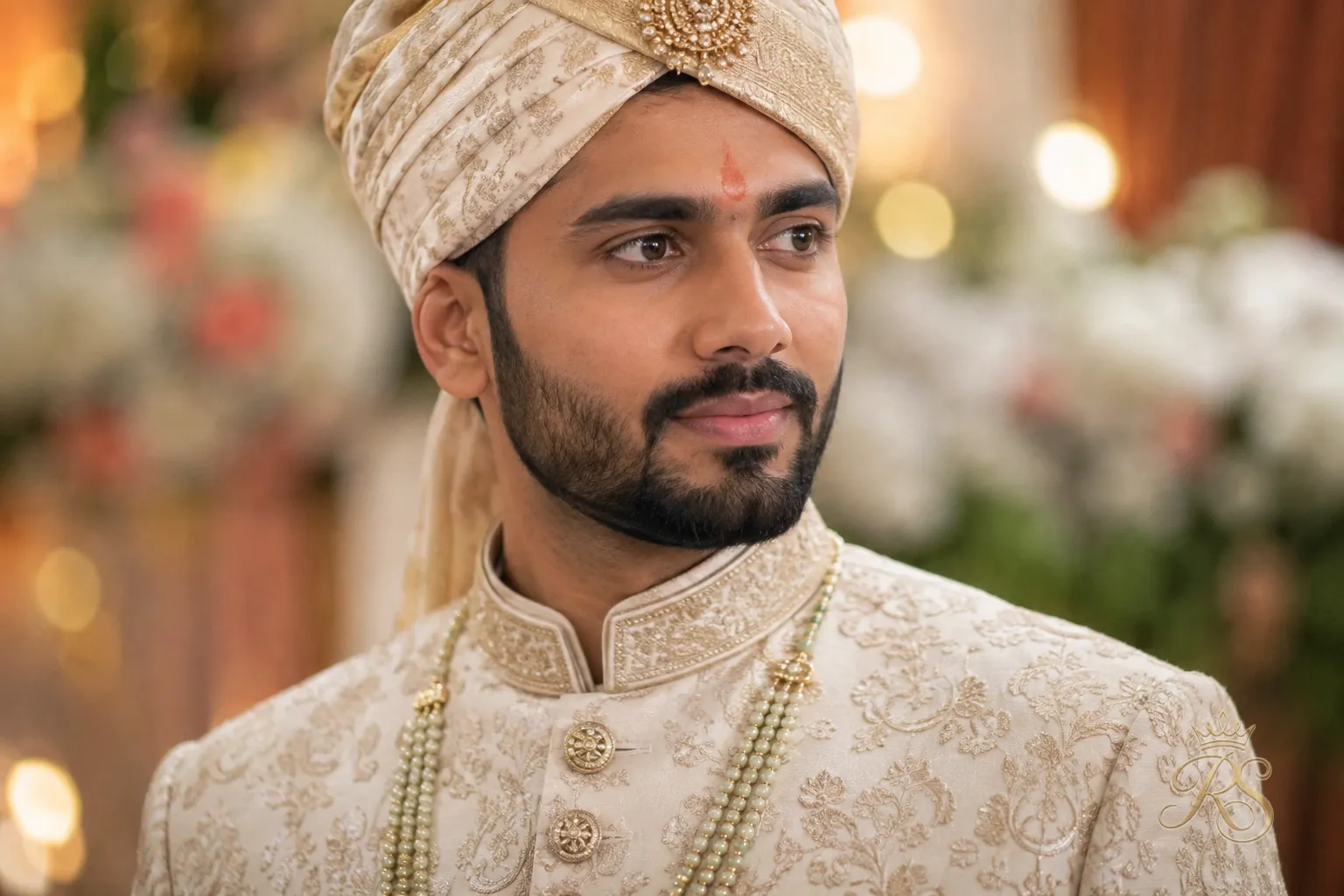
A bandhgala collar with detailed buttonwork leans more formal and structured.
Layering: Jackets, Nehru Jackets & Draped Sherwanis
Layering is one of the biggest sherwani trends for 2026, giving grooms a way to change their look between ceremony and reception without a full outfit change.
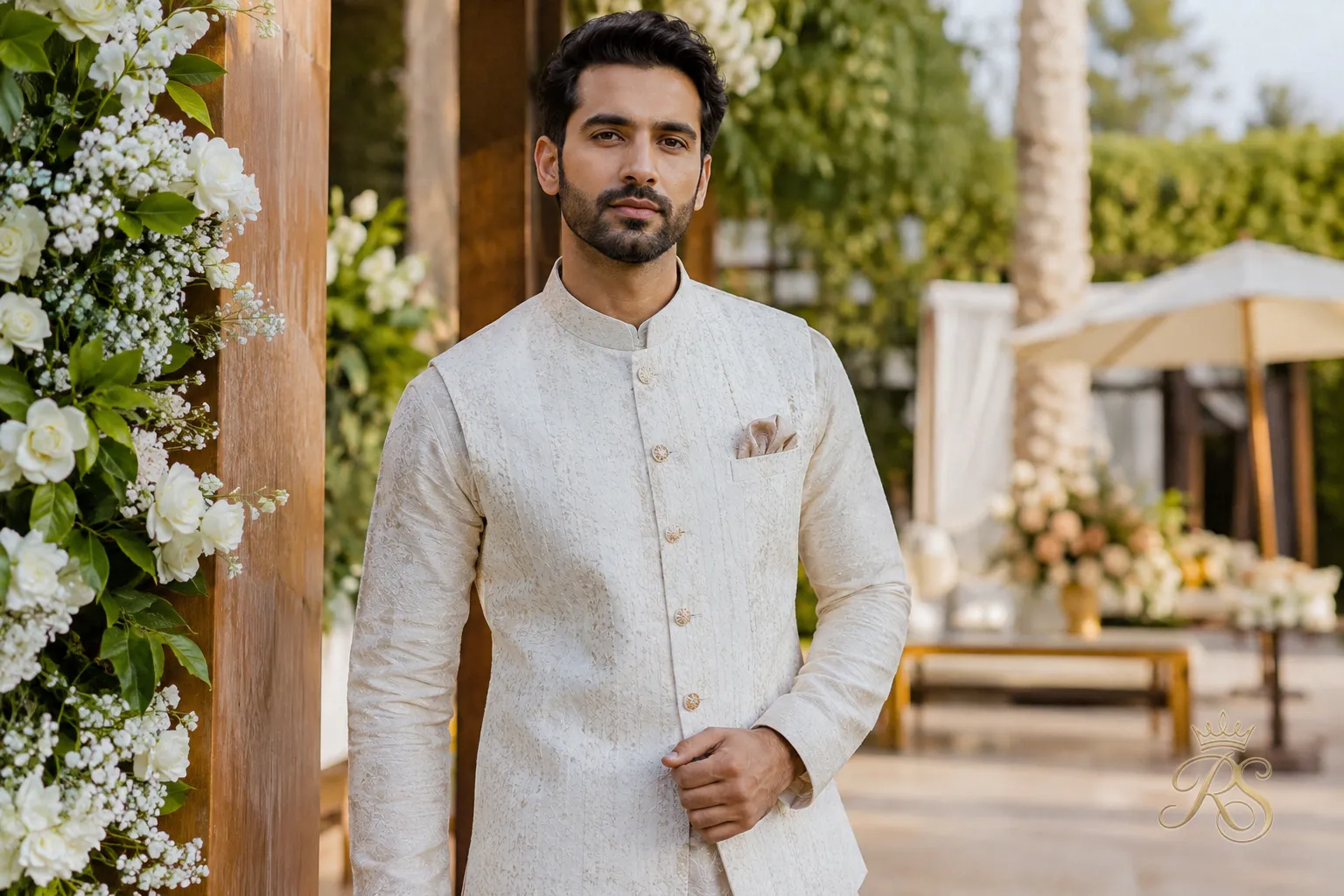
Nehru Jacket Layer
Easily removable for a lighter look later in the celebration.
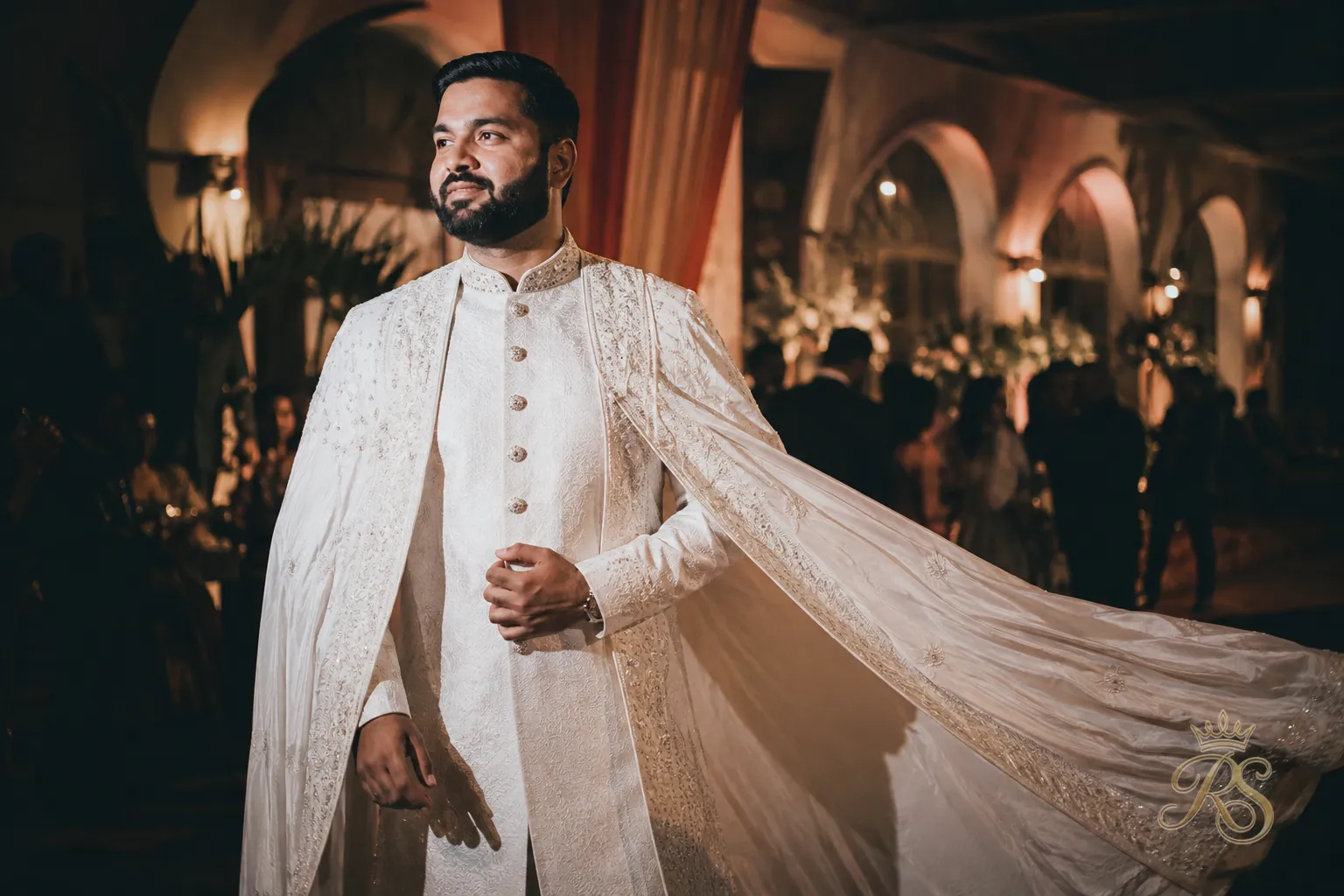
Draped Cape Sherwani
Adds dramatic movement and works beautifully for reception photography.
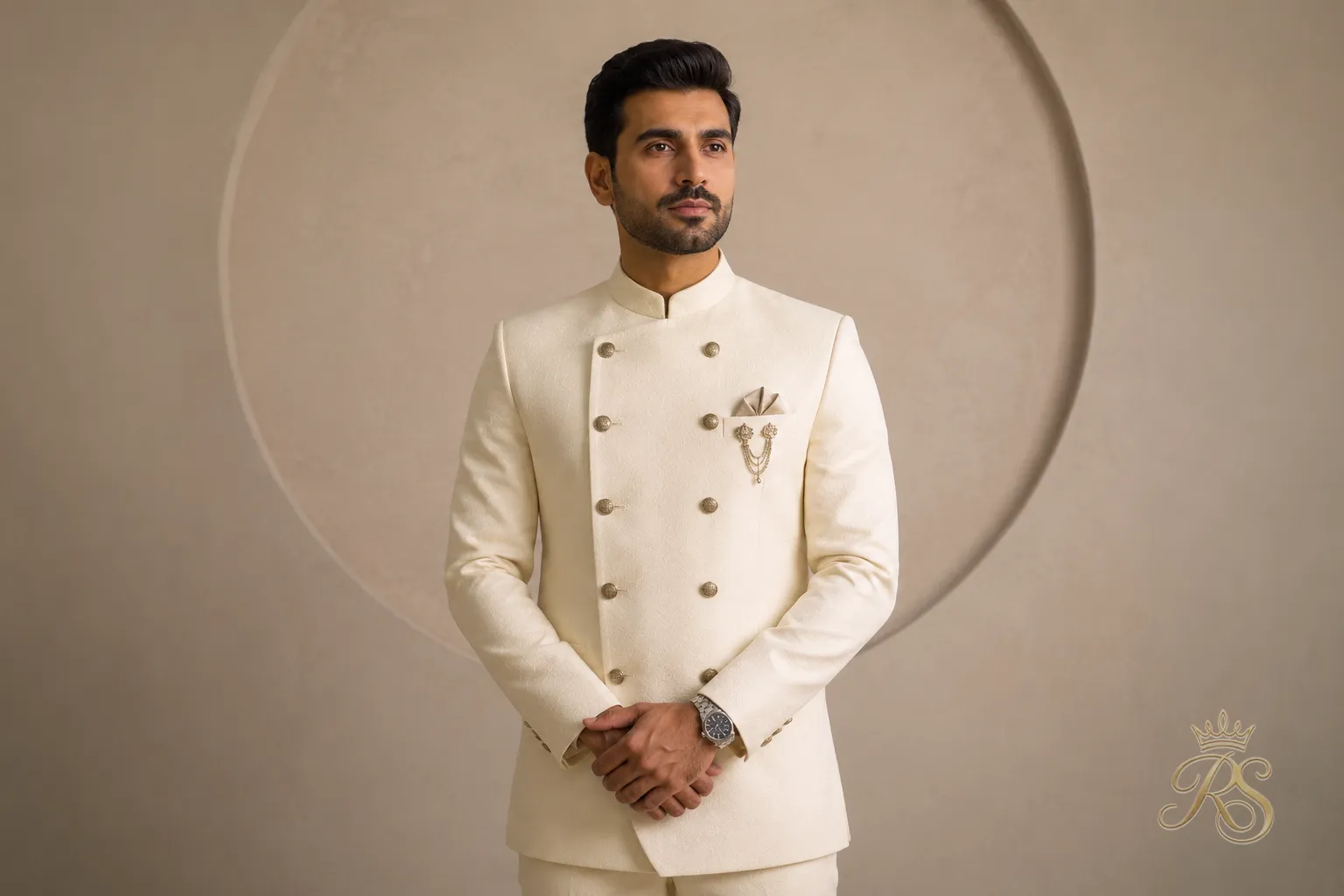
Double-Breasted Jacket
A sharper, more Western-influenced take on the traditional silhouette.
Regional Sherwani Traditions
India's regional menswear traditions each bring a distinct silhouette and detailing style, many of which are seeing a strong revival in 2026 bridal fashion.
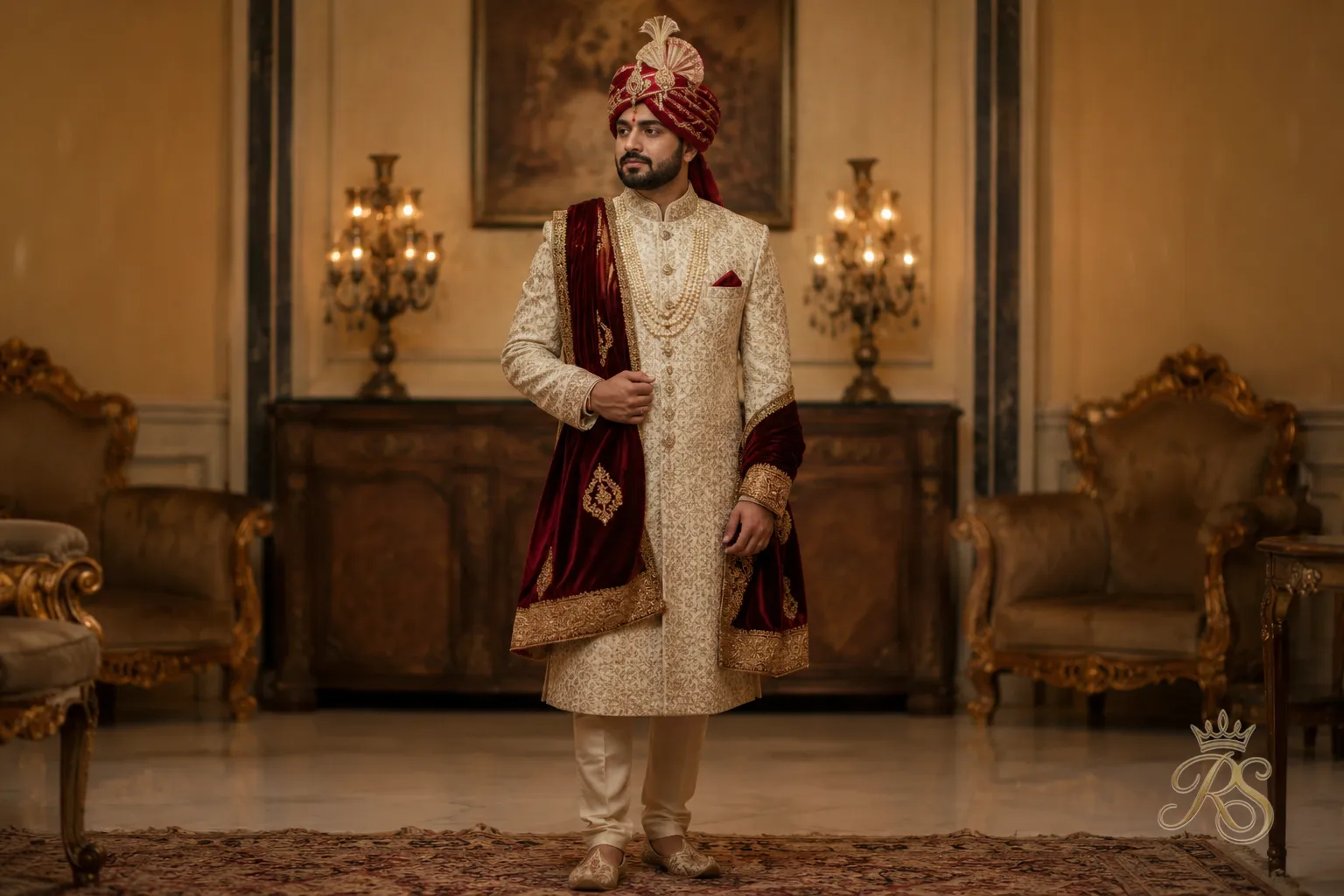
Sherwani with Turban
Paired with a structured turban and kalgi ornament for a regal finish.
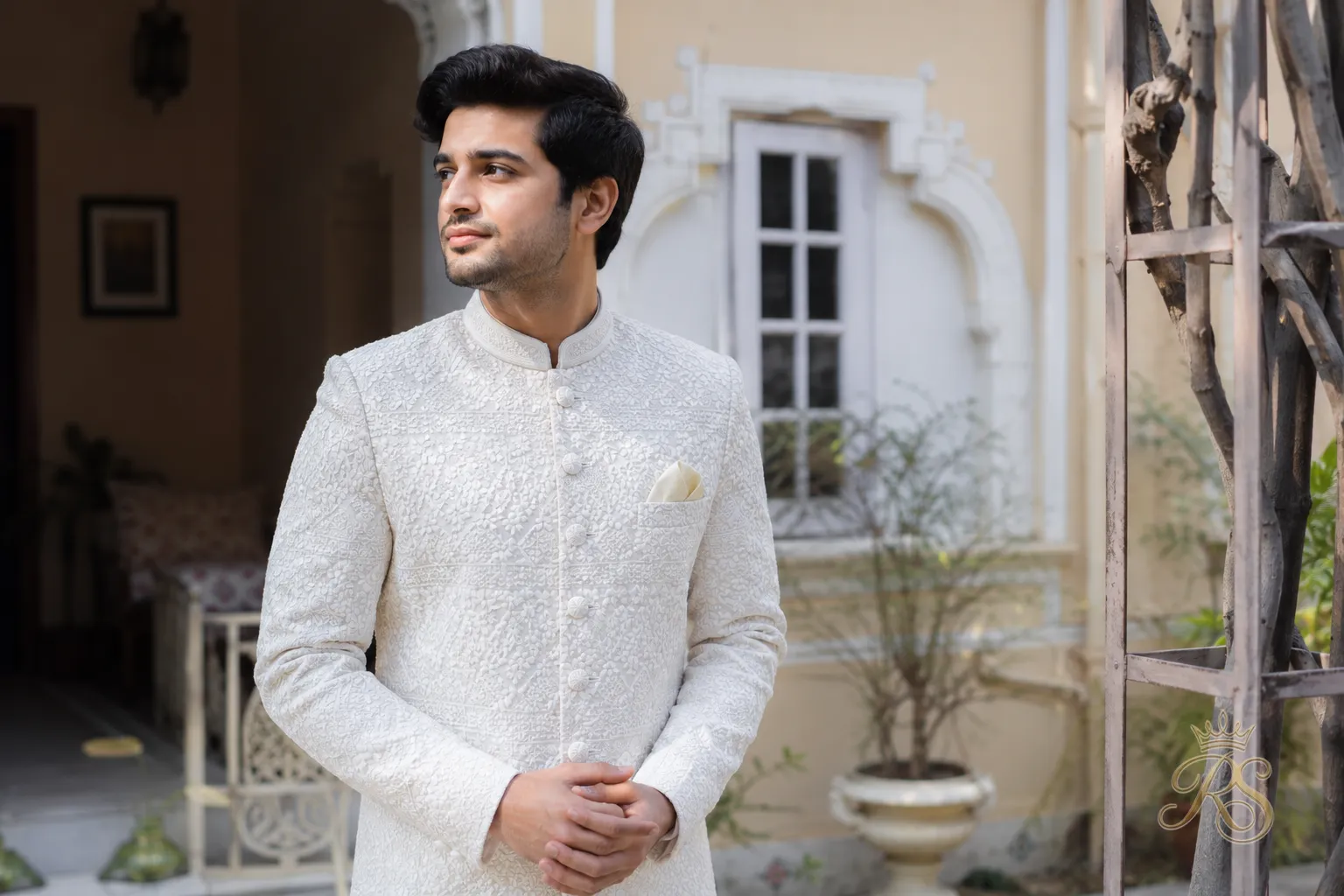
Chikankari Sherwani
Delicate white-on-white hand embroidery for a refined, understated look.
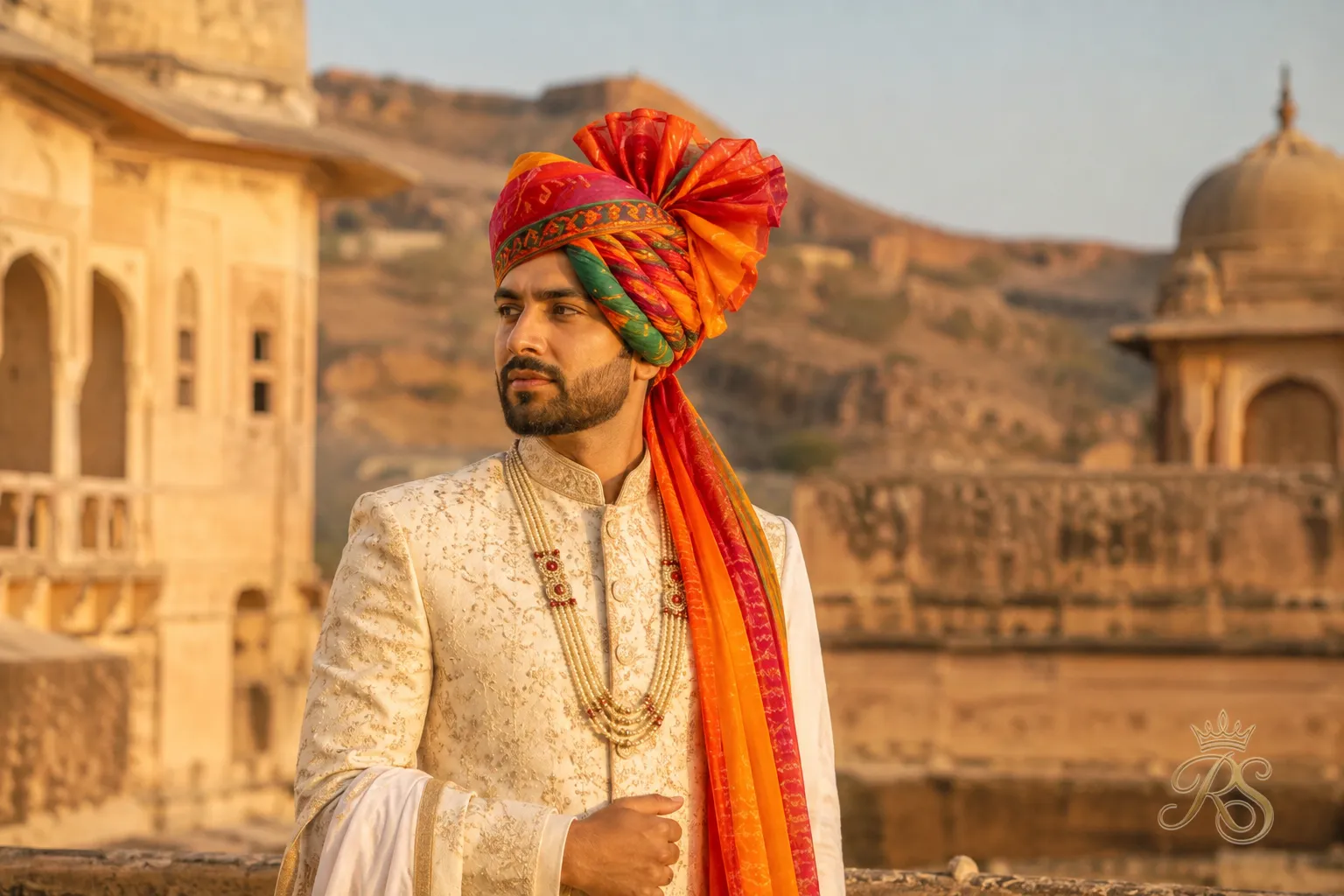
Sherwani with Safa
A vividly colored safa headwrap adds a distinctly regional signature.
Footwear & Accessories Pairing
Footwear and accessories tie the whole outfit together, and mismatched choices here are one of the most common groom styling mistakes.
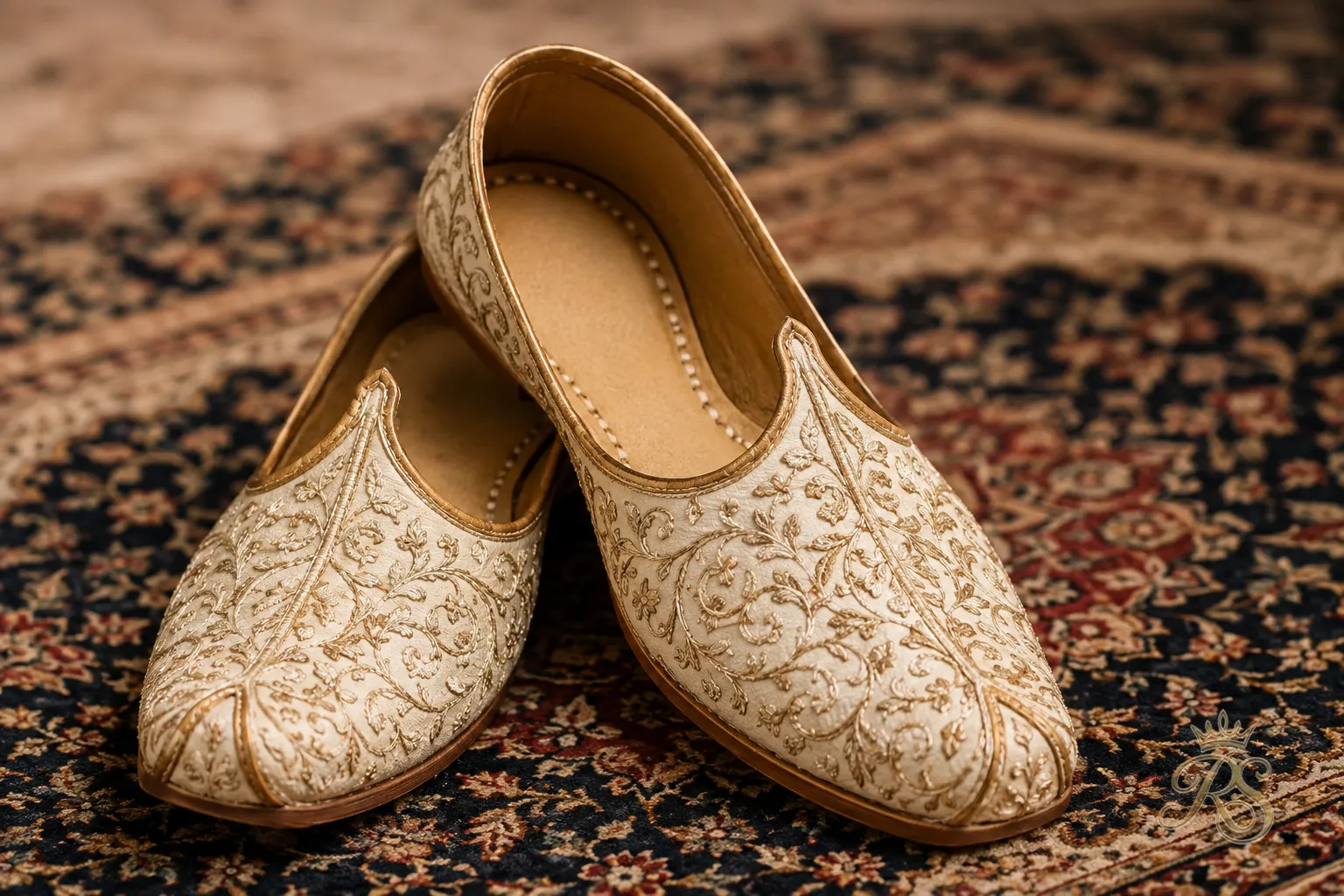
Embroidered mojaris should echo, not exactly match, the sherwani's embroidery tone.
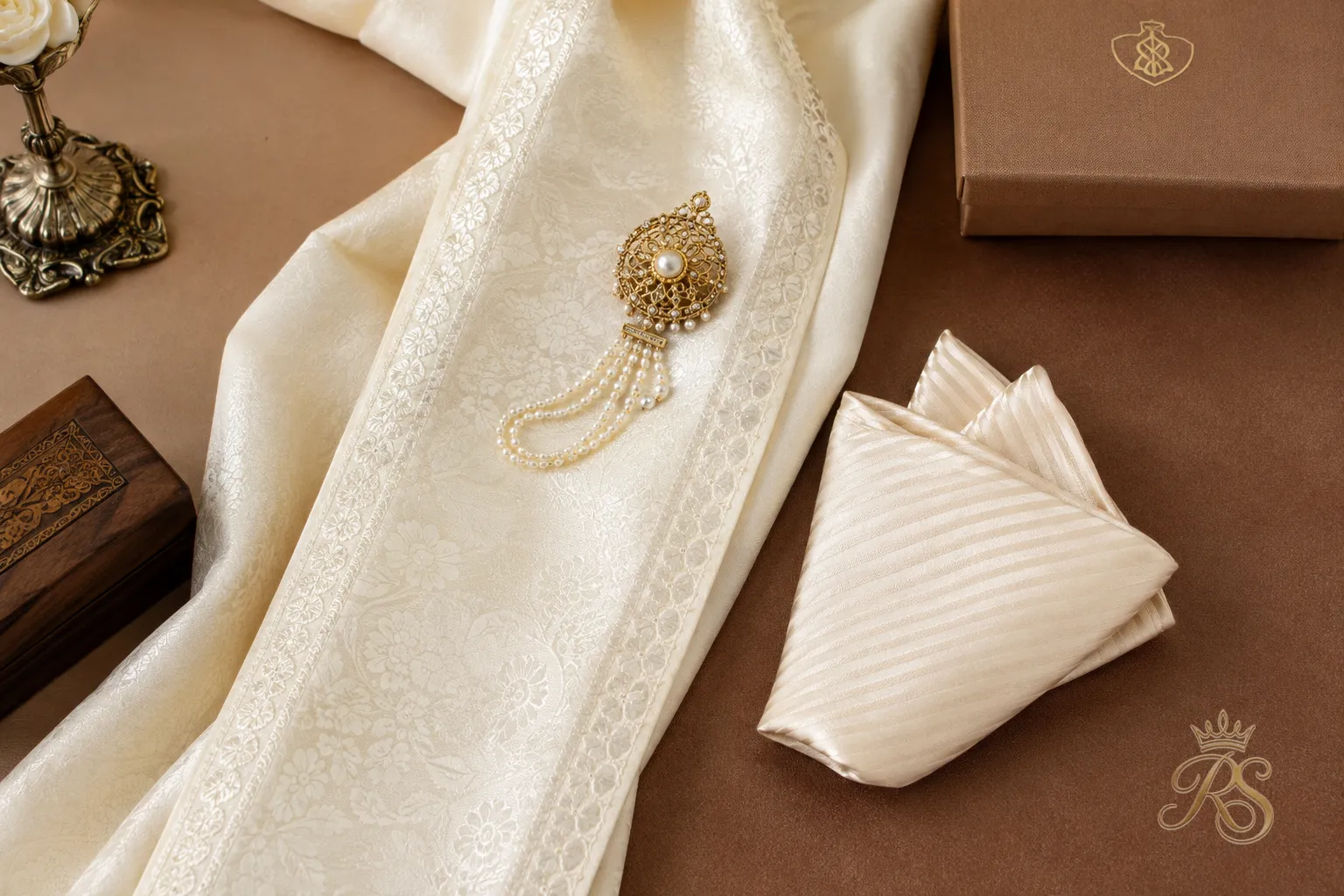
A stole, brooch, and pocket square are the three accessories worth investing in.
Body Type & Fit Guide
The best sherwani design in the world falls flat without correct tailoring — shoulder seams, sleeve length, and hem length are the three measurements to get exactly right.
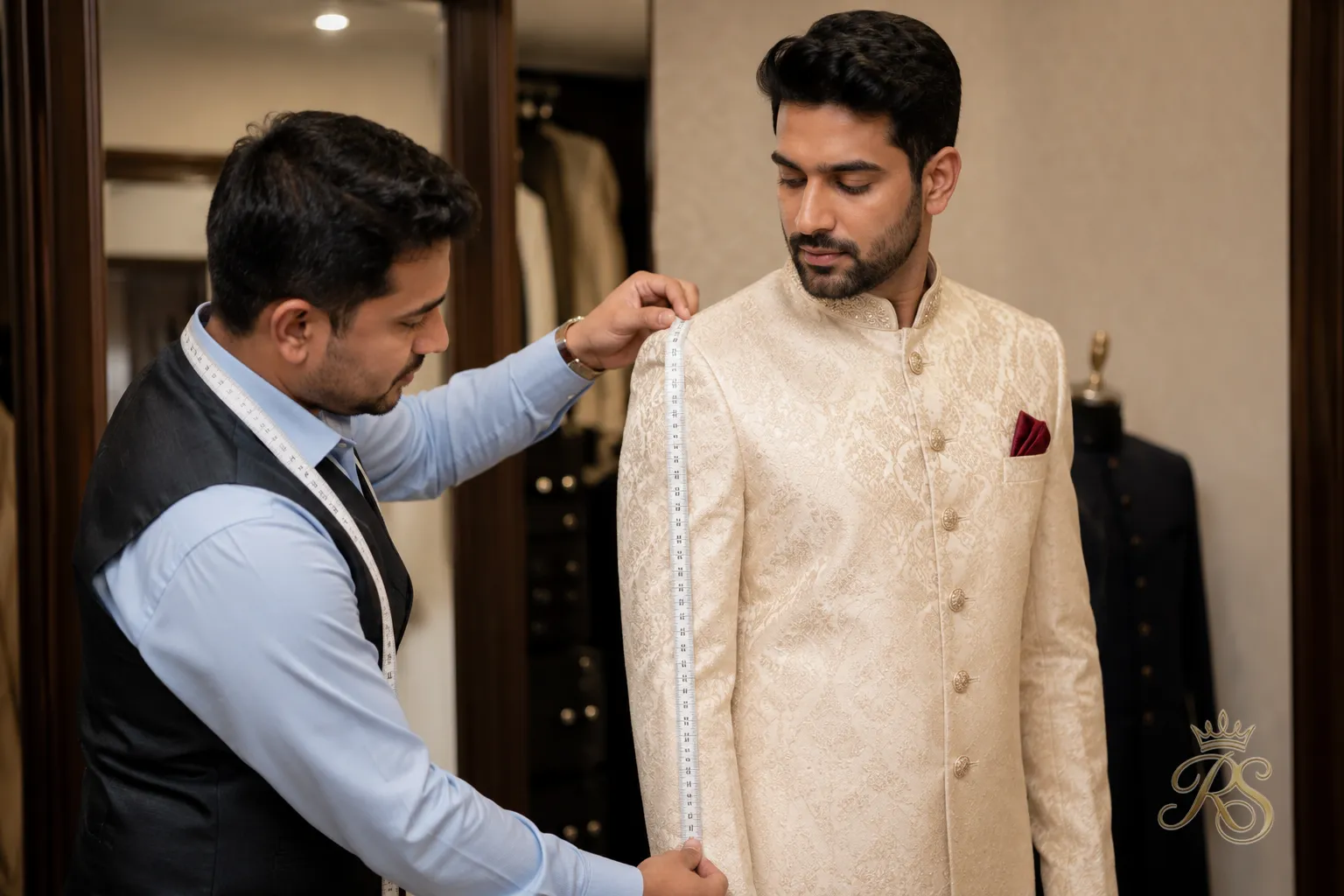
Get this right: shoulder seams should sit exactly at the edge of the shoulder bone.
| Body Type | Recommended Cut | Fit Notes |
|---|---|---|
| Slim / Lean | Classic straight-cut | Flowing length adds visual mass and presence |
| Athletic / Broad | Tailored contemporary | Fitted waist highlights natural shoulder-to-waist taper |
| Heavier build | Structured Nehru jacket layer | Vertical panel lines elongate the overall frame |
| Shorter height | Ankle-length, minimal layering | Avoid excess fabric pooling at the hem |
Budgeting for a Sherwani
A sherwani budget is easiest to plan when it's split clearly across fabric, embroidery, and tailoring rather than treated as one lump sum.
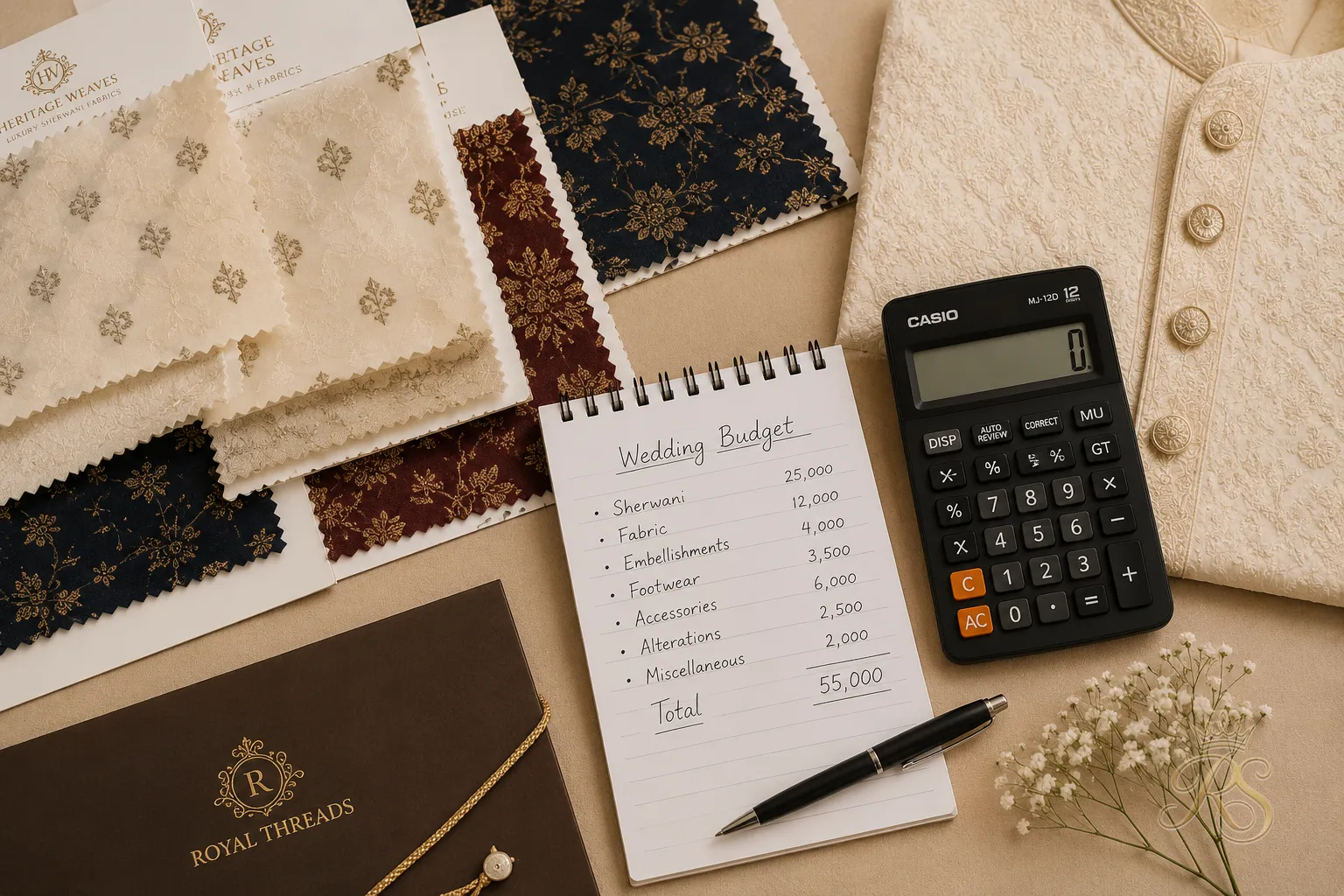
Plan the split: fabric, embroidery, and tailoring each deserve a dedicated budget line.
| Category | Suggested Share | Why It Matters |
|---|---|---|
| Fabric | 35–40% | Determines drape, durability, and overall visual richness |
| Embroidery & handwork | 30–35% | The single biggest driver of the final formal look |
| Tailoring | 15–20% | Precise fit is what makes the finished sherwani look expensive |
| Total buffer | Keep 10% aside | Covers alterations, accessories, or last-minute changes |
Sherwani Care & Maintenance
A heavily embroidered sherwani needs careful storage and handling to keep its shape and shine well beyond the wedding day.
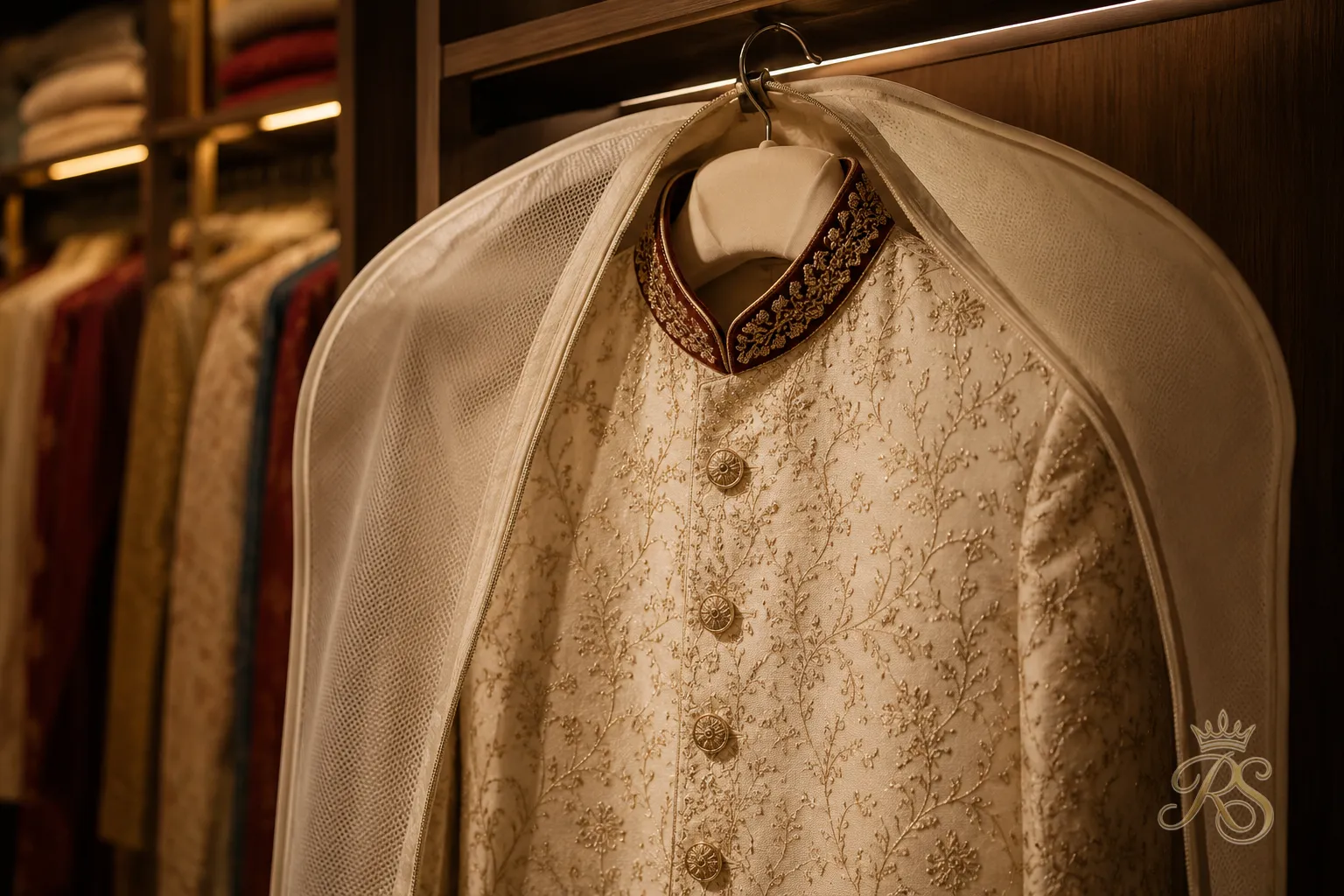
Store it right: a padded hanger and breathable cover prevent embroidery from flattening.
- Always dry clean — never machine wash a heavily embroidered sherwani
- Store on a padded hanger inside a breathable muslin or cotton cover, never plastic
- Keep it away from direct sunlight to prevent color fading on richer fabrics
- Have loose threads or sequins repaired promptly by the original tailor if possible
Common Mistakes Grooms Make
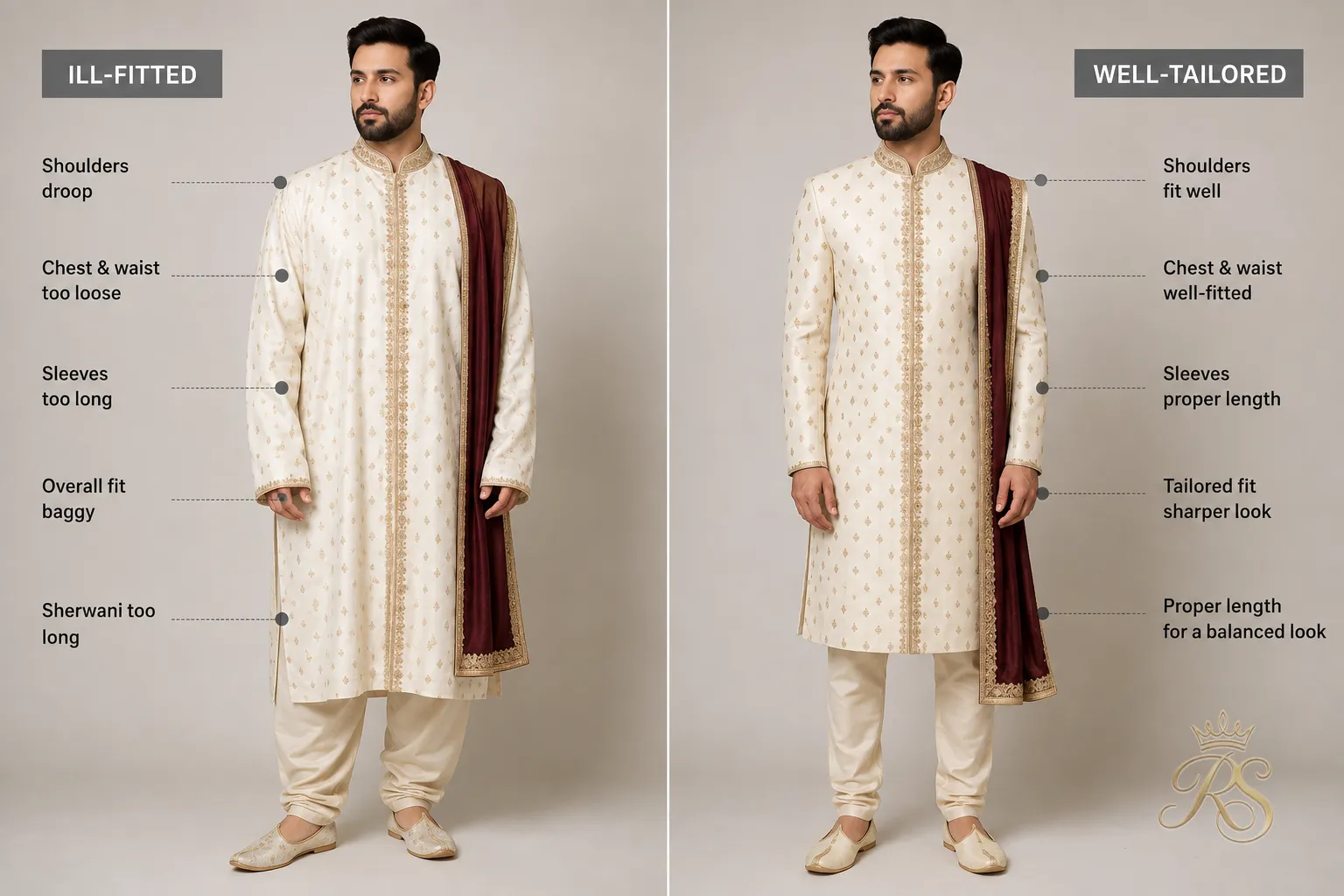
A properly tailored sherwani transforms the exact same fabric and design.
- Booking the sherwani too late, leaving no time for a second fitting
- Choosing embroidery so heavy it competes visually with the bride's outfit
- Ignoring footwear and accessories until the week of the wedding
- Skipping a trial run in full outfit, including layers, before the actual day
Final Thoughts
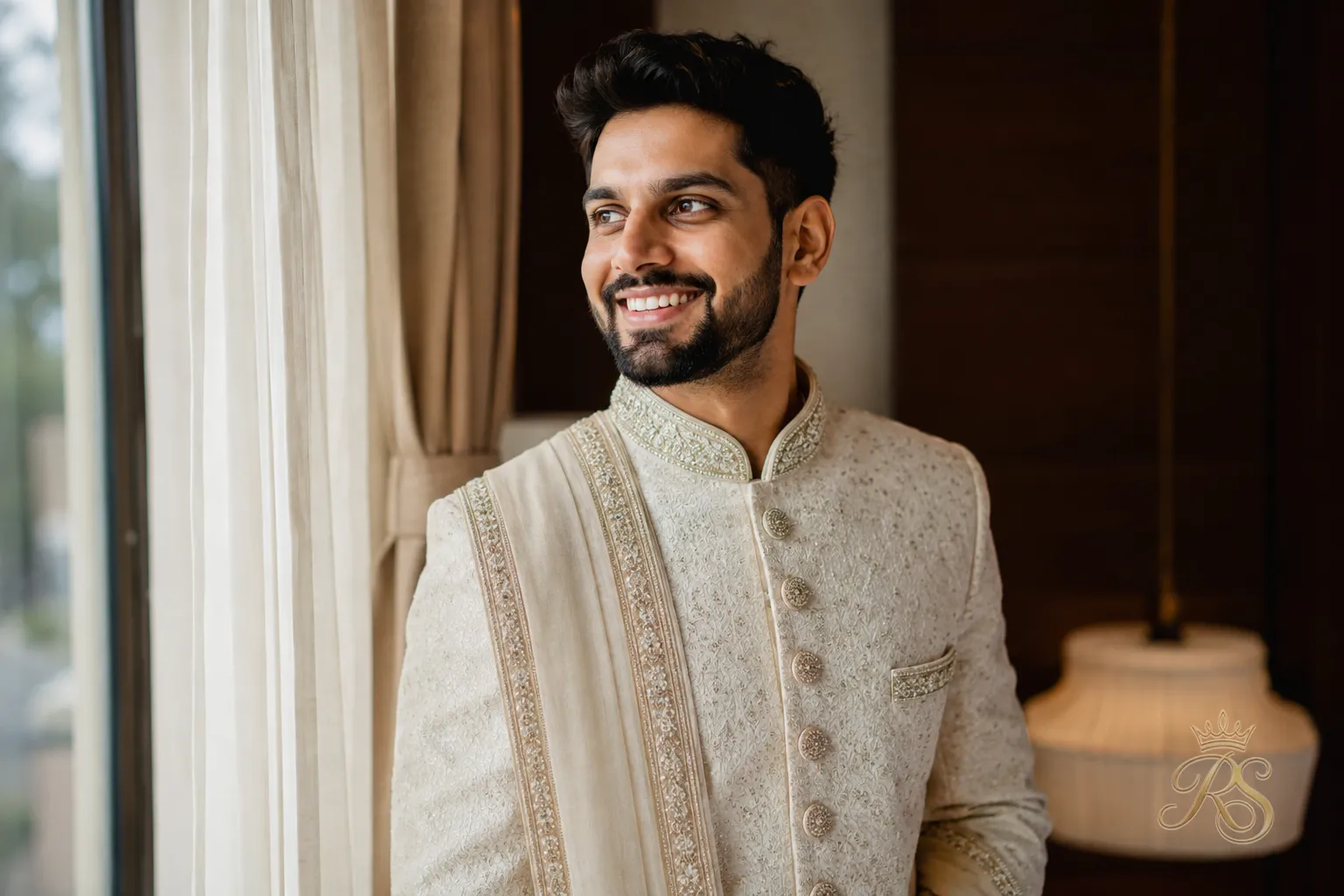
The real test: an outfit that looks as sharp at the end of the night as it did at the start.
The best sherwani for 2026 isn't the most expensive or the most heavily embroidered one — it's the one tailored precisely to your frame, in a fabric and color that complements the day's overall palette. Start early, prioritize fit over trend, and the rest falls into place.
"A groom's sherwani isn't the supporting outfit — it's the other half of the frame."